I’ve made a lot of carnivore bread in my kitchen, and most of it disappointed me in one of two ways: it either tasted like a savory omelet pretending to be bread, or it cracked apart the second I tried to fold it around anything. Carnivore flatbread was the recipe that finally solved both problems for me, and it took more trial batches than I want to admit to get there.
This is a soft, pliable, protein-forward flatbread made from just eggs, cheese, and cream cheese — no flour, no almond flour, no psyllium husk, nothing but animal-based ingredients. It bakes in under 15 minutes, it bends without snapping, and it holds up to being wrapped around meat, folded like a taco, or cut into wedges and dunked in melted butter.
If you’ve tried other carnivore bread recipes and ended up with something rubbery, eggy, or too fragile to actually use, I think this one will change your mind about what carnivore bread can be.
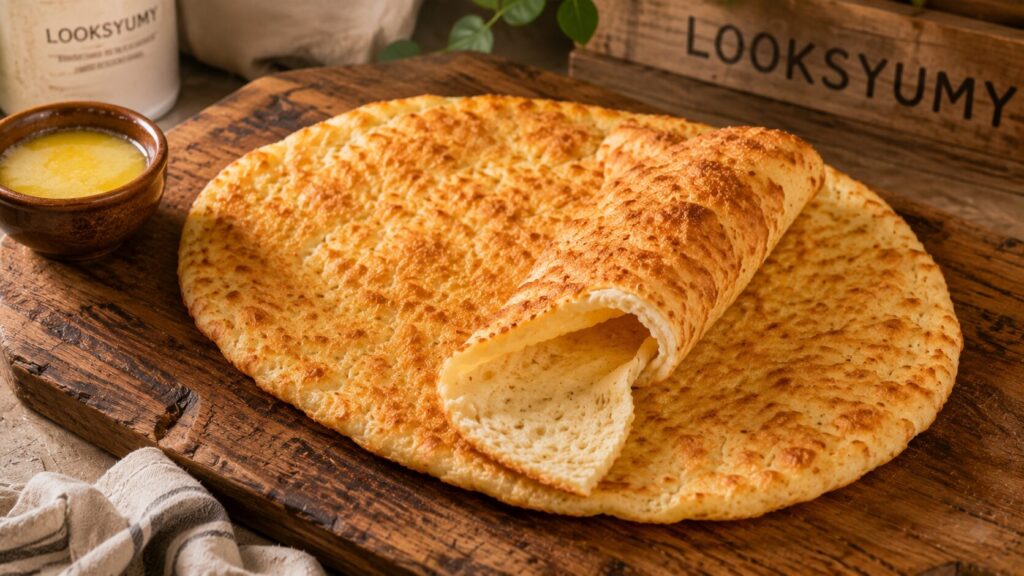
Table of Contents
Carnivore flatbread is a soft, flexible bread substitute made from eggs, shredded mozzarella, and cream cheese, baked flat in a hot oven for 10–12 minutes. It has zero carbohydrates, roughly 9–11 grams of protein per piece, and a texture close to a thick, chewy tortilla. It works as a wrap, a pizza base, a side for eggs, or a scoop for dips, and it stores well in the fridge or freezer for meal prep.
| Feature | Carnivore Flatbread |
|---|---|
| Prep Time | 20 min |
| Cook Time | 12 min |
| Protein | 9–11 g |
| Net Carbs | ~0 g |
| Texture | Soft & Foldable |
| Best Use | Wraps & Pizza |
Why You’ll Love This Recipe
You’ll love this carnivore flatbread because it does something a lot of carnivore breads fail to do — it actually behaves like bread. It bends instead of cracking, it browns instead of staying pale and wet in the middle, and it reheats without turning into rubber.
A few more reasons it’s become a weekly staple in my kitchen:
- Three main ingredients, all things you probably already have
- No specialty carnivore flour, no xanthan gum, no baking soda
- Ready from bowl to plate in about 20 minutes
- Freezes and reheats better than almost any other carnivore bread I’ve tested
- Flexible enough to fold, sturdy enough to hold fillings
Why Carnivore Flatbread Is Different
Most carnivore “bread” recipes are really just baked egg dishes with cheese mixed in — closer to a crustless quiche than to bread. Carnivore flatbread is different because it’s rolled or spread thin, which changes the ratio of surface area to moisture and lets it cook through evenly instead of staying wet in the center while the edges burn.
During testing, I found that thickness was the single biggest factor separating a “flatbread” from a “baked egg puddle.” Once I started spreading the batter to about ¼ inch and no thicker, the texture stopped being eggy and started being genuinely bread-like.
If you’re making burgers instead of wraps, our 3 Ingredient Carnivore Burger Buns are a better choice because they’re designed to hold thicker fillings.
Choose this recipe if…
✅ You want flexible wraps.
✅ You need meal prep.
✅ You miss tortillas.
Skip if…
❌ Dairy free.
❌ You want crispy crackers.
Ingredients Explained
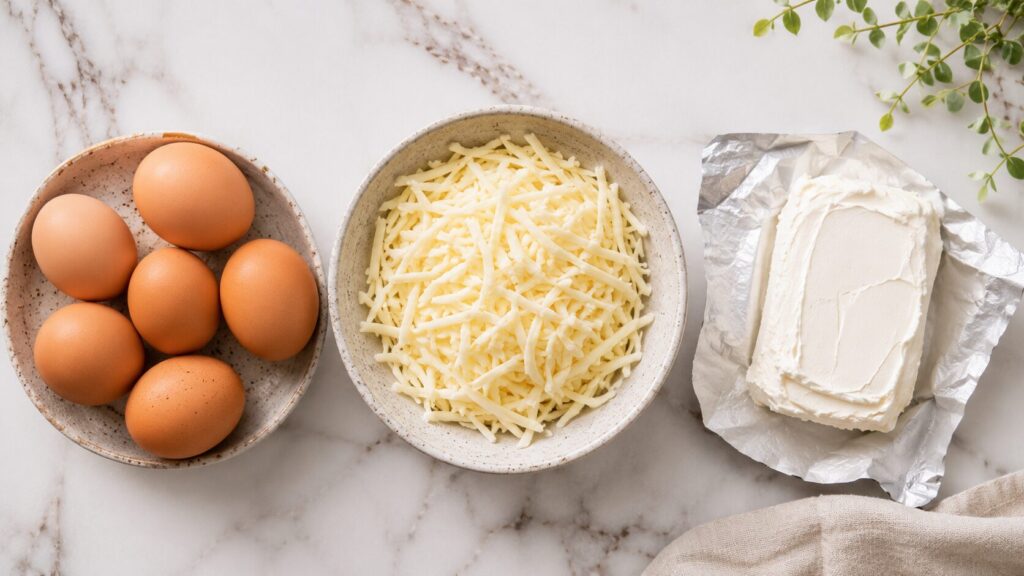
This recipe uses three core ingredients, each doing a specific job:
Eggs provide structure. As the batter heats, the egg proteins denature and bond together, which is what allows the flatbread to firm up and hold its shape once it cools.
Shredded mozzarella provides stretch and chew. Mozzarella has a lower moisture content than many other cheeses once it’s melted and reset, which helps the flatbread firm up rather than staying greasy.
Cream cheese provides softness and flexibility. This was the ingredient that made the biggest difference in my testing — flatbreads made without cream cheese were noticeably more brittle once cooled.
Optional additions: a pinch of salt, garlic powder, or Italian seasoning if you’re not strictly avoiding seasonings. These don’t change the texture, only the flavor.
Ingredient Science
Here’s the part I find genuinely interesting after enough batches: the reason this combination works comes down to how egg proteins and dairy proteins set at different rates and temperatures.
Egg proteins begin to coagulate — meaning they unfold and bond into a solid network — well before mozzarella fully firms up. That means the eggs form the initial “scaffolding” of the flatbread while the cheese is still soft and pliable. As the bake finishes, the cheese proteins tighten around that scaffolding, and the cream cheese fat keeps the whole structure from drying out and becoming stiff.
This happens because egg proteins gradually denature and form a stable network as they’re heated, creating the structure that gives the flatbread its strength and flexibility. The Iowa State University Food Preparation Lab Manual explains how heat causes egg proteins to coagulate and form a gel, which is the same fundamental process that helps this carnivore flatbread hold together during baking.
If you want to go deeper on how egg proteins behave under heat, King Arthur Baking has a solid explanation of egg protein coagulation in their piece on <cite index=”3-1″>how the proteins in egg whites unravel, or denature, as they’re whipped or heated, then form new bonds with water and air</cite> — the same underlying protein chemistry that gives this flatbread its structure, just without the whipping.
Why These Ingredients Work Together
Eggs alone bake into something closer to a firm omelet — flexible when warm, but it tends to tear as it cools. Cheese alone melts and re-hardens into something closer to a cheese crisp — crunchy, not bendable.
Combined, the egg network holds the shape while the cheese and cream cheese keep it soft. Neither ingredient could do this job alone. This is also why swapping the ratios changes the result so much: more egg pushes the texture toward “omelet,” more cheese pushes it toward “cheese crisp,” and the balance in this recipe sits deliberately in the middle.
Equipment
- Mixing bowl
- Whisk or fork
- Baking sheet
- Parchment paper or silicone baking mat
- Offset spatula or the back of a spoon, for spreading
- Oven
An immersion blender or regular blender is optional but helpful if you want an ultra-smooth batter with no visible cream cheese lumps.
Step-by-Step Instructions
- Preheat your oven to 400°F (204°C). Line a baking sheet with parchment paper or a silicone mat.
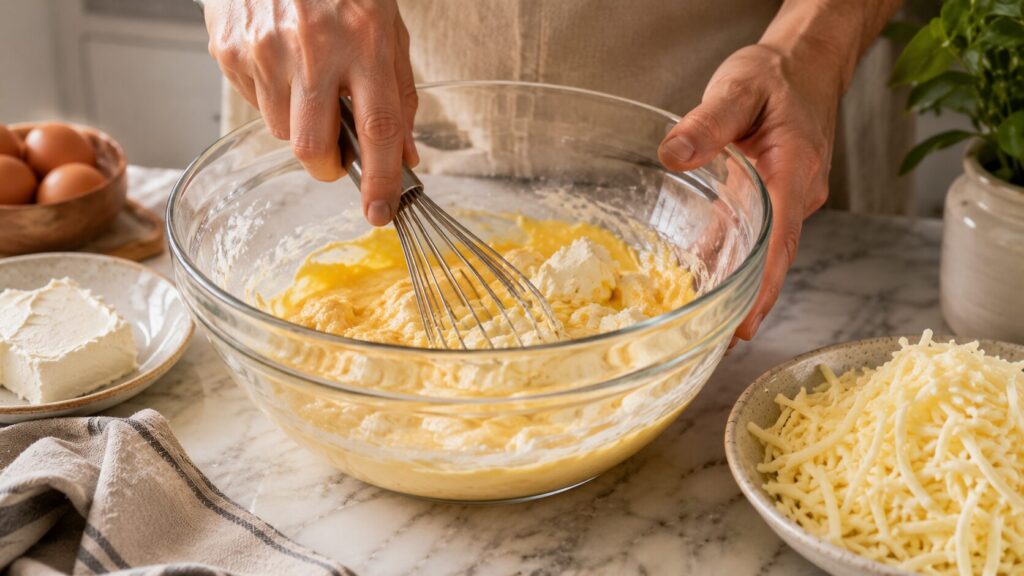
- In a bowl, whisk the eggs until smooth.
- Add the softened cream cheese and whisk or blend until no large lumps remain.
- Stir in the shredded mozzarella until evenly combined.
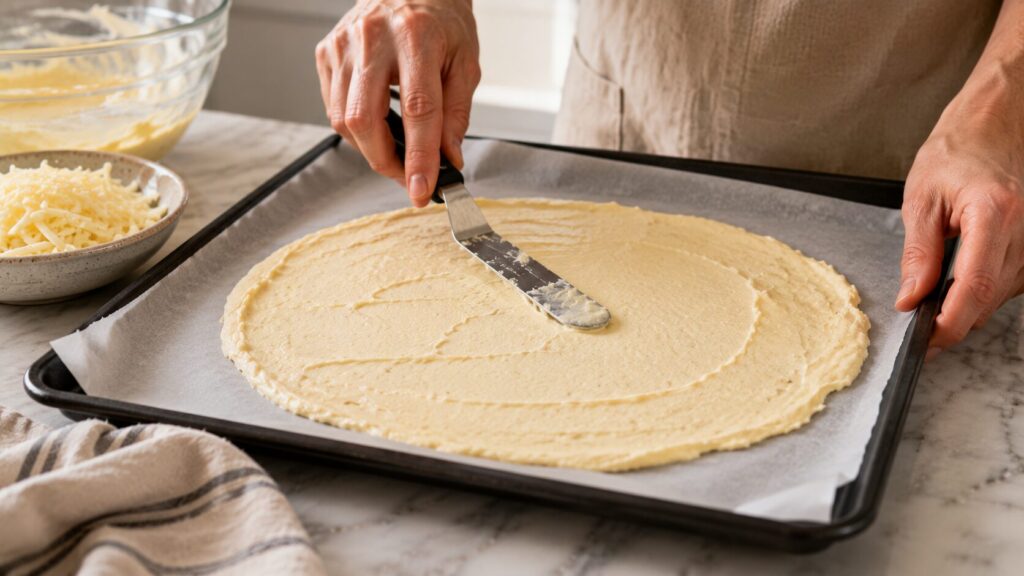
- Pour the batter onto the lined baking sheet. Spread it into a thin, even layer, about ¼ inch thick, using an offset spatula.
- Bake for 10–12 minutes, until the top is set, lightly golden at the edges, and no longer wet-looking in the center.
- Remove from the oven and let it cool on the pan for 5 minutes before touching it. This resting step matters more than it seems — I’ll explain why below.
- Slide the flatbread onto a cutting board, slice into pieces, and use as needed.
The same gentle mixing and resting techniques also help create the chewy texture in our Carnivore Bagels.
- Eggs create structure.
- Mozzarella adds elasticity.
- Cream cheese improves flexibility.
- Thin spreading ensures even baking.
- Resting finishes protein setting.
Visual Texture Cues
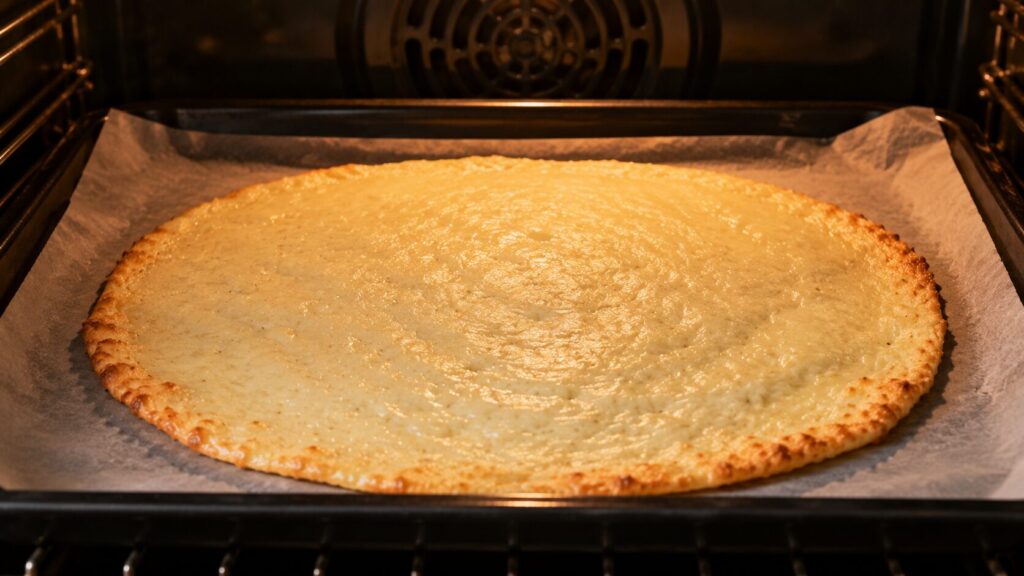
Here’s what to look for at each stage, based on what I’ve watched happen across dozens of batches:
- Raw batter: should pour like thick pancake batter, not run like water
- 5 minutes in: edges start to set and lift slightly from the pan
- 8 minutes in: surface turns matte instead of glossy
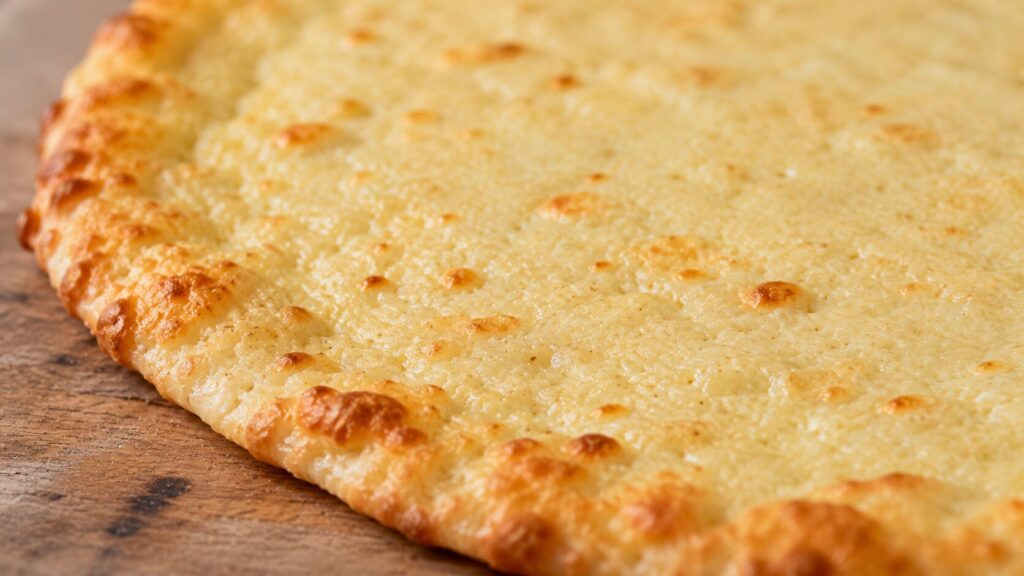
- 10–12 minutes in: light golden color at the edges, center no longer jiggles when the pan is nudged
- Just out of the oven: slightly puffed, will deflate slightly as it cools — this is normal
- Matte center
- Golden edges
- No jiggle
- Easily lifts
- Slight flexibility
Kitchen Observation
One thing I noticed early on: if the batter still looks glossy and wet in the center at the 10-minute mark, it needs more time. Pulling it too early is the single most common reason people end up with a soggy middle, even if the edges look perfectly done.
Pro Baker Tips
- Bring the cream cheese to true room temperature before mixing — cold cream cheese leaves lumps that turn into weak spots once baked
- Spread the batter with a light hand; pressing too hard pushes it too thin in spots, which leads to uneven browning
- Use a light-colored, heavy baking sheet if you have one; dark pans run hotter and can brown the bottom before the center sets
- Don’t skip the 5-minute rest — it lets the protein structure finish firming up outside the direct heat
Common Mistakes
Spreading the batter unevenly. Thin spots overcook and turn crisp while thick spots stay wet.
Cutting into it straight from the oven. The flatbread is at its most fragile the moment it comes out. Cutting too early causes tearing.
Using pre-shredded cheese with anti-caking starch. Most pre-shredded cheese is coated in a small amount of starch or cellulose to prevent clumping. It’s a small amount and won’t meaningfully affect carb counts for most people, but it can slightly change texture. Freshly shredded block mozzarella melts smoother.
Overbaking “just to be safe.” A few extra minutes past done turns a soft flatbread into a stiff, cracker-like one.
Troubleshooting Guide
| Problem | Likely Cause | Fix |
|---|---|---|
| Center stays wet after 12 minutes | Batter spread too thick | Spread thinner next time; bake 2–3 minutes longer this time |
| Flatbread cracks when folded | Overbaked, or cooled too long before handling | Reduce bake time slightly; fold while still warm and flexible |
| Greasy or oily surface | Cheese content slightly high relative to egg | Reduce cheese slightly or blot gently with a paper towel |
| Sticks to the pan | No parchment/silicone liner used, or pan not fully lined | Always line the pan edge to edge |
| Rubbery texture | Overmixed batter, or oven ran hot | Mix just until combined; verify oven temperature with a thermometer |
| Pale, no browning | Oven runs cool, or rack too low | Move rack up one level; extend bake time in 1–2 minute increments |
Flatbread Texture Guide
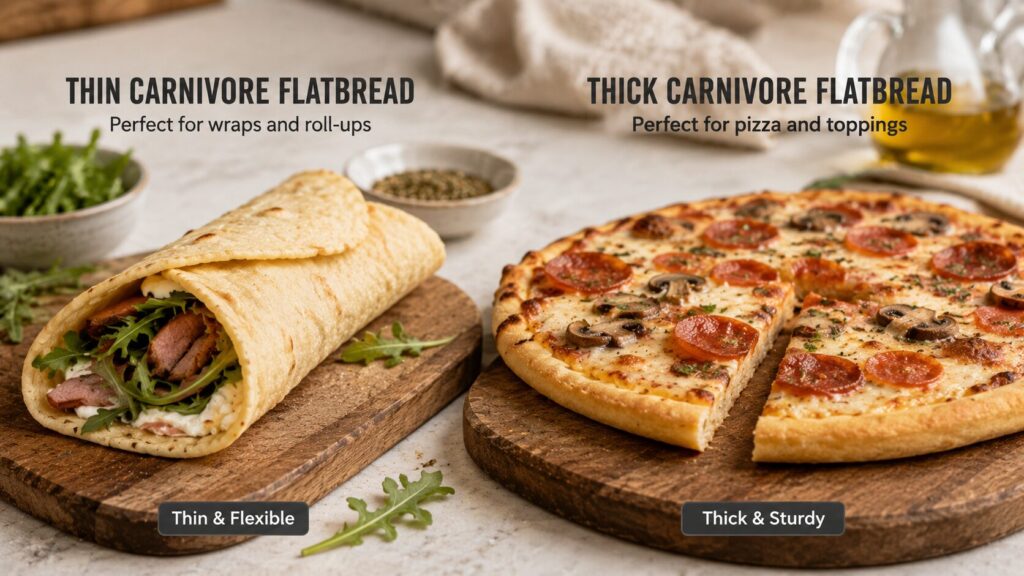
The single biggest lever you have over the final texture is thickness. A thin batter spread bakes into something closer to a soft tortilla, while a thicker spread bakes into something closer to a soft flatbread you’d tear rather than roll.
How Thick Should the Batter Be?
For a wrap-style flatbread, aim for about ⅛ to ¼ inch. For a pizza base or something you’ll eat with a fork, ¼ to ⅓ inch works better and gives you a slightly heartier bite.
How to Spread It Evenly
Pour the batter into the center of the lined pan first, then work outward in a spiral motion with an offset spatula. Working from the center out, rather than back and forth, helps avoid the thin streaks and thick pockets that lead to uneven cooking.
Why Some Flatbreads Crack
Cracking almost always comes down to one of two things: overbaking, which dries out the protein network and makes it brittle, or handling the flatbread cold. Cheese-and-egg bakes are noticeably more flexible warm than cold, since the fat in the cheese firms up as it cools.
Why Others Become Rubbery
Rubbery texture usually means too much egg relative to cheese, or an oven running hotter than the dial suggests. Overmixing can also incorporate extra air that toughens the set structure slightly.
How Baking Time Changes Flexibility
Under bake it slightly and you get maximum flexibility but a softer, more delicate bite. Push it a minute or two further and you get a sturdier flatbread that holds its shape better for pizza but folds less easily.
Best Thickness for Wraps
⅛ to ¼ inch, baked just until set, gives you the most fold-friendly result.
Best Thickness for Pizza
⅓ inch, baked until the edges are visibly golden, gives you a base sturdy enough to hold toppings without going floppy in the middle.
Why Cooling Changes Texture
As the flatbread cools, the fat in the cheese and cream cheese re-solidifies. This is the same reason cold pizza feels stiffer than a fresh slice. A flatbread that felt perfectly pliable straight out of the oven can feel noticeably firmer ten minutes later.
How Long to Wait Before Folding
I’ve found 3 to 5 minutes of cooling is the sweet spot — enough time for the structure to firm up so it doesn’t tear, but before the fat fully re-solidifies and stiffens the whole piece.
Signs It’s Slightly Underbaked
The center looks glossy rather than matte, it feels tacky rather than dry when lightly touched, and it tends to tear rather than fold cleanly.
Signs It’s Overbaked
Edges are noticeably darker brown rather than light gold, the flatbread feels stiff even while still warm, and it cracks rather than bends when you try to fold it.
Best Pan Material
A light-colored aluminum baking sheet gave me the most even results across testing. Dark, non-stick pans absorb more heat and tend to brown the bottom faster than the center sets, which can leave you with a flatbread that looks done but is still soft in the middle.
Silicone Mat vs Parchment Paper
| Feature | Silicone Mat | Parchment Paper |
|---|---|---|
| Non-stick performance | Excellent | Excellent |
| Even browning | Slightly more even | Slightly more variable |
| Cleanup | Reusable, rinse and reuse | Disposable, no cleanup |
| Edge crispness | Slightly softer edges | Slightly crisper edges |
| Best for | Repeated everyday batches | Quick one-off batches |
How to Prevent Sticking
Line the pan completely, edge to edge, and resist the urge to skip the liner even on a well-seasoned non-stick pan. Egg-and-cheese batter is more prone to sticking than most other batters because of how much protein bonds directly to metal surfaces during baking.
Can You Fold It Without Breaking?
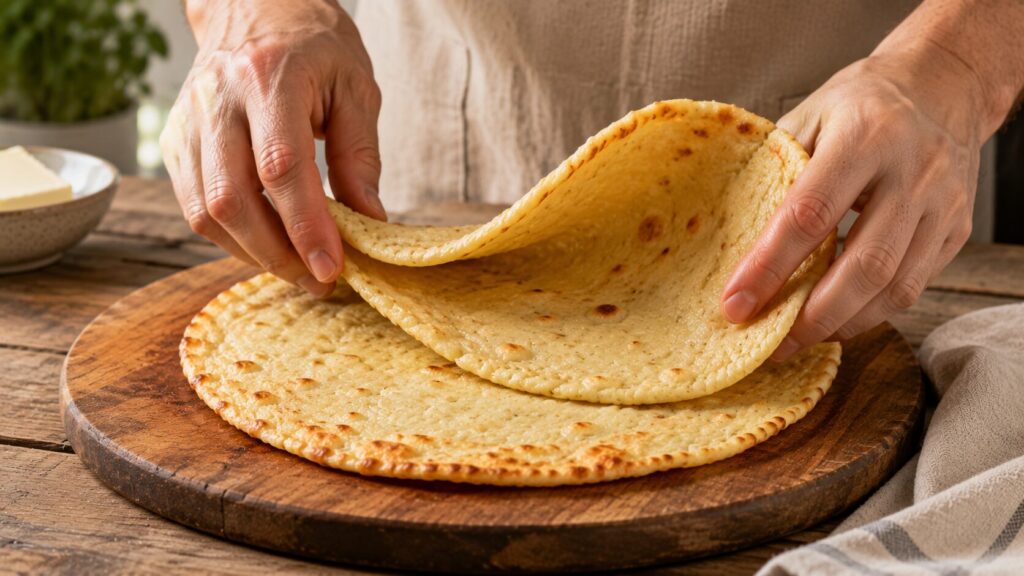
Yes, as long as it’s still warm and hasn’t been overbaked. I fold mine into quarters to test doneness — if it folds cleanly without cracking at the fold line, it’s ready. If it splits, it either needs another minute in the oven next time or needs to cool for a shorter window before folding.
The Fold Test
✓ Folds in half without cracking
✓ Springs back slightly
✓ Doesn’t split at the crease
✓ Holds filling comfortably
Best Temperature for Reheating
325°F (163°C) for about 4–5 minutes in the oven keeps the texture closest to fresh. Microwaving works in a pinch but tends to make the edges slightly tougher.
Best Freezer Method
Freeze individual pieces separated by parchment paper inside a freezer-safe bag or container. Freezing pieces in a single stack without separation makes them stick together and tear apart unevenly when you try to pull one out.
How Texture Changes After Freezing
Frozen and thawed flatbread is very slightly less flexible than fresh, mostly because some moisture is lost during the freeze-thaw cycle. A quick reheat in the oven restores most of the softness. I don’t recommend thawing at room temperature for more than 15–20 minutes, since it can start to feel slightly damp on the surface.
Is This Recipe Right for You?
Choose this recipe if:
- You want a zero-carb bread alternative that actually folds and wraps
- You’re following a strict or lenient carnivore diet
- You’re keto and looking to cut out nut-flour breads
- You want something that reheats and freezes well for meal prep
- You need a fast pizza base or wrap for lunch
Skip this recipe if:
- You’re dairy-free (this recipe relies on cheese and cream cheese for texture)
- You’re looking for a completely neutral-flavored bread — this one has a mild, cheesy flavor
- You want something crisp and cracker-like rather than soft and pliable (see the Variations section for a crispier option)
Flatbread vs Carnivore Bread
| Feature | Carnivore Flatbread | Traditional Carnivore Bread |
|---|---|---|
| Texture | Soft, thin, pliable | Denser, taller, more bread-like crumb |
| Main ingredients | Eggs, mozzarella, cream cheese | Often eggs, cheese, plus binders like gelatin or collagen |
| Bake time | 10–12 minutes | Often 25–40 minutes |
| Best use | Wraps, pizza base, dipping | Sandwiches, toast, slicing |
| Foldability | High | Low to moderate |
| Per Serving | Carnivore Flatbread | Wheat Flatbread |
|---|---|---|
| Protein | 16 g | 5 g |
| Net Carbs | ~0 g | 30 g |
| Gluten | No | Yes |
| Meal Prep | Excellent | Good |
Flatbread vs Carnivore Tortillas
| Feature | Carnivore Flatbread | Carnivore Tortillas |
|---|---|---|
| Thickness | Slightly thicker | Very thin |
| Main binder | Egg and cheese | Often egg white or pork rind based |
| Flavor | Mild, cheesy | Often more neutral |
| Structure | Softer, slightly chewy | Crisp-edged, more pliable when warm |
| Best use | Wraps, pizza, snacking | Tacos, quesadillas |
Best Ways to Use Carnivore Flatbread
This is where carnivore flatbread earns its place in regular rotation. It’s not a novelty — it’s genuinely useful across most meals of the day.
| Meal | Idea |
|---|---|
| Breakfast | Bacon & eggs |
| Lunch | Steak wrap |
| Dinner | Pizza |
| Snack | Butter & cheese |
Wrap Ideas
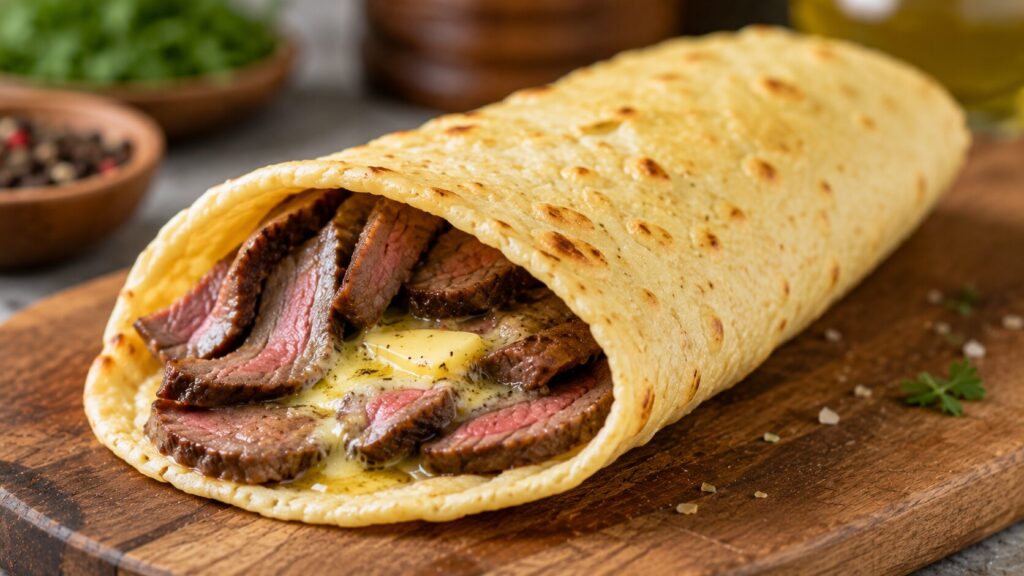
Roll it around sliced steak and a smear of butter, use it to wrap ground beef and shredded cheese taco-style, or fill it with scrambled eggs and bacon for a carnivore breakfast burrito.
Breakfast Ideas
Top a warm piece with a fried egg and a few strips of crispy bacon, or use it as a base under a soft scramble instead of a plate.
Lunch Ideas
Fold it around deli meat and cheese for a fast carnivore sandwich alternative, or cut it into strips to dip into a bowl of bone broth.
Pizza Base
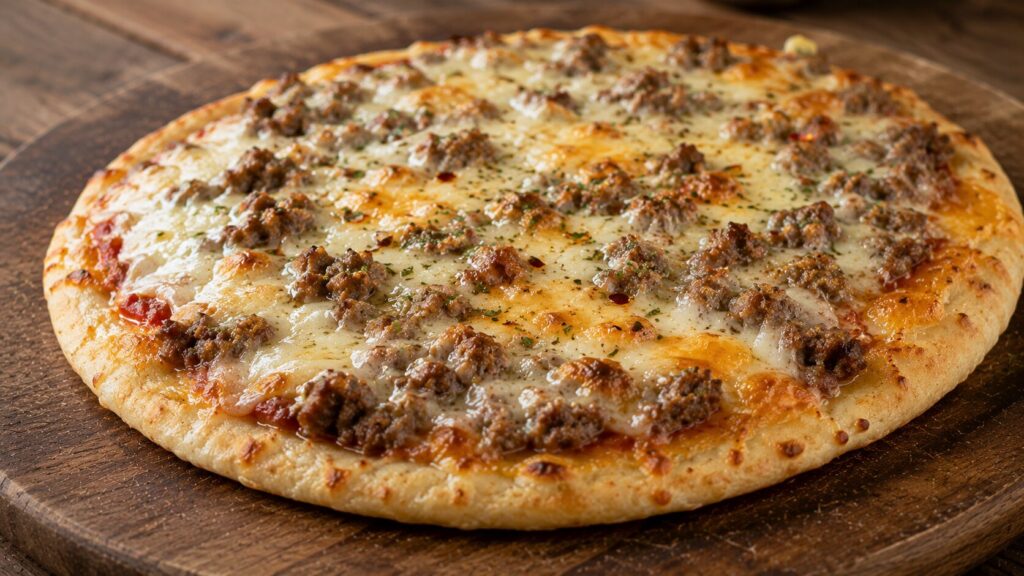
Bake it slightly thicker, top with a light layer of sauce (if you’re including it), cheese, and cooked meat, then return it to the oven for a few minutes until the cheese melts.
Snack Ideas
Cut into wedges and serve with a small bowl of melted butter, or pair with a few pepperoni slices for a quick protein-forward snack.
Meal Prep
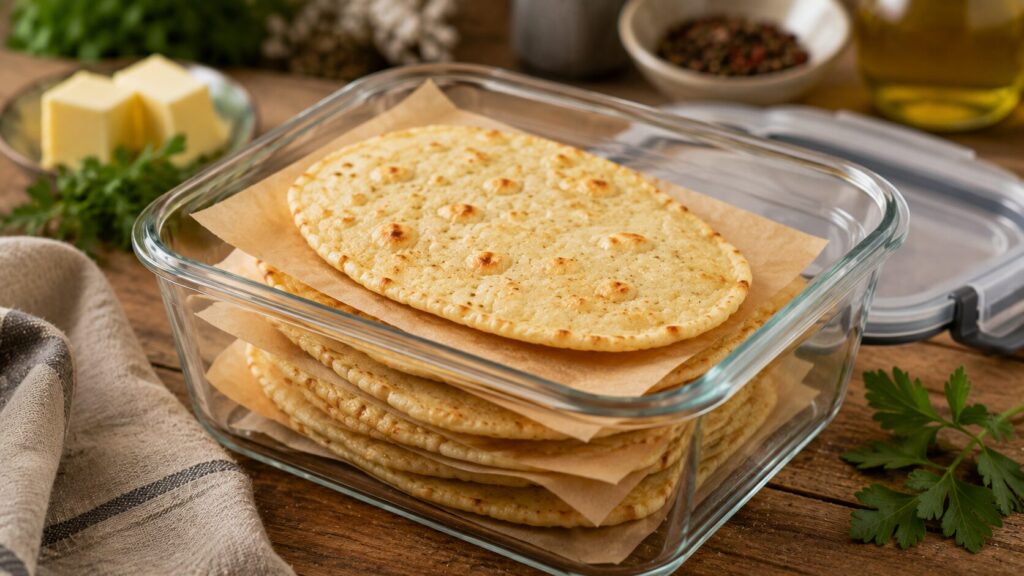
Bake a double batch on a Sunday, portion into pieces, and store for grab-and-go wraps throughout the week. This is genuinely one of the better carnivore meal prep bread options I’ve tested, since it holds its texture through several reheats.
Planning your weekly menu? Browse our Carnivore Dinner Recipes for simple meals that pair perfectly with this flatbread.
Storage
Store cooled flatbread in an airtight container in the refrigerator for up to 5 days. Separate pieces with parchment paper if stacking to prevent sticking.
Freezing
Freeze individual pieces, separated by parchment, in a freezer-safe bag for up to 2 months. Label with the date — it’s easy to lose track of what’s in the freezer.
Reheating
Oven at 325°F for 4–5 minutes gives the best texture. A skillet over medium-low heat for 1–2 minutes per side also works well and adds a little extra color. Microwaving is fastest but slightly firms up the texture.
Recipe Variations
- Crispier flatbread: spread the batter thinner and bake 2–3 minutes longer for a cracker-like texture
- Cottage cheese version: swap half the cream cheese for blended cottage cheese for a slightly higher-protein, tangier result
- Herbed flatbread: add garlic powder and dried oregano to the batter before baking
- Extra crispy edges: bake on the top oven rack for the last 2 minutes
Mozzarella vs Cottage Cheese
| Feature | Mozzarella | Cottage Cheese |
|---|---|---|
| Texture result | Smoother, more elastic | Slightly denser, more protein-rich |
| Flavor | Mild, classic cheese flavor | Slightly tangy |
| Ease of blending | Melts smoothly on its own | Needs blending to avoid curds showing |
| Best for | Classic flatbread, wraps | Higher-protein variation |
Oven vs Air Fryer
| Feature | Oven | Air Fryer |
|---|---|---|
| Evenness | More even across the whole batter | Can brown edges faster than center sets |
| Batch size | Full sheet at once | Smaller batches, may need multiple rounds |
| Texture | Consistent, reliable | Slightly crisper edges |
| Recommended for | First-time batches | Once you’re familiar with your air fryer’s hot spots |
Fresh vs Frozen
| Feature | Fresh | Frozen and Reheated |
|---|---|---|
| Flexibility | Highest | Slightly reduced |
| Flavor | Cleanest | Nearly identical |
| Best use | Wraps, folding | Meal-prepped lunches, pizza base |
Before Baking Checklist
- Cream cheese fully softened to room temperature
- Cheese shredded fresh, or pre-shredded brand you trust for melting
- Pan fully lined with parchment or silicone mat
- Oven fully preheated before the batter goes in
- Batter spread evenly, no thick pockets
After Baking Checklist
- Surface is matte, not glossy
- Edges are light gold, not dark brown
- Center doesn’t jiggle when the pan is gently shaken
- Rested at least 5 minutes before cutting
Meal Prep Checklist
- Double or triple the batch if prepping for the week
- Cool completely before storing
- Separate pieces with parchment to prevent sticking
- Label containers with the date
Storage Checklist
- Airtight container only
- Refrigerate within 2 hours of baking
- Use within 5 days for best texture
- Freeze anything you won’t use within that window
Troubleshooting Checklist
- Wet center → check thickness and bake time
- Cracking → check for overbaking or handling once fully cooled
- Sticking → confirm pan was fully lined
- Greasy surface → check cheese-to-egg ratio
FAQ
Is carnivore flatbread really zero carb? Yes, when made with just eggs, mozzarella, and cream cheese, this recipe contains effectively zero net carbohydrates, since none of the core ingredients contain meaningful carbs.
Can I make this without cream cheese? You can, but expect a more brittle, less flexible result. Cream cheese is what keeps this flatbread soft enough to fold.
Can I use a different cheese? Mozzarella gives the most reliable stretch and mild flavor, but cheddar, provolone, or a cottage cheese blend all work with slightly different textures.
Why is my flatbread soggy in the middle? It almost always means the batter was spread too thick or pulled from the oven a minute or two too early. Spread it thinner and check the center for a matte, set appearance before removing it.
Can I double the recipe? Yes, just use a larger sheet pan or bake in two batches to keep the thickness consistent.
Does it taste eggy? There’s a mild egg presence, but the cheese balances it out. It reads more like a savory, cheesy bread than a plain egg dish, especially once cooled slightly.
Can I make this ahead for a party? Yes, bake it earlier in the day, store at room temperature covered for a few hours, and reheat briefly in the oven before serving.
Is this recipe kid-friendly? Most kids I’ve served this to treat it like a cheesy pizza crust, so it tends to go over well, especially cut into strips.
Carnivore Flatbread (3-Ingredient, Zero-Carb, Foolproof)
- Prep Time: 8 minutes
- Cook Time: 12 minutes
- Total Time: 20 minutes
- Yield: 4 servings (8 pieces) 1x
- Category: Bread
- Method: Baking
- Cuisine: American
- Diet: Carnivore Diet
Description
A soft, foldable, zero-carb flatbread made from just eggs, mozzarella, and cream cheese. Ready in about 20 minutes, it works as a wrap, a pizza base, or a simple side for any carnivore meal.
Ingredients
- 4 large eggs
- 4 oz cream cheese, softened to room temperature
- 1 1/2 cups shredded mozzarella cheese
- Optional: 1/4 tsp salt, 1/4 tsp garlic powder
Instructions
- Preheat oven to 400°F (204°C). Line a baking sheet with parchment paper or a silicone mat.
- Whisk eggs in a bowl until smooth.
- Add softened cream cheese and whisk until no large lumps remain.
- Stir in shredded mozzarella (and optional seasonings) until evenly combined.
- Pour batter onto the lined pan and spread evenly to about ¼ inch thickness.
- Bake 10–12 minutes, until the top is set, matte, and lightly golden at the edges.
- Let rest on the pan for 5 minutes before slicing.
- Cut into pieces and serve, or cool fully before storing.
Notes
For a thinner, more tortilla-like result, spread the batter to about ⅛ inch and reduce bake time by 1–2 minutes. For a pizza base, spread slightly thicker and pre-bake an extra 2 minutes before adding toppings. Store leftovers in the refrigerator for up to 5 days or freeze for up to 2 months, separated by parchment paper.
Best enjoyed warm, when the flatbread is at its most flexible and easiest to fold.
Nutrition
- Serving Size: 2 pieces (¼ of recipe)
- Calories: 245
- Sugar: 1 g
- Sodium: 320 mg
- Fat: 19 g
- Carbohydrates: 1 g
- Fiber: 0 g
- Protein: 16 g
- Cholesterol: 205 mg
Final Thoughts
Carnivore flatbread was the recipe that finally made carnivore eating feel less restrictive in my own kitchen — not because it replaces bread perfectly, but because it does what I actually need bread to do: wrap around food, hold toppings, and reheat without falling apart. If you’ve been frustrated by carnivore bread recipes that crumble or taste like scrambled eggs, give this one a real try, and pay close attention to thickness and bake time. Those two details make more difference than almost anything else in the recipe.
If you’re building out a full carnivore baking rotation, this flatbread pairs well with a few other recipes on the site — Carnivore Bread for something taller and more sandwich-ready, 3 Ingredient Carnivore Burger Buns for handheld meals, Carnivore Bagels for a weekend breakfast, and Carnivore Pizza Crust if you want a version built specifically for toppings. You’ll also find more ideas in Carnivore Sandwich Ideas, Carnivore Breakfast Recipes, Carnivore Desserts, and the full Carnivore Baking Hub.
- Carnivore Flatbread (3-Ingredient, Zero-Carb, Foolproof)
- High Protein Sandwich Bread (Soft, Sliceable & Easy Homemade Recipe)

- Carnivore Bagels (Chewy, Fluffy & Easy 3-Ingredient Recipe)
- 2 Ingredient Protein Cheesecake: Creamy, High-Protein, and Actually Sliceable
- High Protein Egg White Bread (Light, Fluffy & Never Collapses)
- Zero Carb Carnivore Crepes (Soft, Flexible & Never Tear When You Roll Them)