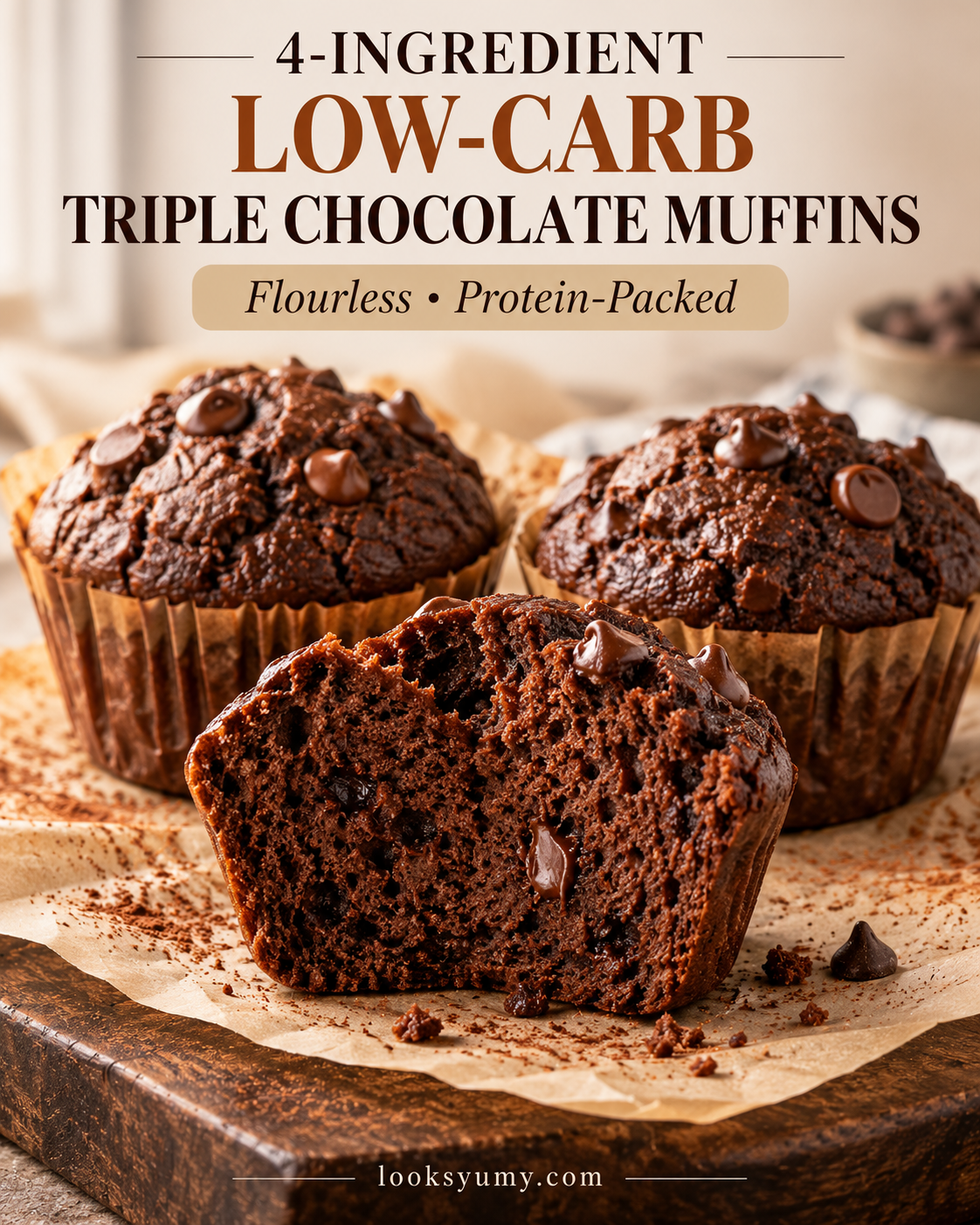
Craving rich chocolate muffins without traditional flour, dairy, or added sugar? These low-carb triple chocolate muffins use cocoa powder, chocolate protein powder, eggs, and baking soda to create a simple, flourless chocolate bake with a protein-rich ingredient base.
The batter comes together in one bowl, making these muffins a practical option for breakfast, an afternoon snack, or a chocolate treat alongside your morning coffee. Add sugar-free chocolate chips for extra chocolate flavor, or choose your preferred chocolate chips if you don’t need to keep the recipe sugar-free.
One important note: The original ingredient list contains four core ingredients only if optional chocolate chips are excluded. The recipe’s final texture and nutritional values also depend on the specific protein powder and chocolate products you use.
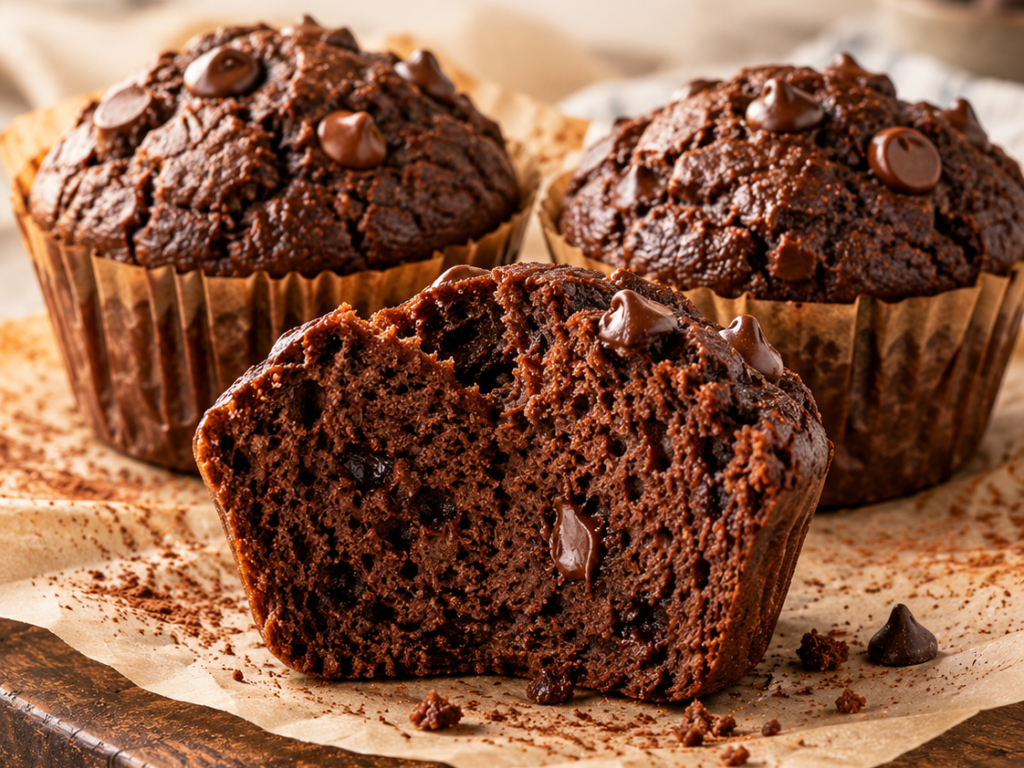
Why You’ll Love These Low-Carb Chocolate Muffins
- Four core ingredients: Cocoa powder, chocolate protein powder, eggs, and baking soda form the base.
- Flourless chocolate baking: No wheat flour or conventional grain-based flour is used.
- Protein-focused: Chocolate protein powder and eggs provide the main sources of protein.
- Rich cocoa flavor: Unsweetened cocoa powder creates a deep chocolate taste without requiring sugar in the batter.
- Easy preparation: Mix the batter in one bowl, divide it between muffin cups, and bake.
- Customizable sweetness: Keep the muffins bittersweet or add a sweetener that suits your preferences.
- Flexible serving options: Enjoy them plain, with coffee, or topped with a little nut butter or yogurt if those ingredients fit your dietary needs.
Are These Muffins Really Low Carb?
These muffins contain no conventional flour, but the final carbohydrate count depends on the ingredients and serving size.
Cocoa powder, protein powder, eggs, and chocolate chips can all contribute to the total nutritional values. Some protein powders also contain sweeteners, starches, or other ingredients that affect their carbohydrate content.
For the most accurate estimate, calculate the nutrition using the labels for your exact ingredients. If you track net carbohydrates, remember that net carbs are calculated differently from total carbohydrates and may not be listed consistently across products.
Ingredients for Triple Chocolate Muffins
Makes: 3 large muffins or 6 small muffins
Prep time: Approximately 5–10 minutes
Bake time: About 15 minutes for large muffins or 9 minutes for small muffins
Oven temperature: 350°F (175°C)
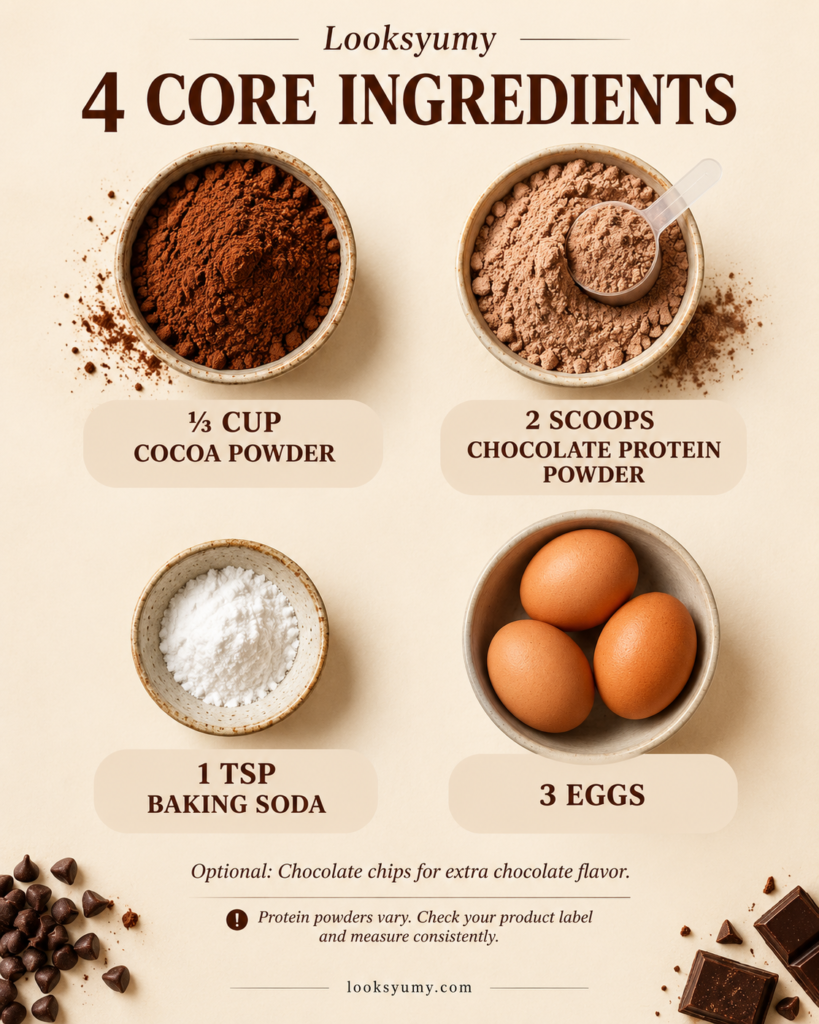
1. Cocoa powder
Use ⅓ cup cocoa powder for the main chocolate flavor. Unsweetened cocoa powder keeps you in control of the sweetness and contributes the characteristic rich, slightly bitter taste of dark chocolate.
2. Chocolate protein powder
Use 2 scoops of the chocolate protein powder specified in the original recipe. The source notes that other protein powders may not produce the same results.
Protein powders differ in sweetness, moisture absorption, and formulation. If you substitute another brand, the batter consistency and finished texture may change. The scoop weight and product label are therefore important when reproducing the original recipe.
3. Baking soda
Use 1 teaspoon of aluminum-free baking soda, as specified in the source recipe.
Baking soda is an alkaline leavening agent. Because the recipe contains no conventional flour, its performance depends on the overall formulation and available acidic ingredients. Follow the original ingredient proportions rather than assuming that any protein powder will react identically.
4. Eggs
Use 3 eggs to bind the ingredients and provide structure. Eggs are particularly important in this flourless batter because there is no wheat gluten to provide structure.
Optional: Chocolate chips
Add chocolate chips to taste, either folded into the batter or scattered over the tops before baking. For a lower-sugar version, select a product whose nutrition label fits your needs.
Chocolate chips are optional and are not included in the original nutrition figures.
How to Make Low-Carb Triple Chocolate Muffins
Step 1: Preheat the oven
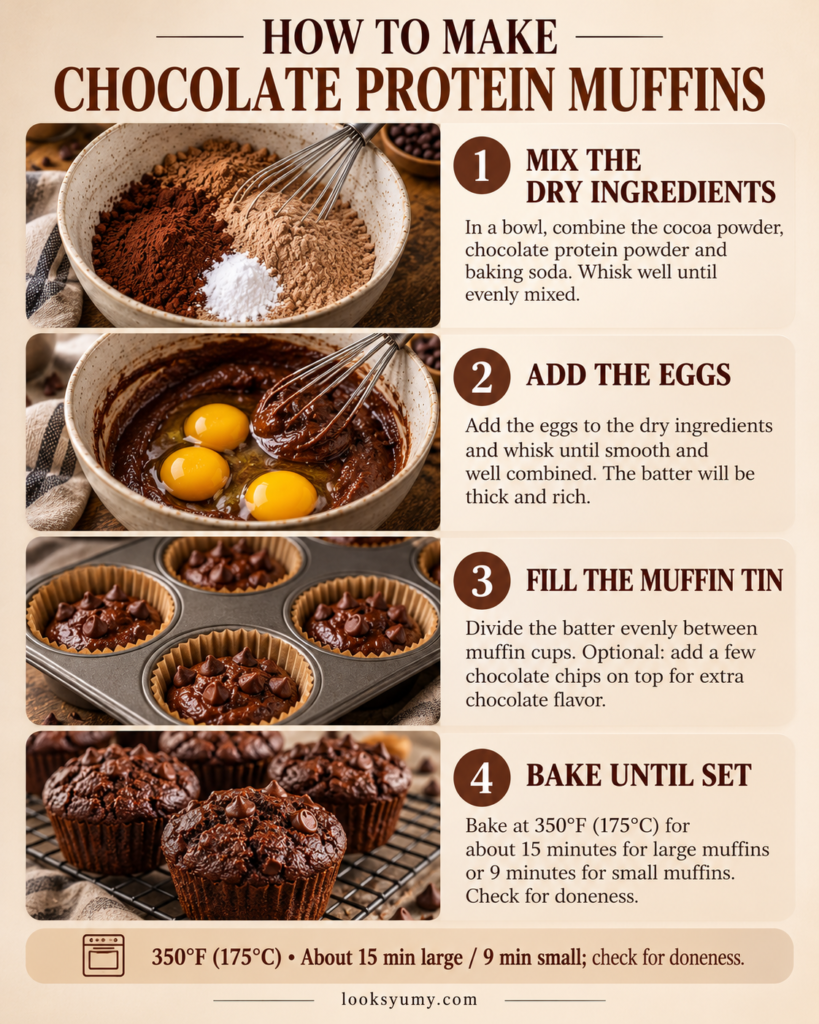
Preheat your oven to 350°F (175°C). Grease a muffin tin or line the cavities with suitable muffin liners.
Step 2: Combine the dry ingredients
In a large bowl, mix the cocoa powder, chocolate protein powder, and baking soda until evenly distributed.
Breaking up cocoa or protein-powder clumps at this stage helps create a more uniform batter.
Step 3: Add the eggs
Add the three eggs and mix until the ingredients form a thick, evenly combined batter.
The mixture will not behave exactly like a traditional wheat-flour muffin batter. Protein powder brands vary, so the consistency may differ slightly from the original recipe.
Step 4: Add the chocolate chips
Fold in your preferred amount of chocolate chips, if using. Alternatively, sprinkle them over the filled muffin cups to keep the chocolate pieces concentrated on the surface.
Step 5: Fill the muffin tin
Divide the batter among three large muffin cups or six smaller cups. Try to distribute it evenly so the muffins bake at a similar rate.
Step 6: Bake until set
Bake large muffins for approximately 15 minutes or small muffins for approximately 9 minutes, as suggested in the source recipe.
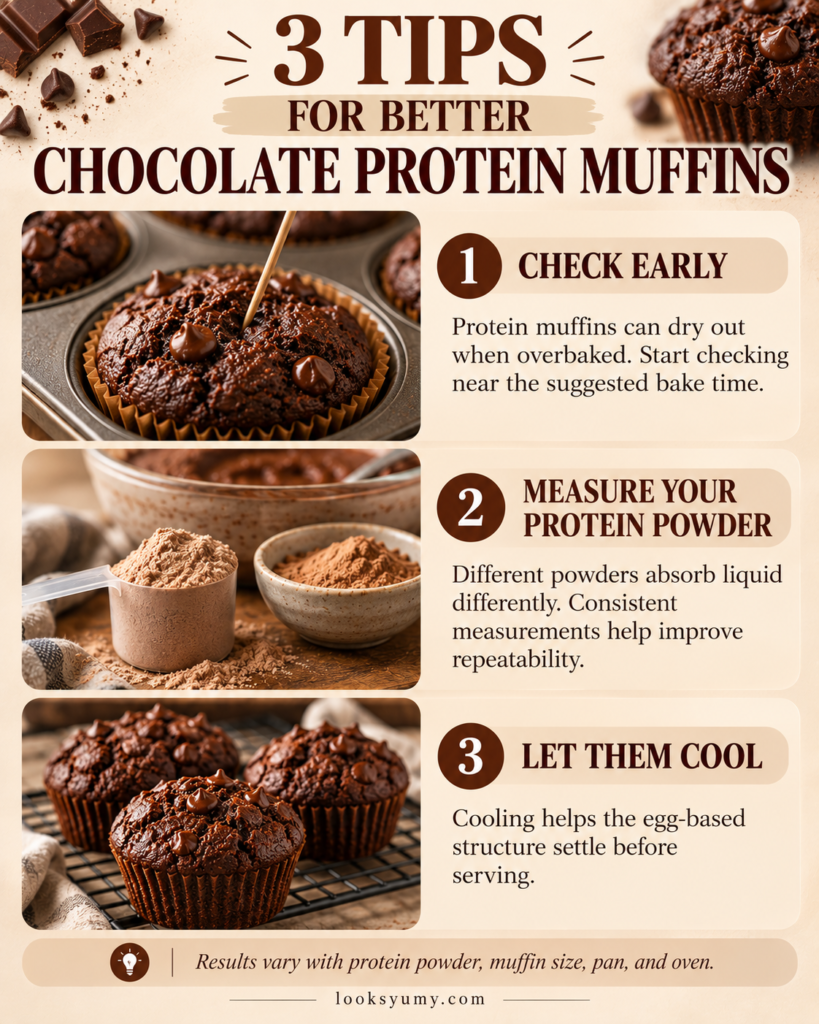
Start checking at the earlier end of the baking window. Muffin size, pan material, oven accuracy, and protein-powder formulation can affect the actual baking time.
A toothpick inserted into the center should come out without visibly wet batter. Avoid relying on the outside color alone because cocoa powder makes chocolate muffins dark even before you can judge the center by appearance.
Step 7: Cool before serving
Let the muffins cool briefly in the pan, then transfer them carefully to a cooling rack if needed. Allowing them to cool helps the egg-based structure settle and makes them easier to handle.
What Makes These Muffins Triple Chocolate?
The triple-chocolate description comes from three potential sources of chocolate flavor:
- Cocoa powder: Provides the primary unsweetened chocolate flavor.
- Chocolate protein powder: Adds another chocolate-flavored component to the batter.
- Chocolate chips: Provide optional pockets of chocolate throughout the muffins or on top.
The chocolate chips are optional, so the base recipe still works without them. However, omitting them means the finished muffins may taste less sweet and have a less varied chocolate texture.
How to Customize the Sweetness
The original recipe is intentionally not very sweet. Cocoa powder is naturally bitter, and the amount of sweetness in chocolate protein powder depends on its formulation.
If you prefer sweeter muffins, consider one of these options:
- Use a sweetened chocolate protein powder: Check the label because different brands contain different amounts and types of sweeteners.
- Add a preferred baking sweetener: Choose one suitable for your dietary requirements and follow its product guidance.
- Use chocolate chips: These add sweetness depending on the product selected.
- Add a topping after baking: A small drizzle of honey is suggested in the source recipe, but honey adds sugar and carbohydrates, so it is not appropriate to describe the resulting muffins as sugar-free.
Make one adjustment at a time so you can judge how it affects flavor and texture.
Tips for Better Flourless Protein Muffins
Measure protein powder consistently
Protein powders can differ considerably in density. Scoops are not always the same weight, so weighing the amount specified on the original product label can improve consistency.
Avoid overbaking
Flourless protein muffins can become firm or dry if baked longer than necessary. Check them near the suggested finish time and avoid leaving them in the oven simply because the tops are not as golden as conventional muffins.
Use the specified protein powder when possible
The original creator specifically states that other protein powders may not work. That is a recipe-specific instruction, not proof that every substitute will fail. If you experiment, expect to evaluate the batter consistency and finished texture rather than assuming the results will be identical.
Allow time for cooling
An egg-based muffin can be delicate while hot. Cooling helps the structure settle before you remove or cut the muffins.
Adjust the toppings separately
If you want to control sweetness or carbohydrate intake, keep the base recipe unchanged while testing different toppings. This makes it easier to understand which ingredient changes the taste and nutrition.
Troubleshooting Common Problems
Why are my chocolate protein muffins dry?
Possible factors include overbaking, differences between protein powders, or inaccurate ingredient measurements. Check the muffins early and measure the protein powder consistently before changing the recipe.
Why are the muffins not rising much?
This recipe has no conventional flour, and its rise depends on the interaction between the ingredients and the leavening agent. Check that the baking soda is fresh and accurately measured. The original recipe does not provide enough evidence to promise a particular rise or crumb texture.
Why does the batter seem unusually thick?
Protein powders absorb liquid differently. A thick batter may be expected with the specified product, but a substitute can behave differently. Avoid adding liquid automatically without considering that it may alter the final texture.
Can I make these muffins without chocolate chips?
Yes. Chocolate chips are optional in the source recipe. The muffins will still contain cocoa powder and chocolate protein powder, although their sweetness and texture will differ.
Can I use another protein powder?
You can experiment, but the original creator warns that other protein powders may not work in the same way. Check the new powder’s ingredients and be prepared for differences in flavor, batter thickness, and texture.
Nutrition Information
The original source reports the following estimates for the base recipe, excluding chocolate chips:
| Nutrient | Entire recipe | Per large muffin (⅓ recipe) |
|---|---|---|
| Calories | 370 | 123 |
| Fat | 19 g | 6 g |
| Total carbohydrates | 18 g | 4 g |
| Sugar | 4 g | 1 g |
| Protein | 43 g | 14 g |
Nutrition disclaimer: These are the original creator’s reported figures, not independently verified calculations. The exact values depend on the brands and quantities used, and rounding explains why multiplying some per-muffin figures may not reproduce the whole-recipe total exactly. Chocolate chips and additional sweeteners are excluded.
Although the recipe may fit some lower-carbohydrate eating patterns, it should not automatically be considered suitable for every person with diabetes. Individual meal plans, serving sizes, ingredient labels, and medical guidance matter.
How to Serve Triple Chocolate Muffins
Try these muffins in a few different ways:
- Serve with morning coffee or tea.
- Add a small amount of nut butter if nuts are suitable for your diet.
- Crumble a muffin over yogurt or a dessert.
- Top with a few chocolate chips before baking.
- Serve plain when you want a less-sweet chocolate snack.
Choose toppings according to your dietary preferences and nutritional goals.
Storage Tips
The original source does not specify tested storage times for this recipe, so avoid assuming a precise shelf life.
Because these muffins contain eggs and may contain moist protein-based ingredients, refrigerate leftovers promptly in a covered container. Allow them to cool before storing to limit condensation, and follow standard food-safety guidance for cooked egg-containing foods.
For longer storage, freezing may be an option. Cool the muffins completely, package them securely, and thaw them safely before serving. Check the texture after thawing, as flourless protein muffins may become firmer or more moist depending on their formulation.
Frequently Asked Questions
Are these muffins flourless?
Yes. The listed recipe contains cocoa powder, chocolate protein powder, baking soda, and eggs rather than conventional wheat flour.
Are these muffins sugar-free?
Not necessarily. The original source reports 4 g of sugar for the entire base recipe, excluding chocolate chips. Cocoa powder and protein powder may contribute naturally occurring sugars or added sweeteners, depending on the products. Optional toppings can add more.
How many muffins does this recipe make?
The recipe makes three large muffins or six small muffins. The baking time depends on the size of the muffin cups.
Can I make these muffins dairy-free?
The ingredient list does not include conventional dairy ingredients, but the protein powder determines whether the recipe is actually dairy-free. Check the specific product label before making that claim.
Are these muffins keto-friendly?
They may fit some low-carbohydrate meal plans, but suitability depends on the total carbohydrate content, the serving size, and the ingredients used. Verify the nutrition labels rather than relying on the recipe title alone.
Are they suitable for people with diabetes?
A lower-carbohydrate recipe may be useful for some people, but carbohydrate tolerance and meal-planning needs vary. Check the actual ingredient labels and nutrition information, and follow your healthcare professional’s guidance.
Final Thoughts
These flourless triple chocolate protein muffins offer a simple way to make a chocolate-flavored bake with four core ingredients. Cocoa powder, chocolate protein powder, eggs, and baking soda form the base, while optional chocolate chips add extra chocolate flavor.
For the most reliable results, use the specified protein powder when possible, measure your ingredients consistently, and check the muffins before the suggested baking time has elapsed.
Keep the batter simple, adjust the sweetness to your preference, and calculate the nutrition from your actual ingredients when precise carbohydrate or protein tracking matters.
Protein-based baking can behave differently depending on the ingredients you use. If you enjoy experimenting with alternative baking ingredients, try this carnivore bread with milk powder for another flourless baking idea.
Getting the right texture takes some experimentation, especially when working with recipes that rely on eggs and protein ingredients. Our guide to troubleshooting carnivore baking problems explains how to identify common baking issues before changing your recipe.
If the center of your bake seems wet or undercooked, check the texture before deciding what to change. This guide explains why carnivore bread can have a wet center and how to distinguish a wet center from a properly set crumb.