
👉 Print the mechanical whipping speed cheat sheet in the pro tips section — it maps every stage from soft peak to full stabilization with the exact visual cues and speed adjustments that prevent over-whipping and structural collapse.
Building a mousse from entirely animal-based ingredients is a study in foam physics that has no equivalent in conventional dessert making. There is no gelatin sheet dissolving into a warm base to provide structural insurance, no agar network setting the mixture from the outside in, no stabilized commercial cream engineered to hold volume under adverse conditions. The entire structure — every pocket of air, every cubic centimeter of lift — exists because a protein network has been mechanically denatured into a foam and then maintained in that state through careful temperature management and precise fat integration. Get the physics right and the result is a genuinely luxurious, airy dessert that holds its shape and texture for hours. Get any one variable wrong and the foam collapses within minutes of serving, leaving a dense, separated mass that tastes fine but bears no resemblance to mousse.
To create a stable carnivore mousse and protect the protein foam from collapse, whip the animal protein base — egg whites, heavy cream, or both — to stiff peaks at consistent speed without interruption, fold any fat components in using a single-direction lifting stroke rather than a stirring motion, and chill the assembled mousse immediately in a cold vessel to slow the drainage of liquid from the bubble network before serving. The structural integrity of the mousse depends entirely on the density and uniformity of the protein film surrounding each air bubble — thin, inconsistent films collapse under the weight of integrated fat, while thick, evenly distributed films maintain the foam architecture through chilling and plating. Mechanical precision during whipping and fat integration is the only variable that determines which outcome you get.
Table of Contents
Understanding the Physical Mechanics of Mousse Structure
A mousse foam is structurally stable only when the protein films surrounding each air bubble are fully denatured, evenly distributed, and thick enough to resist the drainage force of liquid moving downward through the bubble network under gravity. The direct cause of mousse collapse is always the same: protein film failure — either because whipping was insufficient to fully denature the protein, because fat was introduced too aggressively and ruptured the films before they stabilized, or because the assembled mousse was held at a temperature where drainage accelerated beyond the film’s resistance capacity.
The Looksyumy Foam Stability Pattern identifies the three structural checkpoints that determine whether a carnivore mousse holds or fails: film thickness at peak formation, film integrity immediately after fat integration, and drainage rate during the chill phase. A mousse that passes all three holds cleanly for three to four hours. A mousse that fails the second checkpoint — because fat was added too quickly or at too high a temperature — will begin visibly separating within thirty to forty-five minutes regardless of how well the first checkpoint was executed. Understanding the baking science behind protein denaturation and foam formation is the foundation that makes all subsequent mechanical adjustments legible — our baking science guide covers the protein uncoiling process in detail and explains why mechanical shear is the only force available to drive it in a zero-heat mousse context.
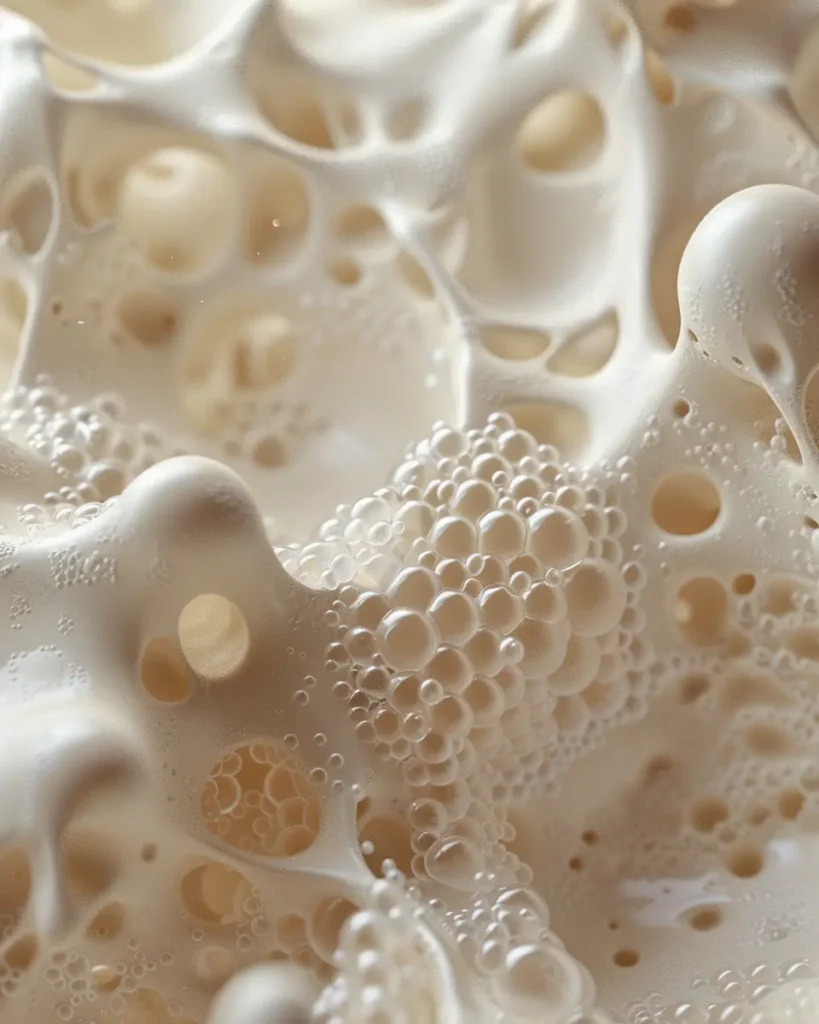
The geometry of the bubble network matters as much as film quality. A well-whipped mousse base contains millions of uniformly sized small bubbles — each surrounded by a protein film of consistent thickness — distributed evenly throughout the mass. This uniformity is what gives mousse its characteristic smooth, dense-yet-light mouthfeel. A poorly whipped base produces a mixture of large and small bubbles with inconsistent film thickness, which drains unevenly and produces the grainy, wet-bottomed texture that signals structural failure. Large bubbles drain faster than small ones because the pressure differential across a larger curved surface is lower, which means liquid migrates more readily through the film walls. This is why speed consistency during whipping matters — erratic speed produces erratic bubble size distribution, which produces uneven drainage and premature collapse.
Advanced Whipping Technique for Animal Proteins
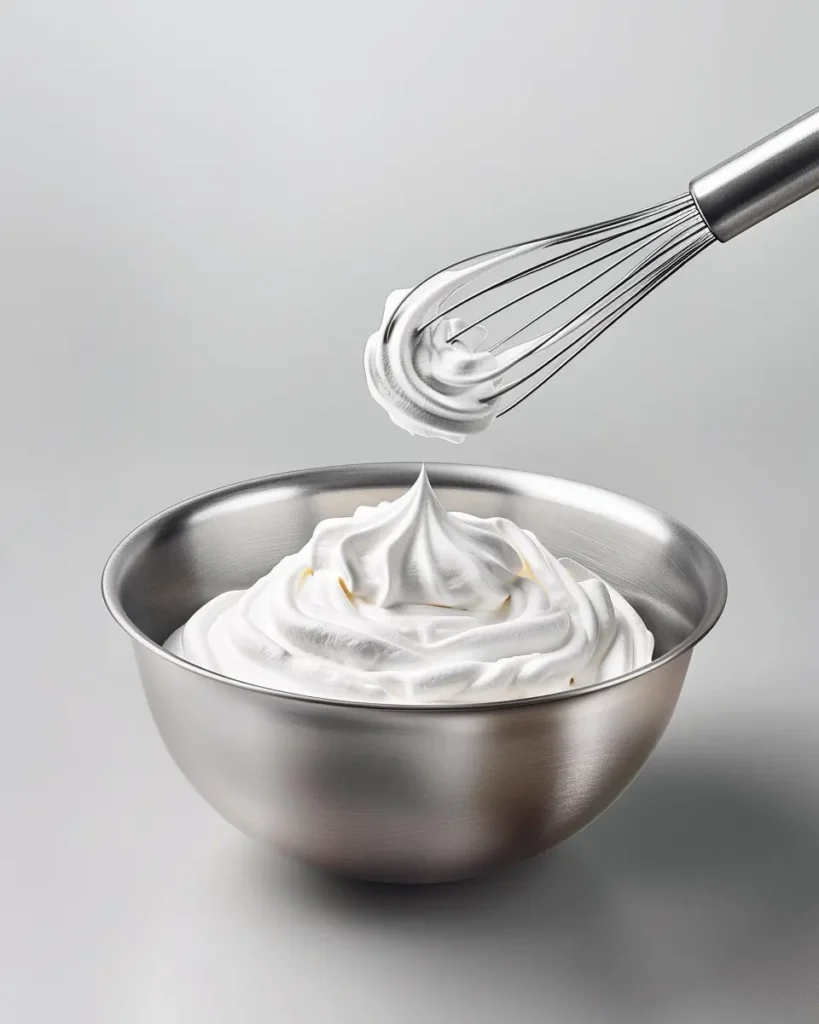
Optimal foam formation in animal proteins requires a sustained, consistent shear force applied at medium-high speed until full denaturation is achieved — reducing speed mid-whip allows partially denatured proteins to begin re-aggregating rather than continuing to unfold, producing a foam with inconsistent film thickness that fails under fat integration. The mechanical target is stiff peaks that hold their shape when the whisk is inverted without drooping, with a surface that appears smooth and slightly glossy rather than dry or clumped, which indicates complete denaturation without the over-whipping that begins to break the protein network.
I understood the theory of fat integration timing before I had genuinely internalized what it felt like to violate it, and the batch where that gap closed was instructive in the way only a complete failure can be. I had whipped a heavy cream base to what I was certain were correct stiff peaks — smooth, glossy, holding shape cleanly on the whisk. I was working with a warmed egg yolk mixture to fold in, and I misjudged the temperature — it was closer to 38 degrees than the 22 degrees it should have been. I added it in two additions the way I normally would, folding carefully. By the time the second addition was incorporated, I could already see the surface of the mousse beginning to look wet and slightly curdled at the edges of the bowl. Within ten minutes of transfer to the serving glasses, a visible liquid layer had formed at the base of each one, and the top third of each glass had collapsed into a dense, heavy cream-like layer with no air left in it whatsoever. The warm fat had melted the protein films faster than folding could distribute it, and the entire foam network had drained in the time it took me to carry the glasses to the refrigerator. Fat temperature is not a minor variable — it is the single most consequential factor after peak quality. Our whipping egg whites guide covers the protein state benchmarks that confirm your foam is structurally ready for fat integration before you begin folding.
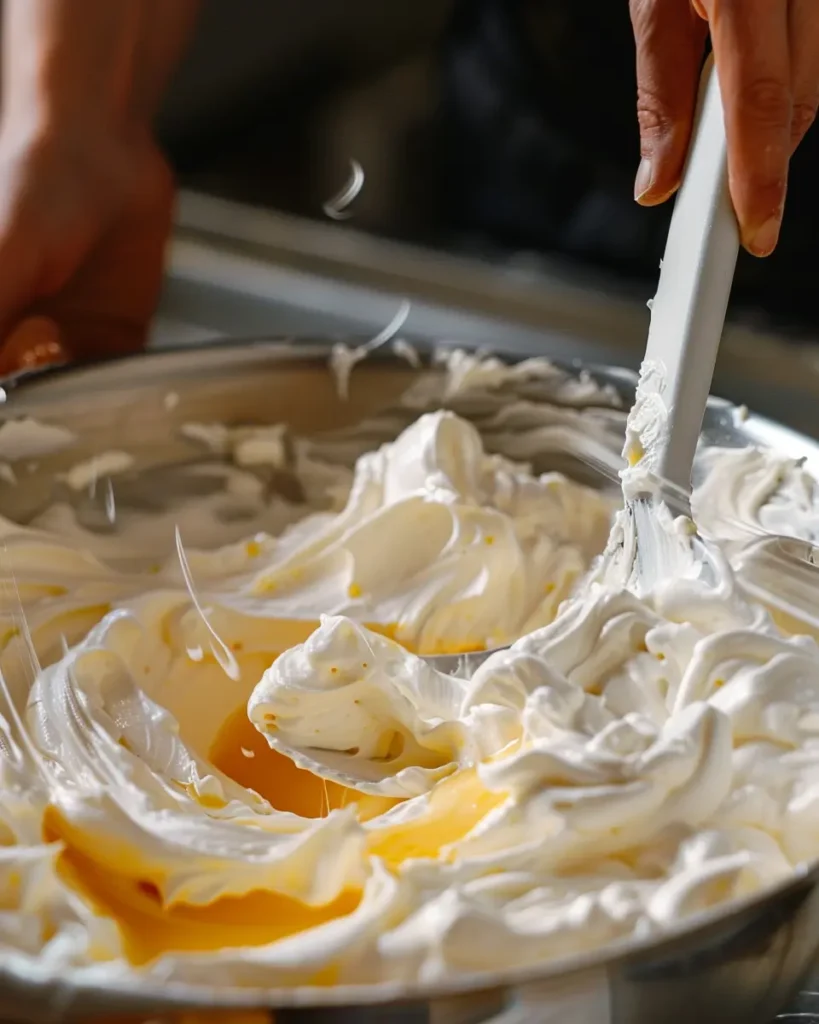
Speed scaling during whipping follows a specific progression for animal proteins. Begin at low speed for the first ninety seconds to establish initial bubble nucleation across the entire volume of liquid — starting at high speed immediately creates large, irregular bubbles at the surface while the interior remains unincorporated. Increase to medium speed for the next two to three minutes as the foam begins to develop volume and the mixture whitens and thickens. Shift to medium-high for the final stage, maintaining that speed consistently until stiff peaks form. Never shift between speeds rapidly during the final stage — each speed change creates a brief period of inconsistent shear that produces a band of differently sized bubbles at that point in the whipping progression.
Aeration Mistakes That Trigger Structural Collapse ❌
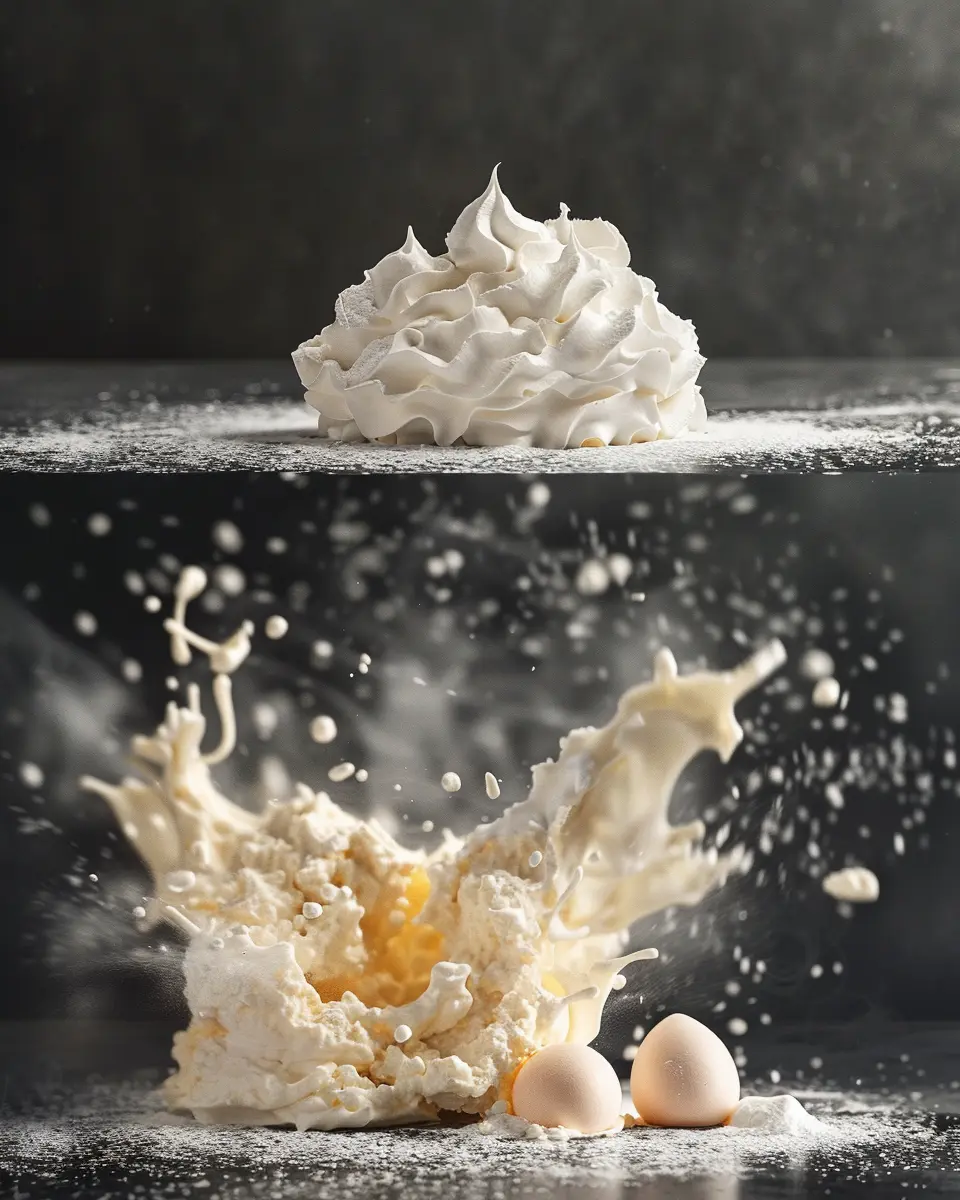
The two fastest paths to mousse collapse are over-whipping past stiff peaks into a dry, clumped protein mass that can no longer hold a continuous bubble network, and introducing fat components at a temperature above 24 degrees Celsius, which melts the protein films faster than folding can distribute the fat through the structure. Both failures are irreversible — an over-whipped foam cannot be rescued by additional liquid, and a fat-collapsed foam cannot be re-whipped into structure.
The luxurious volume and clean structural stabilization of a properly executed carnivore mousse is achieved entirely without xanthan gum, psyllium husk, gelatin powder, agar, carrageenan, almond flour, or any plant-derived texturizer. These compounds appear in low-carb and paleo mousse recipes specifically because the formulations using them have insufficient animal fat or protein content to maintain foam stability on their own — the plant stabilizers compensate for structural deficits rather than contributing genuine foam architecture. In a correctly proportioned all-animal mousse, egg white protein and heavy cream fat provide all the structural and stability functions those compounds are introduced to perform. Adding xanthan gum to a carnivore mousse that collapses doesn’t fix the foam — it masks the symptom while leaving the underlying mechanical failure unaddressed, and it introduces an excluded compound into a dietary framework where it has no place. Every stability problem in a carnivore mousse has a mechanical cause and a mechanical solution.
The sequential structural transitions that occur during over-whipping of cream and egg white proteins — from peak formation through network failure and full fat coalescence — are documented in peer-reviewed research by the American Chemical Society’s Journal of Agricultural and Food Chemistry, whose protein denaturation studies confirm that each transition beyond stiff peaks is mechanically irreversible under continued shear force.
Additional collapse-triggering errors worth naming explicitly:
- Folding too many times after fat integration. Each fold beyond the minimum needed for incorporation applies shear force to protein films that are already under stress from the fat they’re now surrounding. Ten folds too many is enough to begin collapsing the network.
- Using a bowl that retains ambient heat. Thin plastic bowls warm to room temperature quickly under the friction of whipping. A chilled stainless steel bowl maintains the low temperature that keeps protein films rigid and fat from warming during the whipping stage.
- Assembling mousse into warm serving vessels. A glass or bowl at room temperature begins warming the base layer of the mousse immediately on contact, accelerating drainage from the bottom up before the chilling phase can stabilize the network.
- Delaying the chill after assembly. Every minute the assembled mousse spends at room temperature is drainage time. Transfer to refrigeration should happen within two minutes of the final fold.
Pro Tips for Maximum Airy Texture 🔥
- Chill the bowl and whisk before starting. Place both in the freezer for fifteen minutes prior to whipping. Cold equipment keeps the protein base at a low temperature throughout the whipping process, which maintains film rigidity and prevents fat from warming prematurely.
- Use eggs at room temperature, cream at refrigerator temperature. Room-temperature egg whites whip faster and to greater volume. Cold cream whips to stiff peaks more reliably because the fat globules remain solid during the initial aeration phase.
- Never add fat components warmer than 22 degrees Celsius. Use a thermometer. The temperature rule is more important than the folding technique — correct folding cannot save a mousse from warm fat introduction.
- Fold fat in three additions, not two. Smaller additions distribute fat more gradually through the protein network, reducing the peak stress on any individual section of bubble film during integration.
- Use the single-direction lift exclusively. Cut down, sweep across the bottom, lift and turn — always in the same direction. Reversing direction mid-fold applies shear from two angles simultaneously and doubles the stress on protein films at the reversal point.
- Assess foam readiness with the bowl inversion test. Tilt the bowl to 90 degrees after whipping. Properly stabilized stiff peaks don’t move. Any slumping or sliding indicates the foam needs another thirty to forty-five seconds of whipping before fat integration can begin safely.
- Serve within four hours of assembly. Even a structurally perfect carnivore mousse experiences progressive drainage over time. The first hour produces the finest texture — serve as close to assembly as the occasion allows. Our carnivore desserts guide covers the full range of animal-based dessert preparations and the holding times appropriate for each.
- For individual portions, chill in the serving vessel. Transferring a chilled mousse from a storage bowl to a serving glass introduces agitation that restarts drainage. Assemble directly into the vessel it will be served in.
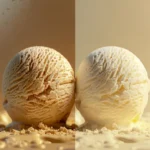
Carnivore Mousse Recipe: The Complete Foam Physics and Whipping Guide
- Prep Time: 20 Minutes
- Total Time: 20 Minutes
- Yield: 4 Servings 1x
- Category: Dessert
- Method: Whipped / Chilled
- Cuisine: Carnivore
- Diet: Carnivore Diet
Description
A light and airy carnivore mousse made with animal-based ingredients only. This protein-rich dessert relies on proper whipping and foam stabilization techniques to create a fluffy texture without gelatin, xanthan gum, or plant-based thickeners.
Ingredients
4 large egg whites
4 large egg yolks
240 ml (1 cup) heavy cream
Pinch of salt
Optional: 1 teaspoon vanilla extract (if your carnivore approach allows it)
Instructions
- Chill a stainless steel mixing bowl and whisk for 15 minutes.
- Whip the egg whites with a pinch of salt until stiff peaks form.
- In a separate bowl, whip the heavy cream until medium-stiff peaks form.
- Whisk the egg yolks until smooth and slightly thickened.
- Fold the yolks into the whipped cream gently.
- Fold the whipped egg whites into the cream mixture in three additions using a lifting motion.
- Transfer immediately into serving glasses.
- Refrigerate for at least 2 hours before serving.
Notes
- Do not over-whip the egg whites.
- Fat components should be cool before folding.
- Use a chilled bowl for maximum foam stability.
- Serve within 4 hours for the best texture.
- Avoid excessive folding after the final addition.
Nutrition
- Serving Size: 1 Glass
- Calories: 325
- Sugar: 1 g
- Sodium: 95 mg
- Fat: 28 g
- Saturated Fat: 16 g
- Unsaturated Fat: 10 g
- Trans Fat: 0 g
- Carbohydrates: 2 g
- Fiber: 0 g
- Protein: 12 g
- Cholesterol: 245 mg
Frequently Asked Questions
How do animal fats affect a perfectly whipped protein dessert foam?
Animal fats affect a protein foam in two distinct ways depending on when and how they are introduced. Fat present before whipping begins — as in a whole-egg or cream base — coats protein molecules and inhibits their ability to denature fully at the air-water interface, which reduces foam volume and produces a denser, less airy texture. Fat introduced after the protein foam has fully formed and stabilized — as in a separately whipped cream folded into an egg white foam — integrates into the existing bubble network as a lubricating phase between protein films, which adds richness without significantly reducing volume if the integration temperature is correct. This is why most high-volume carnivore mousse preparations whip the egg white and cream components separately and combine them through folding — keeping fat away from the protein during the whipping phase allows each component to develop its optimal structure before the two are merged.
Why did my fluffy mousse develop a grainy layer at the base?
A grainy layer at the base of a plated mousse is the visible result of drainage — liquid from the bubble network has migrated downward under gravity and accumulated at the lowest point of the vessel. In a correctly stabilized foam, this drainage is minimal because the protein films are thick and strong enough to resist the passage of liquid through them. When the base layer is grainy rather than simply wet, it means fat globules have also migrated downward and partially coalesced during drainage, producing a semi-solid layer of accumulated fat and liquid rather than a purely aqueous pool. This indicates that the fat integration temperature was too high — the protein films were softened enough by the warm fat that they allowed fat globule passage rather than maintaining the emulsion. The correction is lower fat integration temperature and faster transfer to refrigeration after assembly.
Can I over-whip animal cream or whites when building a mousse network?
Yes, and the failure modes differ between the two. Over-whipped egg whites transition from stiff peaks to a dry, clumped, cottage-cheese-like texture in which the protein network has been so extensively cross-linked that it can no longer hold a continuous film around air bubbles — the foam becomes granular and weeps liquid immediately. Over-whipped heavy cream transitions from stiff peaks through a grainy stage and into butter — the fat globules have coalesced completely, expelling the aqueous whey phase and collapsing the foam entirely. Both transitions happen quickly at the end of the whipping curve, which is why the stiff peak visual check — smooth, glossy surface, peaks that hold without drooping — is the correct stopping signal rather than a fixed time. Once either transition begins, the batch cannot be rescued by additional whipping or the addition of more liquid.