
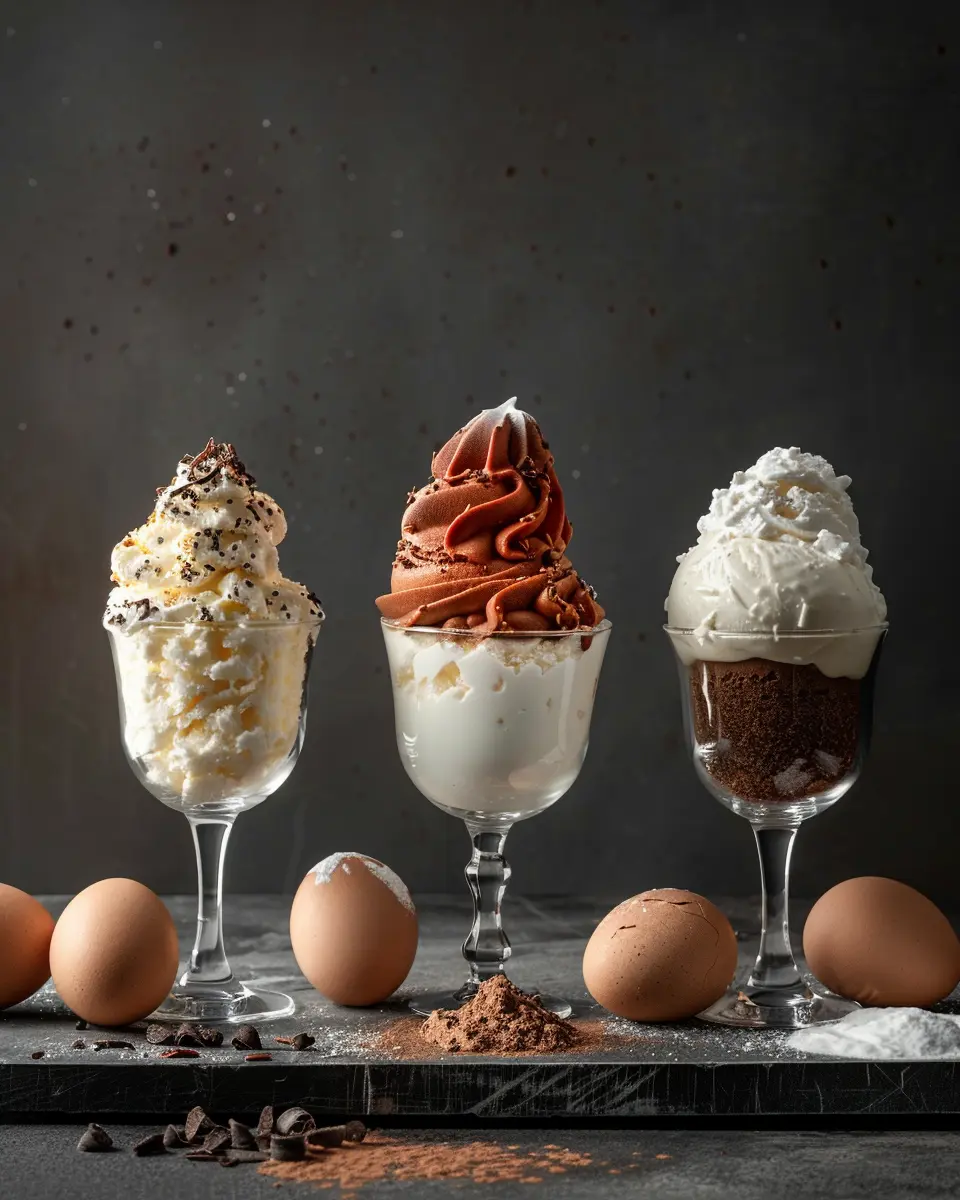
👉 Print the three-ingredient texture optimization matrix in the pro tips section — it maps every fat-to-protein ratio across creamy, frozen, and aerated dessert categories so you can diagnose and correct consistency problems before they reach the serving stage.
The most revealing thing about three-ingredient carnivore desserts is how unforgiving they are. In a twelve-ingredient conventional recipe, a misjudged fat ratio is absorbed by the surrounding system — another ingredient compensates, another texture element masks the error. In a three-ingredient animal-based dessert, every variable is load-bearing. The fat content of the cream determines whether the result is rich and smooth or thin and separated. The temperature of the eggs at integration determines whether the emulsion holds or breaks. The ratio between the three components determines every textural outcome from frozen to aerated to set. There is nowhere for a mistake to hide, which means understanding the structural role of each ingredient isn’t optional background knowledge — it is the recipe.
Table of Contents
Table of Contents
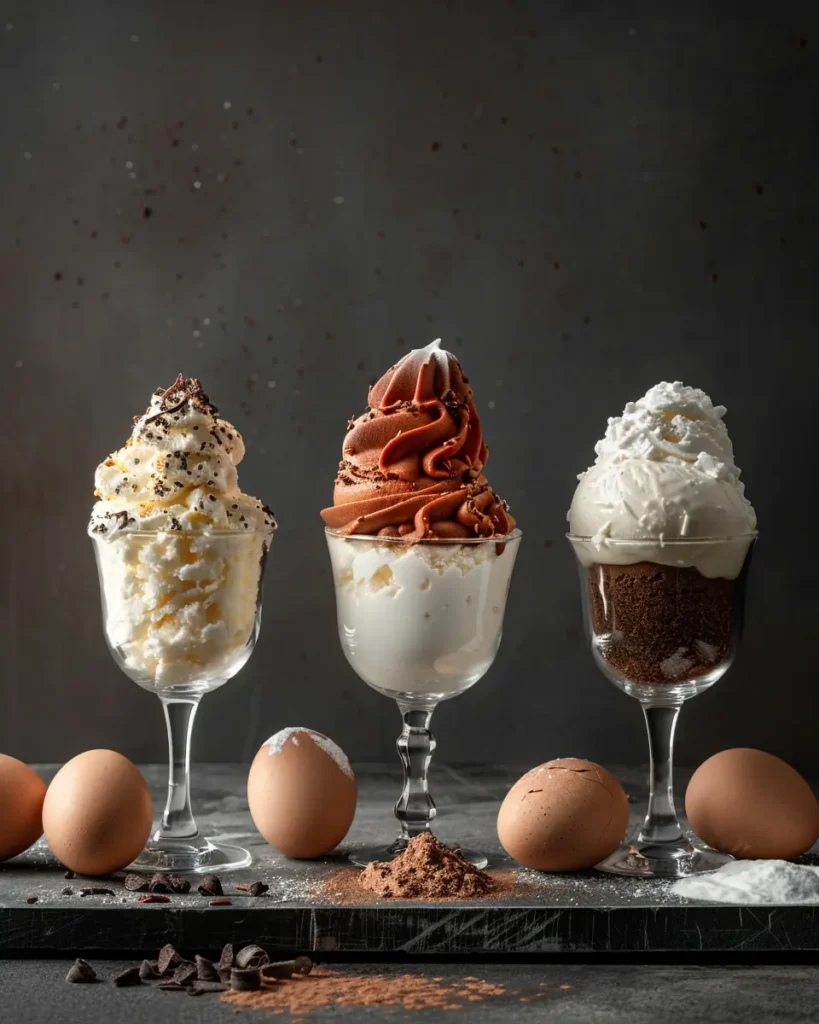
To achieve a perfect structural outcome in a three-ingredient carnivore dessert, select ingredients whose fat-to-protein ratio places fat as the dominant phase — typically heavy cream or egg yolks as the primary component — ensure all ingredients are at compatible temperatures before combining to prevent emulsion failure, and apply the minimum mechanical force needed to achieve the target texture rather than mixing to a uniform appearance. Structural integrity in minimal-ingredient animal desserts is determined before the mixture is assembled: the ratio is set, the temperatures are managed, and the technique is calibrated — and the result is a direct and predictable consequence of those three decisions made correctly or incorrectly upstream.
The secret to successful 3 ingredient carnivore desserts is maintaining a fat-dominant ratio, matching ingredient temperatures before mixing, and using only the amount of mechanical mixing required for the target texture. When fat remains the dominant structural phase, creamy, frozen, and aerated desserts stay stable without plant-based stabilizers.
Easiest Desserts for Zero-Carb Beginners
The simplest structural outcomes in three-ingredient carnivore desserts are achieved when all three components contribute to the same textural goal — fat for richness and emulsion stability, protein for binding and set, and a third animal ingredient that amplifies rather than contradicts the first two. The most common beginner failure is selecting three ingredients whose structural contributions conflict: a high-water component paired with a low-fat base produces a separated, thin result that no mixing technique can fully rescue because the ratio problem was established before the bowl was picked up.
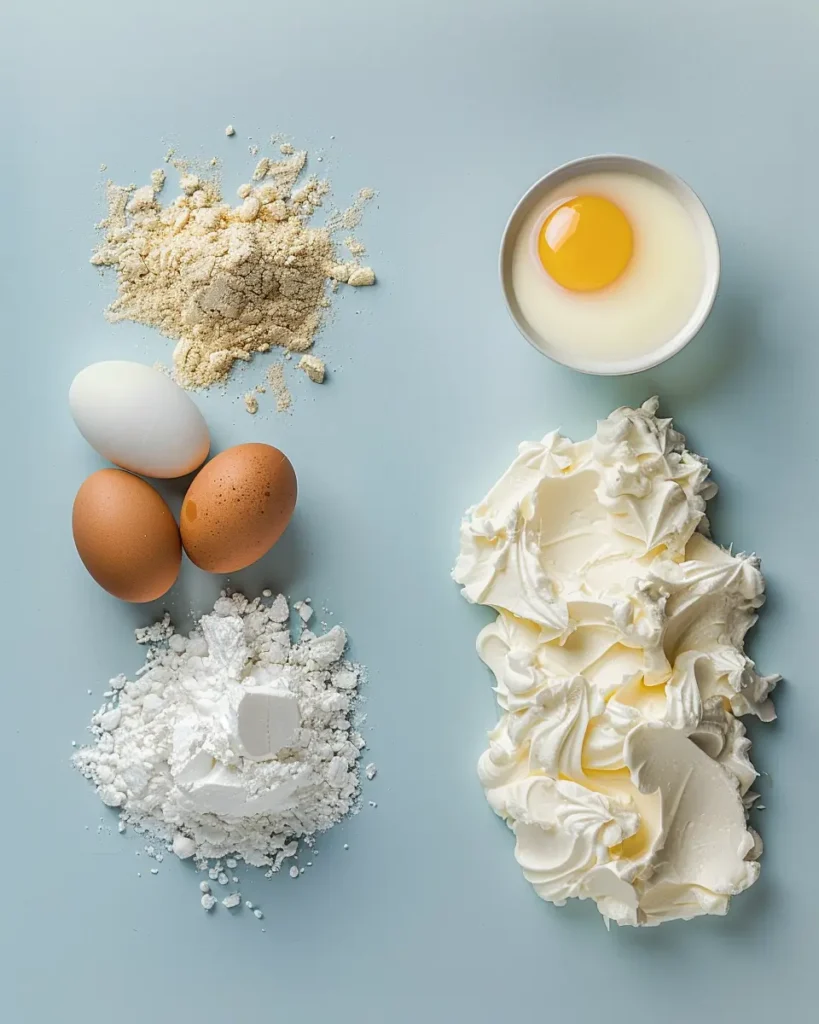
The Looksyumy Ingredient Ratio Principle defines the foundational guideline for minimal-ingredient carnivore desserts: fat must represent at least 60 percent of the total volume of the assembled mixture before any mechanical treatment begins. Below that threshold, the aqueous phase of the mixture is large enough to dominate the structural outcome — producing desserts that separate during chilling, drain during setting, or freeze into solid, icy blocks rather than smooth, scoopable textures. Above it, the fat phase provides sufficient emulsion volume to hold the protein and any remaining liquid in suspension through the target texture state. Three ingredients is not a limitation — it is a precision constraint that rewards ratio awareness more than technique sophistication. Our beginner carnivore desserts guide covers the specific ingredient combinations that naturally satisfy the 60 percent fat threshold without requiring measurement, making them the lowest-risk starting points for anyone new to animal-based minimal-ingredient dessert making.
The threshold at which fat-phase volume becomes sufficient to maintain a continuous emulsion in dairy and egg-based matrices — and why dropping below that concentration allows free water to dominate structural behavior — is documented in food chemistry research published by the Institute of Food Technologists, whose emulsion stability studies confirm that fat-phase continuity is the primary determinant of separation resistance in minimal-ingredient dairy preparations.
3 Proven 3-Ingredient Carnivore Desserts
Creamy Dessert
- Heavy cream
- Egg yolks
- Cream cheese
Frozen Dessert
- Heavy cream
- Egg yolks
- Butter
Aerated Dessert
- Egg whites
- Heavy cream
- Tallow
The three combinations that most consistently produce correct structural outcomes for beginners are heavy cream plus egg yolks plus cream cheese, heavy cream plus whole eggs plus butter, and egg whites plus heavy cream plus a small quantity of tallow. Each of these pairings places fat as the structural dominant, uses protein as the binding secondary, and positions the third ingredient as a texture modifier rather than a structural element. Understanding which role each of your three ingredients plays before you begin is more valuable than any mixing technique — a correctly rationed three-ingredient base assembles correctly almost regardless of technique, while an incorrectly rationed one fails regardless of how carefully it is handled.
Mastering Creamy Textures Without Complex Steps
Fat separation in a three-ingredient creamy carnivore dessert is not a mixing failure — it is a ratio failure that became visible during mixing, meaning the fix is always in the ingredient proportions rather than in the speed or duration of agitation. The direct cause of a creamy dessert that separates into a thin liquid base with a fat layer floating above it is a free water volume that exceeds the emulsification capacity of the fat and protein present — the fat cannot suspend all the available water within a stable emulsion, so the excess water separates out.
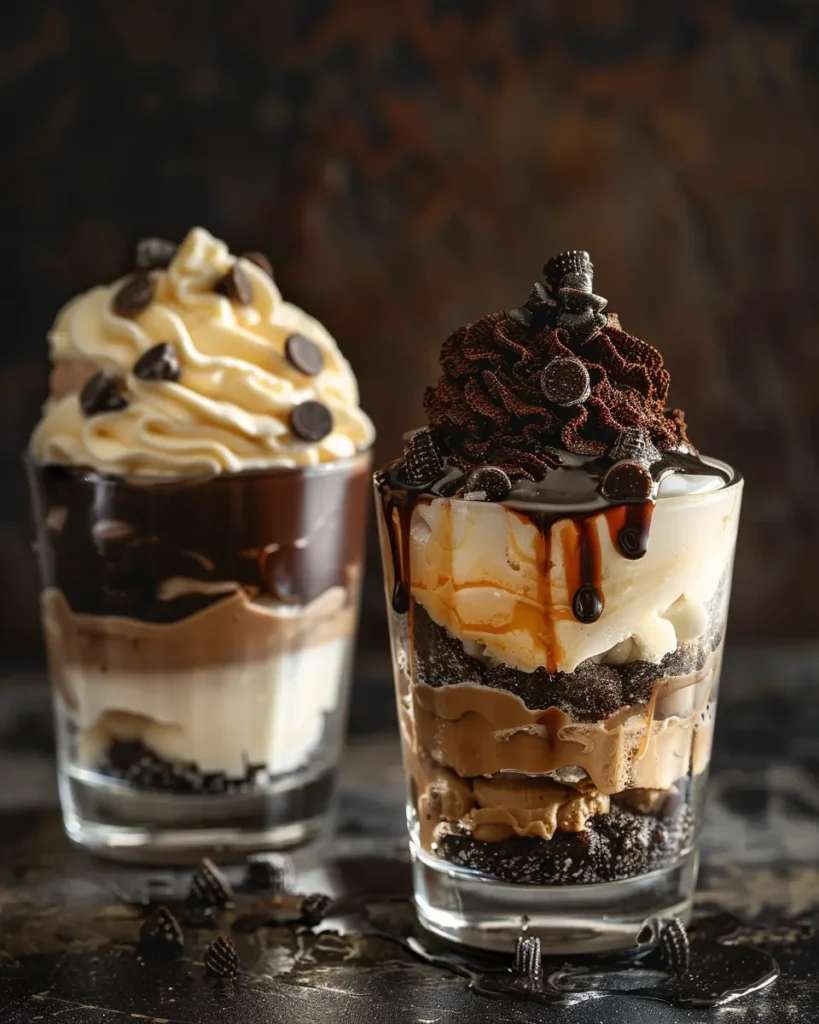
I learned this distinction between ratio failure and technique failure through a batch I was certain I had assembled correctly. I was working with three ingredients — heavy cream, cream cheese, and egg yolks — in quantities that felt intuitively balanced based on appearance in the bowl. The cream cheese was cold, the yolks were room temperature, and the cream was straight from the refrigerator. I mixed everything together with a hand mixer at medium speed for about ninety seconds, transferred the mixture to serving glasses, and refrigerated them. Two hours later, each glass had a visible liquid layer at the base — roughly a centimeter of thin, separated liquid sitting beneath what looked like a correctly set creamy layer above. The mixture had looked completely smooth after mixing. The separation had happened entirely during the chill phase, which told me the emulsion had never been genuinely stable — it had been temporarily homogenized by the mixer but had not actually achieved the fat-continuous structure that resists drainage during setting. The cream cheese had been too cold to integrate properly with the yolks, and the fat phase had never fully encapsulated the aqueous components. Our easy carnivore desserts guide covers the temperature alignment protocol that prevents this specific failure across all three-ingredient creamy preparations.
| Symptom | Most Likely Cause |
|---|---|
| Dessert separated during chilling | Fat ratio too low |
| Grainy texture | Ingredients were not temperature matched |
| Weak set | Insufficient protein support |
| Icy frozen dessert | Excess free water in the formulation |
| Greasy surface | Broken emulsion |
The correction for creamy texture failures is almost always temperature adjustment before mixing rather than technique adjustment during it. Cream cheese at room temperature integrates into a fat-continuous emulsion with egg yolks in under thirty seconds of gentle mixing. Cold cream cheese resists integration and produces the temporary homogenization that separates during chilling. Heavy cream at refrigerator temperature whips into a stable fat-continuous foam but resists integrating with warm components — warm cream loses its aeration capacity before it can be incorporated. The practical protocol is to bring fat-dominant solid ingredients to room temperature, keep cream cold until the moment it is needed, and combine in the order that places the fattest component first.
Flawless Frozen Desserts with Three Ingredients
Ice crystal size in a three-ingredient frozen carnivore dessert is controlled entirely by the fat content of the base and the speed of the freeze — a high-fat base freezes into a fine, micro-scale crystal network that reads as smooth and creamy, while a low-fat base freezes into large, coarse crystals that produce the grainy, icy texture that makes simple frozen desserts unpleasant regardless of how carefully they were assembled. The yolk-driven smoothness that distinguishes a premium three-ingredient frozen carnivore dessert from a basic frozen block comes from egg yolk lecithin acting as a molecular emulsifier — binding fat and water at the interface level so that the two phases freeze together rather than separating into distinct zones.
The smooth, scoopable consistency and stable frozen texture that defines a correctly executed three-ingredient carnivore frozen dessert is achieved entirely without xanthan gum, guar gum, psyllium husk, carrageenan, or any plant-derived thickener or stabilizer. These compounds are used in commercial and low-carb frozen dessert formulations to compensate for insufficient fat content — they increase viscosity and slow water molecule mobility through hydrocolloid swelling or polysaccharide chain entanglement, mimicking the ice-crystal-retarding effect that high animal fat content provides naturally. In a correctly proportioned three-ingredient carnivore frozen base where heavy cream and egg yolks are the dominant components, the fat phase volume and lecithin emulsification already perform those functions through animal biochemistry. Adding plant stabilizers to a three-ingredient carnivore frozen dessert that freezes icy doesn’t fix the crystal structure — it adds an excluded compound to a ratio problem that only a ratio correction can resolve. Increase yolk count, increase cream volume, or reduce any high-water component, and the crystal structure corrects itself without any plant chemistry involved. Our carnivore ice cream guide covers the full freezing physics of animal-fat frozen bases and the specific ratio adjustments that produce micro-scale crystal networks across different ingredient combinations.
The three-ingredient frozen combinations that most reliably produce smooth, scoopable results without stabilizers are heavy cream plus egg yolks plus butter, heavy cream plus egg yolks plus cream cheese, and heavy cream plus whole eggs plus tallow. In every case, the structural key is that two of the three ingredients are fat-dominant and one provides protein binding. A frozen base with only one fat-dominant ingredient and two protein or water contributors will freeze icy regardless of technique — the ratio determines the crystal structure before the freezer is involved.
Pro Tips for Minimal Ingredient Texture Control 🔥
- Always establish the fat-dominant component first in the bowl. The remaining ingredients should be added to the fat, not the fat added to the others — fat-continuous emulsions form more readily when fat is the continuous phase from the beginning of mixing.
- Temperature-match all ingredients within a 5-degree range before combining. The single most common source of three-ingredient dessert failure is a temperature differential between components that prevents proper emulsification — cold cream cheese meeting warm yolks, or cold cream meeting room-temperature fat.
- Use the minimum mixing needed to achieve visual homogeneity, then stop. Over-mixing a three-ingredient base introduces more air than the fat phase can stabilize, producing a foam that collapses during chilling or freezing rather than holding its assembled structure.
- For creamy desserts, chill the assembled mixture in the serving vessel immediately. Every minute at room temperature after mixing is drainage time for the emulsion. The faster the mixture reaches refrigerator temperature, the more stable the final set texture.
- For frozen desserts, pre-chill the base below 4 degrees Celsius before freezing. A room-temperature base entering the freezer spends too long in the partial-freeze zone where large crystals form undisturbed.
- Assess raw consistency before committing to the freezer or refrigerator. A correctly balanced three-ingredient base should coat the back of a spoon and hold a line drawn through it for three seconds. If it runs immediately, the fat content is insufficient and adding volume to the fat component before chilling will produce a better outcome than chilling and hoping.
- Match the third ingredient to the target texture, not the target flavor. Cream cheese as the third ingredient produces a denser, firmer set. Butter produces a richer, smoother set. Tallow produces the firmest frozen texture with the most stable crystal structure. Choose the third ingredient for what it does structurally, and the flavor follows from the quality of the animal ingredients rather than from added compounds.
- Track your ratios numerically across batches. The difference between a three-ingredient dessert that works consistently and one that produces variable results is almost always ratio tracking — knowing that 60ml of cream, 2 yolks, and 30g of cream cheese produces the correct outcome, and scaling that exact ratio rather than estimating by eye. Our carnivore desserts guide includes a ratio tracking template for minimal-ingredient preparations across creamy, frozen, and aerated categories.
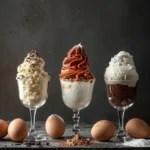
3 Ingredient Carnivore Desserts: The Complete Texture and Structure Guide
- Prep Time: 10 min
- Total Time: 10 minutes
- Yield: 4 servings 1x
- Category: Dessert
- Method: Mixed / Chilled
- Cuisine: Carnivore
- Diet: Carnivore Diet
Description
A simple 3-ingredient carnivore dessert that balances healthy fats and protein to create a creamy, rich, and satisfying texture. Perfect for anyone following a carnivore diet and looking for a quick dessert without plant-based ingredients or artificial thickeners.
Ingredients
- 1 cup (240 ml) heavy whipping cream
- 3 large egg yolks
- 2 oz (60 g) cream cheese, softened
Instructions
- Let the cream cheese sit at room temperature for about 20 minutes to soften.
- Whisk the egg yolks in a mixing bowl until smooth and fully combined.
- Add the softened cream cheese and mix until the texture is creamy and lump-free.
- Slowly pour in the heavy whipping cream while stirring continuously.
- Mix gently until everything is fully incorporated.
- Divide the mixture evenly among serving cups, ramekins, or small dessert bowls.
- Refrigerate for at least 2 hours before serving.
Notes
For best results, make sure all ingredients are at a similar temperature before mixing.
Avoid overmixing, which can cause the mixture to separate.
For a richer texture, add an extra egg yolk.
For a firmer consistency, chill for a longer period.
Serve well chilled.
Nutrition
- Serving Size: 1 serving
- Calories: 295
- Sugar: 2g
- Sodium: 120mg
- Fat: 28g
- Saturated Fat: 17g
- Unsaturated Fat: 8g
- Trans Fat: 0g
- Carbohydrates: 2g
- Fiber: 0g
- Protein: 8g
- Cholesterol: 185mg
Frequently Asked Questions
Why do minimal ingredient carnivore desserts separate so easily?
Minimal ingredient desserts separate easily because every structural function is concentrated in three components with no redundancy. In a multi-ingredient conventional dessert, starch gelatinization, gluten development, emulsifying agents, and stabilizers collectively maintain the mixture’s structural integrity — if one system partially fails, others compensate. In a three-ingredient animal-based dessert, the fat phase is the only emulsification system, the protein is the only binding system, and if the ratio between them places free water volume above the emulsification capacity of the fat, separation is the direct and unavoidable result. The fix is always upstream — adjusting the ratio before mixing rather than the technique during it. A correctly rationed three-ingredient base with fat as the dominant phase holds its emulsion through chilling, setting, and serving without any additional structural support.
Can I substitute heavy cream with animal fat tallow in three-ingredient recipes?
Tallow can replace heavy cream as the fat component in frozen three-ingredient carnivore desserts but produces a markedly different textural outcome in creamy or aerated preparations. Heavy cream contributes both fat and a meaningful volume of water, which means it participates in both the fat phase and the aqueous phase of the emulsion — its water content is what allows it to be whipped into a foam and why it produces a lighter, softer texture in creamy desserts. Tallow is almost entirely fat with negligible water content, which means substituting it for cream in a creamy dessert removes the aqueous phase contribution that gives the dessert its smooth, flowing consistency — the result is typically denser and firmer than cream-based equivalents. In frozen preparations, tallow’s high saturated fat content produces an extremely stable crystal network that freezes very firm, requiring longer tempering before scooping. The substitution works best in frozen preparations where maximum crystal stability is the goal and extended tempering before serving is acceptable.
The compositional difference between tallow and heavy cream — specifically why tallow’s near-zero water content and saturated fatty acid profile produce categorically different emulsion and freezing behavior than cream’s combined fat-water matrix — is outlined in the Harvard T.H. Chan School of Public Health’s nutritional lipid research, whose fat chemistry documentation confirms that water activity and fatty acid saturation level are the two variables that govern frozen and emulsified texture outcomes in animal fat substitutions.
How does egg white whipping change the volume of simple carnivore desserts?
Whipped egg whites increase the volume of a three-ingredient carnivore dessert by introducing mechanically aerated protein foam — air bubbles encased in denatured egg white protein films — into the base mixture. The volume increase is substantial: egg whites whipped to stiff peaks typically triple or quadruple in volume, and that increase transfers directly to the assembled dessert if the folding integration is handled correctly. The structural consequence of this volume increase is a lighter, less dense texture that sets more delicately and is more sensitive to temperature than a fat-only base. The practical trade-off is that whipped egg white volume is less stable over time than fat-phase emulsion volume — the foam drains progressively as the protein films relax, which means aerated three-ingredient desserts made with whipped whites have a shorter optimal serving window than creamy or frozen equivalents and should be served within two to three hours of assembly for maximum volume and texture.