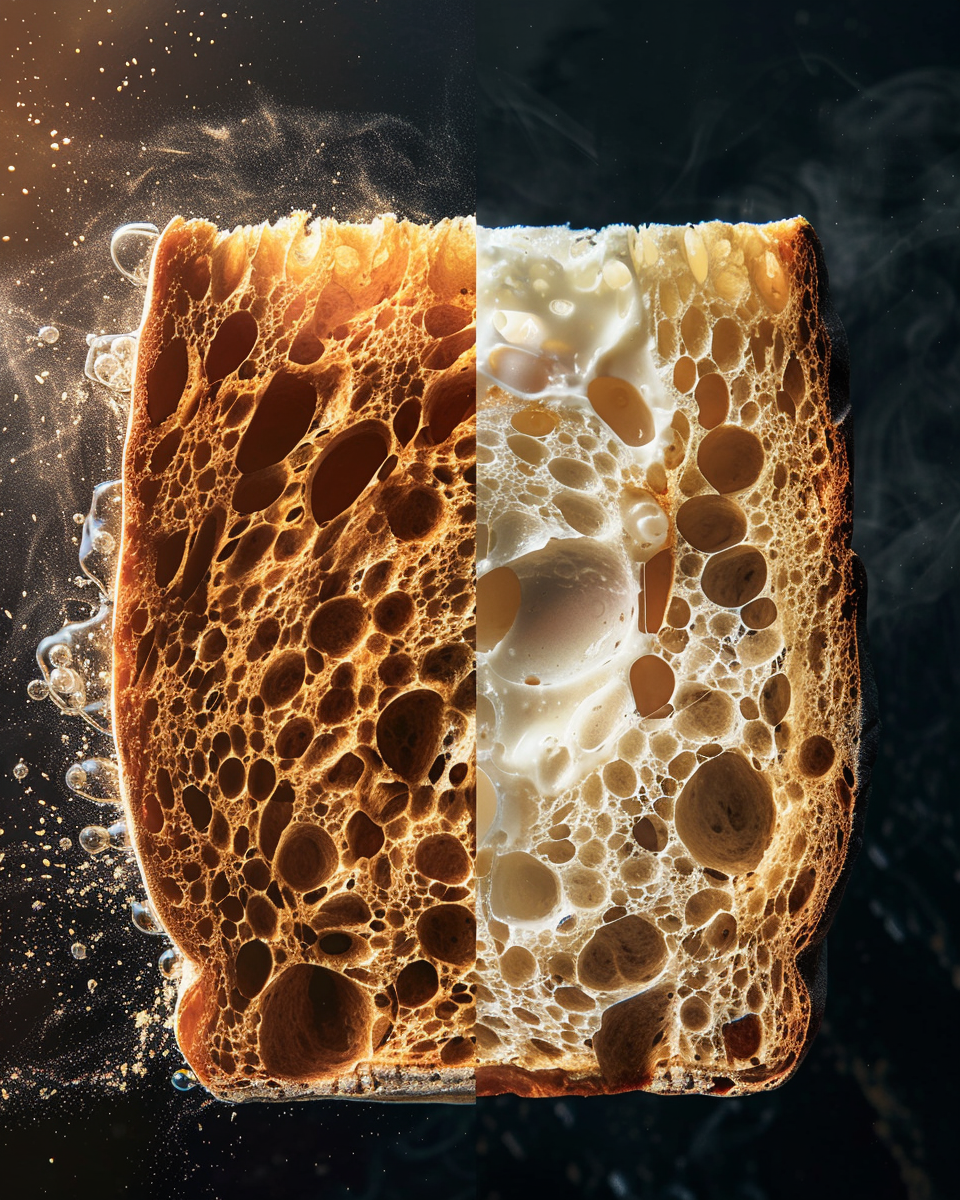
👉 Download the baking physics comparison chart linked in the summary section — it maps every structural system in traditional baking against its animal-protein equivalent in a single reference graphic you can keep beside your kitchen notes.
Most bakers who come to carnivore baking arrive with years of intuition built around flour. They understand how dough should feel, how a batter should move, how a loaf should behave in the oven. That intuition is not just unhelpful in carnivore baking — it is actively misleading. The entire chemical architecture of a grain-based bake and an animal-protein bake operates on different principles, uses different structural systems, and responds to heat, moisture, and mechanical action in fundamentally different ways. Applying flour-baking logic to an egg-based matrix doesn’t produce a slightly different result. It produces a collapsed, wrong result, consistently, until the underlying framework is replaced entirely.
Carnivore baking differs from traditional baking because it eliminates the two structural systems that conventional recipes are entirely built around — the gluten network formed by hydrated wheat proteins and the gelatinized starch matrix that sets during baking — and replaces both with a single system: thermally coagulated animal protein supported by a mechanically aerated fat-and-egg-white foam. Without starch to absorb water, regulate moisture, and create crumb elasticity, and without gluten to provide extensible structural scaffolding, every function those systems performed must be handled by the protein chemistry of eggs and the emulsification properties of animal fat. This is not a substitution. It is a complete replacement of the foundational physics of baking with a different set of foundational physics.
Table of Contents
The Total Absence of Flour and the Starch-Free Impact
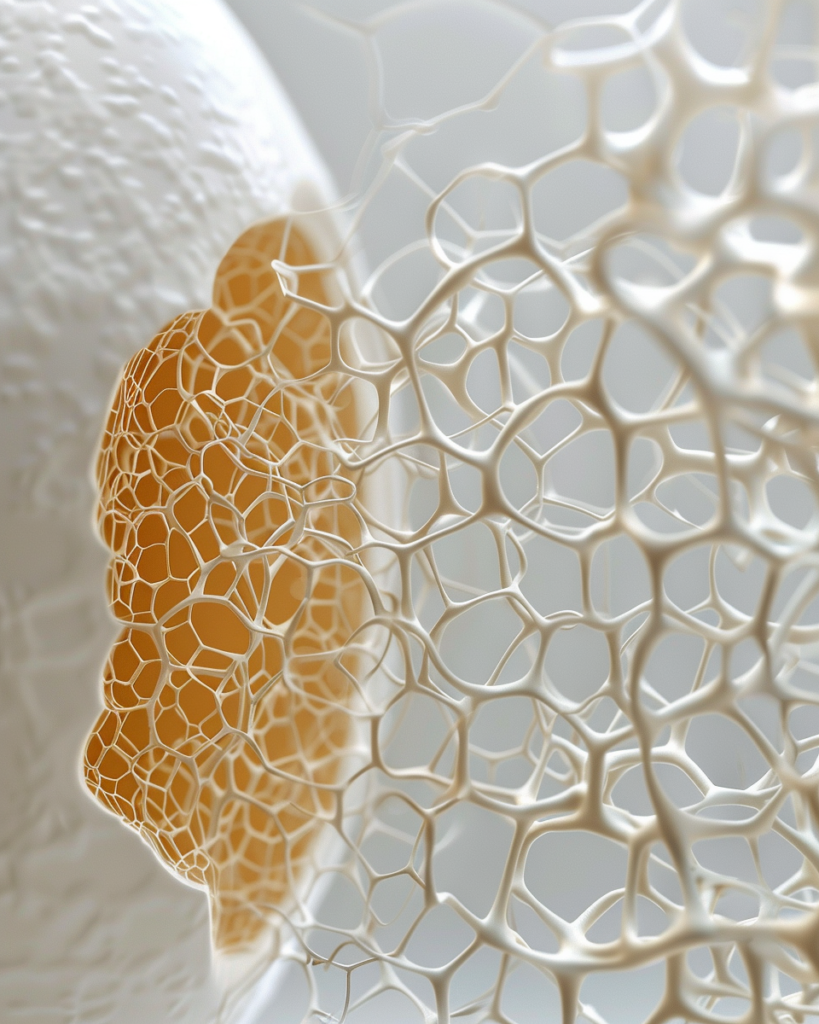
In traditional baking, starch gelatinization — the process by which starch granules absorb water, swell, and form a continuous gel matrix during heating — is the primary mechanism responsible for crumb structure, moisture retention, and the elastic texture of bread; removing it entirely means the bake has no continuous gel phase and must set through protein coagulation alone. The gluten network, formed when glutenin and gliadin proteins in wheat flour hydrate and align under mechanical stress, provides the extensible scaffolding that traps gas and allows the crumb to expand without collapsing — and in zero-carb baking, this network does not exist in any form.
The Looksyumy Crumb Stability Pattern identifies the core implication of this absence: in a zero-carb bake, structural stability is not continuous — it is point-specific. A starch-gel matrix sets gradually and uniformly across the entire crumb as temperature rises. A protein coagulation matrix sets in discrete zones where protein concentration is sufficient, and the spaces between those zones are supported only by the mechanical integrity of the surrounding foam. This is why carnivore crumbs are more sensitive to over-mixing, over-baking, and temperature variation than flour-based crumbs — each of those stresses targets a structural system that is already operating without redundancy. Our baking science guide maps the full temperature progression of protein coagulation versus starch gelatinization side by side, which makes the mechanical difference between the two systems immediately legible.
The practical consequence of starch absence extends beyond texture. In flour-based baking, starch acts as a moisture buffer — absorbing free water during the bake and releasing it gradually during cooling, which produces crumb softness that persists for hours. Without that buffer, all moisture management in a carnivore bake falls to the fat content of the formulation. Fat doesn’t absorb and release water the way starch does — it suspends bound moisture within a lipid matrix, which produces a different quality of softness and a shorter window during which that softness is maintained after cooling. Understanding this distinction changes how you approach fat ratios in carnivore formulations, and it explains why recipes that feel correct in theory sometimes produce a crumb that firms rapidly after the first hour out of the oven.
Mastering the Mechanics of Pure Egg Structure
In the absence of gluten, the only mechanism available to trap and hold the gas that makes a carnivore bake rise is the mechanical foam created by whipping egg whites — air bubbles encased in denatured protein films that expand during heating and then set permanently as protein coagulation completes, locking the risen structure in place. This means that gas retention in carnivore baking is entirely dependent on foam integrity at the moment of oven entry, with no gluten network available as a secondary containment system if the foam partially fails.
I understood this intellectually before I understood it in practice, and the gap between those two kinds of understanding cost me several batches before it closed. During my earliest carnivore baking trials, I treated the egg white foam the way I had always treated conventional batter — as something to be mixed into a uniform, smooth consistency before baking. I folded the whites into the base, noticed some streaks remaining, and kept mixing until the batter looked fully homogenous, the way a wheat-flour batter should look before it goes in. What came out of the oven was a flat, dense disk with a slightly rubbery texture and no crumb to speak of. The foam had been completely destroyed by the additional mixing, and there was nothing else in the formulation to replace the structural function it had been providing. A flour batter can be mixed to smoothness because gluten is still developing during that mixing — it’s building structure. An egg-white batter loses structure with every stroke beyond the minimum needed for incorporation. The carnivore bread guide details exactly where that minimum stopping point is and what the batter should look like when folding is complete.
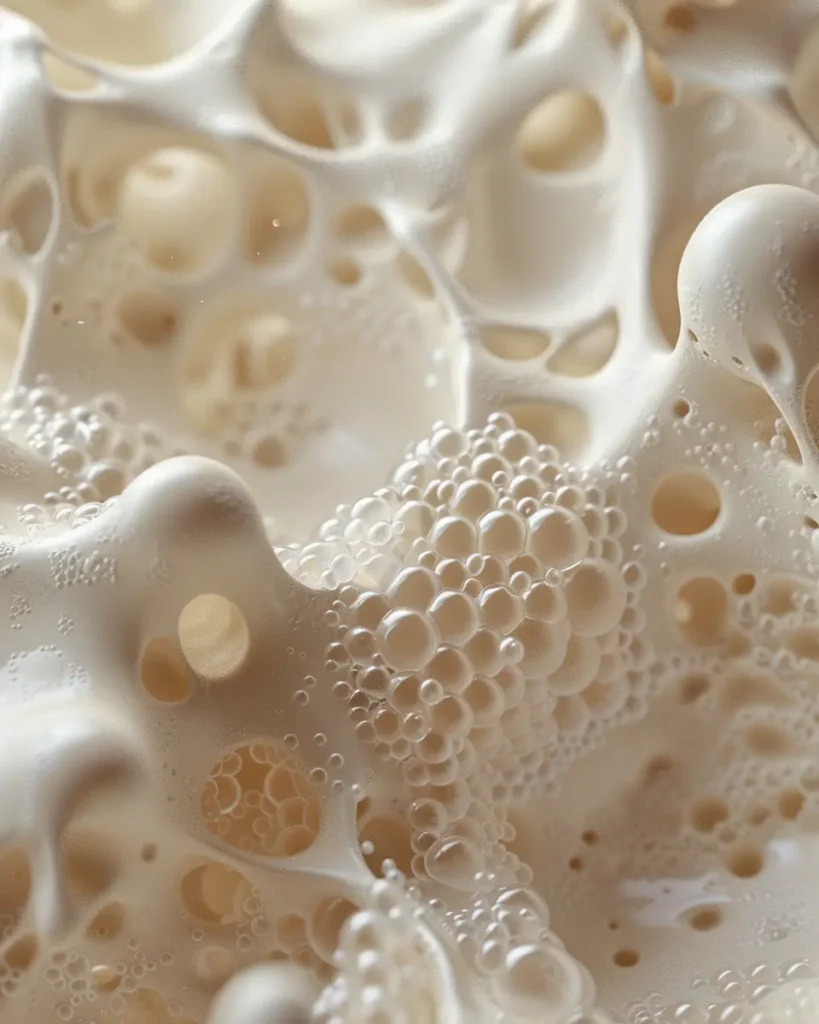
The thermal setting behavior of egg protein is also categorically different from gluten behavior in the oven. Gluten sets gradually across a wide temperature range and remains somewhat extensible even after setting — this is why bread can continue expanding in the oven after the crust has begun to form. Egg protein coagulates rapidly within a narrow temperature band, approximately 62 to 80 degrees Celsius depending on the protein fraction, and once coagulation is complete the structure is fixed. There is no oven spring in a carnivore bake that occurs after coagulation — all expansion must happen while the foam is still fluid and the protein is still mobile. This means oven temperature accuracy matters more in carnivore baking than in any other format, because the window between under-set and over-set protein is measured in minutes rather than the broader margin gluten-based bakes provide.
Key Differences in Fat, Heat, and Moisture Dynamics
Animal fats used in carnivore baking — butter, tallow, and the fat naturally present in egg yolks — have melting points and heat-transfer characteristics that differ fundamentally from the plant oils typically used in conventional baking, and these differences change how heat moves through the crumb, how the internal structure sets, and at what temperature protein begins to express free moisture. The threshold at which a protein-fat matrix begins releasing bound water — what bakers encounter as the weeping or pooling that appears in improperly baked carnivore loaves — is governed by the specific lipid profile of the fat used, not by any stabilizer or binder.
This is the point at which the comparison with gluten-free baking breaks down entirely, and it needs to be stated clearly: the structural framework of carnivore baking is understood completely without almond flour, coconut flour, psyllium husk, xanthan gum, or any plant-based starch. These compounds appear frequently in grain-free and gluten-free baking as structural substitutes, but their mechanisms are plant-specific. Psyllium husk creates viscosity through soluble fiber hydration. Xanthan gum forms a hydrocolloid gel through polysaccharide chain entanglement. Almond flour provides particulate bulk through ground plant cell walls. None of these mechanisms are available in an animal-protein matrix, and none of them interact with egg protein or animal fat in a way that replicates their function from plant-based chemistry. Introducing them into a carnivore formulation doesn’t strengthen the structure — it adds inert or biochemically incompatible material to a system that is already complete in its own terms. The structural architecture of carnivore baking is built from egg protein, animal fat, and mechanical aeration, and understanding it requires no reference to plant chemistry at all.
The melting point differentials between saturated animal lipids and plant-derived oils — and their downstream effects on heat transfer and structural setting during baking — are detailed in nutritional lipid research published by the Harvard T.H. Chan School of Public Health, whose lipid chemistry framework documents why saturated fat phase transitions are narrower and more abrupt than unsaturated equivalents.
Heat dynamics in animal fat also differ from plant oil behavior in ways that affect bake timing. Saturated animal fats like tallow and butter have higher melting points than most plant-based liquid oils and transition from solid to liquid within a narrower temperature band. This means they contribute to crumb structure more abruptly during heating — solidifying the fat phase rapidly as the bake cools rather than transitioning gradually — which is part of why carnivore bakes firm quickly after leaving the oven. Managing this requires pulling the bake slightly earlier than a conventional loaf and allowing the residual heat within the loaf to complete the fat-phase transition during the resting period, rather than driving that transition fully in the oven.
Summary of Zero-Carb Architectural Foundations
- No starch gelatinization. Every moisture-buffering and crumb-setting function performed by starch in conventional baking must be replaced by fat emulsification and protein coagulation. There is no equivalent gel phase in a carnivore bake.
- No gluten network. Gas retention depends entirely on the mechanical integrity of the egg-white foam at oven entry. Over-mixing, over-folding, or any agitation beyond the folding minimum destroys the only gas-containment system available.
- Coagulation replaces gelatinization. Structure sets in a narrow temperature band through protein denaturation rather than across a wide range through starch swelling. Oven temperature precision is more critical, and the margin for over-baking is narrower.
- Fat is the moisture system. Animal fat suspends bound moisture within a lipid matrix rather than absorbing and gradually releasing it the way starch does. Crumb softness is fat-dependent, not hydration-dependent, and degrades faster after cooling.
- Mechanical aeration is the only leavening. There is no chemical leavening system, no yeast fermentation, and no gluten spring. Rise happens entirely because foam expands under heat and then locks in place as protein sets. If the foam is compromised before the oven, the rise is gone.
- Animal lipid melting points govern texture transitions. The rapid solidification of saturated animal fats during cooling is what produces the characteristic firm-then-soft texture of rested carnivore bakes. Cutting too early interrupts this transition.
- All structural failures are mechanical, not ingredient-based. A collapsed, dense, or gummy carnivore bake is the result of a physical process that went wrong — foam destroyed, protein over-set, fat phase poorly managed. Adding plant compounds does not address mechanical failures. The baking tips guide covers the specific mechanical corrections for each failure type.
Frequently Asked Questions
Can standard gluten-free baking rules apply to flourless carnivore baking?
Only partially, and the overlap is narrower than most bakers expect. Standard gluten-free baking replaces wheat flour with a combination of alternative flours — typically rice, tapioca, or potato starch — and compensates for the absent gluten network using hydrocolloid binders like xanthan gum or psyllium husk. The structural system is still starch-dependent: gelatinization still occurs, moisture buffering still happens through carbohydrate absorption, and the crumb still sets through a continuous gel phase. Carnivore baking uses none of these mechanisms. There is no starch, no alternative flour, and no hydrocolloid binder — the entire structure is protein and fat. The rules that govern gluten-free baking — resting the batter to hydrate alternative starches, using gum ratios calibrated to starch content, adjusting liquid for psyllium absorption — are irrelevant in a carnivore context and will produce incorrect results if applied directly.
Why do animal proteins require precise mechanical aeration to rise?
Because mechanical aeration — the physical incorporation of air into a protein foam through whipping — is the only gas source available in a zero-carb bake. Conventional leavening systems rely on either biological gas production (yeast fermentation producing carbon dioxide) or chemical gas production (baking powder releasing carbon dioxide through acid-base reaction). Both of those systems introduce gas into the batter during or after mixing, which means the gas supply is replenished continuously until heat sets the structure. In carnivore baking, the entire gas supply is introduced during the whipping stage and is finite from that point forward. Every bubble lost during folding, waiting, or careless pan transfer is a permanent reduction in the total gas available to drive rise. Precision in mechanical aeration is therefore not a refinement — it is the foundational requirement for any rise at all.
How does heat coagulation replace starch gelatinization in zero-carb bread?
Starch gelatinization and protein coagulation both serve the same ultimate function — converting a fluid batter into a solid, sliceable crumb — but through entirely different mechanisms. Starch gelatinization is a hydration-driven process: starch granules absorb water, swell, and eventually rupture, releasing amylose chains that form a continuous gel network throughout the crumb. This process happens gradually across a wide temperature range and produces a structure that is elastic, moisture-retentive, and relatively forgiving of temperature variation. Protein coagulation is a denaturation-driven process: heat unfolds protein chains that then bond to adjacent chains, forming a rigid cross-linked network. This happens rapidly within a narrow temperature band and produces a structure that is firm, more brittle than a starch gel, and sensitive to over-heating, which causes excessive cross-linking and a tough, rubbery texture. The practical difference is that starch-set crumbs have a wide baking margin and protein-set crumbs have a narrow one — which is the single most important structural reality for any baker transitioning from conventional to carnivore methods.