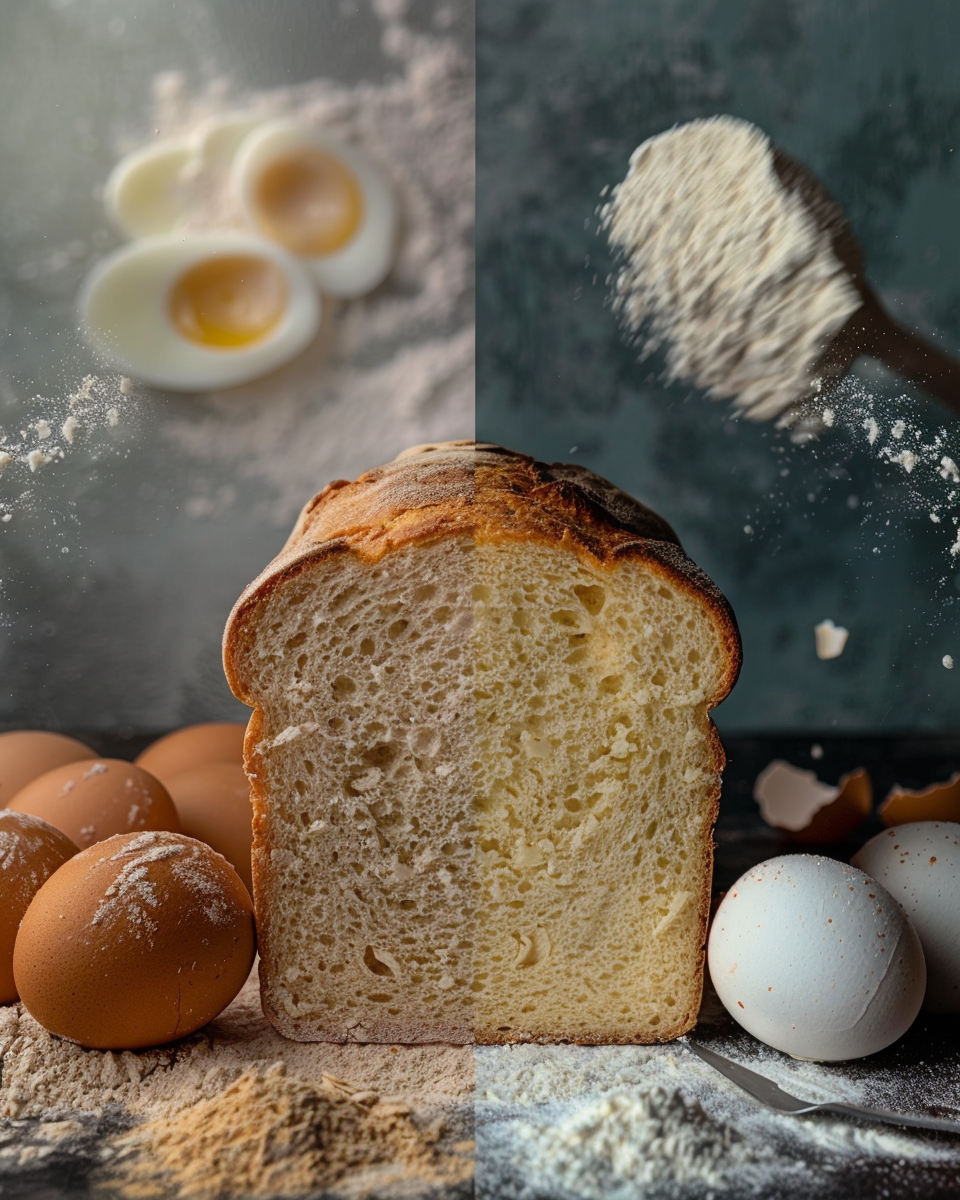
👉 Print or save the leavening method reference chart below — use it before you mix your next batter to choose the right rise method for your specific carnivore bread or bun format.
There is one question that divides carnivore bakers more cleanly than almost any other: do you add baking powder, or do you let the eggs do the work on their own? On the surface it feels like a minor formulation decision — a half-teaspoon difference in a three-ingredient recipe. Underneath, it is a choice between two completely different physical processes for generating internal lift, and those two processes produce measurably different results in crumb texture, flavor integrity, structural durability, and long-term rise stability. Understanding exactly what each method is doing inside your batter — and when each one is appropriate — is the difference between carnivore bread you are genuinely proud to slice and the dense, flat, or chemically bitter loaves that push people toward giving up on zero-carb baking entirely.
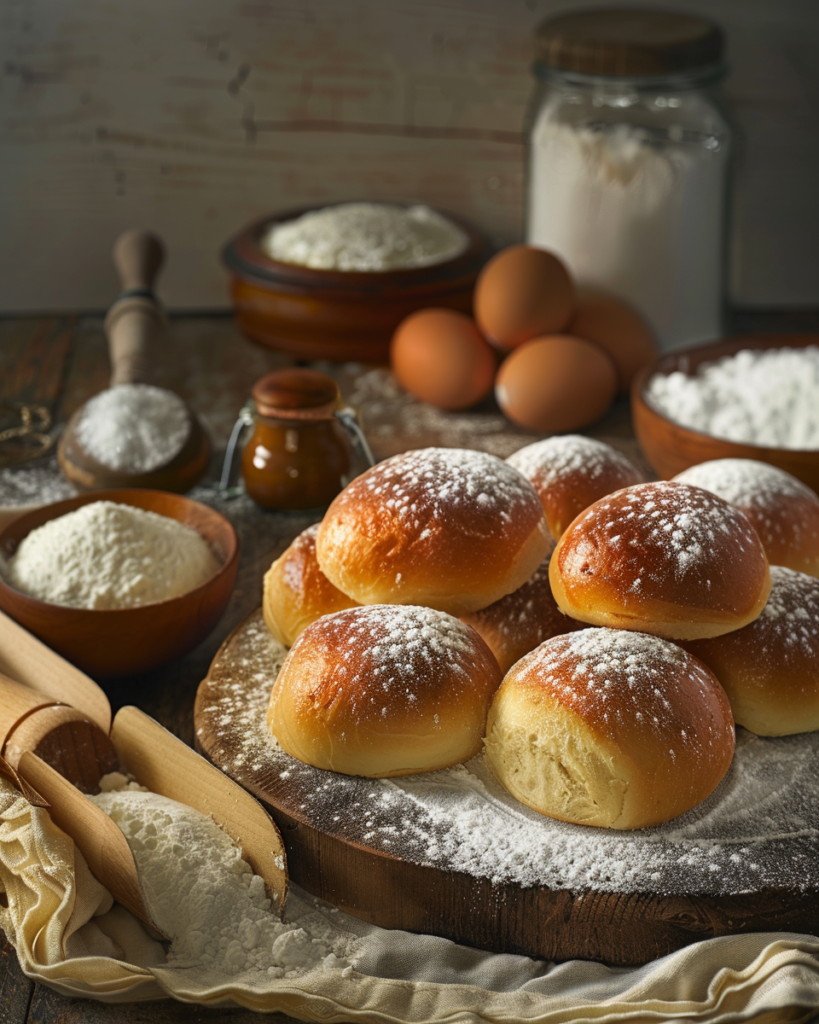
Baking powder creates internal lift through a chemical reaction that releases carbon dioxide gas directly into the liquid batter matrix, expanding existing air bubbles mechanically and producing immediate volume regardless of how thoroughly the eggs were aerated beforehand. Natural rise, by contrast, relies entirely on the mechanical entrapment of air within whipped egg white proteins — specifically ovotransferrin and ovalbumin — where the lift comes exclusively from the expansion of those pre-formed air cells under oven heat, and the structural permanence of the rise depends on how completely the protein mesh coagulates around them as internal temperature climbs through the 70°C–80°C (158°F–176°F) window. These are not interchangeable strategies with slightly different aesthetics — they are structurally distinct mechanisms that produce different crumb architectures, different moisture retention profiles, and different flavor outcomes in an animal-protein batter that has no gluten, no starch, and no plant-based structural fallback to blur the difference between them.
How Each Rise Mechanism Works in Zero-Carb Batters
Chemical leavening releases carbon dioxide in two distinct stages — a cold-action burst during batter hydration and a hot-action burst triggered by oven heat above 50°C (122°F) — flooding the batter with gas bubbles that are then trapped by the surrounding protein and fat matrix and expand aggressively as the loaf heats through. Natural egg-based rise generates no new gas at all; instead, it relies entirely on the thermal expansion of pre-formed air cells that were mechanically incorporated during whipping, meaning the volume ceiling is determined entirely by the quality and stability of the egg white foam before the batter ever enters the oven.
To understand why this distinction matters so much in carnivore baking specifically, it helps to map exactly what is happening inside the batter during each rise method. When baking powder contacts moisture in the batter, sodium bicarbonate begins neutralizing the acid component — typically monocalcium phosphate for the cold-action phase and sodium acid pyrophosphate or sodium aluminum sulfate for the heat-triggered phase — producing CO2 bubbles that diffuse into the existing air pockets and inflate them. This is a chemical event that is entirely independent of how the batter was mixed. You could stir your batter minimally, skip any whipping, and baking powder would still drive a measurable rise because it is generating its own gas supply from scratch.
Natural rise works in the opposite direction. Ovotransferrin — the most heat-sensitive structural egg white protein — begins unfolding and forming the initial bubble-wall mesh during whipping, while ovalbumin, which constitutes roughly 54% of egg white protein by mass, contributes relatively little to raw foam volume but becomes the critical structural anchor during baking, coagulating at 75°C–80°C (167°F–176°F) to permanently lock the expanded air cells in place. The entire volume of a naturally risen carnivore loaf is therefore a function of how much air was incorporated before baking and how completely the oven heat drives ovalbumin to its coagulation threshold. There is no secondary gas source. If the foam was under-whipped, the volume ceiling is low. If the foam was destabilized during folding, the volume is already compromised before the batter hits the pan. If the oven heat stalls before reaching the coagulation window, the structure never fully locks and the loaf falls.
This is precisely what the Looksyumy Rise Ratio Protocol identifies as the core decision point in carnivore bake formulation: chemical leavening provides volume insurance when the batter’s mechanical aeration is imperfect; natural egg-driven rise provides cleaner texture and superior flavor when the whipping and folding technique is disciplined and consistent. Neither method is universally superior — they are correct or incorrect relative to the specific format being baked and the level of technical precision the baker can reliably execute. For a deeper look at how batter consistency affects which rise method performs better in different carnivore formats, the dough consistency(opens in new tab) guide maps out the exact viscosity thresholds at which each leavening approach becomes appropriate. And for the full argument for a baking-powder-free approach to carnivore bread structure, the no baking powder(opens in new tab) breakdown explains the precise mechanical substitutions in detail.
Pros and Cons: Textural and Flavor Realities
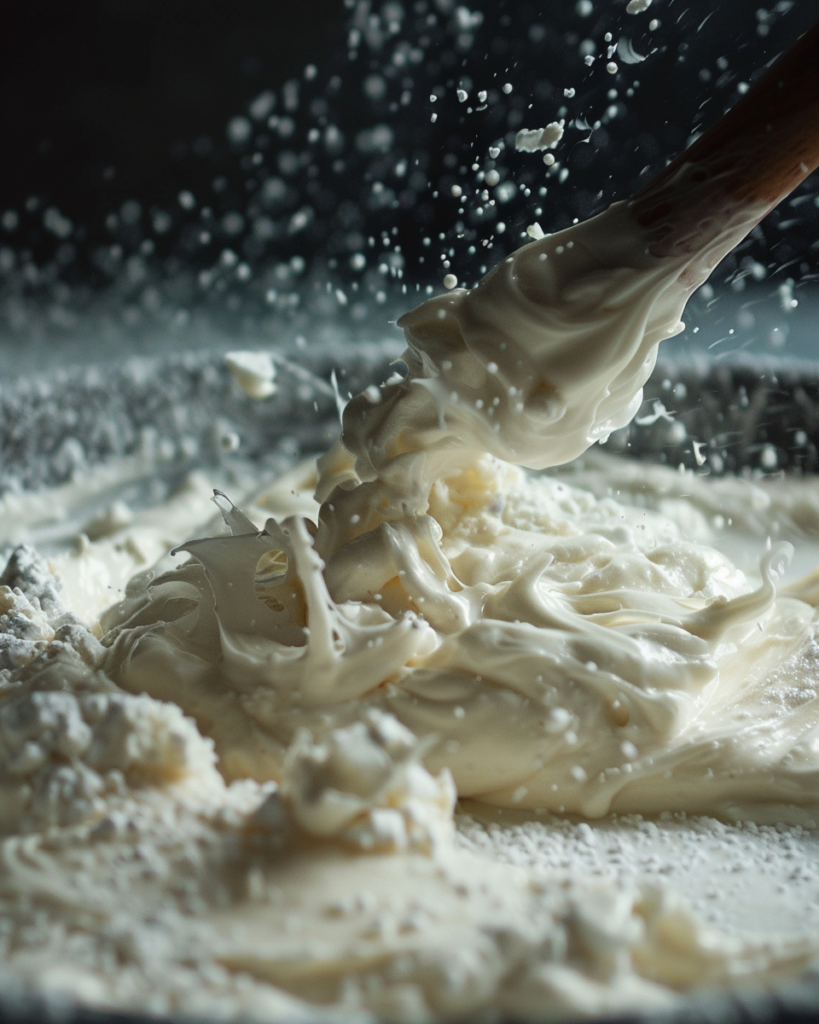
Baking powder produces a more aggressive, immediate rise that generates larger, less uniform air cells — creating a coarser, more open crumb with slightly more structural volume but a reduced moisture-retention capacity once the CO2 has escaped through the surface. Natural egg-based rise produces a finer, denser distribution of smaller air cells — the result of mechanically incorporated air rather than chemically generated gas — yielding a tighter, more even crumb with better moisture hold but a more fragile structural window during the bake.
Natural egg-based rise relies entirely on the mechanical entrapment of air within whipped egg white proteins — specifically, research confirms that ovotransferrin, ovalbumin, and ovomucoid are the three main proteins responsible for foam formation in egg white — where the lift comes from the expansion of pre-formed air cells under oven heat, and structural permanence depends on how completely the protein mesh coagulates as internal temperature climbs through the $70°C$–$80°C$ window.
The flavor difference between the two methods is where I initially failed to pay close enough attention. During early testing with a three-ingredient carnivore bun recipe, I was using a commercial double-acting baking powder at what I thought was a conservative dose — roughly 43 teaspoon per three-egg batter. The buns rose beautifully, domed cleanly, and held their shape through cooling better than any egg-only version I had made to that point. Then I ate one warm, with nothing on it. The first bite was fine. The second bite, as the bun cooled slightly in my hand, brought out something I had been subconsciously dismissing in previous batches: a faint but unmistakeable bitter, slightly metallic finish that lingered on the back of the palate after swallowing. In a conventional bun loaded with toppings, seasonings, and sauces, that residual alkaline sharpness vanishes. In a carnivore bun built from eggs, fat-based dairy, and nothing else, it sits completely exposed because there are no sugars, no caramelized crust compounds, and no spice notes to mask it.
I noticed that the bitterness intensified proportionally with baking powder dose and almost disappeared when I switched to an aluminum-free baking powder at a lower dose of 21 teaspoon. The sourness that can develop from an over-alkaline batter — the soapy, flat finish that signals incomplete neutralization of the sodium bicarbonate — occurs specifically when the acid-to-base ratio inside the baking powder is not perfectly matched to the batter’s own acidity. In a conventional cake batter, flour proteins and sugars buffer the pH. In a carnivore batter, the egg whites provide minimal buffering and the chemical imbalance reads directly on the palate.
The structural consequence of this buffering absence matters as well. Baking powder generates CO2 gas that inflates air cells — but if too much gas is produced too quickly before the egg protein mesh has coagulated enough to contain it, the over-inflated bubbles coalesce and rupture, releasing gas through the surface. This produces the classic over-leavened result: a rapid rise in the first ten minutes followed by a collapsed dome and a crumb riddled with oversized, irregular cavities. In a starch-heavy conventional batter, starch gelatinization at 60°C–75°C simultaneously stiffens the batter walls as gas expands, containing the bubbles as they grow. In a carnivore batter, that stiffening comes entirely from protein coagulation, which happens only above 70°C — meaning there is a dangerous early window where the gas is expanding aggressively in a batter whose walls are still liquid and unable to contain it. Baking powder’s cold-action phase fires during that exact window.
Natural rise avoids this problem entirely because the air cells are fully formed and distributed before the batter even enters the oven. Their expansion under heat is gradual and proportional — the same steady rate at which the egg protein mesh is hardening around them. There is no sudden gas-generation event to overwhelm the still-liquid structure. The cost is fragility: those pre-formed air cells can be collapsed by mechanical shear during folding, undermixed batter incorporation, or a single premature oven door opening. The baking-powder route trades textural precision for structural insurance. The natural-rise route trades structural insurance for textural purity and flavor cleanliness. For buns(opens in new tab) specifically — where the smaller format and higher surface-area-to-volume ratio makes the bitter aftertaste of excess baking powder far more noticeable and where the faster internal temperature rise makes over-gas-generation a real risk — natural rise consistently outperforms chemical leavening in both flavor and structural cohesion.
Best Situational Use for Animal-Based Bakes
In zero-carb carnivore baking, baking powder is the correct choice when the batter is low-aeration by design — when the recipe does not involve a separate whipping step, when whole eggs are used without separation, or when the baker needs a consistent, repeatable result without the technique-sensitivity of a mechanical foam. Natural egg-based rise is the correct choice when the recipe specifically builds its structure around a whipped egg white foam, when flavor purity is the primary goal, and when the baker is working with a format small enough — individual buns, rolls, or thin loaves — that the coarser crumb and residual alkalinity of chemical leavening become detectable liabilities.
This structural comparison is evaluated entirely within the framework of pure animal-protein baking — and that constraint is not incidental. There is no almond flour here to absorb excess moisture released when over-leavened batters collapse and expel liquid. There is no coconut flour acting as a starch buffer to smooth the coarseness of over-sized chemical bubbles. There is no psyllium husk gel creating a secondary structural matrix to catch a foam that deflated before the protein could coagulate around it. There is no xanthan gum providing viscous batter resistance that slows bubble coalescence during the critical pre-set phase. And there are no plant-based starches of any kind gelatinizing at 60°C to stiffen the batter walls before the animal protein coagulation window has even opened. Every structural outcome described in this comparison — the crumb size, the rise height, the moisture balance, the flavor profile — happens in a batter matrix made exclusively of eggs, animal fat, and animal-derived dairy proteins. That purity is what makes the choice between chemical and mechanical leavening carry real consequences rather than being a minor stylistic preference.
For full loaf formats baked in a standard pan, a hybrid approach represents the most reliable outcome for most skill levels: whip the egg whites to stiff peaks for mechanical air incorporation, then add a small, precisely measured dose of aluminum-free baking powder — no more than 41 teaspoon per three eggs — as a structural insurance policy against minor foam deflation during folding. The chemical leavening in this hybrid does not generate enough CO2 to dominate the crumb architecture or produce detectable alkaline bitterness; it simply provides a secondary gas source during the oven’s early heat phase to compensate for any air cells lost in mixing. The mechanical foam does the primary structural work. The baking powder provides the margin. This is the approach that produces the most consistent results across variable technique levels without sacrificing the flavor integrity that makes naturally risen carnivore bread worth making in the first place.
Structural Recommendations for Flawless Crumb 🔥
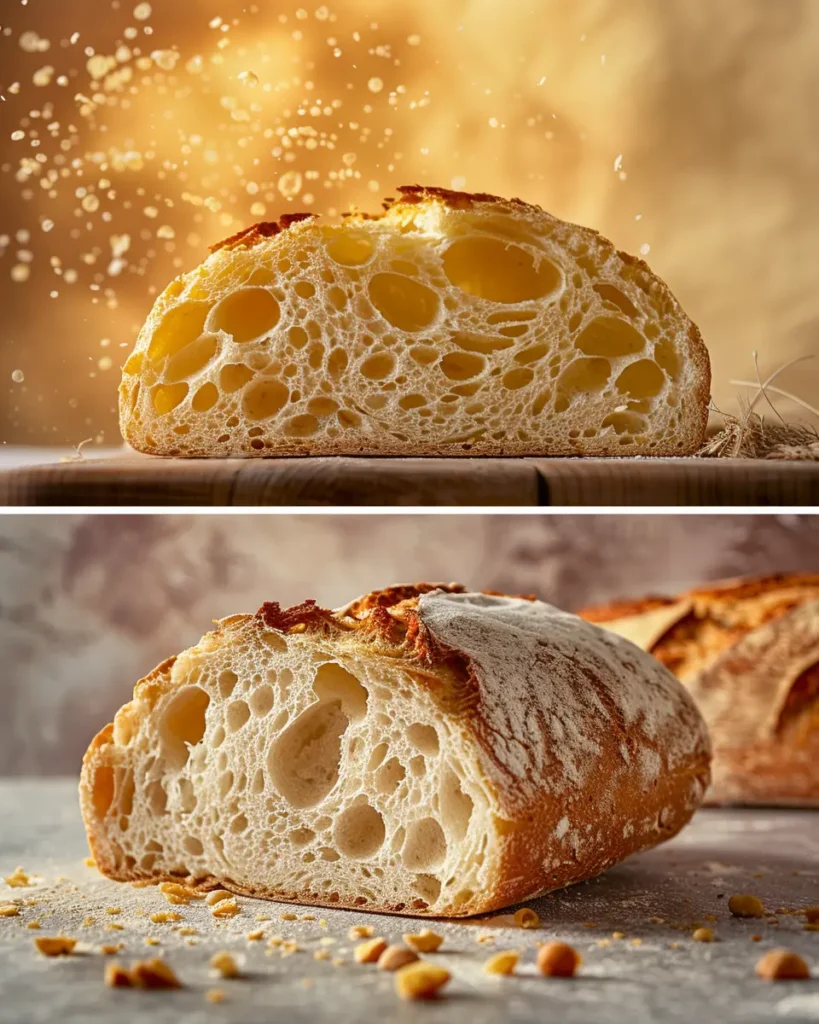
Before you choose a leavening method, audit the format and technique requirements of your specific bake against these structural criteria. Most crumb failures are not ingredient failures — they are leavening-method mismatches. For a complete breakdown of how mixing and folding errors at the bowl stage interact with these leavening decisions, visit the baking mistakes(opens in new tab) diagnostic guide. And for the most detailed treatment of how each rise method performs in a full loaf format, see the bread(opens in new tab) base recipe with annotated leavening notes.
- Use natural rise (egg-only foam) when baking individual bun or roll formats. The smaller mass heats through faster, the coagulation window is reached more quickly, and the fine uniform crumb of a well-whipped foam produces a superior texture-to-size ratio compared to the coarser, gas-bubble-driven crumb of chemical leavening in a small bake.
- Use baking powder when baking without a whipping step. If the recipe calls for whole eggs stirred rather than separated and whipped, chemical leavening is not optional — it is the only available lift mechanism. Use aluminum-free baking powder at 41–21 teaspoon per three eggs maximum to stay below the bitterness threshold.
- Never combine full-dose baking powder with a fully whipped foam. Double-dosing rise mechanisms in a batter with no starch buffering creates too much total gas for the protein walls to contain. The result is aggressive early expansion followed by structural collapse as the over-inflated cells coalesce and burst before ovalbumin reaches its 75°C coagulation point.
- Add cream of tartar (potassium bitartrate) at 41 teaspoon per three egg whites when using natural rise. Cream of tartar acidifies the egg white, suppressing the formation of over-stabilizing disulfide bonds that would make the foam grainy and prone to drainage. The resulting foam stays elastic longer, tolerates gentle folding without deflating, and produces smaller, more uniform air cells for a tighter, more even crumb.
- Always bake immediately after mixing when using standard baking powder. The cold-action phase of double-acting baking powder fires during batter hydration — at room temperature. If the batter sits on the counter for 15 minutes before entering the oven, a significant portion of the available CO2 has already escaped into the air rather than being trapped inside the loaf. Bench time is a direct subtraction from final rise volume.
- Use an oven thermometer to verify temperature before a naturally risen bake more than a chemically leavened one. Natural rise has zero gas-generation redundancy — if the oven stalls 20°F below the target temperature and the coagulation window is not reached, the foam structure relaxes and collapses with no chemical backup to compensate. Chemical leavening continues producing CO2 regardless of oven temperature variance. Temperature accuracy matters for both, but it is mission-critical for natural-rise formats.
- Cool naturally risen bakes slowly, wire-rack elevated, away from cold air drafts. The protein mesh supporting a naturally risen crumb is thinner and less reinforced than the starch-and-protein composite structure of conventional bread. Rapid cooling — especially on a cold surface or near an open window — causes sudden gas contraction inside the air cells that the thin protein walls cannot accommodate. The result is a loaf that domes perfectly in the oven and compresses into a flat disc on the counter.
Frequently Asked Questions
Does baking powder affect the authentic carnivore diet profile?
This is one of the most debated questions in strict carnivore communities and the answer depends entirely on how rigidly you define dietary compliance. Standard commercial baking powder contains three components: sodium bicarbonate as the CO2 base, a leavening acid (most commonly monocalcium phosphate, sodium acid pyrophosphate, or sodium aluminum sulfate), and cornstarch as the moisture-absorbing carrier filler. That cornstarch is a plant-derived carbohydrate — which means technically, by the strictest zero-carb carnivore definition, standard baking powder is not a compliant ingredient. In practice, the quantity of cornstarch delivered per typical serving of baked goods is nutritionally negligible — often less than 0.5 grams per serving — and many carnivore practitioners accept it on a pragmatic basis. For those who will not accept any plant-derived ingredient under any circumstance, aluminum-free baking powder made with cream of tartar instead of phosphate acids can be used (cream of tartar is a byproduct of wine fermentation and contains no plant starch), though it still requires the batter to move quickly to the oven due to its fast-acting single-stage reaction. For absolute zero-compromise strict carnivore baking, the natural egg-white rise — without any chemical leavening whatsoever — is the only fully compliant structural lift mechanism available.
Can I use baking soda instead of baking powder for a natural rise?
Baking soda alone is not a substitute for either baking powder or natural egg-based rise — it is a different tool with a different structural role. Baking soda is pure sodium bicarbonate with no acid component built in. Without an acidic ingredient in the batter to react with, it does not produce meaningful CO2 and instead decomposes slowly under heat into sodium carbonate, water, and a small amount of CO2 — a reaction that leaves excess alkalinity in the finished crumb, producing the soapy, flat, bitter taste that indicates an unreacted base. In a carnivore batter, the egg whites themselves are slightly acidic (typically pH 6.8–8.0), which provides some buffering capacity, but not enough to fully neutralize a standard baking soda dose. If you want to use baking soda in a carnivore recipe, it must be paired with a carnivore-compatible acid — cream of tartar is the most practical choice, at a ratio of roughly 41 teaspoon baking soda to 21 teaspoon cream of tartar. This combination is effectively a homemade single-acting baking powder with no cornstarch filler — which makes it the cleanest chemical leavening option available within a strict-carnivore framework. It is still not “natural rise” in any structural sense. Natural rise refers exclusively to mechanical air entrapment via whipped egg proteins, with no chemical gas generation of any kind.
Why do my natural rise bakes deflate faster than chemical ones?
Natural rise bakes deflate faster than chemically leavened ones because the structural support holding their crumb open is a single-layer protein mesh — the coagulated egg white foam — rather than the combined protein-plus-starch composite structure that conventional batters and even baking-powder-assisted carnivore batters can produce. In a naturally risen bake, every air cell in the crumb is surrounded only by coagulated egg protein. When the loaf exits the oven, the temperature of those air cells begins to drop and the gas inside contracts. If the protein walls are thin — because the foam was slightly under-whipped, because the batter was over-folded, or because the loaf was pulled before the internal temperature fully cleared the 75°C–80°C ovalbumin coagulation window — those walls do not have the mechanical rigidity to resist the inward pressure of contracting gas. The crumb yields and the loaf sinks. Chemically leavened batters produce slightly thicker bubble walls because the larger, more aggressively inflated CO2 cells stretch the protein around them further before setting, paradoxically creating more robust wall sections in the areas where the gas pressure was highest. The practical fix for natural rise deflation is twofold: verify internal doneness with a probe thermometer before removal, targeting the center reaching 78°C–80°C, and allow the loaf to cool inside the oven with the door cracked for at least 8–10 minutes before transferring to a wire rack. This gradual decompression slows the gas contraction rate and gives the already-set protein walls time to accommodate the pressure change without yielding.