

Carnivore buns meal prep means preparing a batch of 10–24 buns in one session and storing them in the fridge (4–5 days) or freezer (up to 3 months). This method saves time, reduces daily cooking, and ensures consistent zero-carb meals throughout the week.
Carnivore buns meal prep means making a large batch of egg-and-meat-based buns in one session, then storing or freezing them for the week ahead. Buns keep 4–5 days refrigerated and up to 3 months frozen. A Sunday prep session of 12 buns takes about 45 minutes and covers every burger or sandwich need for the week.
How long do carnivore buns last?
- Fridge: 4–5 days
- Freezer: up to 3 months
Proper storage keeps texture and prevents sogginess.
What Are Carnivore Buns and Why Meal Prep Them?
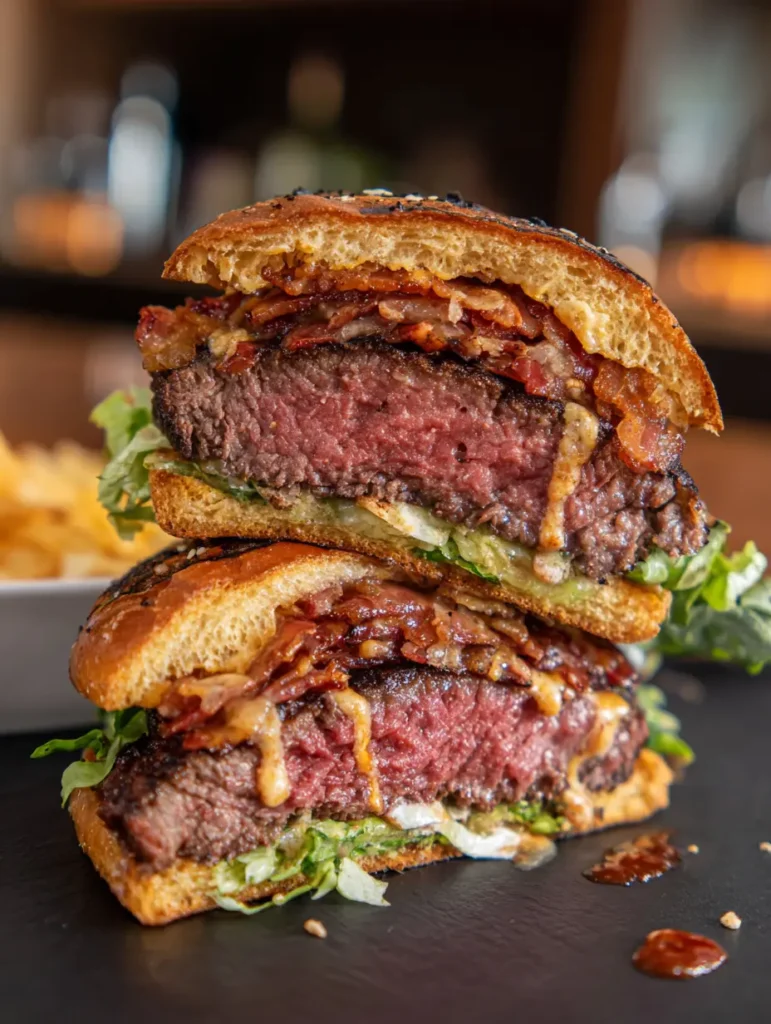
Carnivore buns are zero-carb buns made entirely from animal-based ingredients — eggs, cheese, and sometimes ground meat. Unlike keto buns that may include almond or coconut flour, true carnivore buns contain no plant ingredients whatsoever.
If you already love making [carnivore burger buns], you know how satisfying they are fresh. The problem is making them one by one every single day. That’s where carnivore buns meal prep changes everything. One batch session on the weekend means every burger, sandwich, and snack is covered for the days ahead — no daily cooking, no decision fatigue, no excuses.
The difference between carnivore buns and keto buns
Keto buns often rely on almond flour or psyllium husk for structure. Carnivore buns use only egg protein and animal fat. This makes them stricter, simpler, and actually easier to freeze and reheat without losing texture.
Who benefits most from meal prepping buns
Anyone following a strict carnivore protocol, time-poor professionals eating carnivore, families who want grab-and-go options, and anyone who has ever skipped a meal because cooking felt like too much effort.
Description
Batch-prepared carnivore buns made with eggs and cheese, designed for weekly meal prep and freezer storage.
Ingredients
– 8 eggs
– 200g cream cheese
– 1 tsp salt
Instructions
1. Preheat oven to 160°C
2. Whip egg whites
3. Mix yolks + cream cheese
4. Fold mixture gently
5. Fill molds
6. Bake 25–30 minutes
7. Cool completely
Notes
Cool fully before storing. Wrap individually for freezing.
Nutrition
- Serving Size: 1 bun
- Calories: 120
- Sugar: 0g
- Sodium: 200mg
- Fat: 5g
- Carbohydrates: 0g
- Fiber: 0g
- Protein: 8g
- Cholesterol: 180mg
Why Carnivore Buns Meal Prep Supports Your Diet Long-Term
The biggest threat to any elimination diet is convenience. When compliant food isn’t ready, off-plan food fills the gap. Carnivore buns meal prep removes that risk entirely.
From a metabolic standpoint, these buns carry an effective glycemic index of zero. No carbohydrates means no blood sugar spike, no insulin response, and no energy crash an hour later. They support blood sugar stability in a way no conventional bread ever could.
Research on dietary adherence consistently shows that people who prepare food in advance stick to their protocol significantly longer. Batch cooking buns is one of the simplest and highest-impact habits you can build on a carnivore diet.
Zero-carb buns and blood sugar stability
Because carnivore buns contain no starch, no sugar, and no fiber, they produce no measurable glucose response. This makes them appropriate for metabolic health management, insulin resistance, and type 2 diabetes — more on that below.
Time savings: how one Sunday session feeds you all week
A batch of 12 buns takes roughly 15 minutes to prepare and 25–30 minutes to bake. That single investment replaces daily cooking across 5 to 7 days. At scale, you’re saving 2 to 3 hours of kitchen time per week.
Best Ingredients for Carnivore Buns Batch Cooking
Getting ingredients right at batch scale matters more than it does for a single serving. Small errors multiply across 12 buns.
For a [carnivore sandwich bread] style that holds its shape through storage, the base formula is: egg whites for structure, cream cheese or mozzarella for fat and texture, and a pinch of salt. Everything else is a variation on that foundation.
Egg whites vs whole eggs — which works better at scale
Egg whites alone produce a lighter, airier bun that toasts well. Whole eggs add richness but can make the bun denser and slightly more fragile after freezing. For batch cooking buns intended for the freezer, a mix of 2 whites to 1 whole egg tends to give the best balance.
Cheese-based buns for texture
Cream cheese gives a soft, slightly tangy crumb. Shredded mozzarella creates a chewier, more bread-like structure when melted into the eggs before baking. Both freeze well. Avoid hard aged cheeses in the base — they don’t bind properly at volume.
Meat-forward variations: ground beef crust, pork rind base
For a firmer, more filling bun, some carnivore cooks press a thin layer of ground beef or crushed pork rinds into the base of the mold before adding the egg mixture. This creates a denser bun that holds up better under heavy fillings and reheats with a satisfying crust.
Optional binders and what to avoid
No binders needed and none allowed on strict carnivore. No xanthan gum, no psyllium husk, no gelatin unless it’s unflavored bovine gelatin from an animal source. Keep it clean. The egg protein alone provides all the structure you need if you bake correctly.
Step-by-Step Prep Guide: Batch Cooking 12 Carnivore Buns
Total time: 45 minutes | Yield: 12 buns | Oven: 160°C / 320°F
What you need:
- 8 large eggs (or 6 eggs + 4 whites)
- 200g cream cheese, softened
- 1 tsp salt
- Silicone hamburger bun molds or a lined muffin tin
Steps:
- Preheat your oven to 160°C (320°F). Line your molds or muffin tin with a light coating of butter.
- Separate your eggs if using a white-heavy ratio. Whip the whites to soft peaks — this is what gives the bun its lift.
- In a separate bowl, beat the cream cheese until smooth, then mix in the yolks and salt.
- Gently fold the whipped whites into the cheese mixture in two additions. Don’t overmix — you want to keep as much air as possible.
- Fill each mold about three-quarters full. They will rise slightly.
- Bake for 25–30 minutes until golden on top and firm to the touch in the center.
- Critical step: do not remove from molds immediately. Let them cool in the molds for 10 minutes, then transfer to a wire rack.
- Cool completely on the rack — at least 30 minutes — before any storage.
Scaling from 6 to 24 buns
The recipe scales linearly. Double everything for 24 buns. The only adjustment: add 5 minutes to bake time when oven is running at full capacity, and rotate the trays halfway through.
How to test doneness before cooling
Press the center of a bun gently with one finger. It should spring back immediately and feel firm, not soft or wet. If it sinks, give it 5 more minutes. Underbaked buns will collapse and go soggy in storage — this is the single most common mistake.
Storage Techniques: Fridge and Container Options

Once your buns are completely cooled, you have two main options: refrigerator storage for the first half of the week, and freezer storage for everything beyond day 4.
For full guidance on keeping carnivore baked goods fresh, see our [carnivore storage guide].
Can you freeze carnivore buns?
Yes. Wrap each bun in parchment, freeze for 1 hour, then store in a sealed bag. They last up to 3 months and reheat best in the oven or air fryer.
How long do carnivore buns last in the fridge?
4 to 5 days in an airtight container. Stack them with a small square of parchment paper between each bun to prevent sticking. Glass containers with a tight lid work better than plastic zip bags for fridge storage — they regulate humidity more consistently.
Best containers for keeping texture
Avoid containers that are too large for the number of buns inside. Excess air space accelerates drying. Pack the container snugly, or use multiple smaller containers rather than one oversized one.
Signs a bun has gone off
Discard any bun that smells sour or off, shows visible moisture or liquid pooling at the bottom of the container, or has changed color in the center. When in doubt, discard. Egg-based baked goods don’t give a lot of warning.
How to Freeze Carnivore Buns Without Ruining Texture

Freezing buns is the key to a sustainable carnivore buns meal prep system. Done correctly, a frozen bun reheats to something very close to fresh-baked. Done incorrectly, you end up with a wet, flat disc that nobody wants to eat.
The parchment-wrap method
This is the only method worth using for freezing buns long-term:
- Take each fully cooled bun and wrap it individually in a sheet of parchment paper — not plastic wrap, which traps moisture against the surface.
- Place the wrapped buns in a single layer on a flat tray or baking sheet.
- Freeze uncovered for 1 hour. This is the flash-freeze step — it sets the structure before the buns touch each other.
- After 1 hour, transfer all wrapped buns into a large zip-lock freezer bag. Remove as much air as possible before sealing.
- Label the bag with the date and bun type.
- Store flat in the freezer for up to 3 months.
How to reheat frozen carnivore buns
Oven (best results): 150°C / 300°F for 5–7 minutes directly from frozen. The crust will crisp and the interior will warm through without drying out.
Air fryer: 160°C / 320°F for 3–4 minutes. Produces a slightly crispier exterior than the oven — great if you like a toasted texture.
Skillet: Medium heat with a small amount of butter, covered, for 3–4 minutes per side. Gives a pan-fried crust that works well for breakfast sandwiches.
Microwave: avoid. It steams the bun from the inside out, destroying the texture entirely.
Can you refreeze carnivore buns?
No. Refreezing egg-based baked goods degrades both texture and food safety. Thaw only what you plan to use within 24 hours. This is why individual wrapping matters — you pull exactly one bun at a time without disturbing the rest.
Common Mistakes When Meal Prepping Carnivore Buns ❌
Underbaking — the #1 cause of storage failure
If the bun isn’t fully set before it goes into storage, the residual moisture will turn it gummy within 24 hours. Always do the press test described above, and when in doubt, give it 5 more minutes.
Storing warm buns
This is the second most common mistake. A warm bun in a sealed container creates steam. That steam condenses on the lid and rains back down onto your buns, making them wet and soft. Always cool to room temperature on a wire rack — 30 minutes minimum, 45 to be safe.
Using the wrong container size
A single bun rattling around in a large container dries out fast. Match container size to quantity, or cushion with a folded piece of parchment.
Skipping individual wrapping before freezing
Buns frozen together in a pile stick together as they freeze and thaw unevenly. The individual wrap step takes 3 extra minutes and makes a significant difference. Don’t skip it.
Expert Tips for the Perfect Weekly Carnivore Bun System 🔥

Label everything. Date, recipe variant, and quantity. Future you on a tired Wednesday night will thank you.
Make two types per Sunday. A standard soft bun for everyday use and a denser meat-crusted bun for days you want something more substantial. Two trays, one oven session.
Use silicone molds. They release cleanly every time, produce a consistent shape, and are easy to wash at batch scale. A set of 6-cavity hamburger bun molds is worth the small investment.
Keep a freezer rotation. When you add a new batch, move the older buns to the front. First in, first out. This ensures you’re never eating a 3-month-old bun when a fresh batch is sitting behind it.
Toast before serving. Even a refrigerated bun benefits from 2 minutes face-down in a dry skillet before using. It wakes up the texture and adds a slight crispness that makes the whole meal feel fresher.
7-Day Meal Plan Using Prepped Carnivore Buns
Sunday: Batch cook 12 buns. Refrigerate 6, freeze 6.
Monday: Carnivore smash burger on a prepped bun. Simple, fast, satisfying.
Tuesday: Pulled pork (made in the slow cooker Sunday night) piled onto a bun with mustard.
Wednesday: Fried egg and bacon breakfast sandwich on a split bun — the classic.
Thursday: Ground beef patty with sliced cheddar and butter. Pull a bun from the fridge, toast it in the skillet.
Friday: Deli-style: thinly sliced roast beef, a smear of cream cheese, a bun from the fridge (last day before switching to freezer stock).
Saturday: Pull a frozen bun the night before. Reheat in the oven Saturday morning. Use for a brunch-style egg and sausage stack.
Sunday: Repeat. Bake another batch. Rotate the freezer.
Carnivore Bun Variants for Meal Prep
Mini carnivore slider buns
Use a 12-cavity mini muffin tin instead of full-size molds. Reduce bake time to 18–20 minutes. Perfect for snack prep, kids’ plates, or days you want 3 smaller meals instead of 2 large ones. See our full [carnivore burger buns guide] for slider-specific ratios.
Carnivore hot dog buns
Use a silicone financier mold or form bun shapes freehand on a lined baking tray, elongating them to roughly 15cm. The open-top shape means the surface crisps up nicely and holds a sausage or hot dog without slipping.
Carnivore sandwich bread loaf — sliceable
Double the base recipe, pour into a standard 900g loaf tin, and bake at 150°C for 40–45 minutes. Cool fully, then slice and freeze individually. Produces something very close to a [carnivore sandwich bread] in texture — excellent for days you want something that feels more like traditional eating.
Nutritional Values Per Bun (Standard Cream Cheese Recipe)
Per bun (approximate, based on 12-bun batch):
- Calories: 110–130 kcal
- Protein: 7–9g
- Fat: 9–11g
- Carbohydrates: 0g
- Fiber: 0g
- Glycemic index: 0
Values vary based on egg size, cheese fat content, and any additions. Track using the exact weights of your ingredients for precision.
Adapting Carnivore Bun Prep for Diabetes and Metabolic Health
Carnivore buns are one of the few bread alternatives that can be genuinely recommended for people managing type 2 diabetes or insulin resistance — not as a compromise, but as a legitimately beneficial food.
With zero carbohydrates, they produce no postprandial glucose spike. There is no insulin demand triggered, no energy crash, and no contribution to glycated hemoglobin over time. For someone monitoring blood glucose, a carnivore bun is metabolically neutral.
Portion guidance for diabetic meal planners
One to two buns per meal is a reasonable amount. The protein content (7–9g per bun) is moderate, and the fat is satiating. Most people find one bun is sufficient when paired with a protein source like a burger patty or eggs. The absence of carbohydrate means hunger is governed by protein and fat satiety — not by blood sugar fluctuation.
Always work with your healthcare provider when making significant dietary changes, particularly if you are on glucose-lowering medication.
FAQ
How long do carnivore buns last in the fridge?
4 to 5 days in an airtight container. Ensure they are fully cooled before sealing. Place parchment between layers to prevent sticking.
Can you freeze carnivore buns after baking?
Yes. Wrap individually in parchment, flash-freeze for 1 hour on a tray, then transfer to a freezer bag. They keep for up to 3 months. Reheat from frozen in a 150°C oven for 5–7 minutes
How many carnivore buns should I make per week?
For one person eating two bun-based meals per day, 12 to 14 buns covers the full week. For two people, batch 24 and use the freezer for days 5 onward.
Are carnivore buns safe for diabetics?
Yes. They contain zero carbohydrates and produce no blood glucose response. They are suitable for type 2 diabetes and insulin resistance management. Consult your doctor before major dietary changes.
Why do my carnivore buns go soggy after storing?
The most common cause is storing them before they are fully cooled. Residual heat creates steam inside the container, which softens the crust. Cool on a wire rack for at least 30 minutes before sealing.
Conclusion
Carnivore buns meal prep is one of the highest-leverage habits you can build on a carnivore diet. One focused Sunday session eliminates the daily cooking question — and removes the temptation to reach for something off-plan.
Master the batch cook, nail the storage method, and use the freezer as your buffer. Your future self will open the fridge on a Wednesday night and find exactly what they need, already done.
Start this Sunday. Bake 12 buns. See how different the rest of your week feels.
At Looksyumy, we’re proud to share recipes that bring people together around the table, creating moments worth remembering with nothing more than three simple ingredients. These carnivore burger buns are just the beginning of what’s possible when you embrace the power of simplicity in the kitchen.
For more updates, follow us on instagram.