👉 Print the portable sandwich moisture log and stacking cheat sheet in the pro tips section — it maps every filling category by moisture output level and gives you the exact layering sequence that prevents sogginess across all transit times.
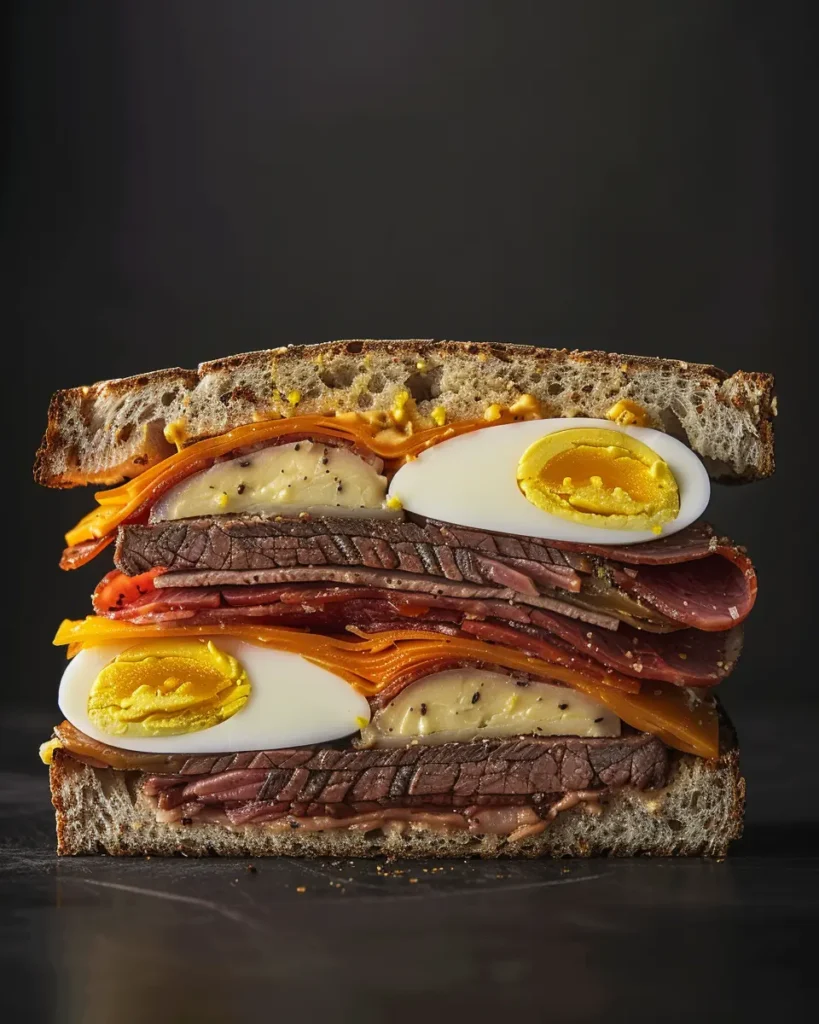
Table of Contents
Table of Contents
Building a carnivore sandwich that survives the journey from kitchen to lunchbox without structural collapse requires understanding moisture migration before a single ingredient is placed. Every protein filling in a zero-carb sandwich releases moisture during refrigeration — cold deli meats sweat as their surface temperature equilibrates with the surrounding air, cooked proteins release bound water as they cool and contract, and fat-rich fillings migrate lipids outward from their surface into any porous material they contact. An egg-white-based carnivore bread is significantly more absorbent than wheat bread because its open protein crumb lacks the starch coating that slows liquid penetration in conventional loaves. Place a wet filling directly against that crumb surface and the bread absorbs the released moisture within thirty to forty-five minutes, softening from a sliceable, holdable structure into a compressed, wet mass that cannot be picked up without falling apart.
To balance high-protein carnivore sandwich ideas and protect structural integrity under zero-carb conditions, position fat-rich solid components — sliced cold cuts, hard-cooked egg, firm cheese — as a barrier layer directly against the bread crumb surface before any moisture-releasing protein is introduced, slice all fillings to uniform thickness so compression force during transport is distributed evenly across the stack rather than concentrated at the thickest point, and wrap the assembled sandwich in a layer of parchment before sealing in a container to absorb any surface condensation that forms during transit without transferring it back to the bread surface. The stacking sequence is the structural variable that separates a sandwich that arrives intact from one that arrives as an unsalvageable wet stack — and it is determined entirely before the lunchbox is closed.
Easy Sandwich Combinations for Maximum Structural Hold
A carnivore sandwich loses structural hold at the bread-filling interface when the first filling layer placed against the crumb surface releases more moisture than the crumb’s protein structure can absorb without softening — the underlying reason is that egg-white bread crumb has a high surface-area-to-volume ratio that accelerates liquid absorption compared to denser protein matrices, meaning wet fillings degrade it faster than they would degrade a conventional bread with starch-coated pores.
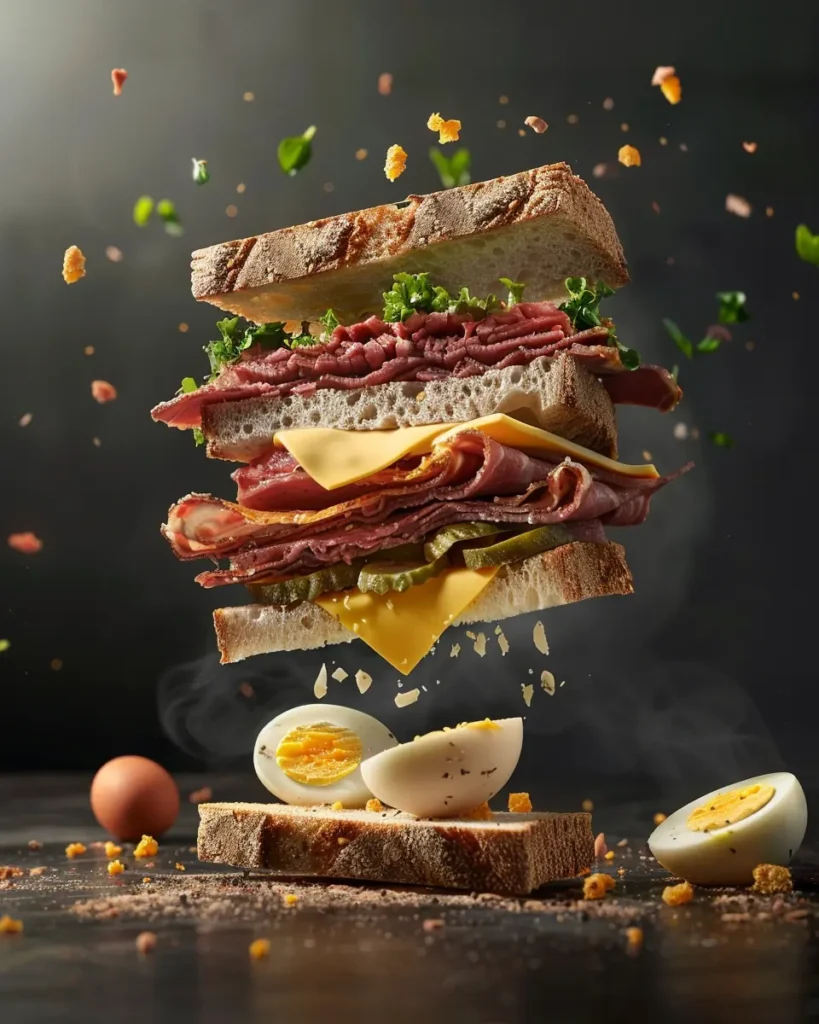
The Looksyumy Sandwich Assembly System defines the core principle for structural hold in zero-carb sandwich combinations: always place the driest, most structurally rigid filling component directly against the bread surface, and reserve moisture-releasing proteins for the center of the stack where they are isolated from direct bread contact by the barrier layers on either side. In practice, this means thin-sliced roast beef or firm pork belly as the first contact layer, followed by any softer or wetter protein — rare-cooked steak strips, cold egg yolk, marrow — in the middle position, with a second barrier layer of dry sliced meat against the top bread surface before closing. This sequence keeps all moisture-generating components insulated from direct crumb contact by protein layers that absorb and hold surface liquid rather than transmitting it into the bread. Our carnivore sandwich bread guide details the crumb density profiles of different zero-carb bread formulations and which ones provide the greatest moisture resistance for long-transit portable sandwiches.
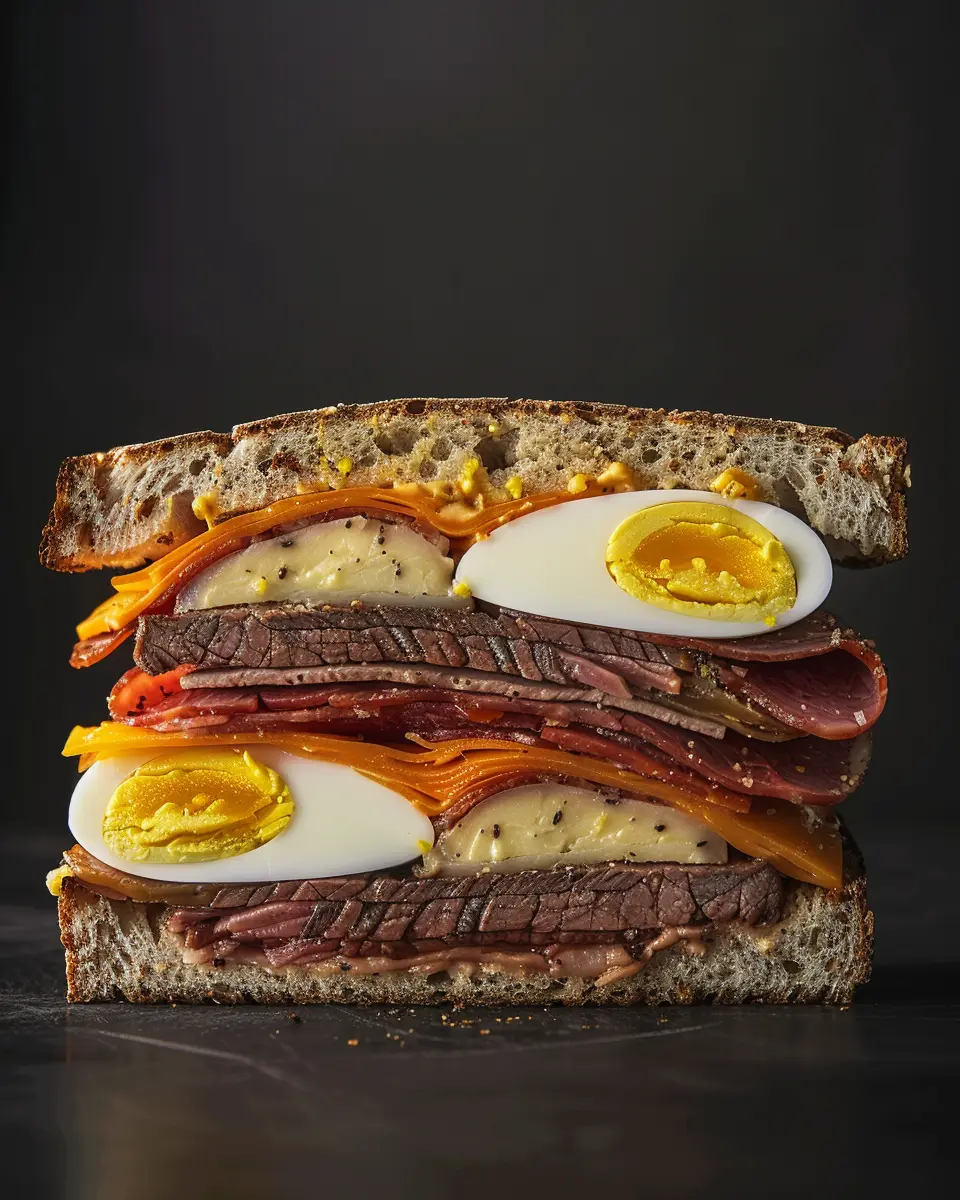
The combinations that consistently produce the best structural hold across a four-to-six hour transport window are roast beef plus cold butter plus hard-cooked egg, pork belly plus firm cheese plus thin-sliced prosciutto, and smoked salmon plus cold cream cheese plus hard-boiled egg white. In each case, the structural logic is identical: two dry, firm components flank a center filling that contributes fat and richness without releasing free moisture into the surrounding stack. The center filling is held in compression between the outer layers, which prevents lateral migration during transport while maintaining the textural contrast that makes the sandwich satisfying at serving time.
The rate at which free moisture migrates from protein surfaces into adjacent porous food matrices under refrigerated compression — and why surface-area-to-volume ratio governs absorption speed more than contact pressure alone — is documented in food physics research published by the Institute of Food Technologists, whose moisture migration studies confirm that open-pore protein matrices reach saturation significantly faster than starch-coated equivalents under identical storage conditions.
Portable Lunch Ideas: Controlling Moisture Migration
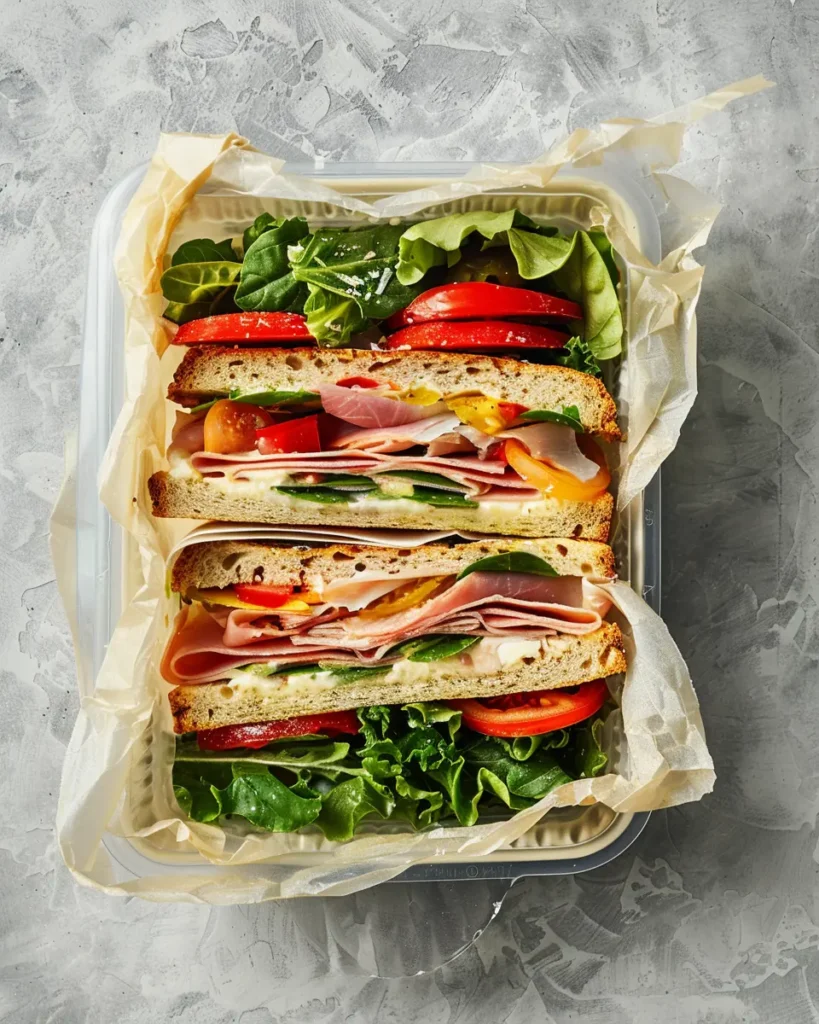
A carnivore sandwich that arrives at its destination with a wet, compressed bread layer and a filling that has shifted out of position during transport has experienced uncontrolled moisture migration — the mechanical explanation is that free water released by chilled protein fillings moves along the path of least resistance, which in a stacked sandwich is always toward the most porous surface, and egg-white carnivore bread is consistently that surface regardless of how carefully the filling was prepared.
I learned the specific failure mode of wet-filling-against-crumb layering through a lunch I had packed with what I was certain was a structurally sound combination. I had assembled a sandwich using sliced rare roast beef — which had been refrigerated overnight — placed directly against the bread surface, with a layer of cold cream cheese in the center. The roast beef looked dry on the surface when I sliced it, so I didn’t think it would be a problem. By the time I opened my lunchbox four hours later, the bread slice that had been in direct contact with the roast beef had absorbed so much surface moisture from the cold meat that it had compressed to roughly half its original thickness and was completely soft — it tore when I tried to pick the sandwich up. The roast beef surface moisture that had looked negligible on the cutting board had been in contact with a highly absorbent protein crumb for four hours under compression, and the result was structurally unusable. The correction was simple — a thin layer of cold butter applied directly to the bread surface before any filling was placed, creating a fat barrier that slowed moisture penetration by coating the crumb pores. Our carnivore buns guide covers the crumb density and fat-content profiles of different zero-carb bun formulations and which ones require less barrier protection for wet filling combinations.
The most effective moisture migration control protocols for portable carnivore lunches operate at three levels simultaneously. At the bread surface level, a fat barrier — cold butter, cream cheese applied in a thin layer, or a slice of firm cheese placed directly against the crumb — slows moisture ingress by coating the protein pore network. At the filling level, all proteins are patted dry with a paper towel before stacking to remove surface moisture that would otherwise transfer immediately on contact. At the container level, a sheet of parchment wrapped around the assembled sandwich absorbs any condensation that forms on the outer surfaces during transport, preventing that moisture from migrating back through the wrapper into the bread.
Savory Fillings for All-Meat Portable Meals
The best savory fillings for portable carnivore sandwiches maintain their structural position within the stack during transport — the structural driver is filling density relative to compression force, meaning fillings that are firm enough to resist being squeezed out of position when the sandwich is handled or packed under weight perform significantly better in portable contexts than soft, spreadable, or loose fillings that migrate laterally under pressure.
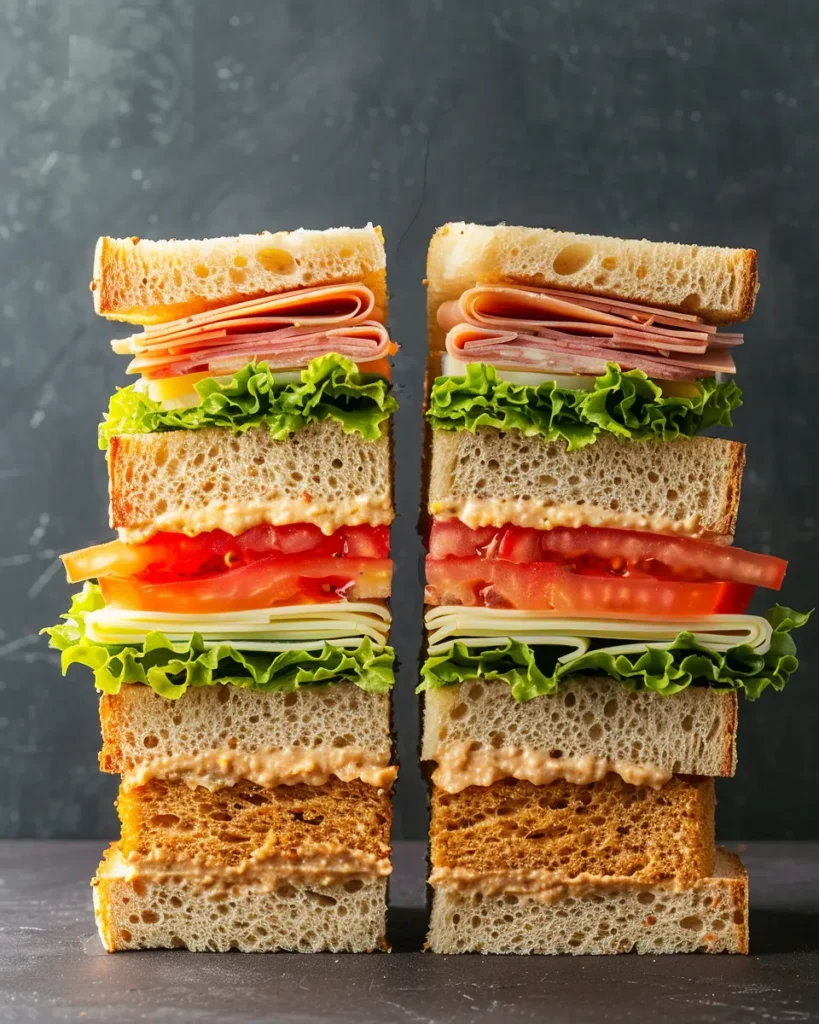
These high-protein portable sandwich combinations and structural stacks are assembled entirely without almond flour wraps, coconut flour pockets, psyllium husk flatbreads, xanthan gum binding agents, or any plant-based starch component. These ingredients appear frequently in grain-free sandwich contexts as structural substitutes — almond flour tortillas for wrapping, psyllium husk flatbreads as bread alternatives, xanthan gum as a filling binder — and none of them are carnivore-compliant. More critically, none of them solve the actual structural problems that make portable carnivore sandwiches challenging: moisture migration from cold protein fillings into porous bread surfaces, filling displacement under transport compression, and fat migration from rich center fillings into surrounding layers during refrigerated storage. A psyllium husk wrap absorbs moisture from wet fillings faster than an egg-white bread crumb does — it is structurally worse, not better, as a portable lunch vehicle. The solutions to portable carnivore sandwich structural problems are entirely mechanical: fat barrier layers, dry filling surfaces, firm filling selection, correct stacking sequence, and parchment wrapping. No plant compound is needed and none would help.
The savory fillings that perform best in portable zero-carb sandwich contexts share three structural properties: they are sliced to a consistent thickness that distributes compression evenly, they have a low free-moisture content at refrigerator temperature, and they contribute fat through their composition rather than through a liquid or spreadable application. Thin-sliced prosciutto, bresaola, firm salami, cold roast pork belly, and hard-cooked egg sliced to uniform rounds all satisfy these criteria. Rare-cooked steak strips, soft-boiled egg, and pulled meat all fail at least one criterion — they are either inconsistently thick, release free moisture when chilled, or displace laterally under compression. Reserve those fillings for eat-immediately preparations and use the firm-slice category exclusively for transport.
Pro Tips for Balanced Layering and Stacking Stability 🔥
- Apply a cold fat barrier to both bread surfaces before any filling is placed. Butter, cream cheese, or a thin slice of firm cheese applied directly to the crumb surface coats the protein pore network and slows moisture ingress from adjacent fillings by creating a lipid seal between the bread and the filling stack.
- Pat all protein fillings dry before stacking. Surface moisture on refrigerated deli meats and cooked proteins is the primary source of bread sogginess in portable sandwiches — thirty seconds with a paper towel before assembly eliminates the moisture that causes four hours of structural degradation.
- Slice all fillings to uniform thickness. Uneven filling thickness creates pressure points under transport compression — the thickest point bears the full compression force and squeezes adjacent fillings laterally out of position, while the thinnest points leave gaps that allow moisture to pool.
- Wrap assembled sandwiches in parchment before container sealing. Parchment absorbs condensation that forms on outer surfaces during transport and prevents it from migrating back into the bread — plastic wrap traps that condensation against the bread surface and accelerates sogginess.
- Pack sandwiches with the heaviest filling component facing down. Gravity acts on filling density during transport — placing the heaviest component at the base of the stack rather than the top prevents it from compressing downward through lighter fillings and displacing them out of position.
- For sandwiches held longer than four hours, separate bread from filling until serving. Pack bread slices and filling components in separate container sections and assemble immediately before eating — this eliminates all bread-contact moisture migration regardless of filling type and is the only protocol that guarantees structural integrity across full-day transport.
- Use firm cheese as the outermost filling layer on both sides. Firm cheese — aged cheddar, parmesan, firm gouda — provides the most moisture-resistant filling surface available in a carnivore sandwich context, slowing lipid and moisture transfer in both directions and maintaining the bread-filling interface integrity through the full transport window. Our soft carnivore bread guide covers the crumb formulations that pair best with firm cheese barrier layers for maximum transit durability.
- Orient the container so the sandwich is held under light, even compression rather than loose. A sandwich that shifts freely inside a large container experiences repeated impact during transport that displaces fillings and compresses the bread unevenly — a container that holds the sandwich snugly prevents movement and maintains the assembly geometry from packing to serving.
Carnivore Sandwich Ideas: The Complete Structural Assembly and Portable Lunch Guide
- Prep Time: 10 Minutes
- Total Time: 10 Minutes
- Yield: 1 Sandwich 1x
- Category: Lunch
- Method: Assembled
- Cuisine: Carnivore
- Diet: Carnivore Diet
Description
A portable carnivore sandwich built with protein-rich fillings and moisture-control layering techniques. Designed for meal prep, lunchboxes, and travel while maintaining structure, texture, and flavor.
Ingredients
2 slices carnivore sandwich bread
100 g sliced roast beef
2 hard-boiled eggs, sliced
20 g cold butter
2 slices aged cheddar cheese
Salt to taste
Instructions
Spread a thin layer of cold butter on both bread slices.
Place a slice of cheddar on each bread slice to create a moisture barrier.
Add sliced roast beef evenly across the bottom layer.
Add sliced hard-boiled eggs in a uniform layer.
Close the sandwich with the second bread slice.
Wrap tightly in parchment paper.
Refrigerate until ready to serve.
Slice in half and enjoy.
Notes
Always use a fat barrier between bread and fillings.
Pat fillings dry before assembly.
Wrap with parchment rather than plastic wrap.
For transport longer than 4 hours, store fillings separately and assemble before eating.
Nutrition
- Serving Size: 1 Sandwich
- Calories: 620
- Sugar: 1 g
- Sodium: 980 mg
- Fat: 42 g
- Saturated Fat: 22 g
- Unsaturated Fat: 16 g
- Trans Fat: 0 g
- Carbohydrates: 2 g
- Fiber: 0 g
- Protein: 52 g
- Cholesterol: 365 mg
Frequently Asked Questions
Why does my carnivore sandwich bread get soggy when stored next to cold meats?
Egg-white carnivore bread becomes soggy when stored in contact with cold meats because its open protein crumb structure has no starch coating to slow liquid penetration — every pore in the crumb surface is directly accessible to moisture released by adjacent proteins. Cold deli meats release surface moisture continuously as they equilibrate to ambient temperature inside a closed container, and that moisture moves along the pressure gradient created by the bread-filling contact into the most porous available surface. At refrigerator temperature, this migration is slower but still cumulative — a four-hour storage window produces enough moisture transfer to fully saturate the contact surface of a standard egg-white bread slice. The solution is a fat barrier applied to the bread surface before filling contact, combined with patting all protein fillings dry before assembly. These two steps address the moisture source and the penetration pathway simultaneously, which is more effective than either alone.
How do you create a non-slip fat barrier inside zero-carb lunches?
A non-slip fat barrier inside a carnivore sandwich is created by applying a fat component that is solid at refrigerator temperature — cold butter or firm cream cheese — in a thin, even layer directly to the bread crumb surface rather than using liquid or warm fats that penetrate immediately into the crumb rather than coating its surface. The distinction between a coating fat and a penetrating fat is temperature: butter applied cold remains on the surface as a semi-solid film that physically separates the crumb from the adjacent filling; butter applied warm melts into the crumb and provides no surface barrier. The barrier function is purely physical — the fat film occupies the pore openings in the crumb surface and slows the rate at which filling moisture can enter. Firm cheese placed directly against the bread surface provides an even more effective barrier because its solid protein-fat matrix creates a complete physical separation between bread and filling with no pore-level penetration at all.
What are the best mess-free fillings for a portable carnivore lunch?
The most mess-free fillings for portable carnivore sandwiches are those that are firm enough to hold their position under transport compression without squeezing out laterally, dry enough on their surfaces not to release moisture onto adjacent bread layers, and sliced thinly enough to distribute compression force evenly across the full sandwich footprint. Thin-sliced prosciutto, firm salami, bresaola, cold roast pork belly sliced to four-millimeter thickness, and hard-boiled egg cut into uniform rounds all satisfy these criteria consistently. The fillings that produce the most handling mess — soft-boiled egg, rare steak strips, pulled meat, spreadable fat preparations applied in thick layers — share the property of being either too soft to resist lateral displacement under compression or too moisture-rich to maintain a dry filling-bread interface during transport. Reserve those fillings for immediate consumption and use the firm-slice category for any sandwich that needs to survive more than ninety minutes between assembly and eating.