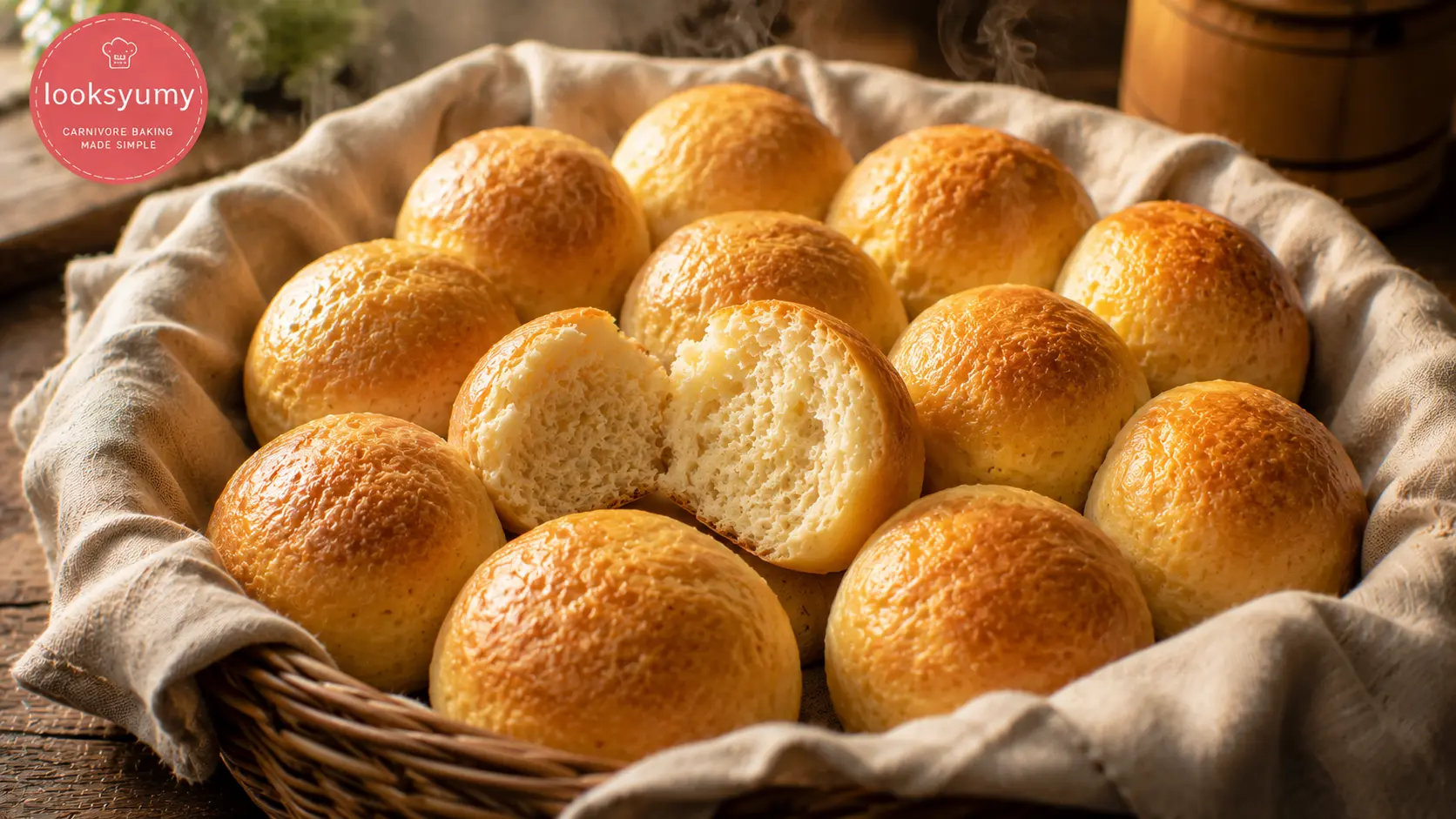
Finding a dinner roll that fits an animal-based lifestyle usually means choosing between two disappointing options: a dense hockey puck or a dry, spongy “egg foam” that falls apart the second it touches gravy. Neither one belongs on a family table next to a roast or a pot of bone broth.
To bake carnivore bread rolls that stay soft, airy, and hold their shape, whip the egg whites to a stable stiff-peak foam, fold in warm animal fat and protein isolate without deflating the structure, then portion the dough into small, individual balls rather than one large loaf. Small portions cook through gently before the exterior over-sets, which is what keeps the crumb tender instead of rubbery. This is the foundation of what I call the Looksyumy Roll System — a portioning method I developed after years of pulling flat, cracked, or hollow carnivore breads out of my own oven.
Soft carnivore bread rolls aren’t created by adding more ingredients. They’re created by giving trapped air enough structure to survive the bake.
If you’re looking for a slightly larger version with the same airy texture, these soft carnivore buns use the same whipped-egg foundation while providing extra structure for burgers and sandwiches.
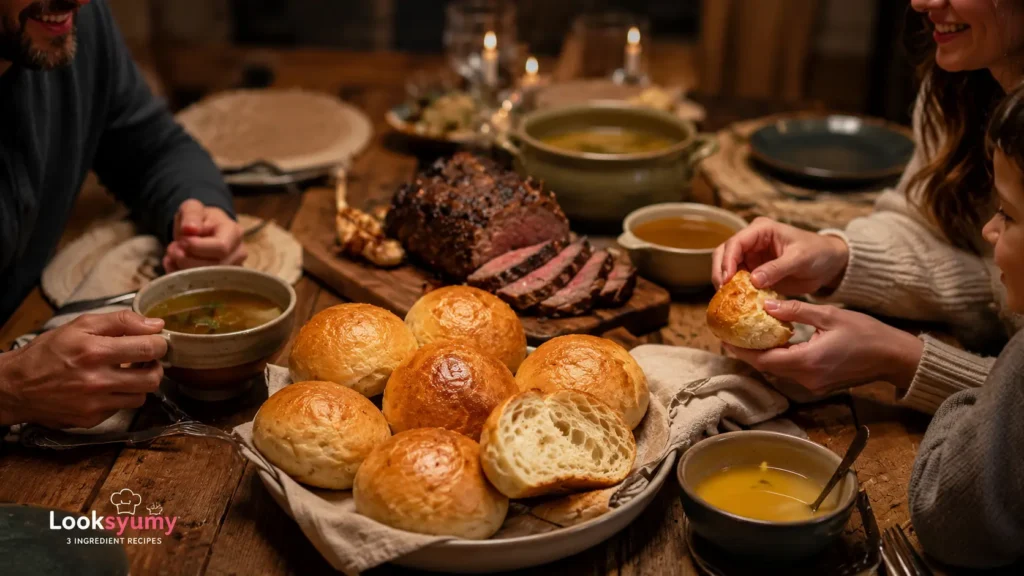
Table of Contents
Quick-View: Serving & Macros
| Metric | Per Batch (12 Rolls) | Per Individual Roll |
|---|---|---|
| Prep Time | 15 minutes | — |
| Bake Time | 22–25 minutes | — |
| Serving Size | 12 rolls | 1 roll |
| Calories | 960 kcal | 80 kcal |
| Protein | 84 g | 7 g |
| Fat | 66 g | 5.5 g |
| Carbs | 1.2 g | 0.1 g |
Macros are estimates based on standard USDA values for egg whites, whey protein isolate, and butter; actual values will shift slightly with brand-specific ingredients.
The Master Recipe
Print
Soft & Pillowy Carnivore Bread Rolls That Never Turn Dry
- Prep Time: 15 minutes
- Cook Time: 24 minutes
- Total Time: 39 minutes
- Yield: 12 rolls 1x
- Category: Bread
- Method: Baking
- Cuisine: Carnivore
- Diet: Gluten-Free
Description
These soft and pillowy carnivore bread rolls are fluffy, tender, and sturdy enough for sandwiches or family dinners without flour, starch, or plant-based ingredients. Whipped egg whites, animal fat, and protein isolate create a light crumb that stays soft instead of dry or rubbery.
Ingredients
- 6 large egg whites, room temperature
- 4 large egg yolks, room temperature
- 1/3 cup (30 g) unflavored whey protein isolate
- 3 tbsp melted tallow, lard, or ghee, slightly cooled
- 2 tbsp full-fat cream cheese, softened
- 1/2 tsp cream of tartar
- 3/4 tsp fine sea salt
- 1 tbsp melted butter, for brushing
- Flaky sea salt (optional)
Instructions
- Preheat oven to 325°F (163°C).
- Line a baking sheet with parchment paper.
- Whip egg whites with cream of tartar until stiff, glossy peaks form.
- Whisk egg yolks, cream cheese, animal fat, protein isolate, and salt until smooth.
- Stir one spoonful of whipped egg whites into the yolk mixture.
- Gently fold the remaining egg whites into the batter in three additions.
- Pipe or spoon 12 evenly sized rolls onto the prepared baking sheet.
- Brush with melted butter and sprinkle lightly with flaky salt.
- Bake for 22–25 minutes until golden and springy.
- Turn off the oven, crack the door, and let the rolls rest for 5 minutes.
- Transfer to a wire rack and cool before serving.
Notes
Stiff egg whites are essential for volume and structure. Fold gently to preserve trapped air, and avoid overmixing. Cooling the rolls gradually inside the oven helps prevent wrinkles and keeps the crumb tender.
Nutrition
- Serving Size: 1 roll
- Calories: 80
- Sugar: 0.1 g
- Sodium: 170 mg
- Fat: 5.5 g
- Saturated Fat: 2.5 g
- Unsaturated Fat: 2.4 g
- Trans Fat: 0 g
- Carbohydrates: 0.1 g
- Fiber: 0 g
- Protein: 7 g
- Cholesterol: 78 mg
Ingredients
- 6 large egg whites, room temperature
- 4 large egg yolks, room temperature
- 1/3 cup (about 30 g) unflavored whey protein isolate (egg white protein isolate works as a substitute)
- 3 tbsp pure animal fat, melted and cooled slightly (tallow, lard, or ghee)
- 2 tbsp full-fat cream cheese, softened to room temperature
- 1/2 tsp cream of tartar
- 3/4 tsp fine sea salt, plus extra for topping
- 1 tbsp melted butter, for brushing the tops before baking
At Looksyumy, every successful dinner roll begins with structure. Ingredients matter, but the way they’re combined matters even more.
Directions
Preheat the oven to 325°F (163°C) and line a baking sheet with parchment paper. Set out a piping bag or a large zip-top bag with the corner snipped off.
In a large, grease-free bowl, whip the egg whites and cream of tartar on medium-high speed until they hold a stiff, glossy peak — the foam should stand upright on the beater without slumping. This is your structural scaffolding, so don’t rush it.
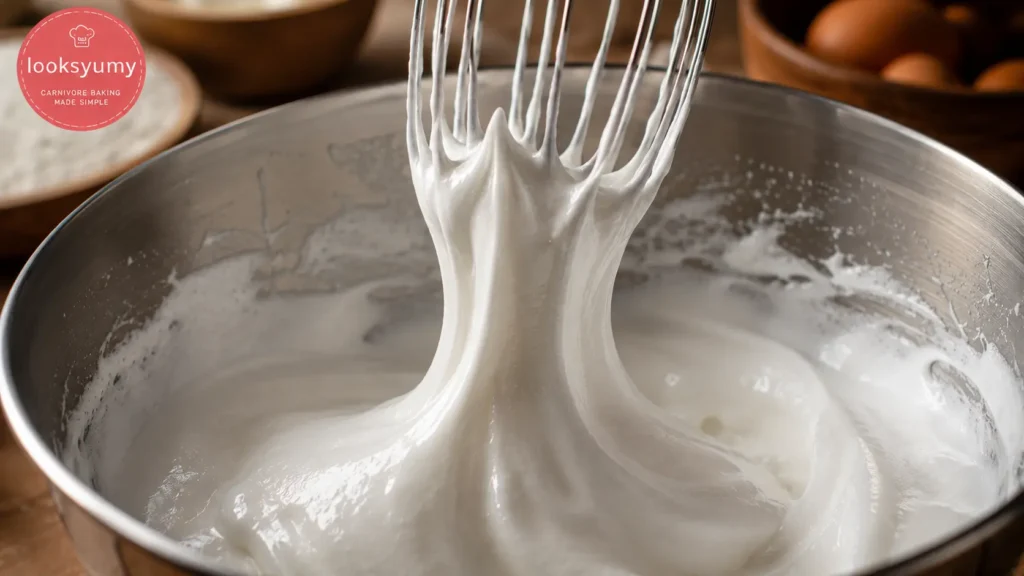
In a separate bowl, whisk the egg yolks, melted animal fat, softened cream cheese, protein isolate, and sea salt together until completely smooth with no visible lumps of cream cheese remaining.
Take one large spoonful of the whipped egg whites and stir it directly into the yolk mixture. This lightens the base so it folds in evenly instead of collapsing the rest of the foam.
Gently fold the loosened yolk mixture into the remaining egg whites in three additions, using a rubber spatula and a scooping, under-and-over motion. Stop folding the moment no dry streaks remain — overmixing here is the single biggest cause of flat rolls.
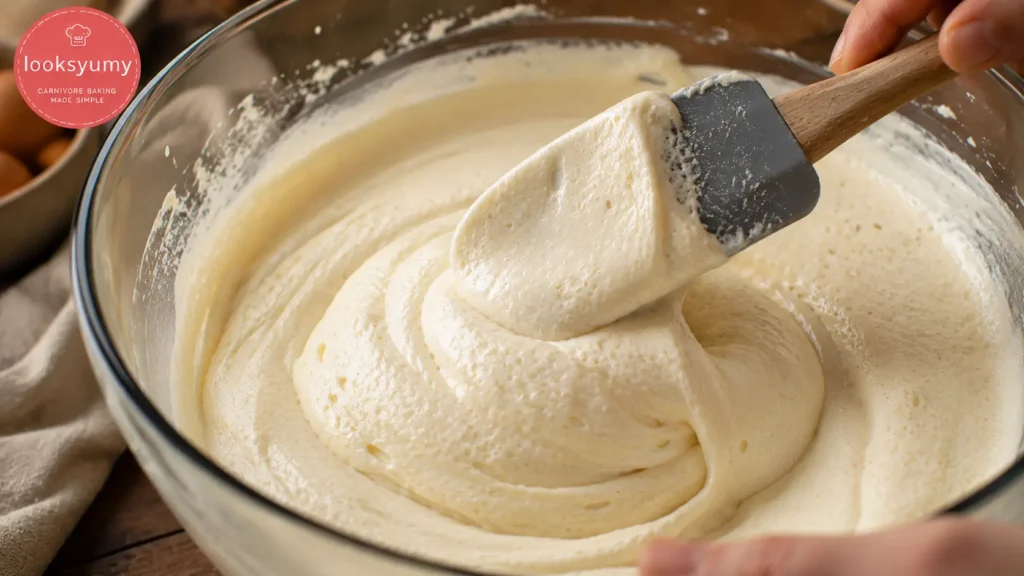
Transfer the batter to your piping bag. Pipe or spoon the dough into 12 individual mounds on the lined baking sheet, each about 2.5 inches wide, spaced at least 2 inches apart on all sides.
Lightly brush the top of each mound with melted butter, then sprinkle with a pinch of flaky sea salt.
Bake for 22–25 minutes, until the rolls are golden on top and spring back gently when pressed with a fingertip.
Turn off the oven, crack the door open, and let the rolls sit inside for 5 minutes before transferring them to a wire rack. This gradual temperature drop keeps the crust from wrinkling as it cools.
The five-minute rest inside the turned-off oven allows the crust and crumb to finish stabilizing together, reducing wrinkles and improving texture.
Most carnivore dinner rolls fail because bakers focus on ingredients instead of heat distribution. The shape of the dough has just as much influence on texture as the recipe itself.
Ingredient Science: Why the Roll System Works
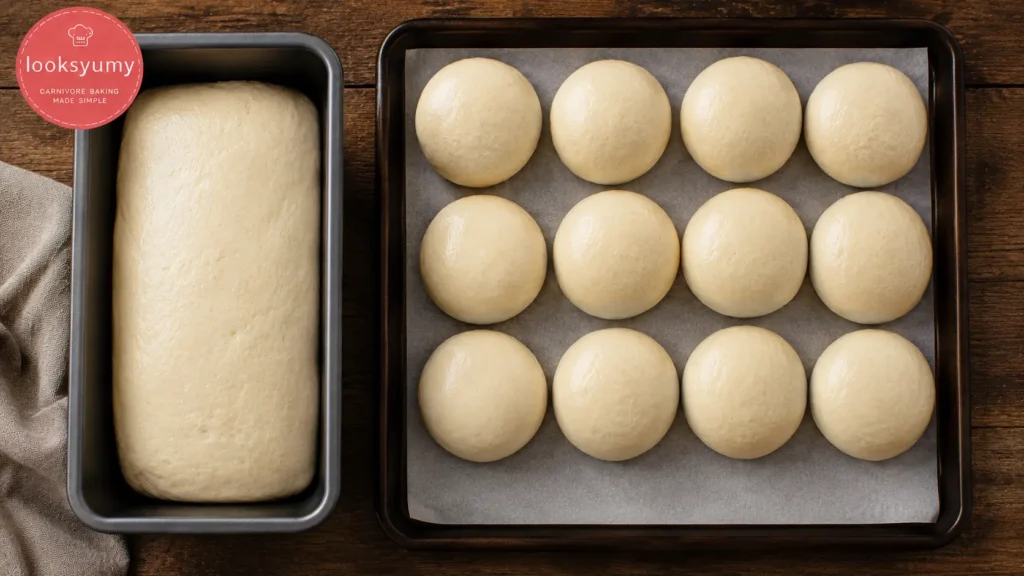
The primary factor behind a soft carnivore roll isn’t the ingredient list — it’s how the dough is portioned. A full loaf pan traps steam in the center while the edges dry out long before the middle finishes setting, which is why so many carnivore loaves come out gummy in the middle and tough at the crust.
When you scale the same batter down into individual, golf-ball-sized portions, you dramatically increase the surface-area-to-mass ratio of each piece. Heat reaches the center of a small roll almost as fast as it reaches the outside, so the crumb finishes setting evenly instead of racing the crust. That’s the entire mechanism behind the Roll System: it isn’t a special ingredient, it’s geometry working in your favor.
Getting the right carnivore dough consistency is just as important as whipping the egg whites correctly. A batter that’s too thin spreads
In my early kitchen trials, I noticed my dinner rolls turned out dense or deflated because I was baking the batter as one large slab and then slicing it into “rolls” afterward. The interior never got the same heat exposure as the crust, so the center stayed damp and heavy no matter how well I’d whipped the egg whites. Switching to individually piped mounds — spaced far enough apart that hot air could circulate fully around each one — was what finally gave me a roll that was light all the way through, not just on the outside.
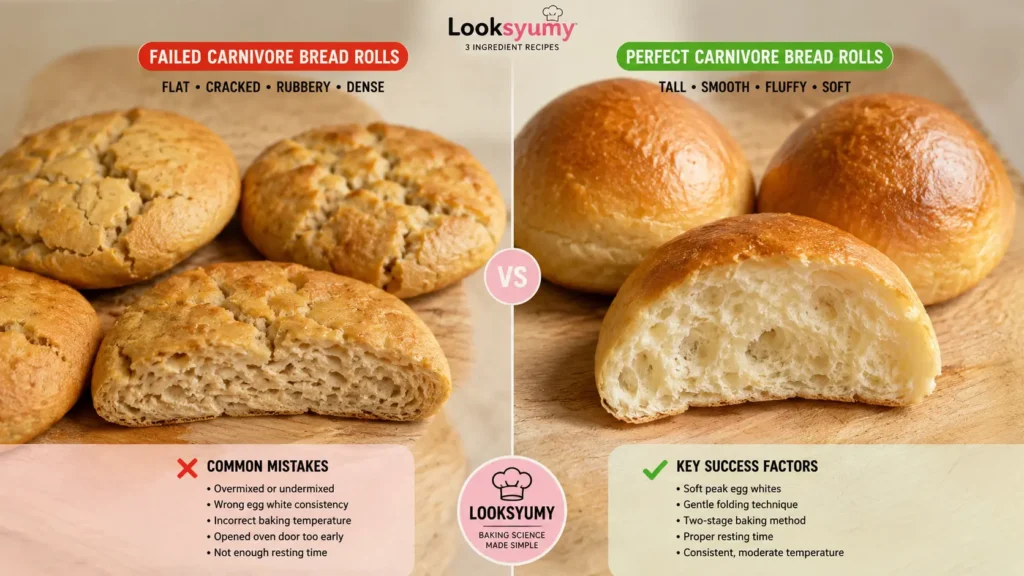
Every failed roll can usually be traced to one of four variables: foam strength, batter temperature, portion size, or baking time.
Troubleshooting & Diagnostics
| Problem | Root Cause | Kitchen Fix |
|---|---|---|
| Skins crack across the top | Oven temperature too high, causing the exterior to set and expand faster than the interior | Drop the oven to 325°F (163°C) and bake on the middle rack, away from direct top heat |
| Rolls flatten on the sheet | Egg whites were under-whipped or the yolk mixture was folded in too aggressively, collapsing the foam | Whip whites to a true stiff peak before folding, and use slow, gentle folds in three additions |
| Hollow centers | Batter was overmixed after folding, releasing too much trapped air before baking | Stop folding the instant the streaks disappear, and pipe the batter within a few minutes of finishing it |
| Rolls spread instead of holding a dome shape | Fat or cream cheese was too warm when mixed in, thinning the batter | Let melted fat cool to just above room temperature and ensure cream cheese is soft, not melted, before combining |
| Dense, rubbery bite | Too much protein isolate relative to egg whites, tightening the crumb structure | Measure the protein isolate by weight rather than volume and don’t round up the amount |
| Pale, soft tops that never brown | Oven rack positioned too low, or rolls baked without a butter brush on top | Move the sheet to the middle rack and brush tops with melted butter before baking |
Expanding the Bread Entity: From Rolls to Loaves
The real issue with scaling a roll recipe up into a full loaf is that the same batter behaves differently once it loses that small-portion surface area. A technique tuned for 2.5-inch mounds won’t automatically translate to a loaf pan, because the ratio of crust to crumb changes completely.
This dinner roll recipe is the entry point into a broader Carnivore Bread Hub built around the same whipped-egg, animal-fat, protein-isolate base — the same principles just get adjusted for different vessels. Sandwich-style bread rolls use a slightly firmer fold and a longer, lower bake to hold up to slicing. A full loaf needs a lower oven temperature and a much longer bake time to let heat penetrate the center without scorching the crust, sometimes tented with foil partway through. If you’re batch-baking for the week, this same dough also works pressed thin on a sheet pan and cut into squares for sandwich-style buns, giving you one base recipe that flexes across rolls, buns, and loaves depending on what your family meal calls for.
FAQ
How do I reheat carnivore bread rolls without drying them out? Warm them in a skillet over low heat with a small pat of butter, turning once, for about 2 minutes per side. The butter re-crisps the exterior while steaming the crumb gently from the outside in, which restores the soft texture better than a microwave does.
Can I freeze a batch-baked batch of rolls? Yes — let the rolls cool completely, then freeze them in a single layer before transferring to an airtight bag or container. They’ll hold well for up to 2 months. Thaw at room temperature for about an hour, then reheat in a 325°F (163°C) oven for 8–10 minutes to bring back the exterior texture.
How do I stop the rolls from sticking to the baking sheet? Always bake on parchment paper rather than a bare or lightly greased sheet — the natural sugars in the animal fat and protein isolate can caramelize onto metal as they cool, tearing the base. Parchment gives a clean release every time, and a silicone baking mat works as a reusable alternative.