Room Temperature vs Cold Eggs for Carnivore Baking: Does It Matter?
Do you really need room-temperature eggs for carnivore baking?
Not always.
The answer depends largely on what you’re doing with the eggs.
If you’re mixing whole eggs directly into a simple batter, the difference between cold and room-temperature eggs may not be the first variable to investigate.
But if you’re separating eggs and relying on whipped egg whites for structure, temperature becomes a more useful part of the technique.
So the better question isn’t simply:
“Should carnivore baking use room-temperature eggs?”
It’s:
“When does egg temperature actually matter for the way I’m using the eggs?”
Why Can Egg Temperature Matter in Carnivore Baking?
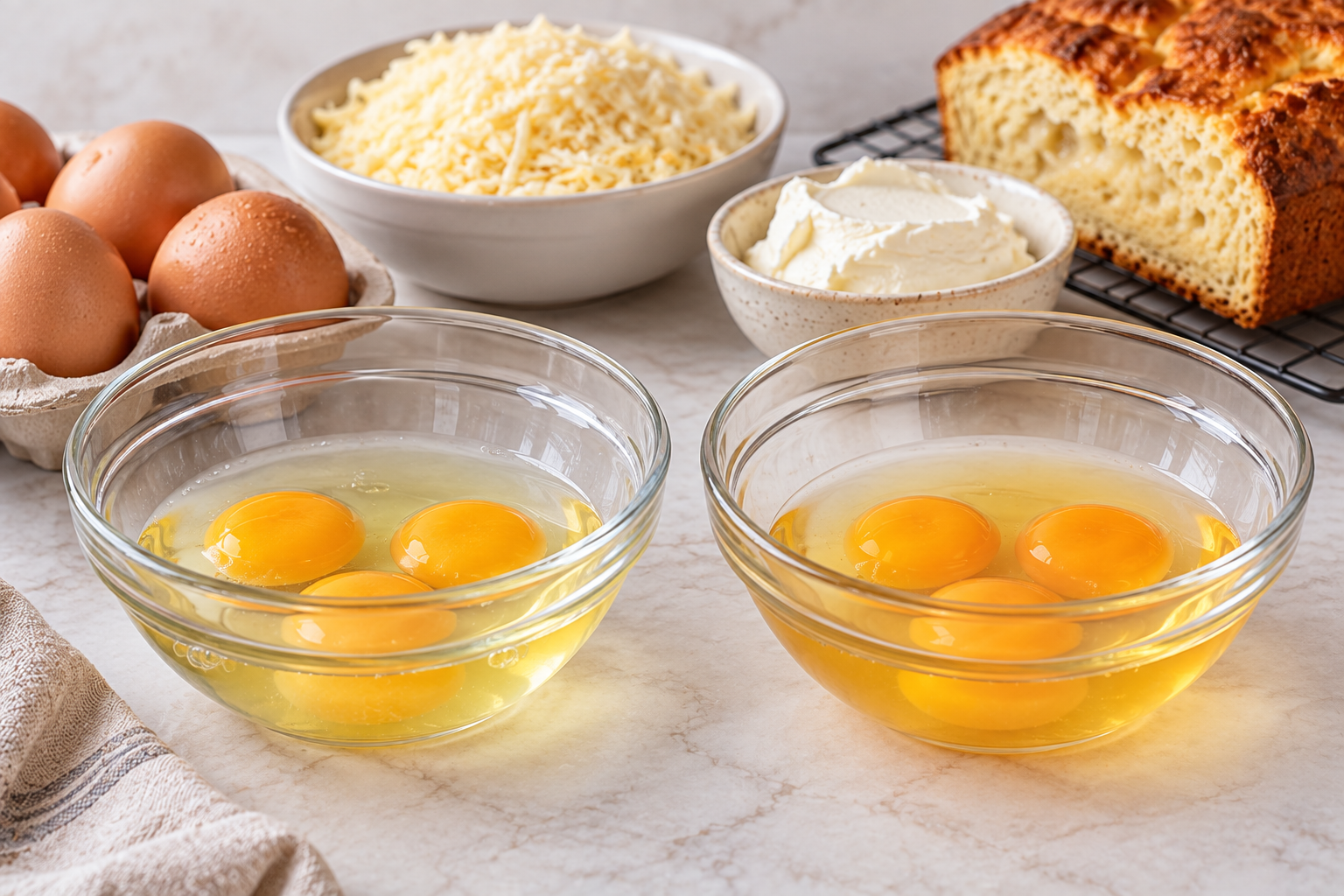
Egg temperature can affect how ingredients behave during preparation, but its importance depends on the formulation and technique.
There is a meaningful difference between:
- mixing whole eggs into a batter,
- separating eggs,
- and whipping egg whites to create structure.
Those methods should not be treated as if they have exactly the same temperature requirements.
For simple whole-egg mixtures, don’t assume that using cold eggs automatically causes a baking problem.
For recipes where whipped egg whites are doing important structural work, however, preparation technique deserves much more attention.
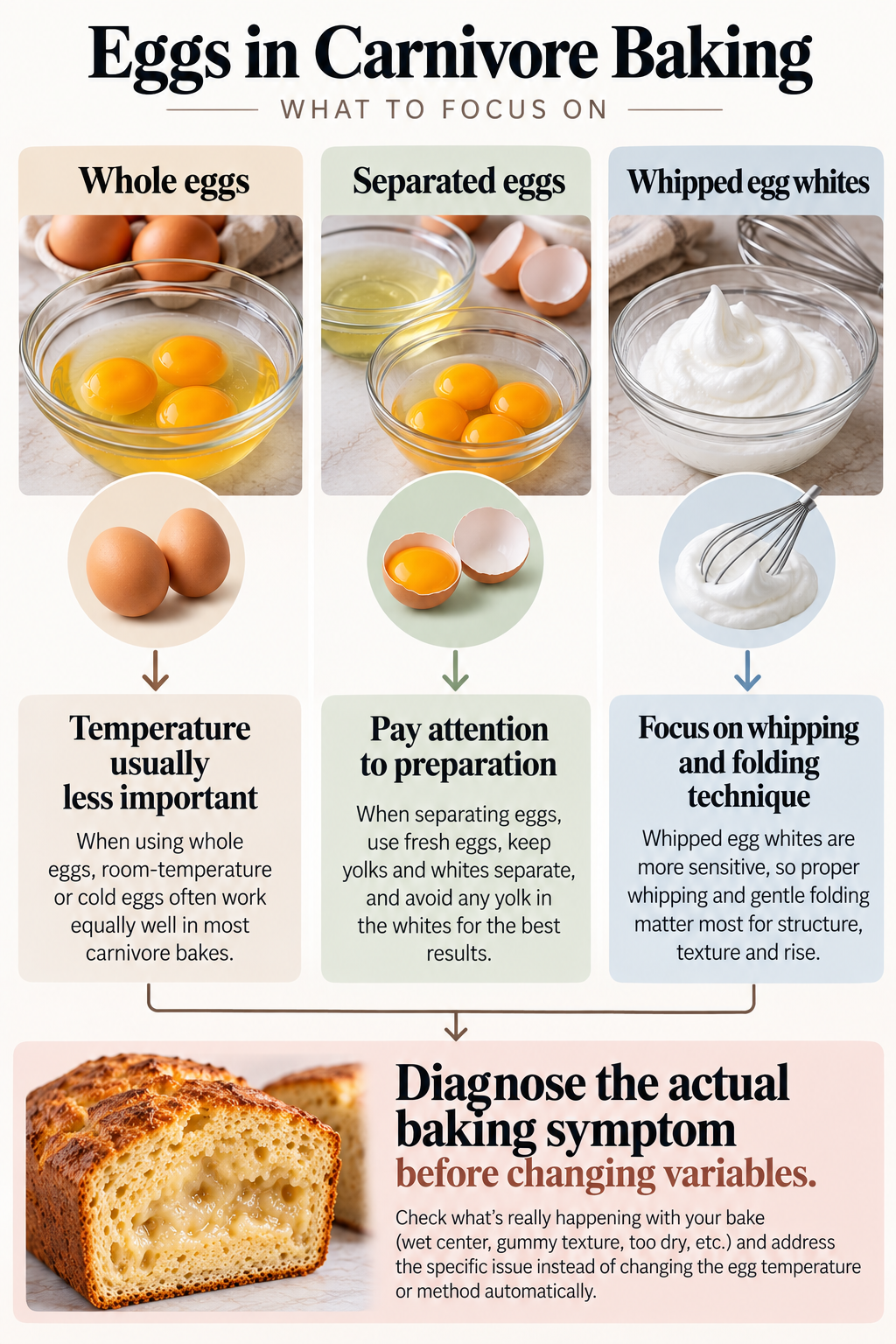
Whole Eggs: When Temperature Usually Matters Less
If a carnivore recipe uses whole eggs and you simply mix them into the rest of the ingredients, egg temperature may not be the main variable affecting your final result.
The more important questions may be:
- Are the ingredients properly combined?
- Is the mixture evenly blended?
- Is the batter being handled consistently?
- Is the final baking result properly set?
In this situation, bringing eggs to room temperature can be convenient, but it should not automatically be treated as the solution to every texture problem.
If the bread is dense, wet, flat, or otherwise unusual, diagnose the actual symptom before blaming egg temperature.
Separated Eggs Are a Different Situation
Once you separate the eggs, the technique changes.
The yolks and whites are now being used for different purposes, and the egg whites may become particularly important if the recipe relies on whipping them.
That means egg temperature is more relevant to the preparation process than it is in a basic whole-egg mixture.
The important point is not that one temperature is universally correct.
It’s that the role of the egg has changed.
If the recipe depends on whipped whites, focus on the quality of the foam and how you handle it rather than assuming temperature alone determines the result.
Whipped Egg Whites: Why the Question Changes
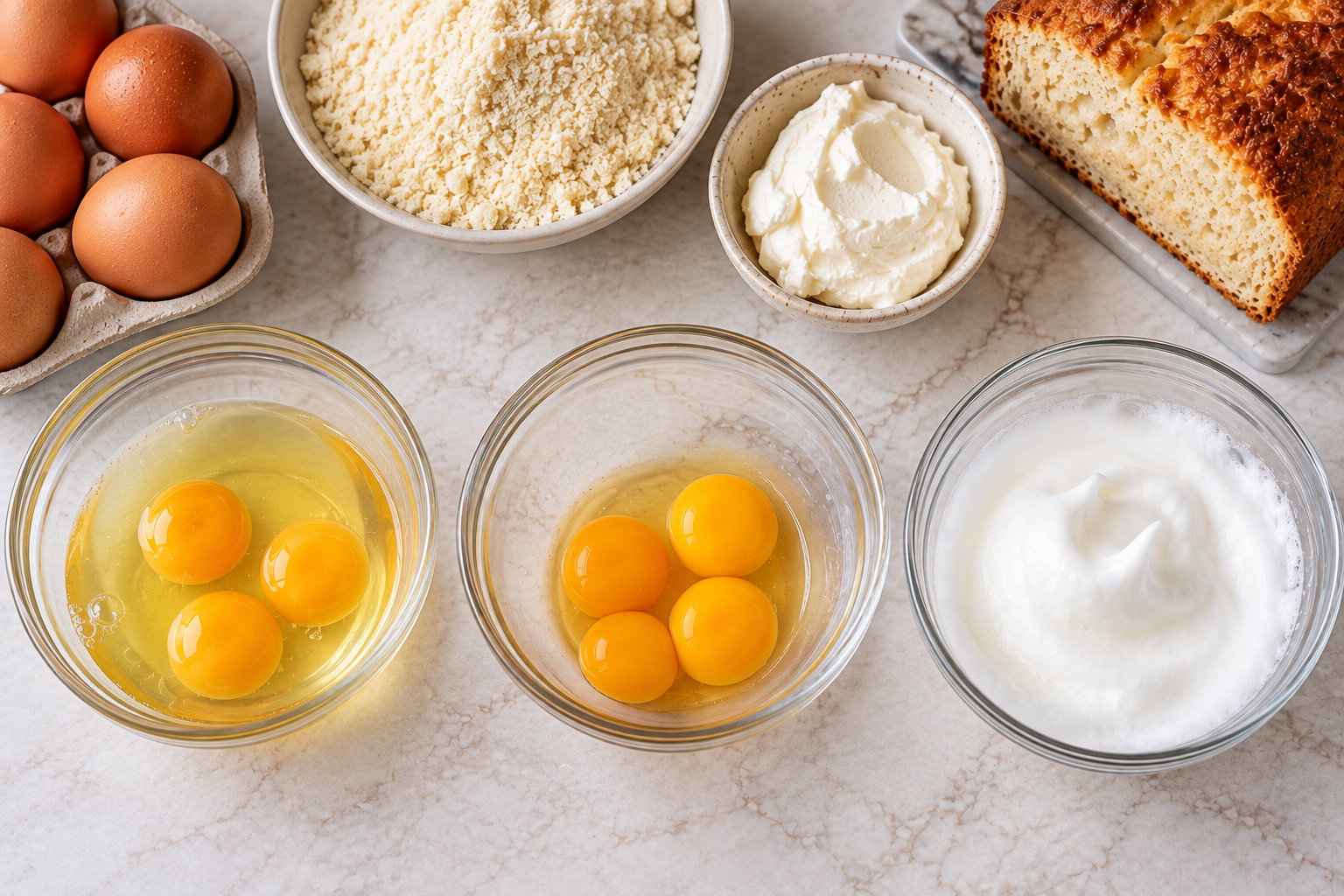
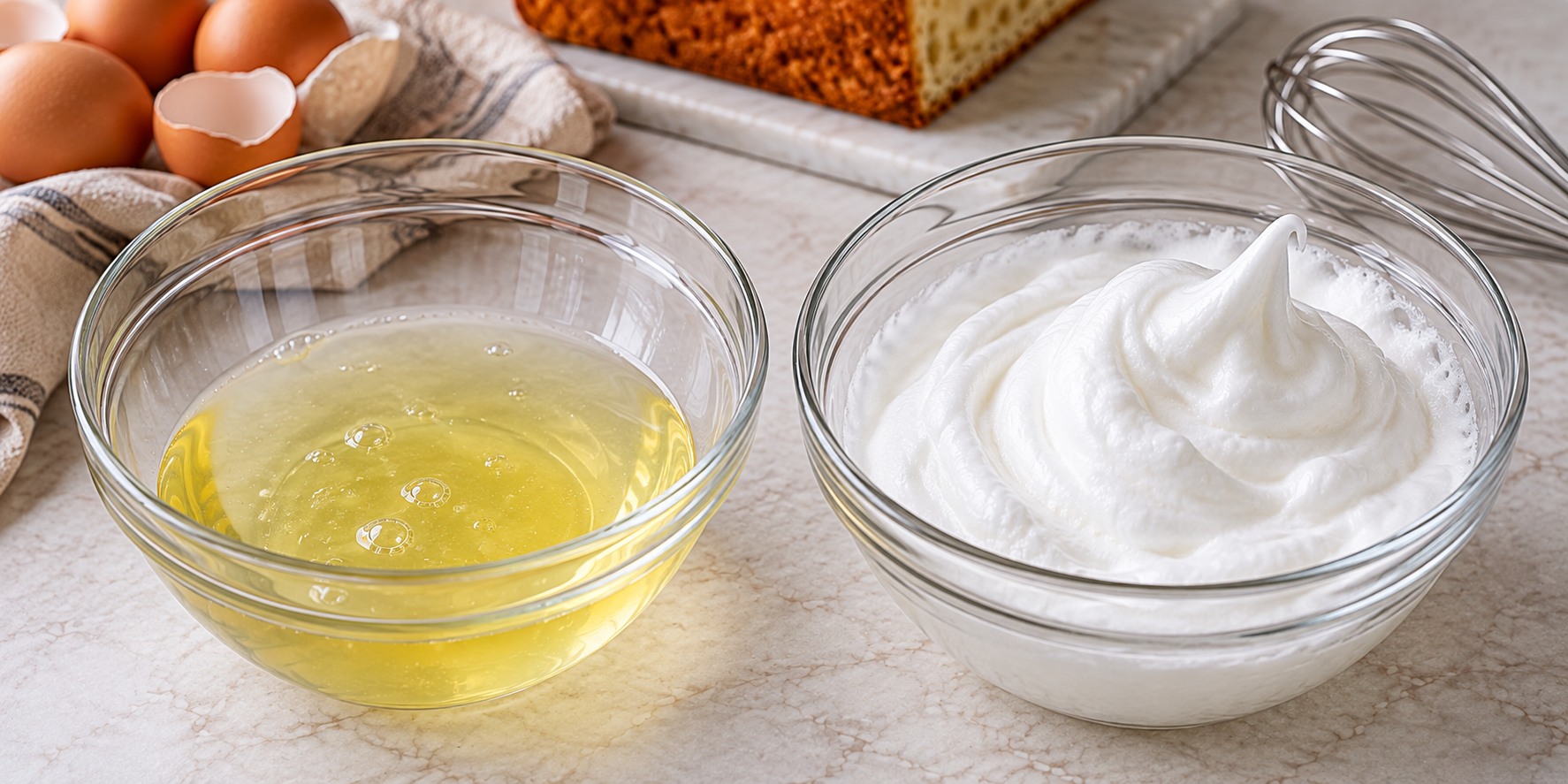
Whipped egg whites are a structural ingredient as well as an egg ingredient.
When a recipe relies on a whipped foam, the way the whites are prepared can affect the structure of the final bake.
That makes this situation different from simply cracking whole eggs into a bowl.
For whipped whites, pay attention to:
- separation,
- whipping technique,
- foam development,
- consistency,
- and how the whipped whites are incorporated into the mixture.
Egg temperature can be one part of that process, but it should not be isolated from the rest of the technique.
If you’re troubleshooting a recipe that depends heavily on whipped whites, changing only the egg temperature may not solve the problem if the real issue is whipping or folding.
When Room-Temperature Eggs Are Worth Considering
Room-temperature eggs are worth considering when you’re working with a technique where the egg mixture needs to behave consistently during preparation.
This is especially relevant when:
- eggs are being separated,
- egg whites are being whipped,
- the recipe depends on foam structure,
- or you’re trying to keep your preparation method consistent from batch to batch.
The key is consistency.
If you normally use cold eggs and then suddenly use room-temperature eggs, that change may affect your preparation. But it does not automatically mean the room-temperature version will produce a better loaf.
Treat egg temperature as one variable within the larger baking process.
When Cold Eggs Are Still a Reasonable Choice
Cold eggs are not automatically a problem.
If you’re making a simple whole-egg carnivore mixture and the recipe does not depend on whipped egg whites, cold eggs can still be a reasonable starting point.
Likewise, if a recipe specifically works well with cold eggs, there is no reason to change the process simply because room-temperature eggs are often recommended in general baking advice.
The recipe and technique matter more than a blanket rule.
When Egg Temperature Actually Deserves Your Attention
Whole eggs in a simple mixture
Temperature is usually not the first thing to troubleshoot.
Start with the actual texture and baking result.
Separated eggs
Temperature becomes more relevant because the whites and yolks are being handled separately.
Whipped egg whites
Technique becomes particularly important.
If the recipe depends on whipped whites for structure, focus on the complete preparation process rather than changing temperature alone.
When Egg Temperature Is Probably Not the Main Problem
If your carnivore bread is wet in the middle, gummy, flat, or unusually dense, don’t automatically assume the eggs were too cold.
Those symptoms can have several possible causes.
For example, a wet center should be diagnosed by looking at the crumb after cooling rather than immediately changing the egg temperature.
Likewise, if the bread repeatedly develops a hard outside while the center remains soft, look at the broader baking conditions and loaf structure.
Egg temperature may matter, but it is not a universal explanation for baking problems.
A Practical Decision Guide
Use this simple framework:
Are you using whole eggs?
Start by following the recipe’s normal mixing method. Don’t make egg temperature your first troubleshooting variable.
↓
Are you separating the eggs?
Pay more attention to preparation consistency.
↓
Are you whipping the egg whites?
Focus on the complete whipping and folding technique as well as egg temperature.
↓
Is the bread still failing?
Diagnose the actual symptom before changing another variable.
This approach keeps egg temperature in perspective instead of turning it into a catch-all explanation.
Room Temperature vs Cold Eggs: The Bottom Line
There isn’t one universal answer that every carnivore recipe needs.
For whole-egg mixtures, the difference may be less important than the actual mixing and baking process.
For separated eggs and especially whipped egg whites, preparation technique deserves more attention, and egg temperature becomes a more relevant variable.
The most useful rule is simple:
Don’t change egg temperature just because you think you should. Change it when the technique you’re using gives you a reason to care about it.
And when troubleshooting, change one variable at a time.
FAQ
Should I use room-temperature eggs for carnivore baking?
Not necessarily. It depends on how the eggs are being used. Whole-egg mixtures may not require the same temperature considerations as recipes that separate and whip egg whites.
Are cold eggs bad for carnivore bread?
No. Cold eggs are not automatically a problem. For a simple whole-egg mixture, egg temperature may not be the main factor affecting the finished bread.
Do room-temperature eggs whip differently?
Egg temperature can be relevant when you’re relying on whipped egg whites, but whipping technique and handling are also important. Don’t treat temperature as the only variable.
Should I use room-temperature eggs when separating eggs?
They can be useful to consider when the recipe relies on separated or whipped eggs, but the complete preparation technique matters more than temperature alone.
Can cold eggs make carnivore bread dense?
Don’t assume so. Density can have multiple causes, and egg temperature should be investigated alongside the actual recipe, mixing method, and baking conditions.
Does egg temperature matter more for egg whites?
It can matter more when egg whites are being used as a whipped structural component. In that situation, focus on the entire whipping and folding process rather than temperature alone.
Should I change from cold eggs to room-temperature eggs if my bread keeps failing?
Not automatically. First identify the specific failure—such as wetness, density, flatness, or poor structure—then change one variable at a time.