Changing your carnivore bread pan size can affect the shape and texture of the finished loaf, even when you use the same batter. A deeper pan creates a thicker loaf, while a wider, shallower pan spreads the batter differently. Comparing the center and edges helps you identify whether the new pan may be contributing to a texture problem.
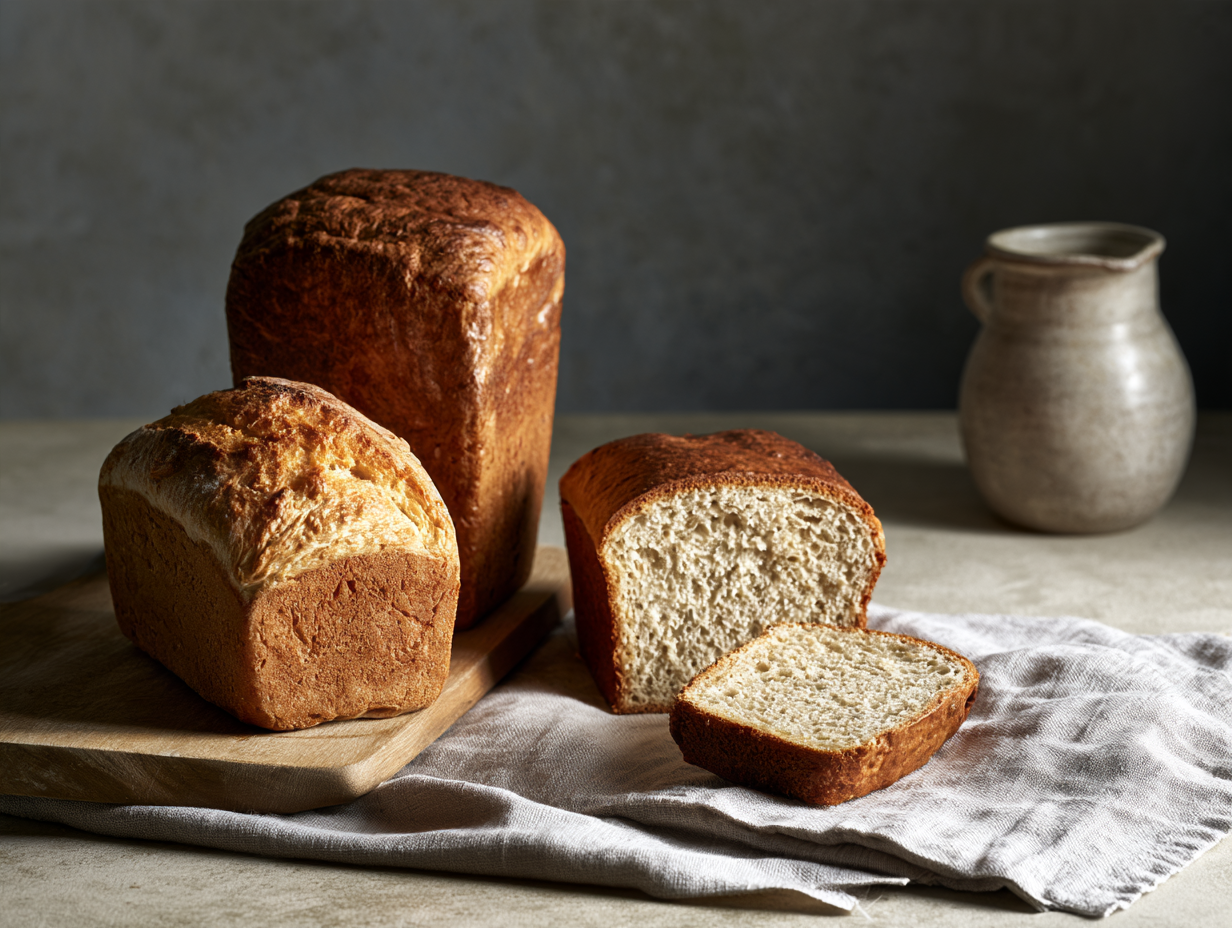
How Carnivore Bread Pan Size Affects Texture
A pan doesn’t simply hold the batter.
It determines the shape and depth of the batter before baking.
Put the same amount of batter into two differently shaped pans and you can end up with different loaf formats. One may produce a taller, thicker loaf while another spreads the batter into a wider, shallower layer.
That difference changes what you see when you slice the bread.
The important variable isn’t simply whether a pan is “big” or “small.”
It’s the relationship between:
- the amount of batter,
- the available surface area,
- the depth of the batter,
- and the final thickness of the loaf.
This is why changing pans can create a texture difference even when the ingredient list stays exactly the same.
For a broader look at the finished loaf itself, see the Looksyumy Carnivore Bread Recipe.
What a Deeper vs. Shallower Format Actually Changes
The easiest way to think about pan size is to focus on batter depth.
A deeper batter format creates a thicker loaf.
A shallower format creates a thinner loaf.
That doesn’t automatically mean one is better.
It means the baking process is working with a different physical shape.
A thicker loaf has more distance between the outer surface and the center. As a result, the center can behave differently from the edges.
A shallower loaf has less depth, so the finished bread may have a different height and a different center-to-edge relationship.
This is also why you should be careful when transferring a recipe from one pan format to another. The same batter volume does not necessarily produce the same loaf structure.
If you want to understand how changing pan dimensions affects baking generally, see King Arthur Baking’s guide on how to convert baking pan sizes for baking.
The practical takeaway is simple:
Don’t judge a new pan only by its listed dimensions. Think about how deeply your batter sits inside it.
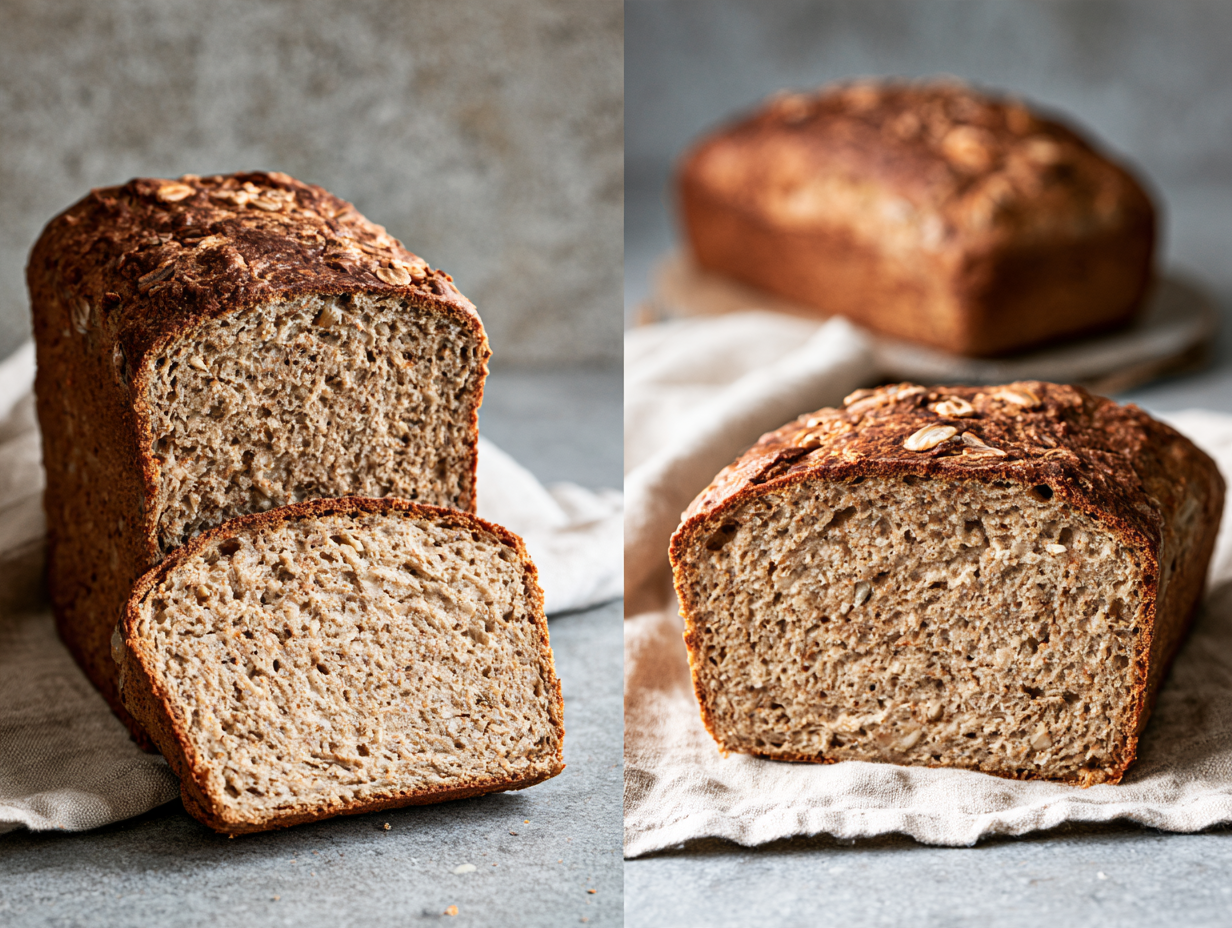
How to Read the Center-to-Edge Texture
When testing a different pan, don’t just look at the top of the loaf.
Slice through the center and compare it with the edges.
This gives you much more useful information.
Center softer than the edges
If the center is noticeably softer while the outside is already firm, the loaf may be too thick for the baking conditions you’re using.
Center and edges have a similar texture
A more even crumb from edge to center suggests that the new pan may be distributing the batter in a format that works better for that particular recipe.
Edges noticeably drier than the center
This can indicate that the outer portions are receiving a different baking exposure from the thicker center.
If you’re specifically dealing with a wet center, compare the result with Carnivore Bread Too Wet in the Middle.
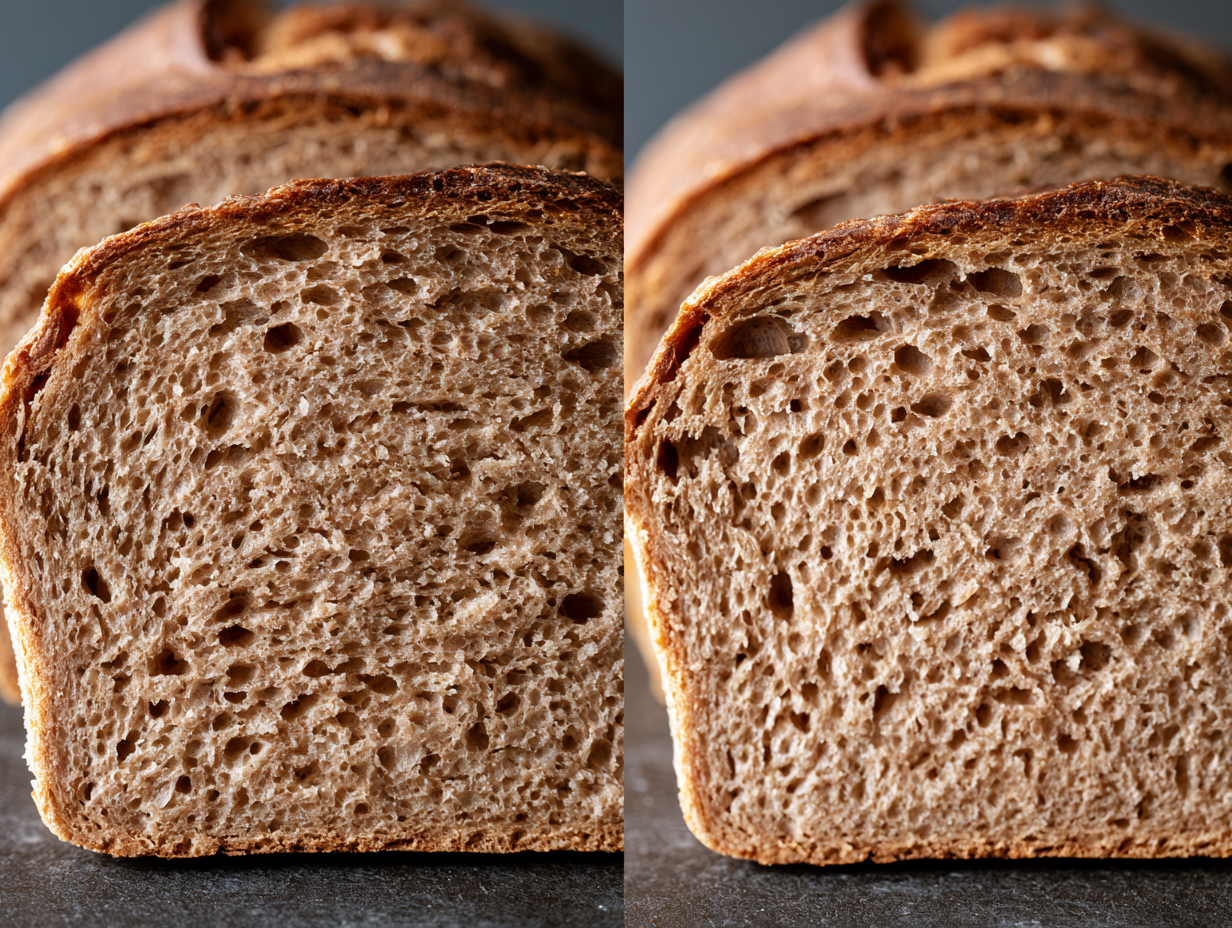
How to Determine Whether the Pan Is Actually Responsible
A different result doesn’t automatically mean the pan caused it.
Before blaming the pan, check what else changed.
Ask yourself:
- Did you use the same recipe?
- Did you use the same amount of batter?
- Did the batter have the same consistency?
- Was the oven setup the same?
- Did you bake the loaf in the same position?
- Did you judge the texture after the same cooling period?
- Did the new pan change the depth of the batter?
This last question is particularly important.
If the new pan produces a much thicker loaf, the texture difference may be related to loaf thickness rather than the pan material or brand itself.
The goal is to isolate the variable.
If you also have a firm crust with a softer center, compare the symptoms with Carnivore Bread Crust Too Hard rather than assuming pan size is the only issue.
Simple Pan-Comparison Test
If you’re unsure whether pan size is affecting your carnivore bread, don’t change the recipe immediately.
Run a simple comparison.
Step 1: Keep the recipe the same
Use the same ingredient quantities and preparation method.
Step 2: Keep the batter amount consistent
Don’t compare a full batch in one pan with a partial batch in another.
You want the pan format to be the main variable.
Step 3: Compare the finished loaf shape
Look at:
- overall height,
- width,
- thickness,
- and how evenly the loaf formed.
Step 4: Let both loaves cool before judging
Carnivore bread can continue setting as it cools, so judging the crumb while it is still warm can give you misleading information.
Step 5: Slice through the center
Compare the center with the edges.
Step 6: Record the difference
Don’t simply decide that one pan is “good” and the other is “bad.”
Write down what actually changed.
Step 7: Change only one variable
If the new pan produces a noticeably different result, keep the recipe unchanged during your next comparison.
Changing the pan, ingredients, oven temperature, baking time, and mixing method at the same time makes the result much harder to interpret.
How to Choose a Pan Based on the Desired Loaf Format
The right pan depends partly on what you want the finished bread to look and feel like.
If you want a taller loaf
A pan that creates greater batter depth can produce a taller loaf format.
But remember that greater thickness also changes the relationship between the edges and the center.
If you want a flatter loaf
A wider format can spread the same batter over a larger area, creating a shallower loaf.
If your priority is an even center
Don’t choose a pan based only on appearance.
Look at how the center behaves after baking and cooling.
If you’re troubleshooting an existing recipe
Start with the pan that the recipe was developed and tested with, if that information is available.
If you’re switching to another pan, treat it as a new variable and compare the result rather than assuming the original baking behavior will transfer perfectly.
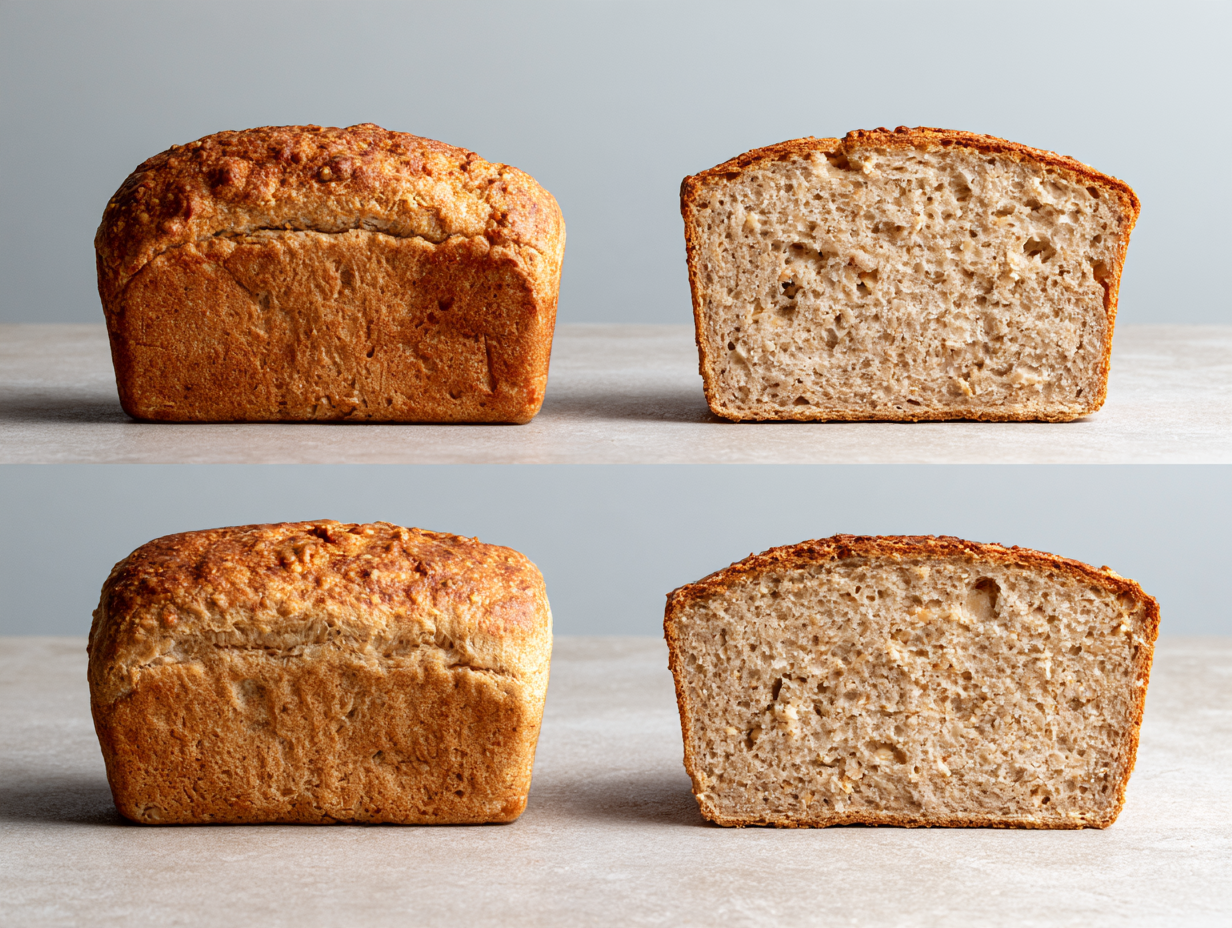
What to Watch When Switching to a New Pan
A new pan can change more than loaf height.
Pay attention to these four things:
1. Batter depth
How thick is the batter layer before baking?
2. Finished loaf shape
Does the bread become taller, wider, or flatter?
3. Center texture
Is the middle properly set, gummy, wet, or simply softer than the edges?
4. Edge texture
Are the edges becoming significantly firmer or drier than the center?
These observations are more useful than simply saying, “The new pan didn’t work.”
They tell you how the pan changed the result.
Final Practical Decision
If your carnivore bread changes texture after switching pans, start by comparing batter depth and center-to-edge texture.
If the new pan creates a thicker loaf and the center becomes noticeably softer, the change may be related to the new loaf geometry.
If the center remains properly set but the loaf is simply taller or flatter, the pan may have changed the format without creating a baking problem.
The best approach is to keep the recipe consistent, compare the two pan formats, cool the bread fully, and inspect the center before making additional changes.
FAQ
Does pan size affect carnivore bread?
Yes. Changing the pan can change the depth and shape of the batter, which can affect the finished loaf’s structure and center-to-edge texture.
Does a deeper pan make carnivore bread thicker?
A deeper pan format can produce a thicker loaf when the same batter is distributed into a smaller or deeper baking space. The actual result depends on the pan and batter amount.
Why is my carnivore bread soft in the middle after changing pans?
If the new pan creates a thicker loaf, the center may behave differently from the edges. Check the loaf thickness and center texture before changing the recipe.
Should I change the recipe when I change the pan?
Not immediately. Keep the recipe consistent first and compare the new pan with the previous one. This makes it easier to determine whether the pan is actually responsible for the change.
How can I tell if my pan is causing a texture problem?
Compare the same recipe and batter amount in the two pans, then evaluate the finished loaf after cooling. Pay particular attention to batter depth, loaf thickness, and center-to-edge texture.