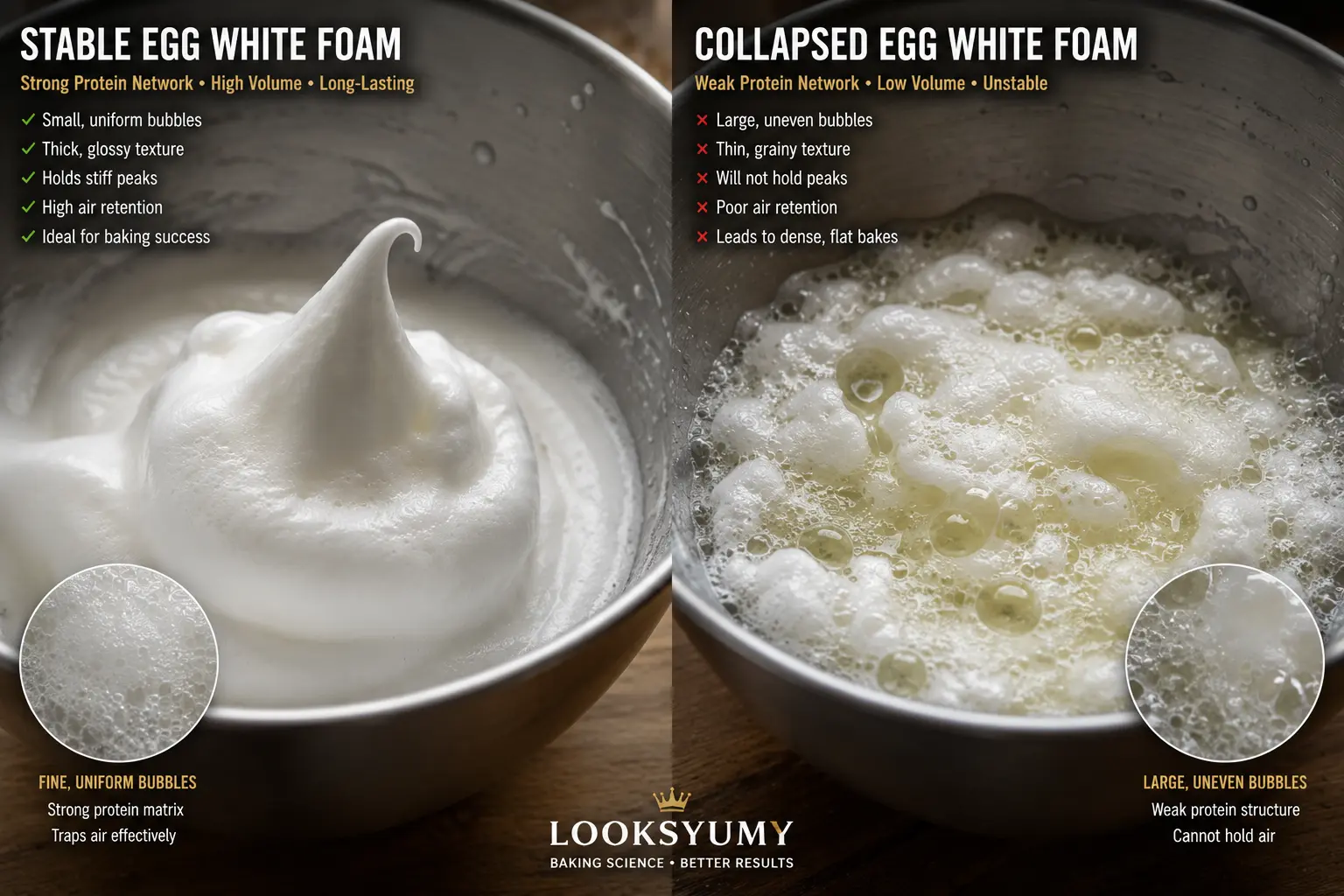
There are few kitchen frustrations more demoralizing than watching a perfectly whipped bowl of egg whites sink into a puddle the moment it hits the oven — or even before. Whether you’re working with carnivore bread, egg white tortillas, or any foam-based bake, that collapse is never random. It always has a cause, and more importantly, it always has a fix.
Egg whites collapse in baking because the protein network holding air bubbles in suspension becomes structurally compromised — either it was never strong enough to begin with, or it was actively destabilized by fat, excess moisture, or mechanical overworking. The foam loses its ability to trap gas, the bubble walls thin and rupture, and the entire matrix deflates into a dense, weeping liquid. Understanding this failure at the molecular level is the first step toward diagnosing which specific error occurred in your kitchen.
Egg whites collapse in baking because the protein network holding air bubbles becomes structurally compromised by fat contamination, overwhipping, weak peaks, or excess moisture.
Table of Contents
Table of Contents
Fat Contamination: The Silent Collapse Trigger
Fat contamination is the most common and most misunderstood cause of egg white foam failure. Even a microscopic trace of egg yolk, butter residue, or oil on your bowl or whisk is enough to prevent the proteins from bonding correctly, producing a foam that looks deceptively normal at soft peaks but collapses the moment structural stress is applied.
The mechanism is straightforward: lipid molecules physically interrupt the protein-to-protein bonds that form the foam’s skeleton. The relationship between egg proteins and foam stability is also explained in professional egg foaming guidance published by the American Egg Board. What I call the Looksyumy Lipid Barrier Rule captures this precisely — any fat introduced into the white matrix before full peak formation acts as a structural wedge, preventing the interlocking protein strands from achieving the continuous network needed for stability. I noticed this firsthand when a single crack sent a sliver of yolk into my bowl; the foam peaked visually but completely liquefied within eight minutes of resting on the counter.
The fix begins before you ever touch the eggs. Wipe your bowl and whisk with a clean paper towel dampened with white vinegar or lemon juice, then dry thoroughly. Separate eggs cold — the yolk membrane is firmer and less likely to break — but whip the whites only after they’ve reached room temperature, which improves protein extensibility and reduces whipping time. If you suspect contamination mid-whip and the foam looks glossy but won’t stiffen, do not continue — the batch is compromised and must be discarded. There is no recovery from active fat contamination once it has penetrated the foam structure.
For carnivore baking specifically, where no non-carnivore stabilizers such as xanthan gum or cream of tartar are used, fat exclusion becomes even more critical. Without these external structural aids, the egg white proteins must perform flawlessly on their own, leaving zero margin for lipid interference. See our guide on how to whip egg whites for carnivore baking for a full bowl-prep protocol.
Overwhipping: When Strong Peaks Become Brittle Walls
Overwhipped egg whites feel like a baking success right up until they fail catastrophically. Overwhipping causes the protein network to tighten past its functional limit — the foam transitions from a flexible, aerated gel into a rigid, granular structure that cannot expand with heat and fractures instead of rising.
At the point of overwhipping, the moisture that was previously distributed evenly throughout the foam begins weeping out in visible pools around the base of the beaten mass. This is the unmistakable sign that the protein bonds have collapsed inward, squeezing out the liquid they could no longer hold. The resulting foam is dry on the surface, lumpy in texture, and will produce a dense, rubbery crumb in baked goods rather than any lift whatsoever.
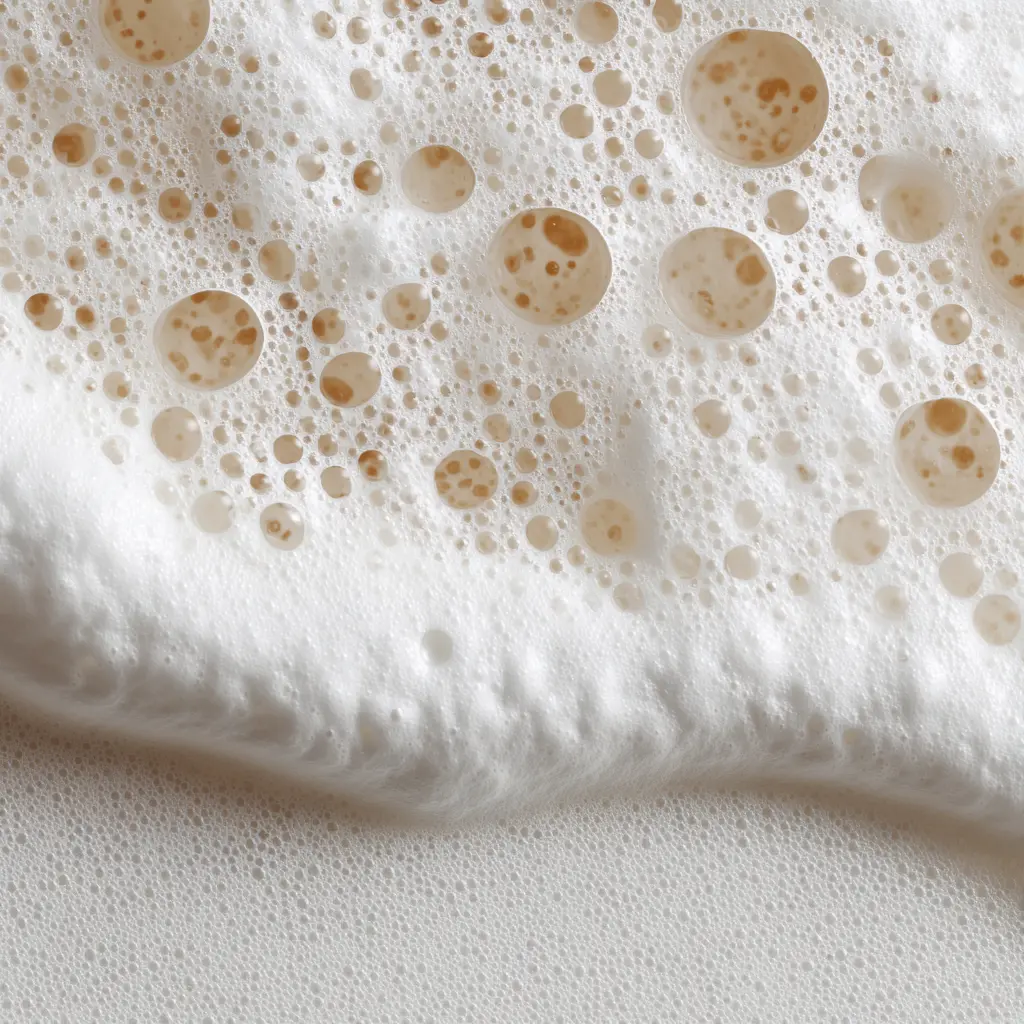
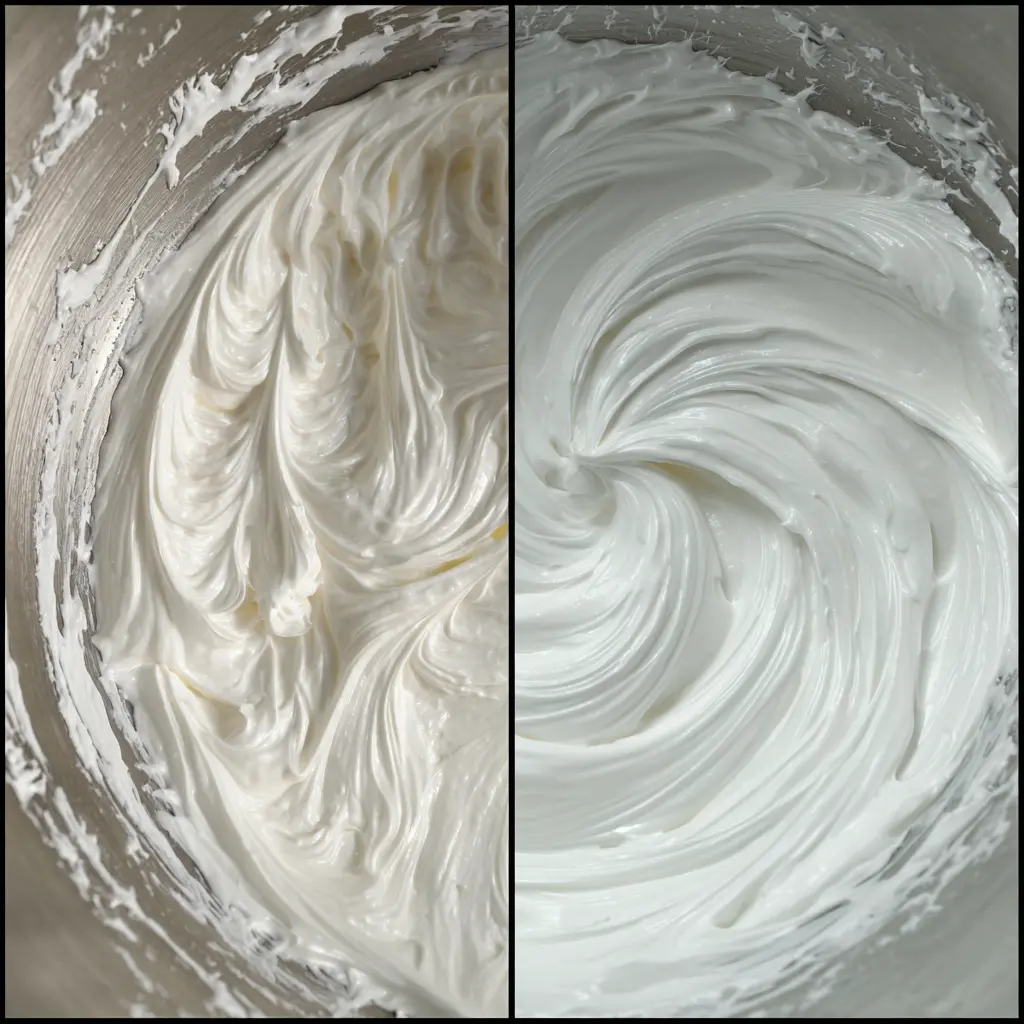
Visually, the transition from stiff peaks to overwhipped happens faster than most home bakers expect — particularly with a stand mixer, where a 30-second lapse in attention is enough to cross the threshold. Stiff peaks should hold their shape when the whisk is lifted, with the tip pointing straight up or curling only very slightly. If the mass looks chunky, dull, or cottage-cheese-like, it has gone too far. In my kitchen testing with high-protein whites from pasture-raised eggs, I found that overwhipping was actually more likely than underwhipping, because the higher protein concentration accelerates network formation significantly.
If your whites are mildly overwhipped — slightly grainy but not yet weeping — folding in a fresh, unbeaten egg white can sometimes restore enough flexibility to salvage the batch. However, if weeping has begun, the foam is structurally irreparable and should not be baked. For related texture issues in your bakes, visit our texture troubleshooting resource.
Weak Peaks and Structural Instability Before the Oven
Underwhipped egg whites present a different but equally damaging failure mode — one that often isn’t detected until the bake has already collapsed. Weak peaks lack the protein network density needed to withstand the weight of the batter folded into them, the thermal shock of a hot oven, or the extended time between preparation and baking.
The physics here involve surface tension and bubble-wall thickness. In a properly whipped foam at stiff peaks, each air bubble is encased in a thin but reinforced protein film. In a soft or medium-peak foam, those films are too thick and too fluid — they drain downward under gravity, causing larger bubbles to merge, pressure to equalize, and the foam to visibly deflate even before any heat is applied. This is the deflation pattern you’ll see when a batter sits unbaked for more than a few minutes with insufficiently whipped whites.
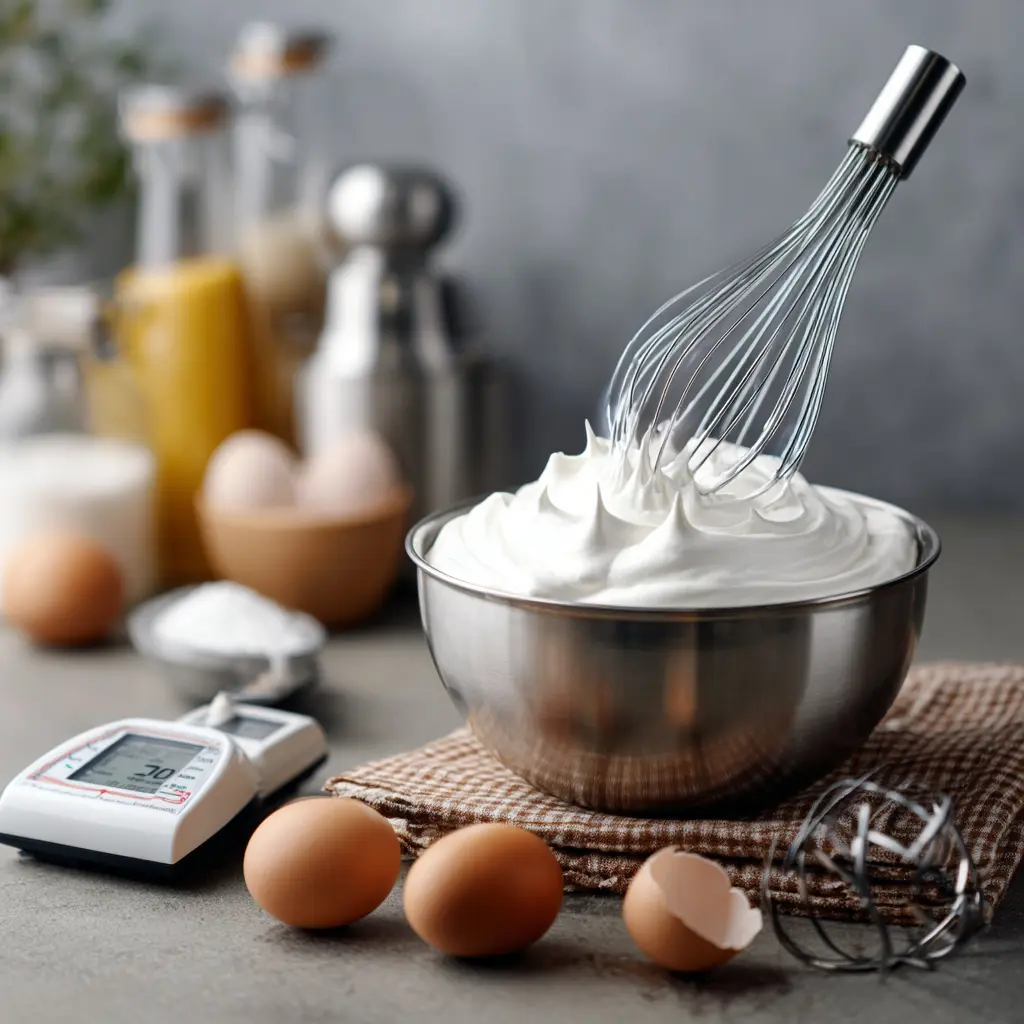
The practical correction is to always whip to genuine stiff peaks for carnivore baking applications, where the absence of flour, starch, and non-carnivore stabilizers means the foam must carry the full structural burden of the recipe. Never fold underwhipped whites into a heavy batter hoping the oven will compensate — it will not. Bake immediately after folding, and handle the batter with the minimum number of strokes necessary to combine. Every additional fold collapses bubbles and weakens the network you built during whipping. This intersects directly with common baking mistakes that compromise final texture and rise.
Quick Diagnostic Checklist
Use this before and after each bake to identify which failure point caused your collapse:
- Bowl and whisk were not fully defatted — wipe with vinegar, rinse, dry completely before use
- Yolk trace entered the whites — even a drop is disqualifying; start over
- Whites were beaten cold — always bring to room temperature before whipping
- Foam peaked but sat too long — always fold and bake immediately, never rest whipped whites
- Batter was overfolded — use as few strokes as possible; stop the moment the mixture combines
- Peaks were glossy and soft, not firm — underwhipping produces unstable foam that collapses under its own weight
- Foam looked dry or chunky — overwhipping has broken the network; discard and restart
- Oven was not fully preheated — cold oven causes foam to melt before it can set; always preheat fully
- Pan was greased — a fat-coated pan prevents foam-based batters from climbing and holding structure on the walls
| Symptom | Most Likely Cause |
|---|---|
| Foam collapses immediately | Fat contamination |
| Foam looks dry and grainy | Overwhipping |
| Foam slowly shrinks before baking | Weak peaks |
| Foam rises then sinks in oven | Understructure or underbaking |
| Liquid pools at bowl base | Protein breakdown from overwhipping |
Frequently Asked Questions
Why do egg whites deflate after whipping but before baking?
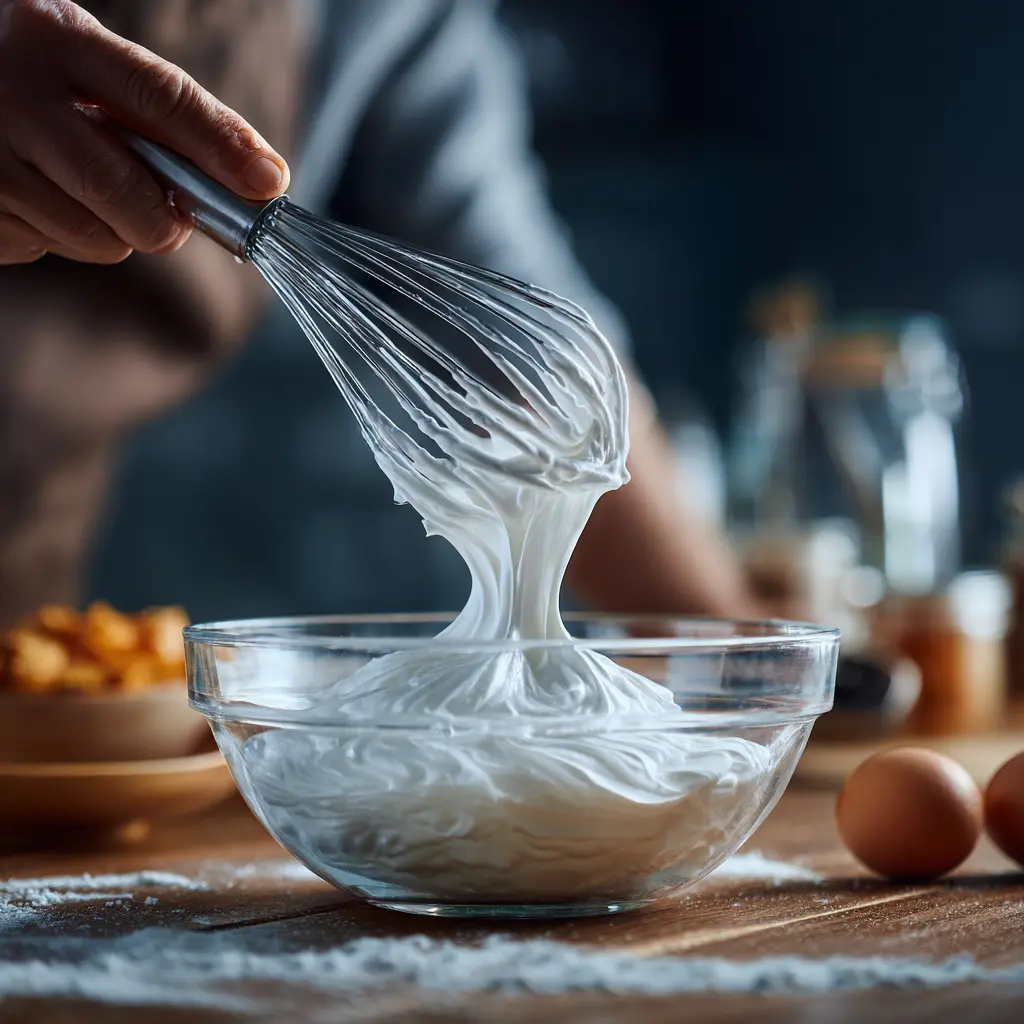
Deflation before the oven almost always indicates either underwhipping or excessive resting time. A foam whipped only to soft or medium peaks does not have sufficient protein network density to resist gravity — the bubble walls drain, bubbles merge, and the foam visibly shrinks within minutes. Always fold and bake immediately after whipping to stiff peaks, and avoid any delay between mixing and placing the batter in a fully preheated oven.
Can I fix collapsed egg whites once they’ve deflated?
Partially collapsed whites that have not yet wept liquid can sometimes be rescued by briefly rewhipping them. However, if the foam has begun weeping — visible liquid pooling around the edges — the protein structure has broken irreversibly and the batch must be discarded. Attempting to bake with wept foam produces a dense, flat, rubbery result with no rise. Starting fresh is always faster than trying to bake through a compromised foam.
Does bowl material affect egg white stability?
Yes, significantly. Copper bowls create a mild ionic reaction with egg white proteins that produces a finer, more stable foam and extends the overwhipping window slightly. Stainless steel is an excellent second choice. Glass and ceramic are acceptable if meticulously clean and dry. Plastic bowls should be avoided entirely — plastic is inherently porous and retains fat residue in microscopic surface scratches that cannot be removed through normal washing, making reliable defatting nearly impossible regardless of how thoroughly you clean them.
Why do egg whites collapse in the oven after rising?
A rise followed by collapse during baking typically points to one of three causes: the foam was not whipped to fully stiff peaks and lacks the structural rigidity to maintain its expanded volume once steam begins escaping; the oven temperature was too high, causing the exterior to set before the interior could finish expanding and leading to structural fracture on cooling; or the bake was removed from the oven too early, before the internal protein network fully coagulated, causing the still-liquid interior to drag the structure downward. Always confirm doneness with a toothpick or internal temperature rather than visual cues alone.