Carnivore Bread Too Wet in the Middle? Causes & Fixes
If your carnivore bread is too wet in the middle, don’t immediately assume you need to completely change the recipe.
The first job is to identify what kind of wetness you’re actually seeing.
A center can be:
- genuinely wet and underbaked,
- gummy,
- moist but properly set,
- or affected by moisture that becomes more noticeable after cooling or storage.
Those problems can look similar when you first cut into the loaf, but they don’t necessarily point to the same cause.
This guide stays focused on one question:
Why is the middle of my carnivore bread wet, and how can I diagnose it before changing the recipe?
[IMAGE_1]
What Does “Wet in the Middle” Actually Mean?
Start with the crumb.
When you cut into the center, ask:
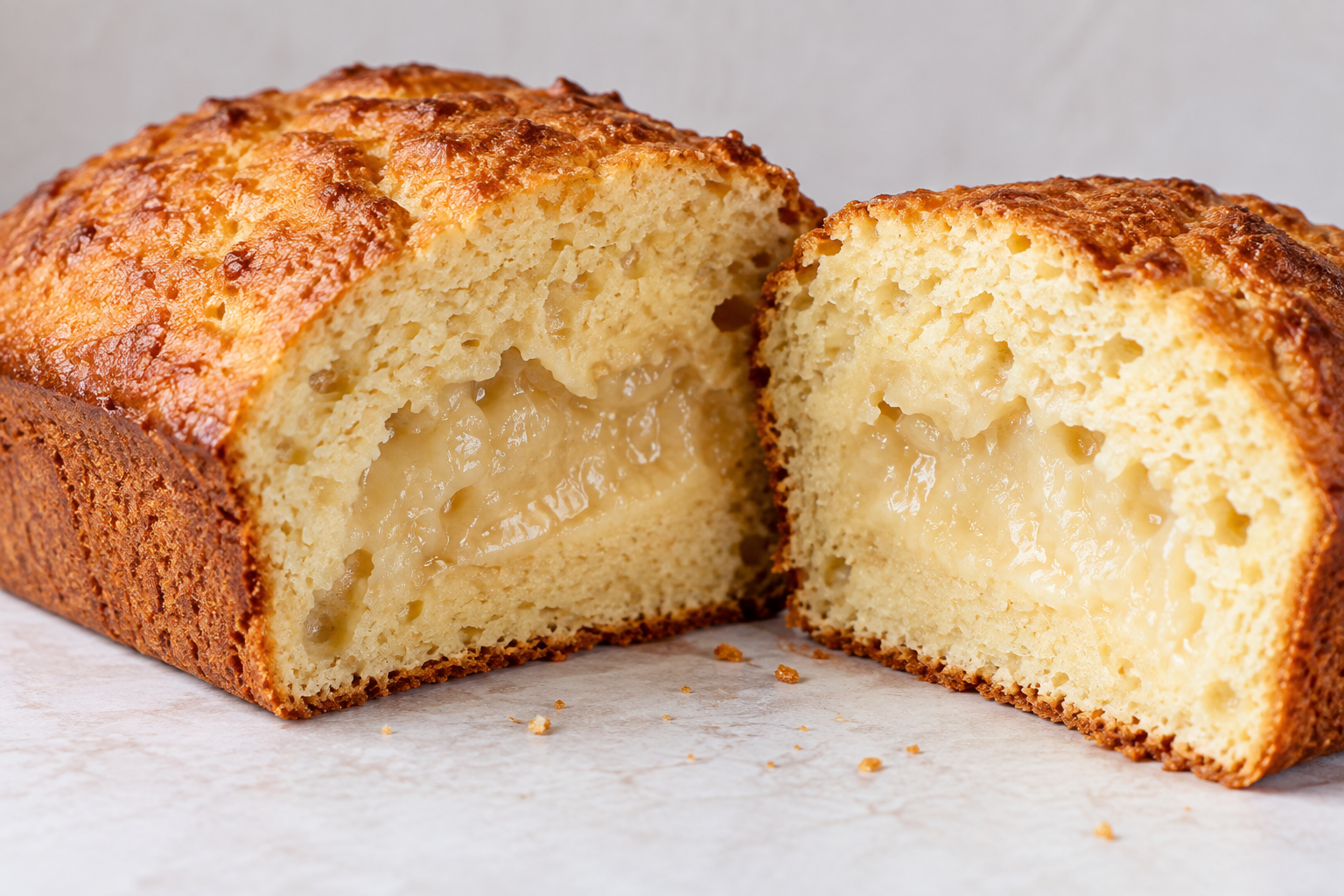
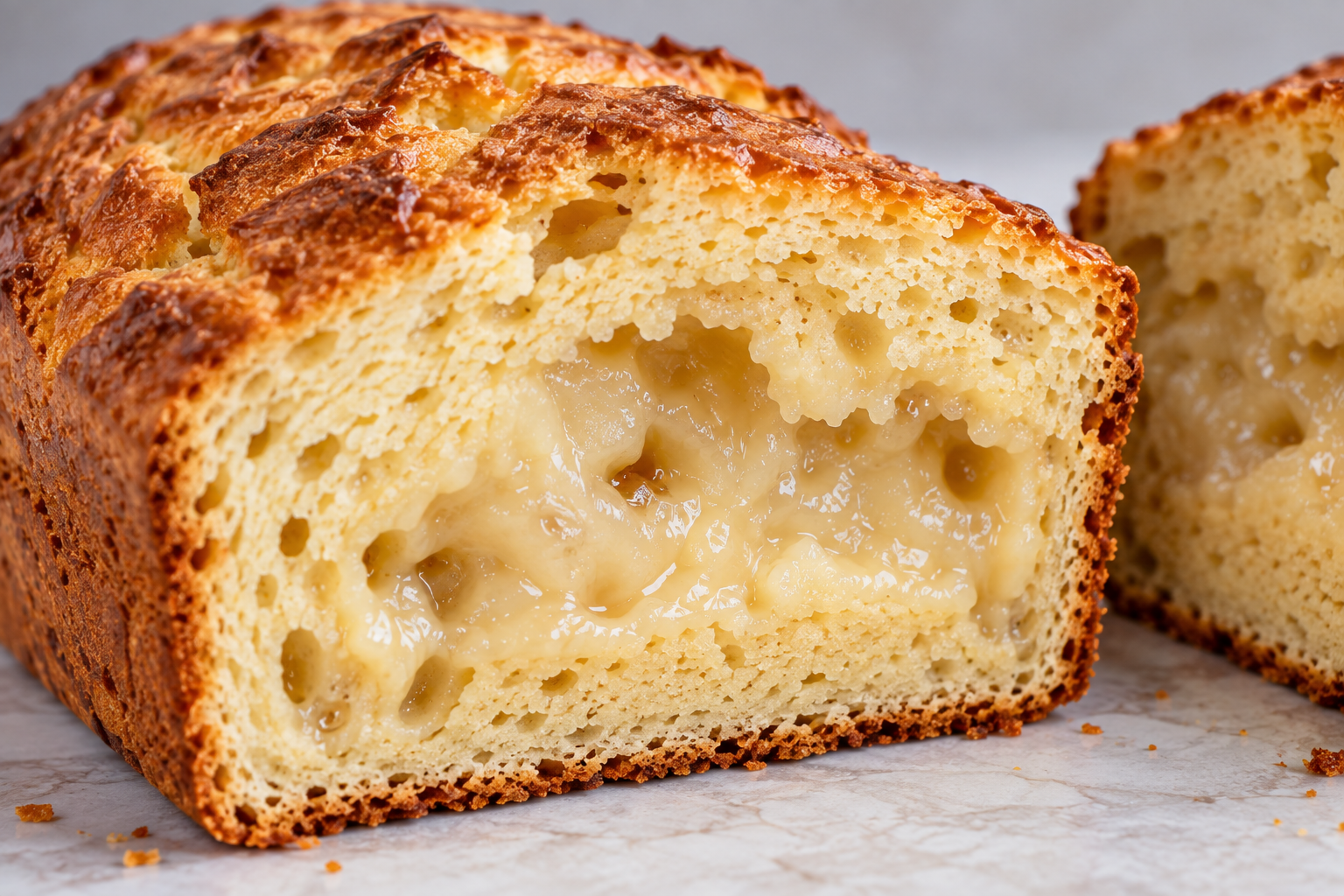
Does it look wet and unset?
Or:
Is it moist but still holding its shape?
That difference matters.
A properly moist crumb can still be soft without being underbaked.
A genuinely wet center may look glossy, feel sticky, or fail to hold the structure you expect from the finished bread.
Then there is the middle ground: a gummy center.
Gummy and wet are often used interchangeably, but they are useful diagnostic descriptions when kept separate.
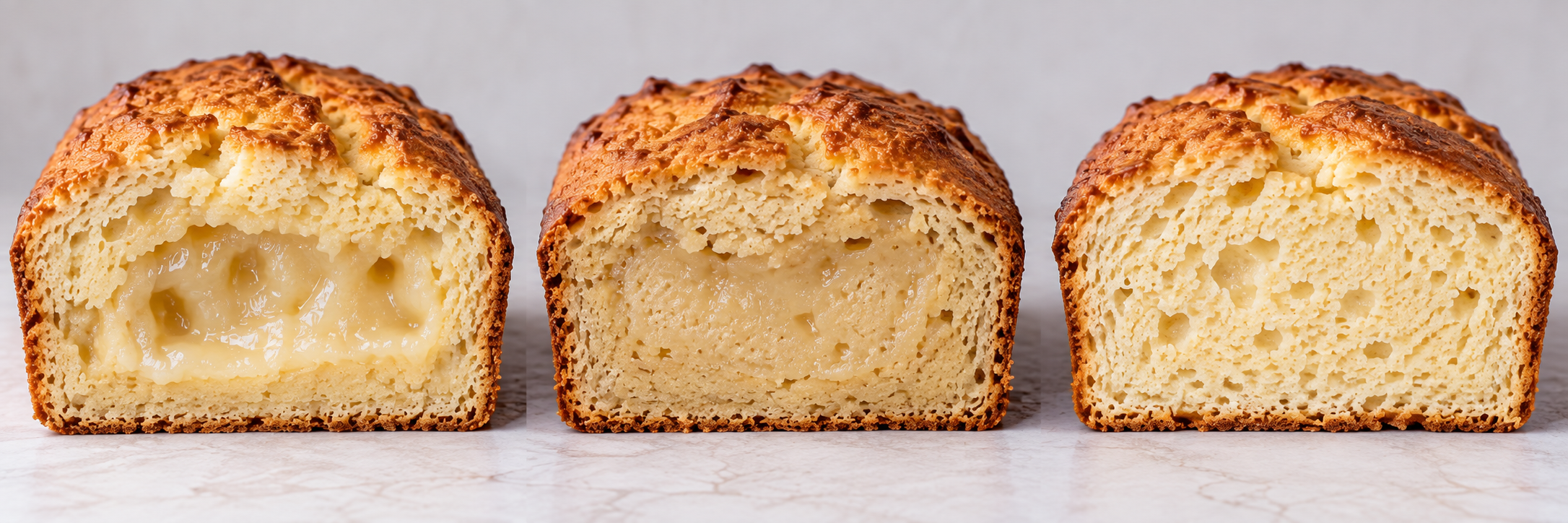
Wet vs. Gummy vs. Moist-but-Set
Wet center
The crumb appears genuinely wet or unset.
The center may seem noticeably different from the outer portion of the loaf.
Gummy center
The crumb has more structure than a wet center but feels sticky, dense, or elastic.
Moist but properly set
The center is soft and moist but still holds its shape when sliced.
That last situation isn’t automatically a failure.
The goal is not necessarily a completely dry center. The goal is a center that has set into the texture the recipe is intended to produce.
First Step: Let the Bread Cool Before Judging the Middle
Don’t diagnose the center immediately after removing the loaf from the oven.
The crumb can continue setting during cooling.
Cutting too early can also compress the interior and make the texture seem less developed than it will be once the bread has cooled.
So if you see a soft center immediately after baking, give the loaf time to cool before deciding that it is underbaked.
Then cut through the center again.
This simple step can prevent you from changing the recipe to solve a problem that wasn’t actually there.
Why Is My Carnivore Bread Wet in the Middle?
Once the bread has cooled, look at the center and work through the most obvious possibilities.
1. The center wasn’t fully set during baking
If the middle remains genuinely wet after cooling, the loaf may not have baked sufficiently for the center to set.
The outside can look finished while the middle still needs attention.
This is particularly easy to notice when the crust is already firm.
2. The loaf is thick
A thick loaf takes longer for the center to reach the same stage as the outer portions.
This can produce the classic situation where the outside looks done while the middle remains wet.
If the same recipe works when made in a different shape or portion but produces a wet center as a thick loaf, thickness is an important clue.
3. The oven may not be behaving as expected
Two ovens set to the same temperature can still produce different baking results.
If your outside repeatedly sets while the middle stays wet, don’t ignore the oven as a possible variable.
For broader oven-related troubleshooting, see Oven Mistakes in Carnivore Baking.
4. The recipe may contain more moisture than the structure can handle
If the same wet-center problem happens repeatedly with the same formulation, look at the recipe rather than assuming every problem is an oven problem.
The broader How to Control Moisture in Carnivore Baking article covers moisture-related troubleshooting in greater detail.
For this article, the important point is simply:
A wet middle means the center has not reached the texture you intended. Diagnose the center before changing multiple ingredients.
Hard Outside + Wet Middle: What Does It Mean?
This is one of the most frustrating versions of the problem.
The outside feels firm, but when you cut through the loaf, the middle is still wet.
Don’t assume that the hard crust means you should simply reduce the baking time.
The two symptoms need to be considered together.
The surface has already become firm, while the center hasn’t reached the same stage.
How to Tell If the Center Is Actually Undercooked
Use the center as your main evidence.
Look for:
- visibly wet crumb,
- a center that doesn’t hold its shape,
- a noticeable difference between the outer crumb and the middle,
- persistent wetness after cooling.
If the center is simply soft and moist but holds together cleanly, don’t automatically classify it as underbaked.
This distinction is especially important because the words wet, gummy, and moist can describe very different results.
Why the Outside Can Look Done Before the Middle
The outside of the loaf is exposed directly to the oven environment.
The middle is surrounded by the rest of the loaf.
That means the surface can become firm before the center reaches the same stage.
The thicker the loaf, the more noticeable this difference can become.
This is why judging the loaf solely by its crust can be misleading.
If your recurring problem is specifically a wet middle, look at the center—not just the color of the top.
What to Change on the Next Bake
Once you’ve diagnosed the center, change one variable at a time.
If the center is genuinely wet
Review the baking conditions first.
Check:
- the loaf thickness,
- oven behavior,
- baking time,
- and whether the bread was allowed to cool before judging.
If the center is gummy
Look more closely at moisture, structure, and baking conditions.
The broader How to Control Moisture in Carnivore Baking resource can help with that diagnosis.
If the center is moist but properly set
You may not actually have a failed loaf.
Instead of trying to eliminate all moisture, decide whether the texture is acceptable for the way you want to use the bread.
If the same recipe repeatedly produces a wet center
Don’t change five things at once.
Test one variable, make another batch, and compare the center.
That gives you a much clearer signal.
Don’t Confuse a Wet Center With Storage Moisture
There is another situation worth separating from underbaking.
Sometimes bread can appear wetter after storage because moisture redistributes inside the loaf or condensation develops in the storage environment.
If the bread was properly set when freshly cooled but later becomes noticeably wet inside its storage container, that is a different troubleshooting question.
The key diagnostic question is:
Was the center wet when the bread was properly cooled, or did the moisture appear later during storage?
That distinction can save you from changing the baking process when the change happened afterward.
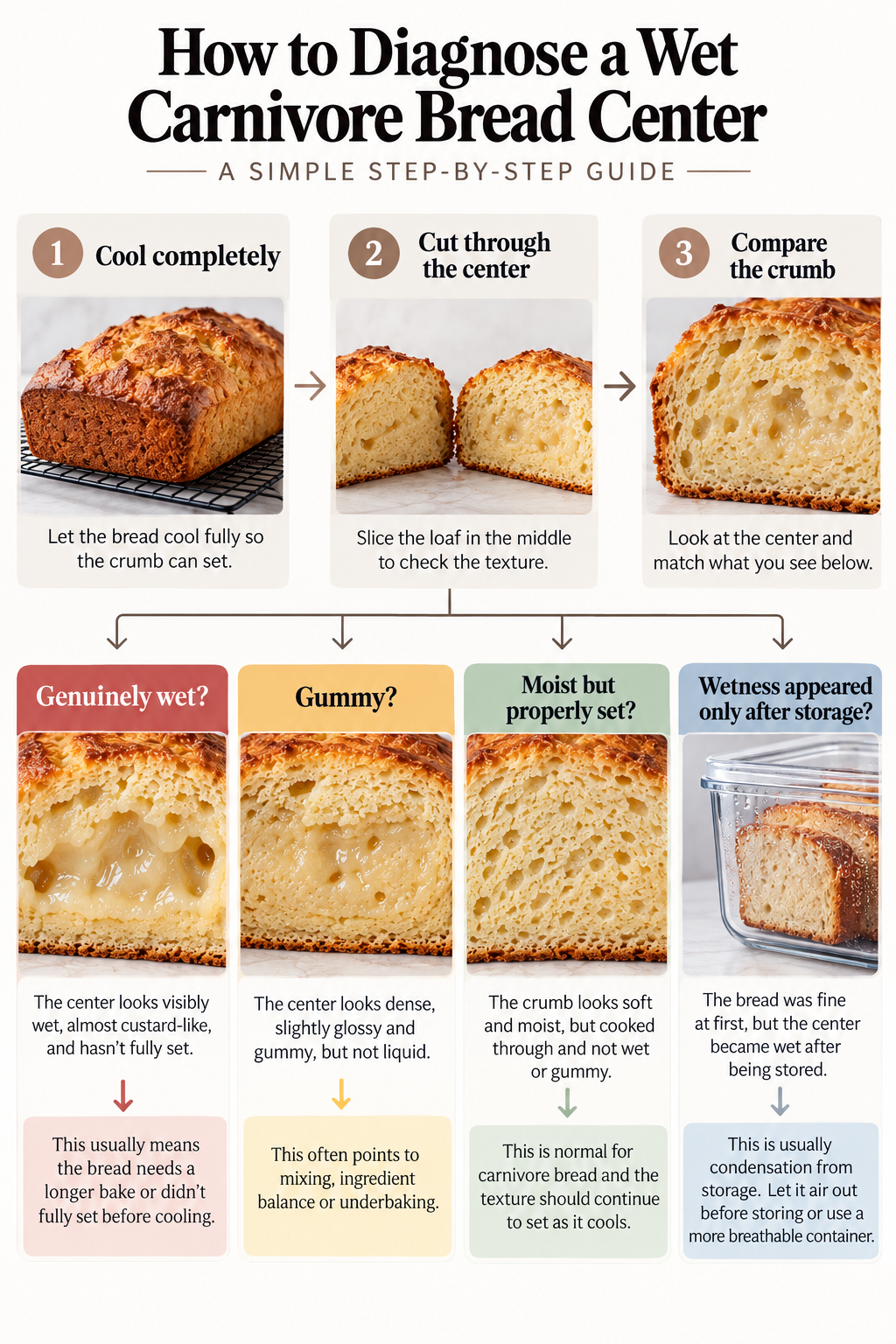
A Simple Wet-Center Decision Tree
When your carnivore bread is wet in the middle, use this sequence:
- Cool the bread completely.
↓
- Cut through the center.
↓
- Is the center genuinely wet?
- Yes: investigate baking, thickness, oven behavior, and formulation.
- No: continue.
↓
- Is it gummy?
- Yes: investigate moisture and structure.
- No: continue.
↓
- Is it moist but properly set?
- Yes: the bread may simply have the texture expected from that formulation.
↓
- Did the wetness appear only after storage?
- Yes: investigate storage and moisture redistribution.
This approach keeps the diagnosis focused instead of turning one wet-center problem into a complete recipe overhaul.
When to Use the Broader Troubleshooting Guides
This article is intentionally focused on the wet center.
If the problem turns out to be something broader, use the relevant existing guide instead of trying to solve everything on one page.
For example:
- For general bread troubleshooting, see Carnivore Bread Troubleshooting.
- For moisture-related problems, see How to Control Moisture in Carnivore Baking.
- If your specific problem is a hard outside with a wet middle, compare it with Carnivore Bread Crust Too Hard.
Final Takeaway
If your carnivore bread is too wet in the middle, don’t start by changing the entire recipe.
First let the bread cool.
Then look at the center.
Is it genuinely wet? Gummy? Or simply moist but properly set?
If it is genuinely wet, investigate the baking conditions, loaf thickness, oven behavior, and recipe formulation one variable at a time.
If the bread was properly set when fresh but becomes wet later during storage, investigate storage instead.
The center is the clue. Diagnose it first, then decide what to change.
FAQ
Why is my carnivore bread wet in the middle?
A wet center can result when the middle has not fully set during baking. Loaf thickness, oven behavior, baking time, and moisture balance can all be relevant. Let the bread cool completely before deciding that the center is actually underbaked.
Why is my carnivore bread wet inside but cooked outside?
The outside can become firm before the middle reaches the same stage. This is especially noticeable when the loaf is thick. Check the center after cooling and consider the oven and loaf shape if the problem repeats.
Is moist carnivore bread the same as wet carnivore bread?
No. A moist crumb can still be properly set and hold its shape. A genuinely wet center remains noticeably unset or wet after cooling.
Why is my carnivore bread gummy in the middle?
A gummy center is different from a simply moist crumb. Moisture, structure, and baking conditions can all contribute. Use the crumb itself to distinguish gummy from genuinely wet.
Should I change the recipe if my carnivore bread is wet in the middle?
Not immediately. First determine whether the problem is underbaking, loaf thickness, oven behavior, moisture balance, or storage. Change one variable at a time so you can identify what actually affects the result.
Why does my carnivore bread become wet after storage?
If the bread was properly set when cooled but becomes wetter later, the change may be related to moisture redistribution or condensation during storage. This is different from a loaf that was wet in the center immediately after cooling.