👉 Save or print this page and keep it on your counter — the stopping cues in the step-by-step section are the ones most bakers miss mid-fold.
In carnivore baking, egg whites aren’t just an ingredient — they’re the entire structural system. There’s no almond flour scaffolding, no psyllium husk binder, no starch network holding your batter together. The air trapped inside the whipped foam is the architecture. That means folding isn’t a casual step between two others. It’s the moment where everything you’ve built either survives or collapses, and the difference is entirely in how you move the spatula.
To fold egg whites correctly and preserve air, To fold egg whites correctly, cut through the center of the batter, sweep along the bottom, and lift up and over while rotating the bowl between folds. Stop when only faint white streaks remain. cut the spatula vertically through the center of the mixture, drag it firmly along the bottom of the bowl, and sweep it upward and over in one continuous arc while rotating the bowl a quarter turn. Repeat this motion — never stir — until just a few streaks of white remain, which is your signal to stop. Every extra fold beyond that point pops air bubbles you cannot recover, and in a batter with no structural backup ingredients, each lost bubble directly reduces final volume.
Table of Contents
Table of Contents
Why Folding Matters for Structural Volume
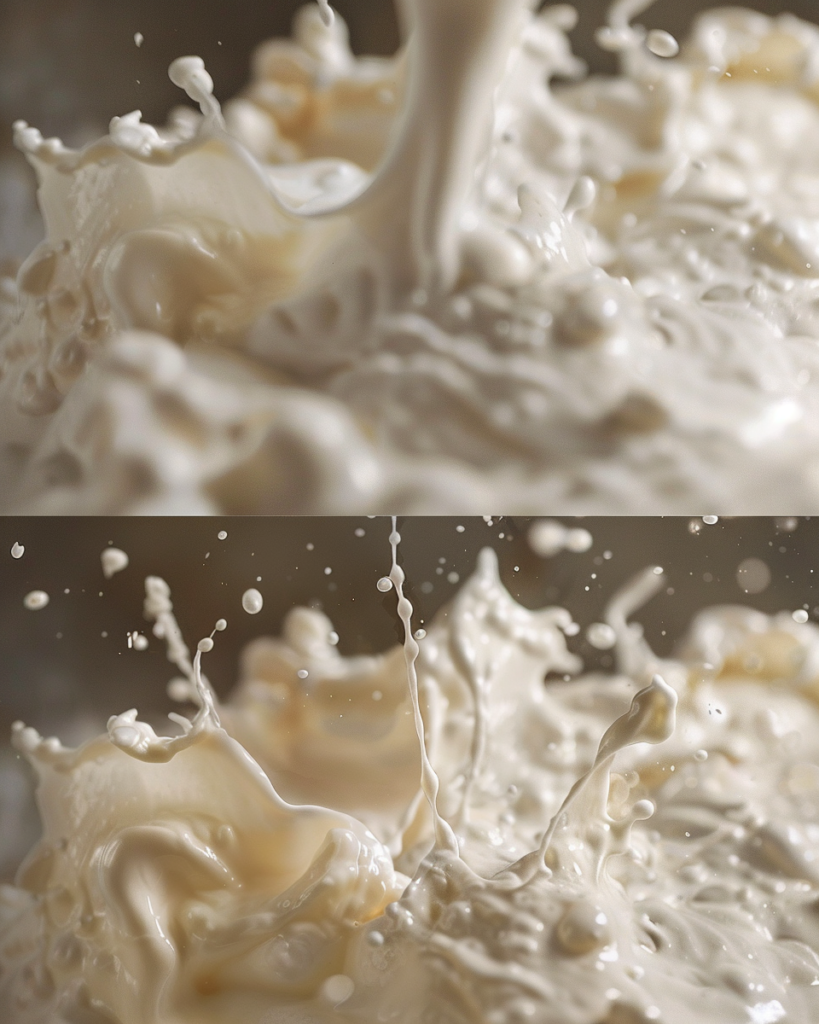
Deflation during folding is a mechanical failure, not a recipe failure — the foam collapses because lateral shearing force cuts through the protein walls of air bubbles rather than lifting them. When the spatula moves in a circle or is pressed down from above, it sheers rather than supports, and the bubbles pop on contact.
In traditional baking, a collapsed fold is partially rescued by gluten networks or starch gelatinization. In carnivore baking, there is no rescue. The Looksyumy Stabilization Protocol addresses this directly: The second part of the Looksyumy Stabilization Protocol is what I call the Looksyumy Air Preservation Window — the short period between final incorporation and foam collapse where the batter contains its maximum usable volume. Folding should stop within this window, and baking should begin immediately. treat folding as a structural engineering step, not a mixing step. The goal is distribution, not homogenization. You’re moving egg white foam through a base — not blending two liquids — and the spatula path should reflect that. If you’re unsure whether your whites are properly whipped before folding, see our how to whip egg whites for carnivore baking guide, which explains soft peaks, stiff peaks, and over-whipping mistakes.
The physics matter here. Whipped egg whites are a colloidal foam — a gas (air) dispersed through a liquid (protein-rich water). Each bubble wall is a thin film of denatured protein, flexible enough to stretch but fragile enough to rupture under pressure. The folding stroke works because it applies tension — lifting and stretching the film — rather than compression, which would collapse it. A slow, wide, deliberate arc imposes the least possible force on individual bubble walls while still moving the mixture through the bowl.
Step-by-Step Folding Technique to Preserve Air
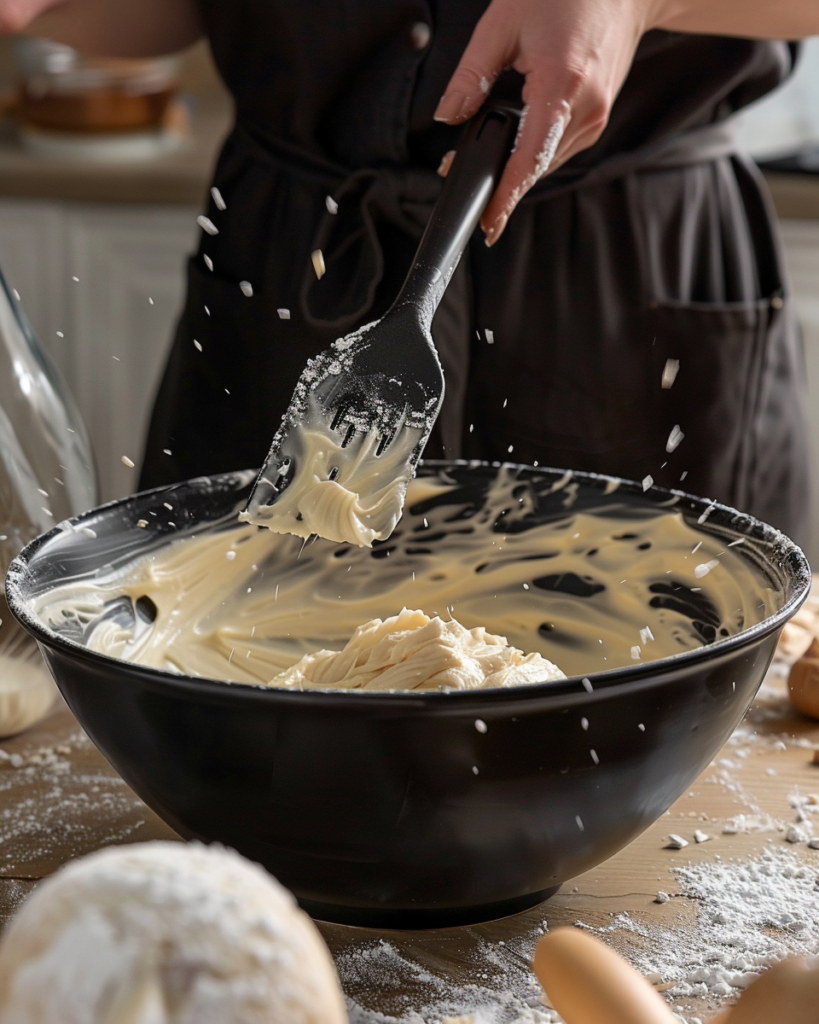
The physical folding stroke is a single unbroken arc: down through the center, across the bottom, and up the far side — the spatula never changes direction mid-stroke, and the bowl rotates to reposition the mixture rather than the spatula reaching around to find it. This is how you apply minimal shear force across the maximum surface area per stroke.
I learned this the hard way. During early carnivore baking trials, I was convinced that faster folding meant less time for the foam to sit and deflate on its own. So I sped up — small quick strokes, working from the top down, pressing the whites into the batter rather than lifting it through them. Within forty-five seconds, a bowl of beautifully stiff whites had turned into a thin, foamy liquid with visible puddles of water separating at the base. The entire structure was gone. What I didn’t understand yet was that speed increases shear force, and shear force is exactly what destroys foam. Slow hands preserve more air in fifteen folds than fast hands preserve in five.
Here’s the correct sequence:
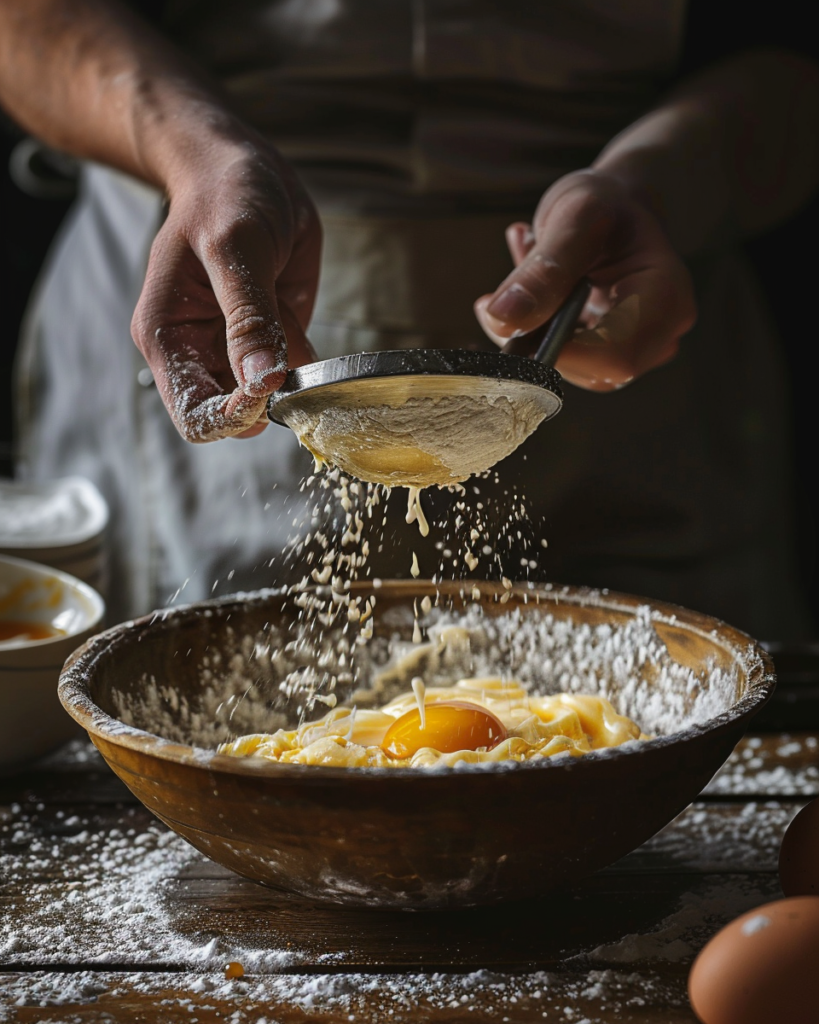
Step 1 — Lighten the base. Add approximately one-quarter of your whipped whites to the base batter and stir them in deliberately. Yes, stir. This portion is sacrificial. Its job is to loosen the batter’s density so it becomes close enough in texture to the remaining whites that folding them in won’t require force. A stiff, dense batter will drag down and compress the foam on contact. A pre-loosened batter accepts it.
Step 2 — Add whites in two additions. Add half the remaining whites to the bowl. Hold the bowl in your non-dominant hand at roughly a 30-degree tilt. Insert the spatula blade vertically at the twelve o’clock position, push it straight down to the bottom, pull it toward you across the floor of the bowl, and sweep it up and over as you rotate the bowl a quarter turn counterclockwise. That’s one fold. Repeat eight to ten times, then evaluate.
Step 3 — Add the final addition and fold to completion. Add the last of the whites and continue folding. Stop when the mixture is mostly uniform with only faint pale streaks visible. If you’re uncertain about what the texture should look and feel like at this stage, the dough consistency guide shows the exact ribbon drop behavior to look for. Don’t chase those last streaks — they vanish in the oven. Should you keep folding until all white streaks disappear? No. Faint white streaks are a sign that the batter is fully folded. Continuing beyond this point usually causes unnecessary foam loss.
Mistakes That Trigger Structural Deflation
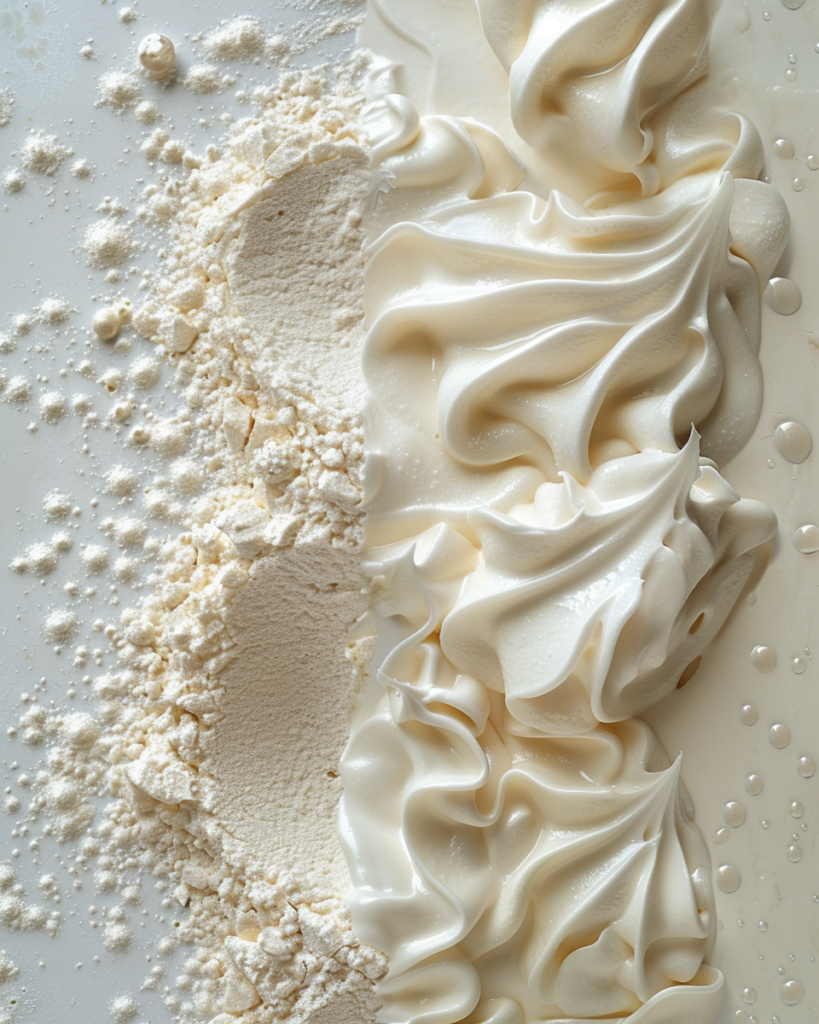
The most structurally destructive movements are circular stirring, downward pressing, and using any tool with multiple tines — all three apply shear force across a wide cross-section of bubbles simultaneously, rather than lifting a few at a time. The result in every case is the same: rapid, irreversible foam collapse.
It also needs to be said clearly: structural volume in carnivore baking is achieved entirely without almond flour, coconut flour, psyllium husk, xanthan gum, or any plant-based starch. These are not missing ingredients — they are excluded ingredients. Some bakers reach for them when foam collapses, treating them as structural patches. They aren’t. A collapsed foam batter reinforced with psyllium husk will produce a dense, gummy result, not a light one — because the problem was never ingredient-based. It was mechanical. The folding motion was wrong, and no binder corrects that. Protecting structural volume is a technique problem with a technique solution, and the troubleshooting guide on baking mistakes covers the most common mechanical errors in full.
For readers confirming their dietary framework, the nutritional case for eliminating plant-based binders in strict animal-based eating is outlined by Harvard T.H. Chan School of Public Health, whose nutrition research supports understanding exactly which non-animal compounds strict protocols exclude.
Other critical mistakes to avoid:
- Folding cold whites into warm batter (or vice versa). Temperature differentials increase surface tension in the foam and make the two components resist combining, which forces more aggressive folding.
- Using a bowl that’s too small. If the spatula can’t complete the full arc without scraping the bowl wall, you’re compressing the batter on every stroke.
- Waiting too long between folding and baking. Once whites are folded in, drainage begins. The liquid phase of the foam starts to separate downward. Get it into the oven.
- Over-folding a “streaky” batter. Pale white streaks at fold completion are not a defect. They’re the sign that you stopped at the right moment.
| Problem | Most Likely Cause |
|---|---|
| Dense batter | Over-folding |
| Watery batter | Broken foam structure |
| Flat bake | Foam collapse during folding |
| Uneven crumb | Under-folding |
| Visible white streaks | Usually normal |
| Batter loses volume fast | Delayed baking |
Pro Tips for Maximum Foam Density 🔥
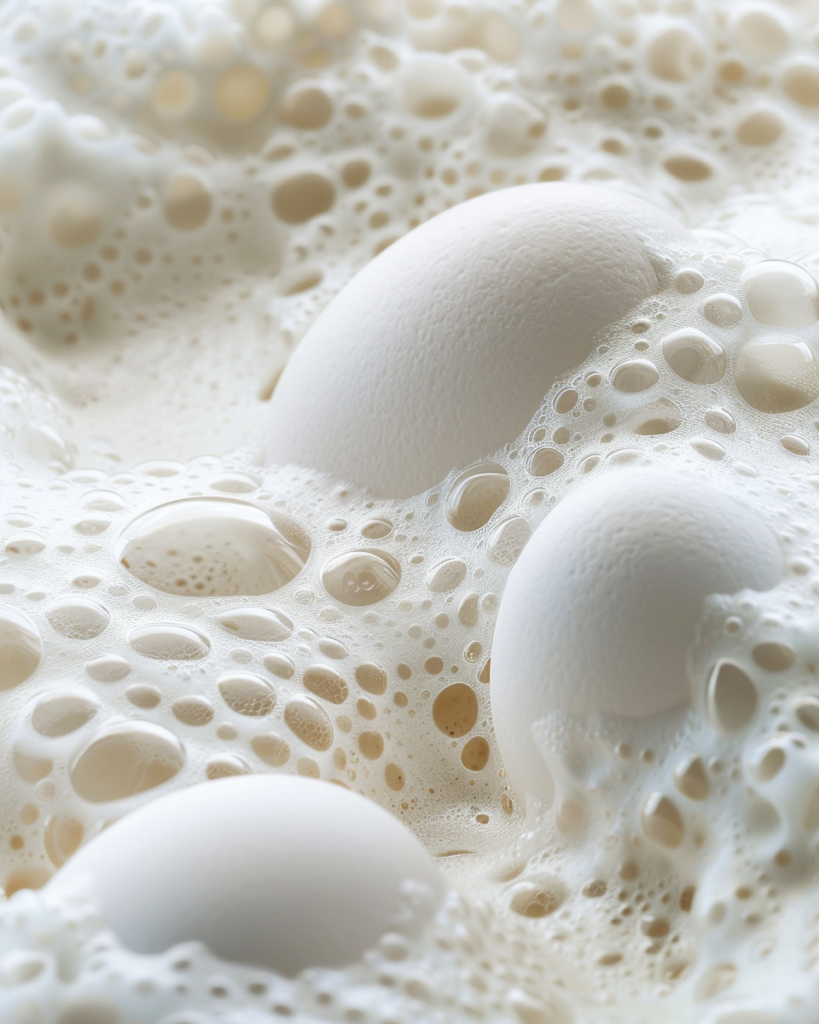
- Use a wide, flexible silicone spatula. A wide blade covers more bowl surface per stroke, which means fewer total folds needed to achieve incorporation. Fewer folds = more air retained.
- Rotate the bowl, not your wrist. The bowl rotation is what repositions the mixture. Your wrist just holds the spatula on its arc. If your wrist is doing the heavy work, your stroke path has collapsed into a circle.
- Match densities before folding. The sacrificial first-quarter of whites isn’t optional — it’s the step that makes all subsequent folds easier and more air-preserving. Skip it and you’ll compensate with force.
- Room temperature everything. Whites and base batter at the same temperature fold together in fewer strokes. More temperature difference = more resistance = more strokes = more deflation.
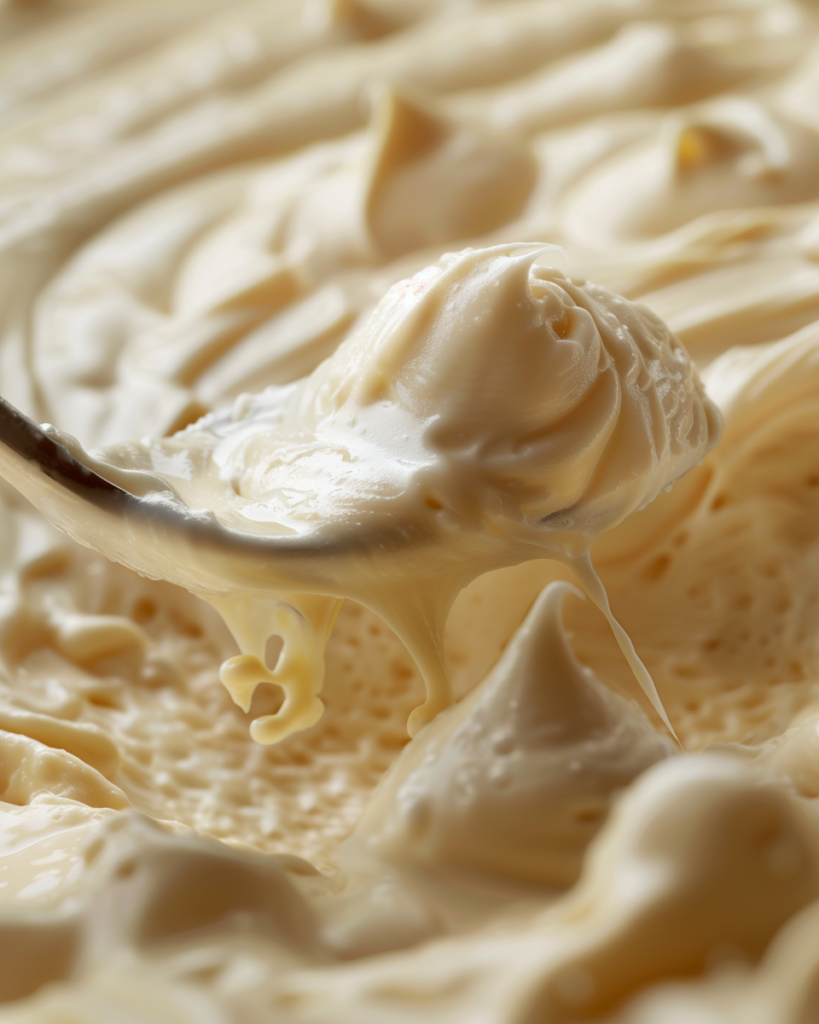
- Do the ribbon drop test. Lift a spoonful of folded batter and let it fall back into the bowl. It should fall in a slow, thick ribbon that briefly mounds before settling. If it splashes flat, the foam is already significantly deflated.
- Prep your pan before you fold. Folded batter loses volume while it waits. Have the pan ready, the oven hot, and the rack positioned before the spatula touches the bowl.
- Glass or stainless steel bowls only. Plastic retains trace fats even after washing. Fat is the primary structural enemy of egg white foam. See our full texture troubleshooting guide for how fat contamination presents in the final bake.
Frequently Asked Questions
How do I know when the egg whites are fully folded?
The mixture is ready when it looks mostly uniform in color and texture, with only faint pale streaks of white visible. Those streaks will disappear during baking. The more reliable signal is texture: the batter should feel light and airy rather than dense or liquid, and a spoonful lifted and dropped should fall in a slow ribbon, not a splash. If you’re chasing a completely streak-free batter, you’ve already gone too far.
Can you over-fold egg whites?
Yes, and it happens faster than most bakers expect. Over-folding is the single most common cause of dense, flat results in foam-based carnivore baking. If your final bake turns dense instead of airy, our why carnivore bread is dense guide explains the most common structural causes. Each fold beyond the stopping point ruptures additional bubbles. Because there’s no starch or flour network to provide backup structure, every lost bubble is a direct loss of final height and crumb openness. The tell-tale sign of an over-folded batter is that it becomes visibly looser and more liquid as you continue — the foam has broken down into its component water and protein rather than remaining as a stable, airy mass.
Why did my folded batter turn watery at the bottom?
Liquid pooling at the base of a folded batter almost always means one of three things: the whites were over-beaten and the foam was already beginning to break before folding started, the folding motion was too aggressive and sheared through the bubble walls, or the batter sat too long after folding before going into the oven. In all three cases, the protein film around the air bubbles ruptured and released the liquid phase of the foam. If this happens consistently, start by checking your whites at the whipping stage — over-beaten whites look dry, grainy, and clumped, and they fold poorly no matter how careful the technique.