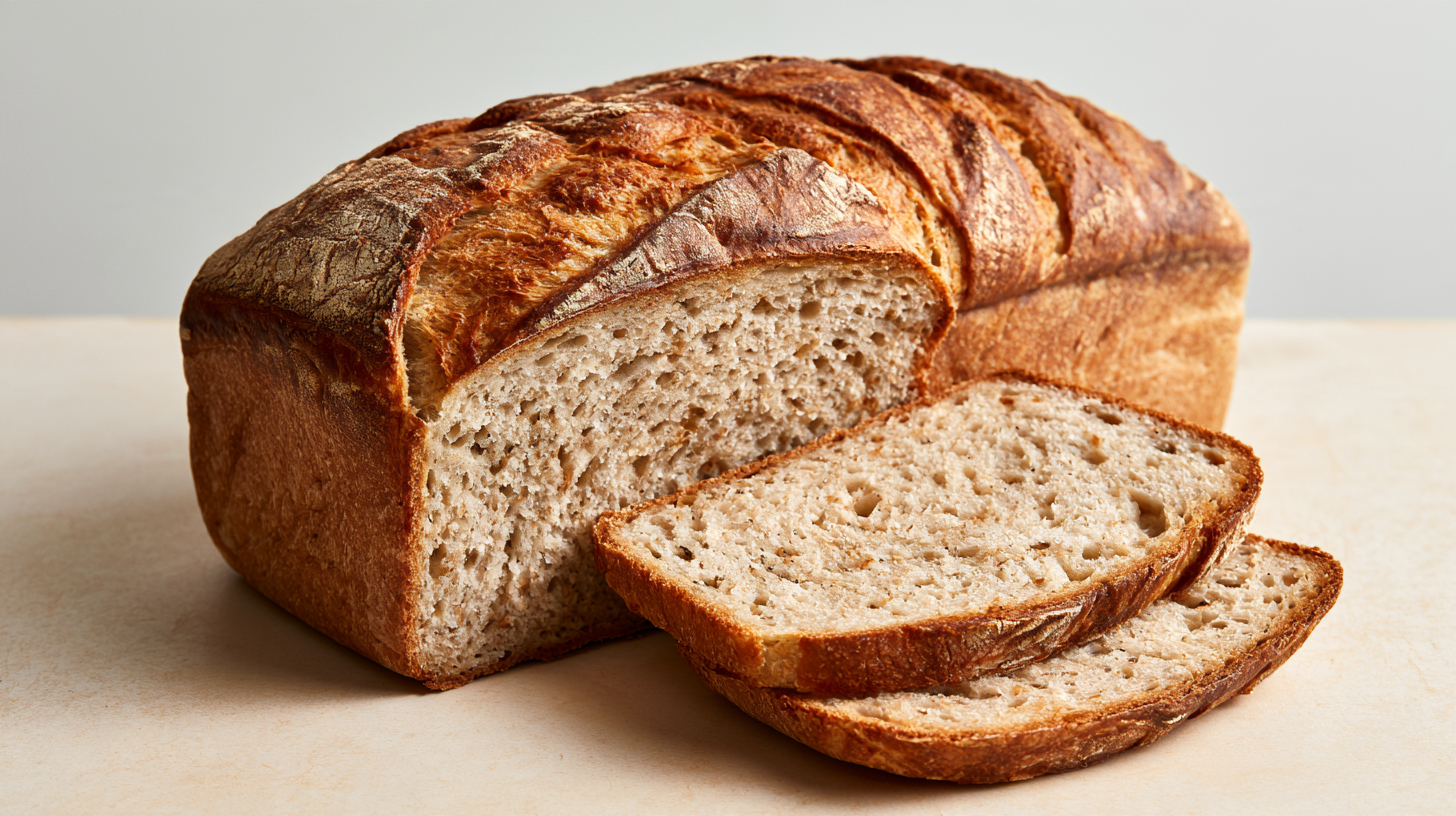
If your carnivore bread crust is too hard, the first question is not “Which ingredient should I change?”
Check the inside first.
A firm crust can exist alongside a properly set center. But a hard crust can also appear with a wet middle or a dry crumb, and those situations point toward different troubleshooting paths.
That distinction matters because changing the recipe when the problem is mainly on the surface can create a new problem without fixing the original one.
The useful approach is simple:
Look at the crust. Then look at the crumb. Then decide what actually needs to change.
Table of Contents
Why Is My Carnivore Bread Crust So Hard?
A hard carnivore bread crust does not automatically mean the entire loaf is overbaked.
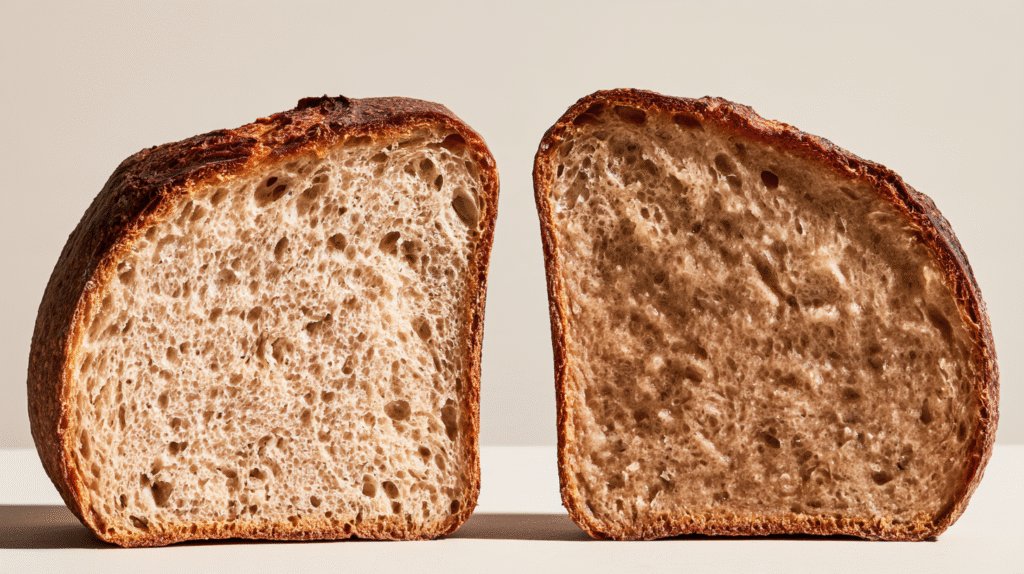
Start by cutting through the cooled loaf and looking at the center.
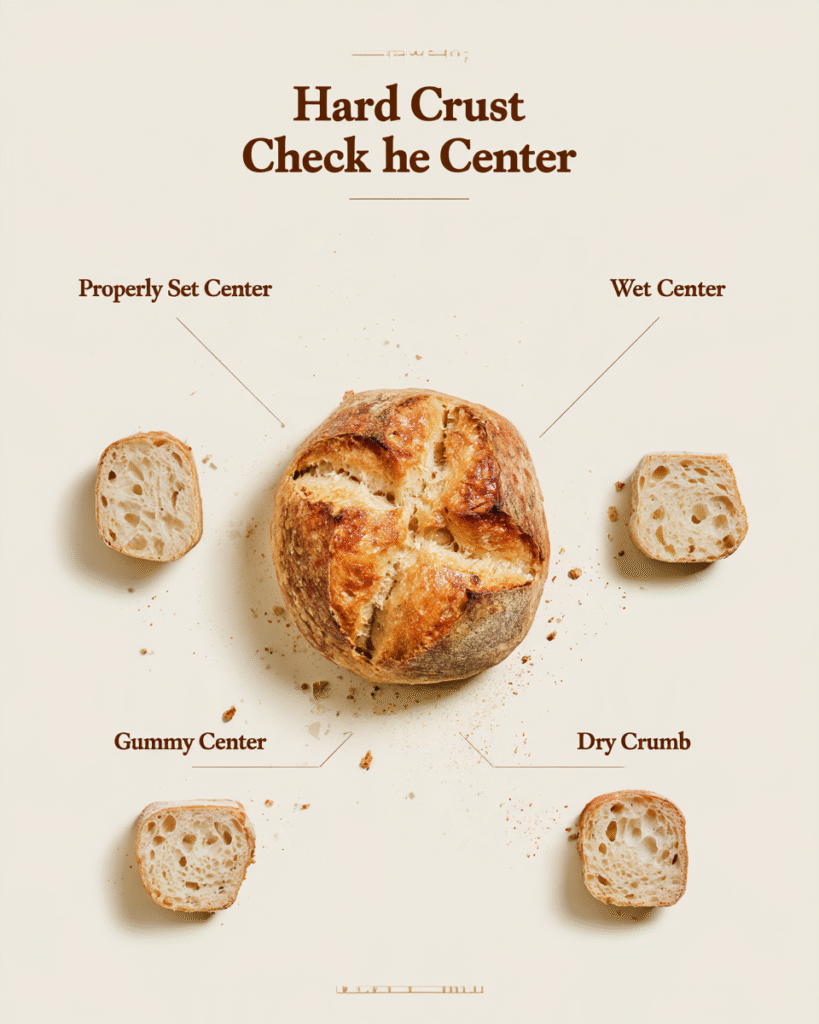
There are four useful combinations to recognize:
- Hard crust + properly set center: the problem is mainly the surface.
- Hard crust + wet center: the outside has set while the middle still has a baking or setting problem.
- Hard crust + dry crumb: the issue affects more than the crust.
- Crust becomes hard after storage: the bread may have changed texture after baking.
This quick comparison is more useful than changing several ingredients at once.
The rest of the diagnosis depends on which combination matches your loaf.
Hard Crust With a Soft, Properly Set Center
This is the clearest hard carnivore bread crust problem.
The outside feels much firmer than you want, but the center is soft, holds its shape and has the texture you expect from the finished bread.
In this situation, don’t treat the entire loaf as a failure.
Look specifically at the surface.
Ask:
- Is the crust noticeably firmer than the crumb?
- Is the crust harder around the exposed edges?
- Does the inside remain properly set?
- Did the bread spend longer in the oven than usual?
- Does the problem happen repeatedly with the same recipe?
If the crumb is good but the crust is consistently too firm, the useful variables are the ones affecting the surface and baking environment.
For broader oven-related troubleshooting, see Oven Mistakes in Carnivore Baking.
The important point is this:
Don’t change the entire formula just because the crust is harder than you prefer.
First establish that the center is actually fine.
Hard Crust + Wet Center
A tough carnivore bread crust becomes a different problem when the center is still wet.
The combination can be frustrating because the outside looks finished while the middle does not.
But don’t diagnose this as a crust-only problem.
The useful questions are:
- Was the bread cooled before you judged the center?
- Is the center genuinely wet, or simply soft?
- Is the loaf particularly thick?
- Does the same problem happen repeatedly?
- Does the outside consistently become firm before the middle?
If the center remains genuinely wet after cooling, the crust is telling you that the outside and inside have not reached the same stage.
In that situation, simply trying to make the crust softer does not address the underlying problem.
For the separate wet-center diagnosis, see Carnivore Bread Too Wet in the Middle.
And if the issue appears connected to the oven or baking environment, the broader Oven Mistakes in Carnivore Baking guide is the better resource.
The key distinction:
Hard crust + properly set center = investigate the crust.
Hard crust + genuinely wet center = investigate the bake.
Hard Crust + Dry Crumb
Now check the whole slice.
If the crust is hard and the crumb is also noticeably dry or firm, you’re no longer dealing with a surface-only problem.
Look for:
- a dry interior,
- a crumb that feels firmer than expected,
- a crust that is hard all around,
- an overall texture that is noticeably drier than previous batches.
This is different from having a firm crust around a soft, properly set center.
In other words:
Hard crust + soft center points you toward the surface.
Hard crust + dry center points you toward the loaf as a whole.
Don’t try to solve the second situation by focusing only on the crust.
For broader bread troubleshooting, How to Fix Carnivore Bread is the more appropriate resource.
The purpose of this article is to help you recognize that distinction—not to duplicate the broader troubleshooting guide.
Why the Crust Gets Harder Than the Center
The crust and crumb do not experience the same conditions during baking.
The outside is directly exposed to the oven environment, while the center is surrounded by the rest of the loaf.
As a result, the surface can become firm while the interior is still softer.
That explains why a loaf can have:
- a firm outer crust,
- a properly set center,
- or a firm outside with a center that still needs more attention.
This is why judging the loaf only by its top or crust color can be misleading.
For a carnivore bread crust problem, the inside of the loaf is part of the diagnosis.
What to Check Before Changing the Recipe
Before changing ingredients, work through the problem in order.
1. Check the center
Let the loaf cool before judging the crumb.
Then cut through the center.
Is it:
- properly set,
- wet,
- gummy,
- or dry?
You don’t need to solve every texture problem at once. You first need to know which one you actually have.
2. Compare crust and crumb
Ask whether the crust is the only part that feels too firm.
If the center is good, keep your attention on the crust.
If the center is also problematic, the crust may only be one symptom.
3. Look at the baking environment
If the crust repeatedly becomes hard while the center remains softer, consider the baking environment as one of the variables.
You do not need to change everything at once.
The existing Oven Mistakes in Carnivore Baking article can be used when the problem points toward oven behavior.
4. Check the loaf thickness
A thicker loaf can create a larger difference between the outside and center.
If the same formulation behaves differently when the shape or portion changes, that comparison gives you useful information.
5. Don’t judge the crumb too early
Cutting into bread before it has cooled can make diagnosis harder.
If the center looks softer immediately after baking, give it time to cool before deciding that the loaf is underbaked.
6. Change one variable
This is especially important with a hard crust.
Don’t change the ingredients, oven conditions, pan, baking time and shape simultaneously.
Make one controlled change, then compare the next loaf.
That gives you a much clearer signal about what affected the crust.
Can You Soften a Hard Carnivore Bread Crust?
If the bread is already baked and the center is properly set, the most useful fix is usually to identify why the crust became too firm and adjust the next bake.
First determine which situation you have:
Hard crust + good center: focus on the surface and baking environment.
Hard crust + wet center: don’t simply try to soften the crust; investigate the center.
Hard crust + dry crumb: look at the whole loaf rather than the crust alone.
If the bread became noticeably harder only after storage, that is another clue. In that case, compare the texture immediately after cooling with the texture after storage.
The existing How Long Does Carnivore Bread Last? article covers the broader storage question.
The practical lesson is:
Diagnose first. Change second.
Hard Crust vs. Overbaked Bread
A hard crust and an overbaked loaf are not automatically the same thing.
Hard crust
The outside is noticeably firm, but the center may still be soft and properly set.
Hard crust + wet center
The outside is firm while the middle still has a setting or baking problem.
Overbaked or overly dry loaf
The crust and the crumb are both noticeably dry and firm.
That is why the center matters.
If you only look at the outside, several different problems can look similar.
If you look at the crust and the crumb, the next step becomes much clearer.
A Simple Hard-Crust Diagnostic
Use this sequence the next time your carnivore bread crust is too hard:
Step 1 — Cool the loaf.
Don’t make the diagnosis from the bread immediately after baking.
Step 2 — Cut through the center.
Look at the crumb, not just the crust.
Step 3 — Identify the center.
Is it:
- properly set?
- wet?
- gummy?
- dry?
Step 4 — Compare the two textures.
If the center is good and only the crust is hard, focus on the surface.
If the center is wet or dry too, the problem is broader.
Step 5 — Check the likely variable.
Consider the baking environment, loaf thickness, baking history and storage timing.
Step 6 — Change one thing.
Make one controlled adjustment rather than rebuilding the recipe.
Quick decision tree
Hard crust → What is the center doing?
→ Properly set
Focus on the crust and baking environment.
→ Wet
Investigate the wet-center problem.
→ Gummy
Treat the center texture as a separate diagnostic issue.
→ Dry
Investigate the overall dryness rather than only the crust.
→ Only became hard after storage
Investigate the storage-related texture change.
This keeps a hard carnivore bread crust problem from turning into unnecessary recipe changes.
FAQ
Why is my carnivore bread crust hard but the inside is soft?
A crust can become firm while the center remains soft. If the crumb is properly set and has the texture you want, focus on the surface and baking environment rather than changing the entire recipe.
Why is my carnivore bread crust hard but the middle is wet?
That combination suggests the outside has set while the center still has a baking or setting problem. Check the loaf after cooling and consider the loaf thickness and baking environment.
How do I know if my carnivore bread is overbaked?
Look at the crumb as well as the crust. If both the outside and interior are noticeably dry and firm, the problem is broader than simply having a hard crust.
Should I change the recipe if my carnivore bread crust is too hard?
Not immediately. First determine whether the center is properly set, wet, gummy or dry. That tells you whether the crust is the main problem.
How can I soften a hard carnivore bread crust?
First identify why the crust became too firm. If the center is properly set, focus on the surface and baking conditions for the next bake rather than changing multiple ingredients at once.
Can a thick loaf cause a hard crust and softer center?
Loaf thickness can be an important diagnostic clue when the outside repeatedly becomes firm before the center reaches the desired texture. Compare the result with the same formulation in a different shape or portion before changing several other variables.