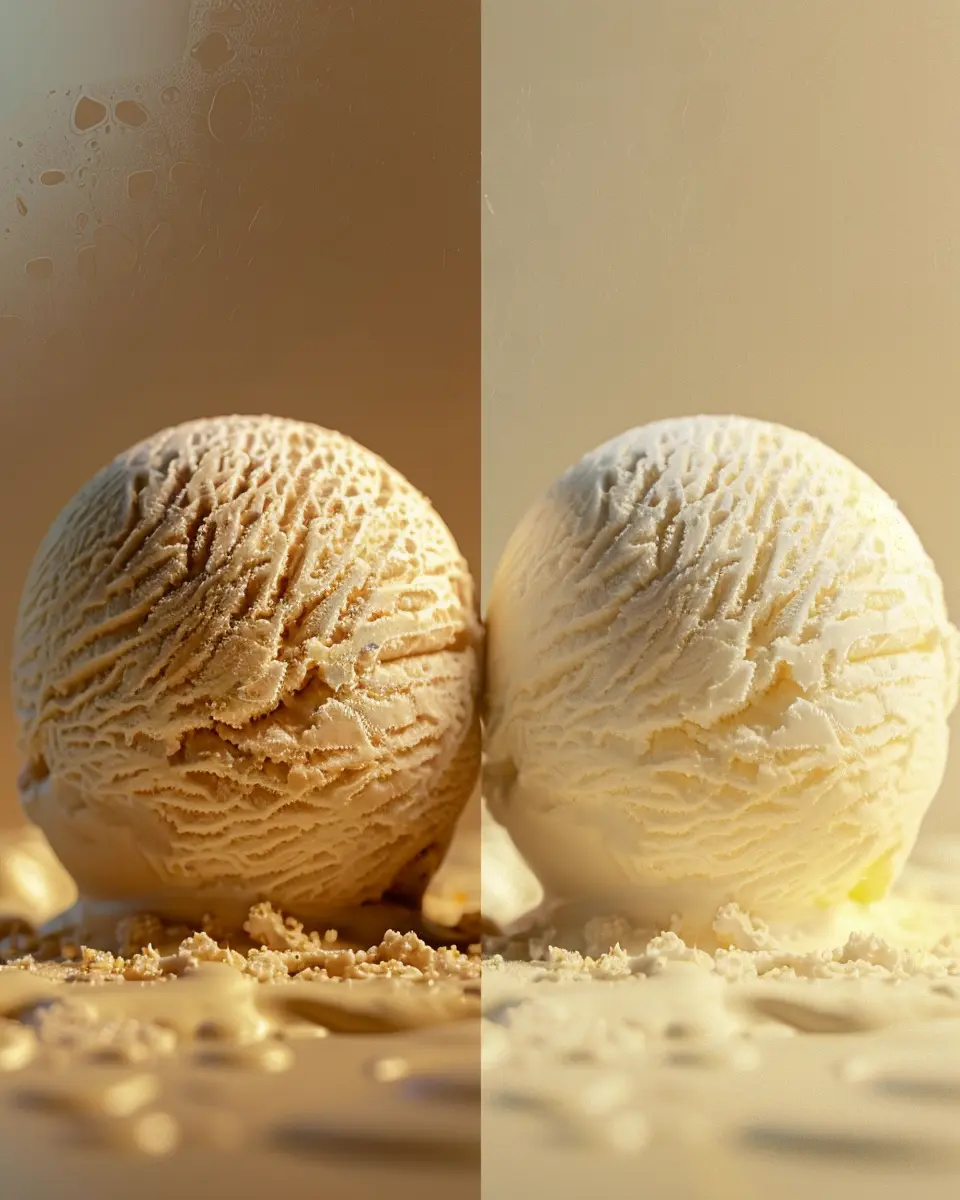
👉 Print the freezing temperature log and visual texture diagnostic checklist in the pro tips section — it gives you a single-page reference for every stage from base preparation through scoop-ready consistency.
Freezing a carnivore ice cream base is nothing like freezing a conventional dairy dessert, and it is even further removed from the plant-thickened keto ice cream formulations that dominate most low-carb recipe spaces. When the entire structural system is built from animal fat, egg protein, and heavy cream — with no starch, no fiber, no hydrocolloid gel to buffer ice crystal formation — the physics of the freeze become the recipe. The temperature at which the base enters the freezer, the speed at which ice crystals nucleate, the ratio of fat to protein to free water, and the mechanical disruption applied during churning all determine whether the final result is a smooth, scoopable, genuinely creamy frozen dessert or a dense, icy block that requires a warm knife and considerable patience before it yields a single serving.
Table of Contents
Table of Contents
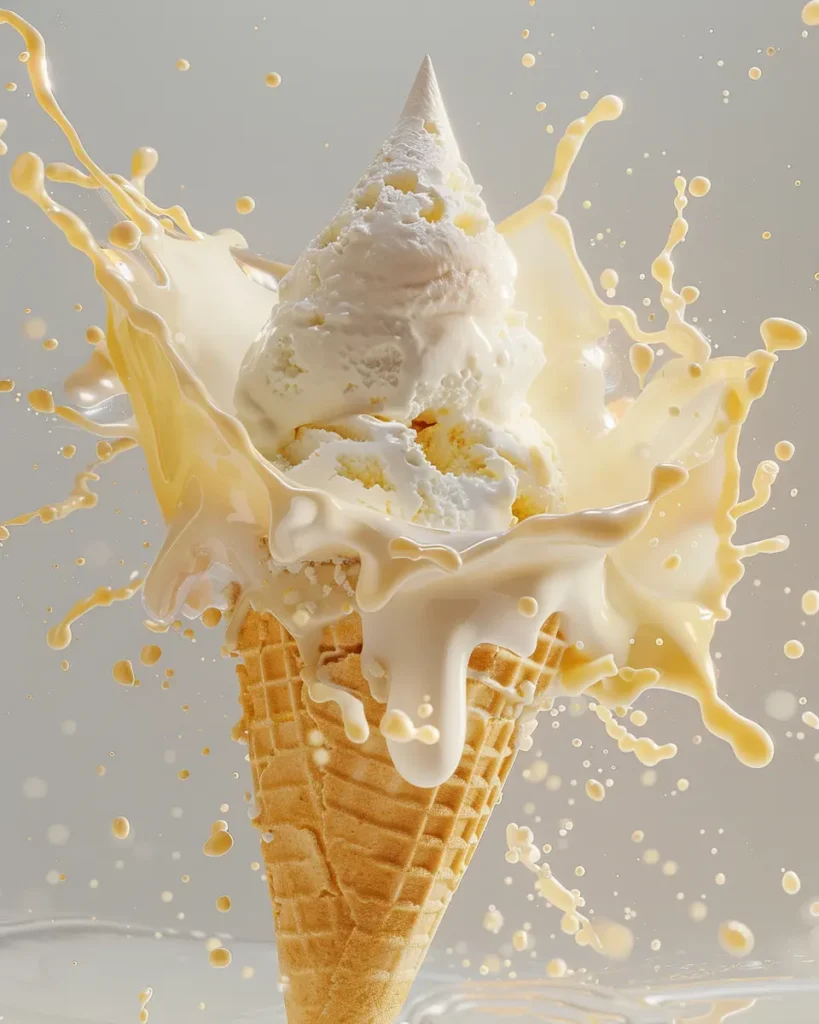
To control ice crystal growth in a carnivore frozen dessert, the base must enter the freezer pre-chilled to below 4 degrees Celsius, the churning process must begin while the mixture is still fully fluid and continue until the base reaches soft-serve consistency, and the fat content must be high enough relative to free water that the majority of the freezable water in the mixture is bound within the fat emulsion rather than existing as a free aqueous phase. Large ice crystals form when water freezes slowly in an undisturbed environment — they grow by drawing in adjacent water molecules, producing the coarse, grainy texture that makes poorly made frozen desserts unscoopable and harsh on the palate. Rapid freezing combined with continuous mechanical agitation prevents crystals from growing beyond micro-scale by constantly disrupting the nucleation process, while a high animal-fat content reduces the proportion of free water available to crystallize in the first place.
Carnivore Ice Cream: The Complete Freezing and Texture Science Guide
- Prep Time: 15 Minutes
- Cook Time: 0 minutes
- Total Time: 15 Minutes
- Yield: 6 Servings 1x
- Category: Dessert
- Method: Churned, frozen
- Cuisine: Carnivore
- Diet: Carnivore Diet
Description
A rich and creamy carnivore ice cream made entirely from animal-based ingredients. This recipe focuses on ice crystal control, natural emulsification, and proper freezing techniques to create a smooth, scoopable texture without plant-based thickeners or stabilizers.
Ingredients
500 ml (2 cups) heavy cream (36-40% fat)
4 egg yolks
2 whole eggs
1 pinch salt
1 teaspoon vanilla extract (optional)
Instructions
Whisk the egg yolks and whole eggs until fully combined.
Gradually add the heavy cream and salt while whisking.
Refrigerate the mixture for at least 4 hours until it reaches below 40°F (4°C).
Pour the chilled base into a pre-frozen ice cream maker.
Churn until the mixture reaches a soft-serve consistency.
Transfer immediately to a chilled freezer-safe container.
Cover the surface directly with plastic wrap to prevent ice crystal formation.
Freeze for 2 to 4 hours before serving.
Let the ice cream sit at room temperature for 5 to 8 minutes before scooping.
Notes
Use heavy cream with at least 36% milk fat for the creamiest texture.
Do not allow the base to warm up before churning.
Avoid thawing and refreezing the ice cream.
Store at 0°F (-18°C) to minimize ice crystal growth.
For the best texture, allow a short tempering period before serving
Nutrition
- Serving Size: 1 Serving
- Calories: 385
- Sugar: 2 g
- Sodium: 37 g
- Fat: 90
- Saturated Fat: 23 g
- Unsaturated Fat: 11 g
- Trans Fat: 0 g
- Carbohydrates: 2 g
- Fiber: 0 g
- Protein: 8 g
- Cholesterol: 255 mg
The Texture Science of Animal-Based Freezing
Ice crystal size is the single variable that determines whether a frozen dessert reads as creamy or icy — crystals below 40 microns are imperceptible to the tongue, while crystals above that threshold produce a detectable graininess that no amount of softening at room temperature fully resolves. Fat crystallization in an animal-based frozen matrix is not a texture problem but a temperature-management problem: the fat phase must solidify into a fine, evenly distributed network of small crystals rather than aggregating into large solid masses that separate from the aqueous phase.
The Looksyumy Crystal Stability Pattern defines the target state of a properly frozen carnivore base: a continuous fat crystal network — fine enough to be invisible to the palate — suspended throughout a matrix of micro-scale ice crystals, with the protein fraction from egg yolks and cream acting as a stabilizing boundary layer between the two phases. When this pattern holds, the ice cream is smooth, cohesive, and scoopable directly from the freezer within a short tempering window. When it fails — because the base was frozen too slowly, the fat-to-water ratio was insufficient, or churning was stopped too early — the fat and aqueous phases separate visually and texturally, producing either a greasy surface layer over an icy interior, or a uniformly dense block with no discernible crumb or texture. Our carnivore desserts chocolate covers the full range of animal-based frozen formulations and the fat ratios that produce stable crystal patterns across each one.
The crystallization behavior of saturated animal lipids under sub-zero conditions — and why crystal network distribution determines final texture rather than fat volume alone — is documented in food physics research published by the Institute of Food Technologists, whose lipid crystallization studies confirm that nucleation rate and crystal size distribution are the two governing variables in frozen fat-matrix texture.
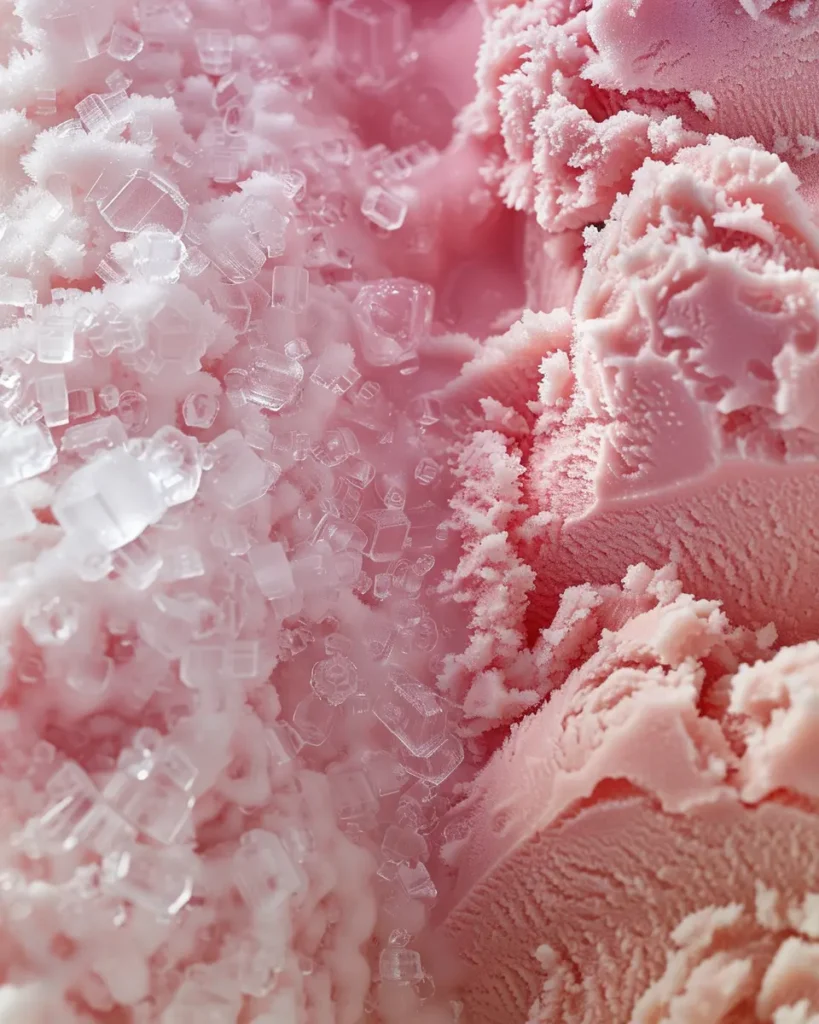
The physics behind fat crystallization in heavy cream and egg-yolk-enriched bases are worth understanding in practical terms. Animal fats are composed primarily of saturated and monounsaturated fatty acids, which crystallize at relatively higher temperatures than plant-derived unsaturated fats. This means animal-fat-based ice cream begins solidifying at a higher sub-zero temperature than a plant-oil-based equivalent, which is an advantage — it means the fat network begins forming earlier in the freeze, providing structural scaffolding that the ice crystal formation then builds around rather than dominating. Managing this requires that the base enters churning cold enough that fat crystallization and ice crystal nucleation happen simultaneously rather than sequentially, which is why pre-chilling the base is a structural requirement, not a convenience step.
Clean Animal Ingredients for Ultimate Creaminess
The creamiest carnivore frozen desserts are built on a fat-dominant base in which egg yolk lecithin acts as the primary emulsifier, maintaining the bond between fat and water phases through the freeze-thaw cycle and preventing the fat globules from coalescing into a separated, greasy layer. The fat content of the base is not simply a richness variable — it is the structural determinant of how much free water is available to form large ice crystals, with higher fat concentrations producing proportionally less free water and therefore finer, less perceptible crystal structures.
Heavy cream is the foundation ingredient of any high-performance carnivore frozen base because its fat content — typically between 36 and 40 percent — places it at the threshold where fat-phase volume is sufficient to dominate the freezing behavior of the mixture. Below that fat percentage, the aqueous phase becomes large enough to produce noticeable ice crystal formation regardless of churning technique. Egg yolks contribute two distinct functions: their fat content increases the overall lipid volume of the base, and their lecithin content stabilizes the emulsion at the molecular level by forming boundary layers around fat droplets that prevent them from merging during freezing. A base made with only cream and no yolk is structurally less stable because it lacks this molecular-level emulsification — the fat phase is present but not fully protected against coalescence under mechanical stress. Our high protein meal guide covers the broader nutritional architecture of animal-based eating that provides context for why these specific ingredients are structurally irreplaceable rather than interchangeable.
Egg whites, when included, function differently from yolks in a frozen context. Their protein content increases the viscosity of the aqueous phase, which slows ice crystal growth by reducing the mobility of water molecules — a useful secondary effect that complements rather than replaces the fat-dominant structural approach. However, egg whites also increase total free water content, which works against crystal-size control if the fat ratio is not adjusted upward to compensate. The practical guideline is that every additional egg white in a carnivore ice cream base should be paired with an increase in yolk count or cream volume to maintain the fat-to-free-water ratio that keeps crystals in the sub-perceptible range.
Advanced Freezing Tips and Churning Mechanics
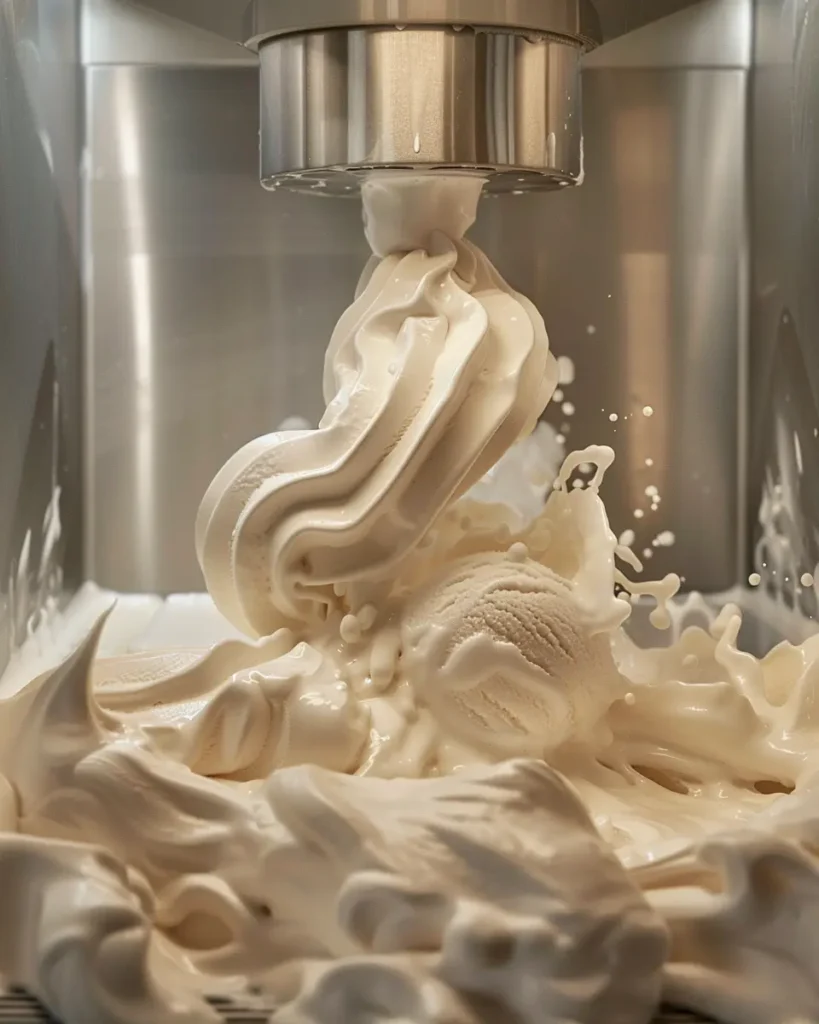
Rapid sub-zero cooling combined with continuous paddle agitation is the only mechanical method available in a home kitchen that reliably produces micro-scale ice crystals — the paddle disrupts crystal growth by physically breaking apart nucleating ice structures before they can aggregate, while rapid cooling ensures that the window during which crystals can grow undisturbed is minimized. Every minute the base spends in a partially frozen, unchurned state is a minute during which existing crystals are growing larger and drawing in adjacent free water.
I learned the consequence of ignoring churning timing through a batch that represented everything I thought I understood about carnivore ice cream at the time. The base ratio was correct — heavy cream, egg yolks, a small amount of whole milk — the emulsification had been handled properly, and the mixture had been pre-chilled overnight. What I misjudged was the starting temperature when churning began. I pulled the base from the refrigerator and let it sit at room temperature for roughly fifteen minutes while I set up the machine, convinced that slightly warmer was fine since churning would handle everything. By the time the paddle started moving, the outer layer of the base had already begun nucleating crystals in the bowl. Those early crystals acted as seed structures — the rest of the freeze built around them rather than producing an independent micro-crystal network. The result came out of the freezer the next morning as a single unscoopable solid mass with a coarse, grainy texture throughout and a faintly separated fat layer at the surface. Everything that could have been prevented by starting churning with the base at 3 degrees Celsius rather than 12 had gone wrong simultaneously. The meal prep guide covers the pre-chill protocol that prevents this specific failure across all frozen carnivore preparations.
The lipid composition of heavy cream — including why its saturated fatty acid profile produces a higher and narrower crystallization temperature range than plant-derived fats — is documented in the Harvard T.H. Chan School of Public Health’s nutritional lipid research, whose fat chemistry framework confirms that saturated lipid phase transitions are more abrupt and structurally decisive than unsaturated equivalents.
Churning speed matters as much as timing. A paddle moving too slowly allows crystal aggregation to outpace disruption — the mechanical force isn’t sufficient to break apart forming crystal clusters. Most home ice cream machines operate at a fixed speed, but the variable you can control is the stage at which you stop churning. Pull the base from the machine at soft-serve consistency — when it holds its shape briefly before slowly settling — not when it looks fully frozen. Over-churning at the end stage introduces air unevenly and can begin breaking the emulsion under prolonged mechanical stress.
Common Freezing Mistakes That Cause Iciness ❌
Static freezing — placing a churned or unchurned base directly into a freezer container without any mechanical agitation — produces large ice crystals in every animal-fat base regardless of how well the emulsion was constructed, because the nucleation and growth phase happens undisturbed across the entire mixture simultaneously. Fat layer separation visible at the surface of a frozen carnivore dessert after overnight storage indicates that the emulsion broke during freezing — fat globules coalesced and migrated upward through the setting aqueous phase, which happens when the churning window was too short or the base temperature was too high at the start of churning.
The smooth, fat-bound creaminess that defines a well-executed carnivore frozen dessert is achieved entirely without xanthan gum, guar gum, psyllium husk, carrageenan, or any plant-derived stabilizer. These compounds appear in commercial and keto ice cream formulations specifically to compensate for low fat content — they increase viscosity through hydrocolloid swelling or polysaccharide chain entanglement, slowing water molecule mobility and mimicking the ice-crystal-retarding effect that high fat content provides naturally. In a full-fat animal-based base with correct emulsification, they are structurally redundant — the fat phase and egg yolk lecithin are already performing those functions through animal chemistry. More importantly, in a strict carnivore framework, these are excluded compounds by definition, not missing ingredients. Reaching for xanthan gum when a carnivore ice cream turns icy is treating a mechanical or ratio problem with an excluded ingredient rather than addressing its actual cause.
Other iciness-producing errors that don’t require plant stabilizers to solve:
- Refreezing after partial thaw. Each freeze-thaw cycle allows existing ice crystals to melt partially and recrystallize larger during the subsequent freeze — a process called Ostwald ripening. After the first freeze, the base should not be allowed to soften beyond the tempering stage before serving.
- Under-fat formulations. A base with heavy cream below 36 percent fat concentration has a free water volume that produces unavoidable coarse crystals regardless of churning technique. Fat content is not a richness preference — it is a structural parameter.
- Freezer temperature too high. Home freezers set above minus 18 degrees Celsius allow continued crystal growth during storage. The storage temperature matters as much as the churning temperature.
Pro Tips for a Flawless Soft Scoop 🔥
- Pre-chill the base to below 4 degrees Celsius before churning begins — not just cold, but measured cold. A kitchen thermometer eliminates the guesswork that causes most churning failures.
- Start churning immediately after removing from the refrigerator. Every minute at room temperature before the paddle starts moving is crystal nucleation time you cannot recover.
- Stop churning at soft-serve consistency, not full freeze. The final hardening happens in the freezer container. Over-churning breaks the emulsion under prolonged mechanical stress.
- Use a pre-frozen churning bowl if your machine requires one, and freeze it for a minimum of 24 hours — not the 12 hours most instructions suggest. An insufficiently frozen bowl warms through before churning completes.
- Transfer churned base to a pre-chilled container — a room-temperature container warms the outer layer of the ice cream on contact and initiates crystal growth in the surface layer during the final freeze.
- Cover the surface of the base directly with cling film before sealing the container — eliminating the air gap above the ice cream prevents surface dehydration and the icy crust that forms when moisture evaporates from the exposed top layer during storage.
- Temper for exactly five to eight minutes at room temperature before scooping — not longer. The goal is softening the outer layer enough for the scoop to move cleanly, not warming the base back toward the crystal-growth temperature range.
- Track your fat percentages across batches. The difference between a smooth and a grainy result is often a single variable — cream fat percentage varying between brands. Consistent sourcing produces consistent results. The baking tips guide includes a formulation tracking template adaptable for frozen preparations.
Frequently Asked Questions
Why does my low carb ice cream turn rock-hard in the freezer?
A carnivore ice cream base that freezes to an unscoopable solid almost always has one of two root causes: insufficient fat content relative to free water, or inadequate mechanical agitation during the freeze. When fat content is too low, the proportion of free water in the base is large enough that ice crystal networks form continuously and interconnect across the entire frozen mass, producing a monolithic solid rather than a dispersed crystal structure suspended in a fat matrix. When churning was insufficient — either because it started too late, stopped too early, or the machine bowl was under-frozen — the same crystal aggregation happens for mechanical rather than compositional reasons. The solution in both cases is upstream: increase fat content before freezing and ensure churning begins with the base at the correct pre-chill temperature and continues until genuine soft-serve consistency is reached.
How do egg whites affect the density of a carnivore frozen dessert?
Egg whites increase the density of a carnivore frozen dessert by raising the protein content of the aqueous phase, which increases its viscosity and produces a firmer, more compact texture. They also introduce additional free water into the base — water that is not bound within the fat emulsion and is therefore available to form ice crystals during freezing. In small quantities, the viscosity increase from egg white protein is beneficial: it slows water molecule mobility and modestly reduces crystal growth rate. In larger quantities, the additional free water volume outweighs the viscosity benefit and produces a denser, icier result. The practical balance is to use egg whites sparingly in carnivore frozen bases and compensate their water contribution with an equivalent increase in yolk or cream volume to maintain the fat-to-free-water ratio.
Can I make a smooth carnivore ice cream without a commercial churning machine?
Yes, but it requires a manual disruption protocol that replicates the crystal-interruption function of a churning paddle. The most effective method is the freeze-stir technique: pour the pre-chilled base into a shallow, wide metal container — metal conducts cold faster than glass or plastic — and place it in the freezer. After forty-five minutes, remove it and stir vigorously with a fork or hand mixer, breaking up any ice crystals that have begun forming at the edges and bottom. Return it to the freezer and repeat this process every thirty minutes for three to four cycles, then allow it to freeze fully. The shallow container is critical — it maximizes the surface area through which cold penetrates, reducing the time each crystal has to grow between disruption cycles. The result will not be as fine-textured as a machine-churned base, but it will be meaningfully smoother than a static freeze and scoopable with a brief tempering period.