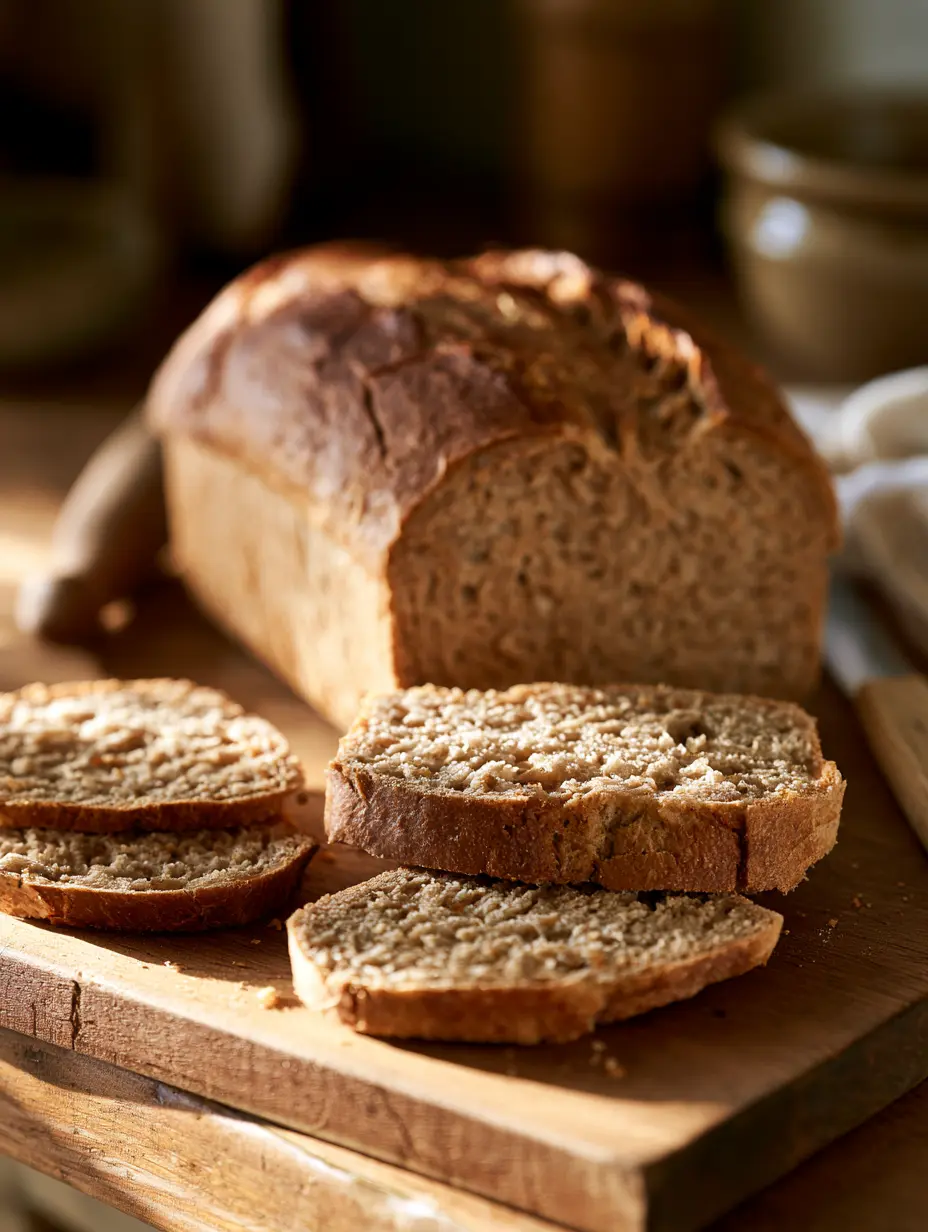
Making carnivore bread can be surprisingly frustrating.
You follow the recipe, measure everything carefully, put the loaf in the oven—and then something goes wrong.
Maybe the bread comes out dense and heavy. Maybe the center is gummy, the texture is rubbery, or the beautiful loaf you saw rising in the oven suddenly collapses as soon as it cools.
The good news is that these problems usually aren’t random.
Carnivore bread doesn’t have the same flour-and-gluten structure as conventional bread, so protein, moisture, mixing, and heat have to work together differently.
This guide helps you identify what went wrong and, more importantly, what to change next time.
Looking for the actual loaf recipe? Start with our Carnivore Bread Recipe, then use this guide to troubleshoot the texture if something goes wrong.
At a Glance
The most common carnivore bread problems are:
- Dense or heavy texture
- Gummy center
- Rubbery crumb
- Bread collapsing after baking
- Wet center
- Dry or crumbly texture
- Uneven rise
- Over-browned outside with an underbaked center
- Bread falling apart when sliced
The important thing is not to change five things at once.
Identify the texture problem first, then adjust the technique responsible for it.
Why Carnivore Bread Is Different
Traditional bread has a major structural advantage: flour and gluten create an elastic network that traps gas and gives the loaf its familiar texture.
Carnivore bread doesn’t rely on that same system.
Instead, its structure can come from combinations of:
- Egg proteins
- Dairy proteins
- Whipped egg whites
- Milk solids
- Fat
- Moisture
- Heat
That makes the process more sensitive.
A small change in moisture or mixing can produce a noticeably different result.
Because carnivore diets can vary considerably in food selection and strictness, nutritional adequacy can also vary. A 2026 scoping review found that the long-term evidence remains limited and identified potential nutritional gaps in some carnivore diet patterns. Read the current research on the carnivore diet
If you’re comparing different formulas, our Carnivore Bread With Milk Powder is a useful example of how concentrated dairy ingredients can affect the structure and texture of a loaf.
1. Why Is My Carnivore Bread So Dense?
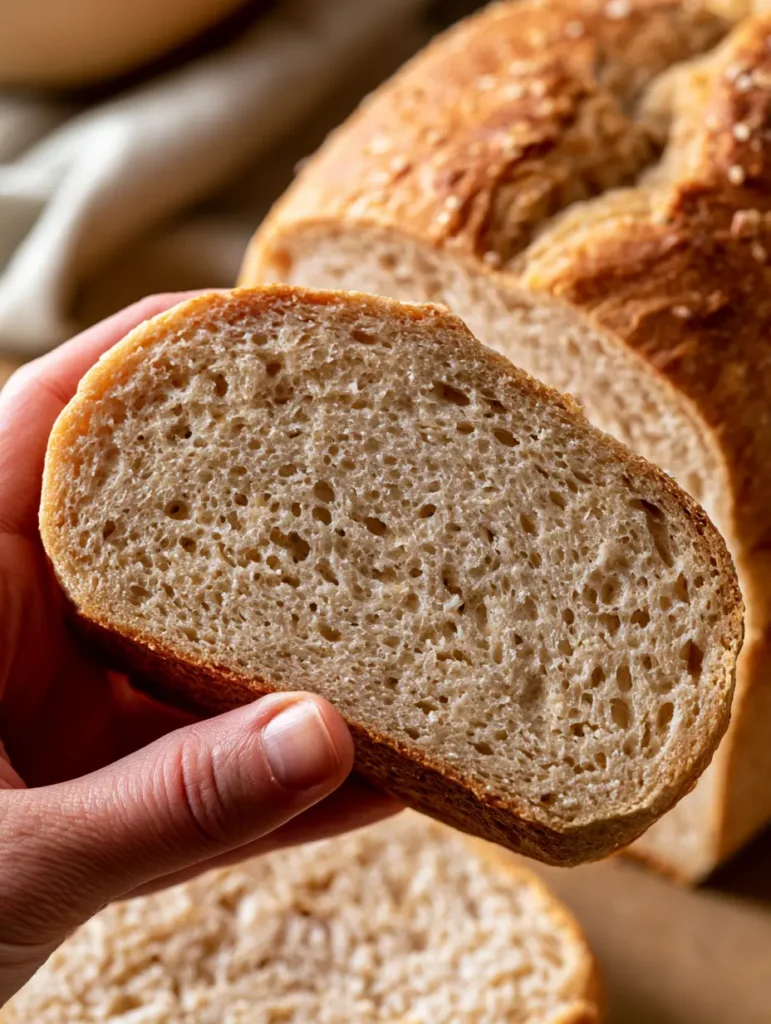
A dense loaf is one of the most common problems.
Instead of a light, tender crumb, the bread feels heavy and compact.
What May Be Happening
The batter may not have enough trapped air or structural support to create the texture you’re expecting.
Heavy mixing, excessive moisture, or a formula with too much dense material can all contribute to a compact loaf.
How to Fix It
Start by looking at the mixing stage.
If your recipe uses whipped egg whites, avoid aggressively folding them until all the air disappears.
If the recipe doesn’t rely on whipped whites, focus on maintaining the intended ingredient balance rather than adding extra liquid or dairy.
Also check the baking time. A loaf that hasn’t fully set internally can become dense as it cools.
For a different protein approach, see our Carnivore Egg White Whey Bread, which uses powdered egg whites and whey to create a different type of bread structure.
2. Why Is My Carnivore Bread Gummy?
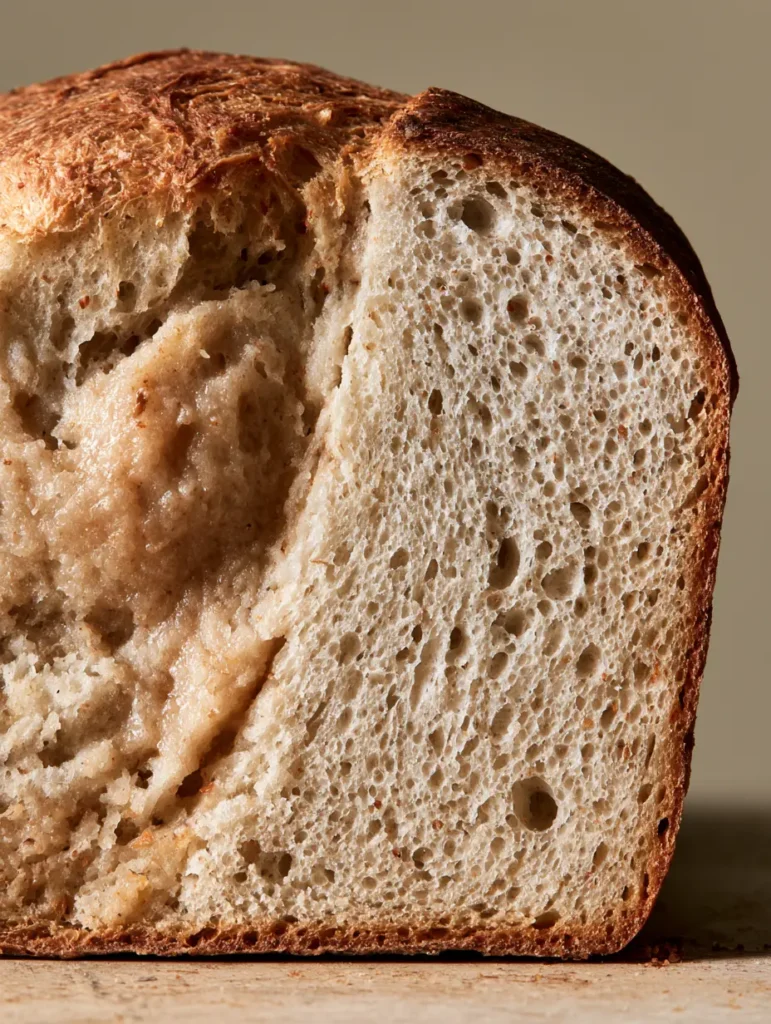
A gummy center usually points toward moisture and setting.
The outside can look completely baked while the middle remains sticky or almost paste-like.
Common Causes
- Too much moisture
- A loaf that is too thick
- Insufficient baking time
- Cutting the bread while it’s still hot
How to Fix It
Don’t judge the loaf only by its color.
The center needs enough time to set.
If the outside is already deeply browned but the middle isn’t ready, protect the surface and continue baking rather than simply increasing the oven temperature.
And most importantly:
Let the bread cool before slicing.
The crumb continues to firm as it cools.
3. Why Does Carnivore Bread Become Rubbery?
Rubbery bread can be especially disappointing because it may look perfect from the outside.
The problem often becomes obvious only after slicing.
What Causes It?
Protein structure is strongly affected by heat.
Eggs and dairy proteins change as they cook. If the structure becomes excessively tight, the crumb can lose tenderness and develop a rubbery bite.
What to Try
Check whether you’re:
- Overbaking
- Using excessive heat
- Overworking the batter
- Changing the ingredient ratios
Don’t automatically compensate for rubberiness by adding more fat.
First determine whether the loaf is simply being baked too aggressively.
4. Why Does My Carnivore Bread Collapse?
A loaf that rises beautifully and then sinks can be one of the most confusing problems.
You open the oven and everything looks perfect.
A few minutes later, the center drops.
Why It Happens
The loaf can rise before its internal structure has become strong enough to support itself.
As it cools, trapped air contracts and the unsupported center can collapse.
How to Reduce the Risk
Make sure the center is properly set before removing the bread.
Also avoid opening the oven repeatedly during baking, especially early in the process.
If your recipe depends heavily on whipped egg whites, handle them gently during folding so you preserve the air that provides volume.
5. Why Is the Outside Done but the Center Is Wet?
This is a heat-distribution problem.
The surface receives direct heat and can brown long before the interior reaches the temperature needed to set.
The Mistake to Avoid
Don’t simply turn the oven hotter.
Higher heat can make the outside cook even faster while the center remains behind.
Better Approach
If the top is already sufficiently browned:
- Protect the surface if necessary.
- Continue baking.
- Check the center rather than relying only on appearance.
- Allow the loaf to cool before making your final texture judgment.
6. Why Does My Carnivore Bread Fall Apart?
A loaf that crumbles when sliced doesn’t necessarily need more ingredients.
First ask when it falls apart.
If It Falls Apart While Hot
The bread may simply need more cooling time.
The structure is still developing as it cools.
If It Falls Apart After Completely Cooling
The formula may not have enough structural support, or the ingredients may not have been distributed evenly.
Check your measurements and mixing technique before making substitutions.
A serrated knife and gentle sawing motion can also make a noticeable difference.
If your main goal is bread that can hold fillings, our Carnivore Sandwich Bread is a more specific format to explore.
7. Why Is My Carnivore Bread Dry?
Dry bread is often the opposite problem from gummy bread.
You may have removed too much moisture—or simply baked the loaf longer than necessary.
Common Causes
- Overbaking
- Too little moisture
- Excessive dry ingredients
- A loaf that’s too thin
- Leaving the bread uncovered after baking
How to Improve It
Start checking the bread earlier.
Remember that the loaf continues to cook from residual heat after leaving the oven.
If the center is already set, additional baking may improve firmness but can also take away tenderness.
8. Why Is My Bread Uneven Inside?
You may see areas that are airy in one section and dense in another.
This usually suggests that the batter wasn’t distributed or mixed evenly.
Possible Causes
- Uneven mixing
- Large pockets of dry ingredients
- Air bubbles concentrated in certain areas
- Uneven batter depth in the pan
The Fix
Scrape the sides and bottom of the mixing bowl during preparation.
Make sure the dry ingredients are fully incorporated without aggressively destroying the structure you’ve created.
Then spread the batter evenly in the pan.
9. Why Does My Carnivore Bread Brown Too Quickly?
A deeply browned crust doesn’t necessarily mean the loaf is finished.
Carnivore bread can develop color on the surface before the interior has completely set.
If This Happens
Don’t assume the bread needs a higher temperature.
Instead:
- Check the center.
- Reduce direct browning if necessary.
- Continue baking until the interior is properly set.
The goal is a finished center with a pleasant crust, not simply a dark surface.
Protein Structure: The Part Most Recipes Don’t Explain
One of the biggest differences between conventional bread and carnivore bread is how the structure develops.
In conventional bread, gluten provides an elastic framework.
In flourless carnivore baking, proteins from ingredients such as eggs and dairy have to do much of the structural work.
During heating, these proteins change and become firmer.
This creates a delicate balance:
Too little structure → fragile or collapsing bread.
Too much heat or excessive tightening → rubbery or tough bread.
Different protein sources can therefore produce very different results.
Our Carnivore Egg White Whey Bread is a useful example of a formula built around powdered egg whites and whey rather than relying on exactly the same protein balance as a traditional whole-egg loaf.
Moisture Control Is Just as Important
Protein provides structure, but moisture determines how that structure feels.
Too much moisture can produce:
- Gummy centers
- Heavy crumb
- Difficulty slicing
- Collapse during cooling
Too little can produce:
- Dry bread
- Crumbling
- Hard edges
- A dense mouthfeel
That’s why simply adding more eggs, dairy, or fat isn’t always the answer.
Every added ingredient changes the moisture balance.
Milk powder is particularly interesting because it adds concentrated dairy solids without introducing the same amount of water as a high-moisture dairy ingredient.
You can see this principle in our Carnivore Bread With Milk Powder.
Whole Eggs vs. Whipped Egg Whites
The way eggs are used can also affect the final texture.
Whole Eggs
Whole eggs contribute both protein and fat.
They can help create a richer, more cohesive crumb.
Whipped Egg Whites
Whipped whites introduce air before baking.
That can help create additional volume, but the air needs to survive mixing and baking long enough for the protein structure to set around it.
If the whites are aggressively mixed into a heavy batter, much of that volume can disappear before it has a chance to help.
Milk Powder vs. Cottage Cheese vs. Cream Cheese
Different dairy ingredients don’t behave identically in carnivore baking.
| Ingredient | Main Contribution | Typical Effect |
|---|---|---|
| Milk Powder | Milk solids and protein | More structure with less added moisture |
| Cottage Cheese | Protein + moisture | Softer, wetter texture |
| Cream Cheese | Fat + dairy solids | Richer, denser texture |
This is why you shouldn’t automatically substitute one for another at the same quantity.
A substitution can change the entire moisture and protein balance of the batter.
A milk-powder-based loaf and a cottage-cheese-based loaf may look similar in the recipe card, but their moisture behavior can be very different.
How to Diagnose Your Bread Before Changing the Recipe
Before changing anything, cut the loaf and look at the crumb.
Dense + Dry
Think about overbaking or insufficient moisture.
Dense + Wet
Think about excess moisture or insufficient baking.
Airy + Collapsed
Think about structure and setting.
Rubbery + Firm
Think about excessive heat, overbaking, or protein tightening.
Crumbly + Dry
Think about moisture balance and structural support.
This simple diagnosis is more useful than randomly adding ingredients.
The Cooling Step Most People Skip
One of the easiest mistakes to make is slicing the bread immediately.
Fresh from the oven, the interior is still hot and the structure hasn’t fully stabilized.
Cutting too early can make a properly baked loaf appear:
- Wet
- Fragile
- Gummy
- Compressed
Give the loaf time to cool before judging the final result.
The bread you see immediately after baking isn’t necessarily the bread you’ll have after cooling.
How to Make Better Carnivore Buns, Rolls & Loaves
The same principles apply beyond a standard loaf.
Buns
Buns need enough structure to hold their shape while remaining tender enough to bite through easily.
Because they’re smaller, they can also brown faster than a large loaf.
Rolls
Rolls benefit from even shaping and consistent thickness.
Uneven portions can cause one roll to dry out while another remains underbaked.
Loaves
Loaves require particular attention to the center.
The thicker the loaf, the longer the interior may take to set.
That’s why surface color alone isn’t a reliable indicator of doneness.
Choosing the Right Carnivore Bread for the Job
Not every carnivore bread formula is designed for the same purpose.
If you want a simple everyday loaf, start with our 3 Ingredient Carnivore Bread.
If you’re interested in a formula using concentrated dairy ingredients, explore Carnivore Bread With Milk Powder.
If your priority is a different protein structure, see Carnivore Egg White Whey Bread.
And if you specifically need bread for sandwiches and fillings, Carnivore Sandwich Bread is the more targeted option.
This distinction is useful because the best bread isn’t necessarily the same for every use.
A Simple Carnivore Bread Troubleshooting Checklist
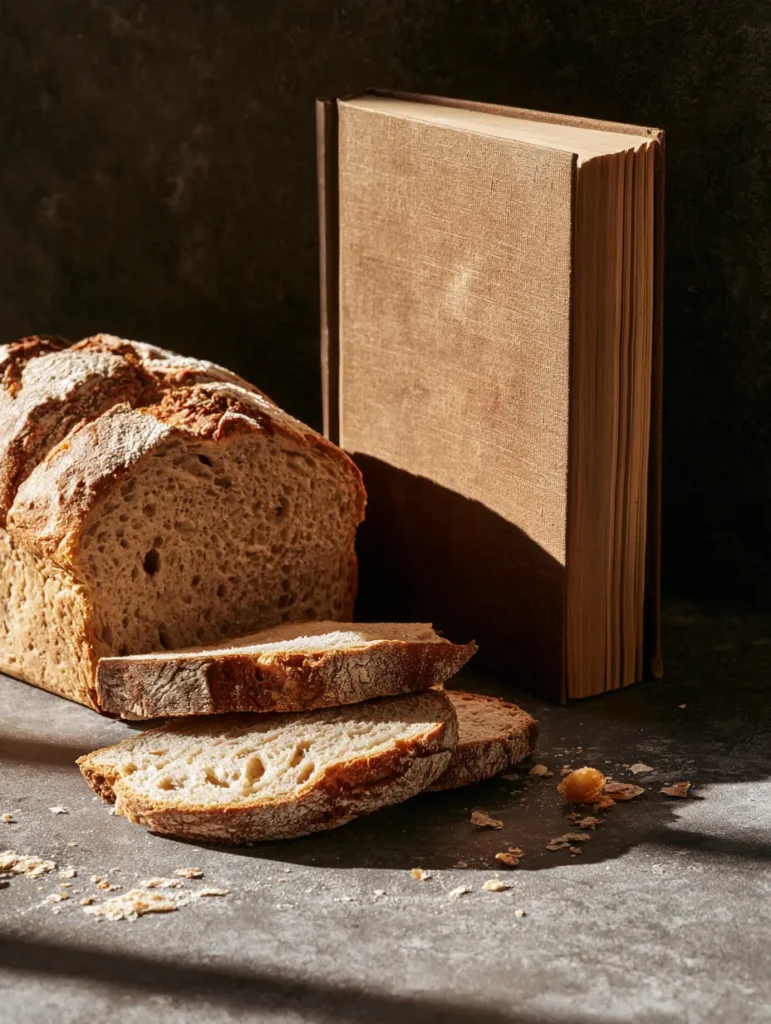
Before putting the next batch in the oven, check:
Before Baking
☐ Ingredients measured accurately
☐ Dairy ingredients at the intended consistency
☐ Eggs prepared according to the recipe
☐ Batter evenly mixed
☐ Pan filled evenly
During Baking
☐ Oven fully preheated
☐ Surface not browning excessively early
☐ Center given enough time to set
☐ Oven not opened repeatedly
After Baking
☐ Center is properly set
☐ Bread allowed to cool
☐ Loaf sliced with a serrated knife
☐ Texture evaluated only after cooling
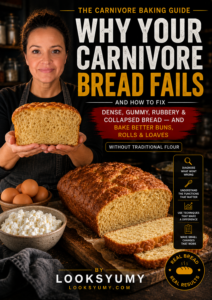
🥩 Why Your Carnivore Bread Fails — And How to Fix It
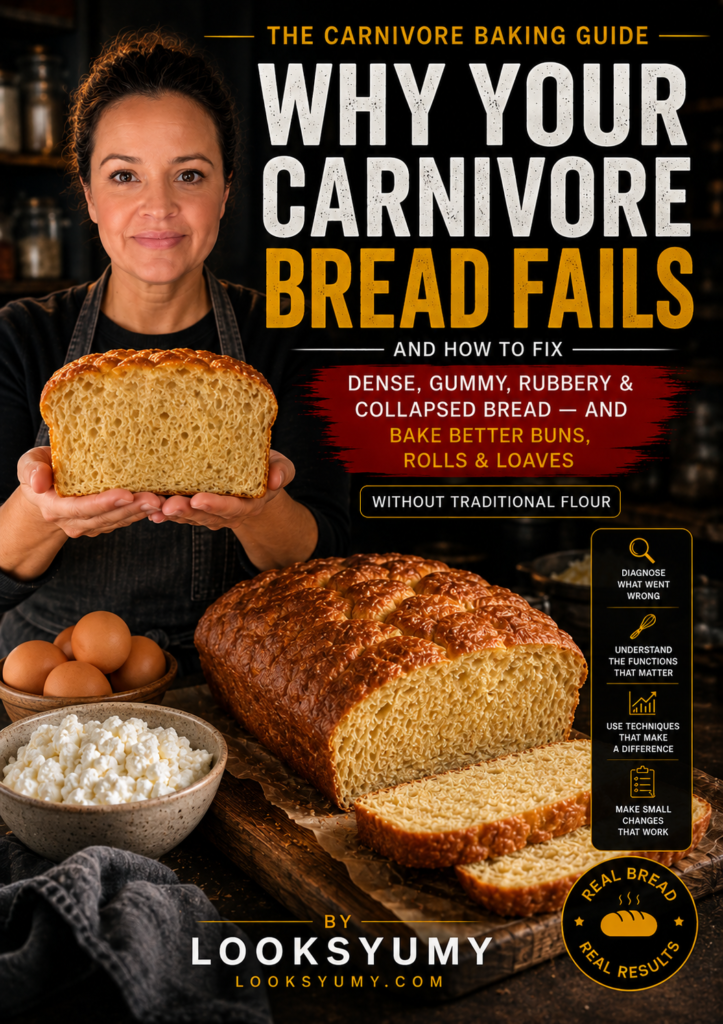
Dense? Gummy? Rubbery? Collapsing?
If your carnivore bread keeps failing for different reasons, don’t keep changing ingredients at random. Learn how protein structure, moisture, egg whites, dairy choices, and baking affect the final loaf.
Inside the guide:
- Why carnivore bread collapses
- How to fix gummy and rubbery bread
- Protein structure explained simply
- Moisture control
- Egg white techniques
- Better buns, rolls & loaves
[Get the Complete Carnivore Bread Guide →]
When Should You Change the Recipe?
Not every failed loaf means the recipe itself is wrong.
Sometimes the problem is:
- Ingredient variation
- Different pan dimensions
- Oven temperature differences
- Mixing technique
- Baking time
- Ingredient temperature
Before completely redesigning the recipe, change one variable at a time.
For example, if your bread is gummy, don’t simultaneously reduce the eggs, increase the milk powder, change the pan, and raise the oven temperature.
You won’t know which change actually solved the problem.
Why Your Carnivore Bread Fails: 9 Common Problems & How to Fix Them
Description
Is your carnivore bread dense, gummy, rubbery, or collapsing? Learn why carnivore bread fails and how to fix texture, moisture, protein, and baking problems
https://shop.beacons.ai/looksyumy/6d86be06-1893-4599-854d-87bcf5096ecb
Ingredients
Frequently Asked Questions
Why Does My Carnivore Bread Collapse After Cooling?
The internal structure may not have fully set before the loaf was removed from the oven. This can allow the center to contract and collapse during cooling.
How Do I Make Carnivore Bread Less Rubbery?
Start by checking baking time and temperature. Overbaking can cause proteins to become excessively firm. Also make sure you’re following the intended ingredient ratios.
Why Is My Carnivore Bread Gummy in the Middle?
A gummy center can indicate excess moisture or insufficient baking. Allow the bread to cool completely before deciding whether the center is actually underbaked.
Why Is My Carnivore Bread Dense?
Dense bread can result from insufficient air incorporation, excessive moisture, heavy mixing, or an internal structure that hasn’t developed properly.
Can I Add More Eggs to Make It Fluffier?
Not automatically.
Eggs change both protein structure and moisture. Adding more without adjusting the rest of the formula can make the bread wetter or more eggy rather than lighter.
Why Does My Carnivore Bread Crack?
Some cracking can occur as the exterior sets while the interior continues expanding. The severity can depend on the batter consistency, pan shape, and oven conditions.
Should I Slice Carnivore Bread Hot or Cold?
For the cleanest slices, cool it first.
The crumb becomes more stable as it cools.
Can I Toast Carnivore Bread?
Yes.
Once cooled and sliced, toasting can improve the exterior texture and make the bread more enjoyable for sandwiches or breakfast.
Final Thoughts
Carnivore bread doesn’t fail for just one reason.
A dense loaf, gummy center, rubbery crumb, and collapsed middle can look like different problems—but they’re often connected to the same fundamental factors:
protein structure, moisture control, mixing, and heat.
Instead of immediately changing the entire recipe, diagnose the texture first.
If it’s gummy, look at moisture and baking.
If it’s rubbery, look at heat and protein tightening.
If it collapses, look at structural stability.
If it’s dry, look at baking time and moisture balance.
Once you understand why your carnivore bread failed, fixing the next batch becomes much more predictable.
When you’re ready to make the actual loaf, start with our 3 Ingredient Carnivore Bread and use this troubleshooting guide to understand what happens when the texture doesn’t come out as expected.