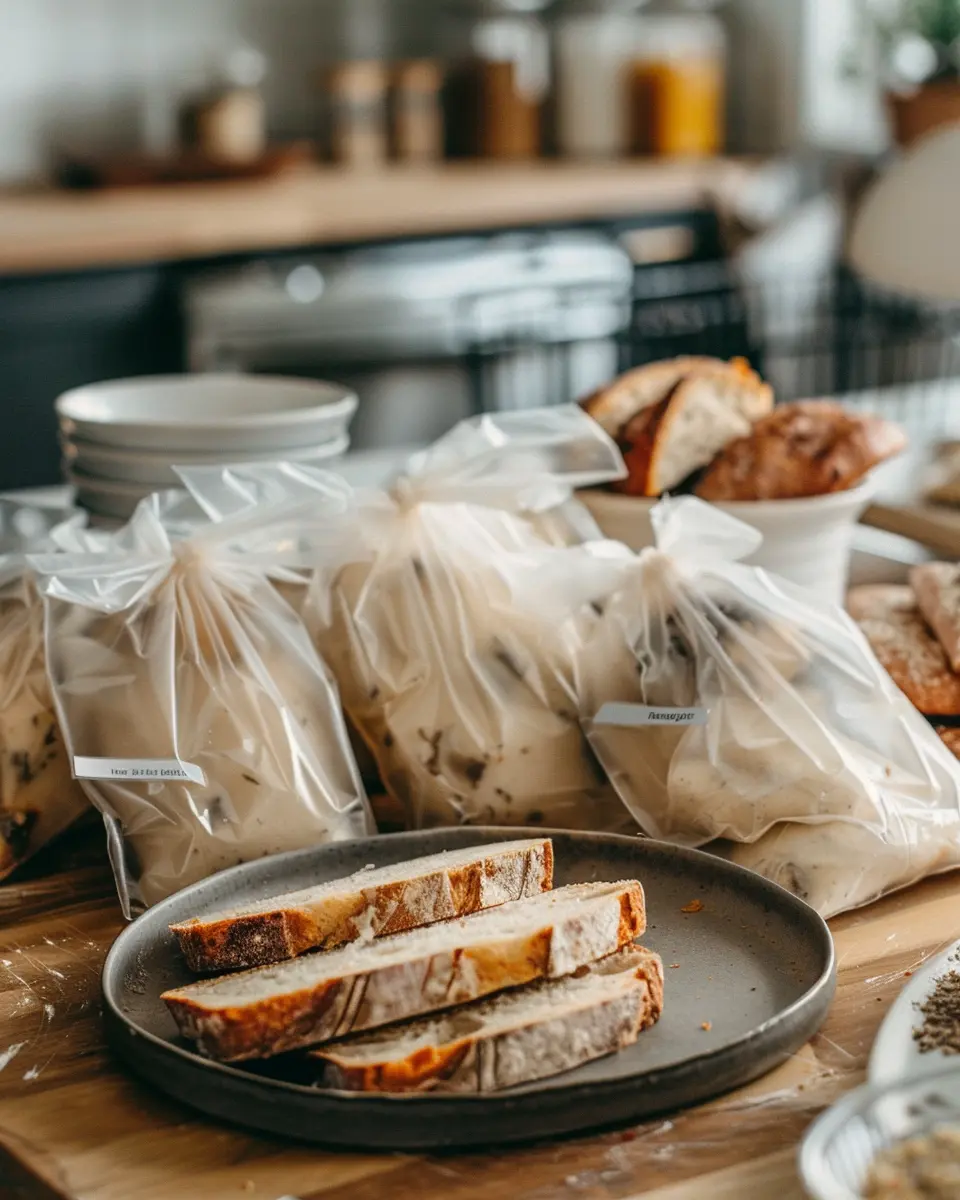
Yes — carnivore bread freezes well and maintains good quality for up to 2 to 3 months when wrapped and stored correctly. The freezer is the most practical long-term preservation method available for this type of bread, and it works significantly better than extended refrigeration for anything beyond 10 days. The key variables are how the bread is wrapped before freezing and how it is thawed afterward — both decisions affect texture more than the freezing itself. For a complete picture of freshness timelines across all storage methods, see our carnivore bread shelf life guide.
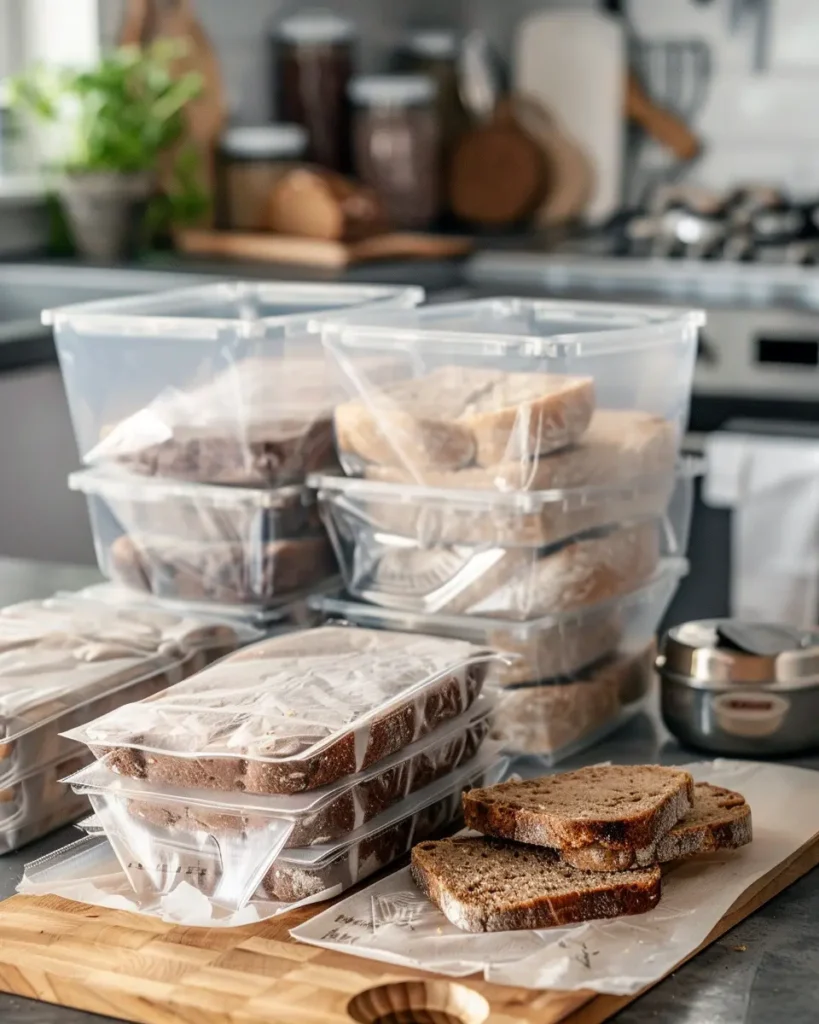
Carnivore bread’s dense, protein-rich composition responds to freezing differently from wheat-based bread. It holds its structural integrity well during the freeze itself, but it is more sensitive to moisture shifts during thawing. Understanding both stages — what happens inside the bread as it freezes and what happens as it returns to room temperature — is what separates a good result from a disappointing one.
Can You Freeze Carnivore Bread?: Yes, carnivore bread freezes well for up to 2–3 months when sliced, wrapped individually in parchment paper, and stored in airtight freezer-safe bags with air removed.
2 to 3 months is the recommended freezer window for bread Why it works: StillTasty is a widely cited food storage reference database used by food editors
Table of Contents
Table of Contents
How Freezing Affects Carnivore Bread Texture
Freezing does not damage carnivore bread directly.
Does freezing damage carnivore bread texture? Not directly. Most texture problems happen during improper thawing, not during the freezing process itself.
What it does is suspend moisture inside the bread as ice crystals. Those crystals form in the spaces between the bread’s internal structure, and when they melt during thawing, the released water either redistributes evenly through the bread or migrates toward the surface — depending almost entirely on how slowly or quickly thawing occurs.
When thawing happens too quickly, the ice crystals melt faster than the bread’s structure can reabsorb the moisture.
Why does frozen carnivore bread become gummy? Frozen carnivore bread usually becomes gummy when thawed too quickly, causing moisture to release faster than the bread structure can absorb it.
The result is surface wetness, a gummy exterior, and a denser interior than the bread had before freezing.
Many gummy texture problems follow the same moisture imbalance principles explained in our how to fix carnivore bread guide.
This is the Freeze-Thaw Texture Shift — a predictable outcome of rapid moisture release that most people incorrectly attribute to the freezing itself.
When thawing happens slowly and at a controlled temperature, moisture redistributes gradually and the bread returns close to its pre-freeze texture. The difference between a well-frozen and poorly-thawed slice versus a well-frozen and well-thawed slice is significant.
What freezer exposure does over time
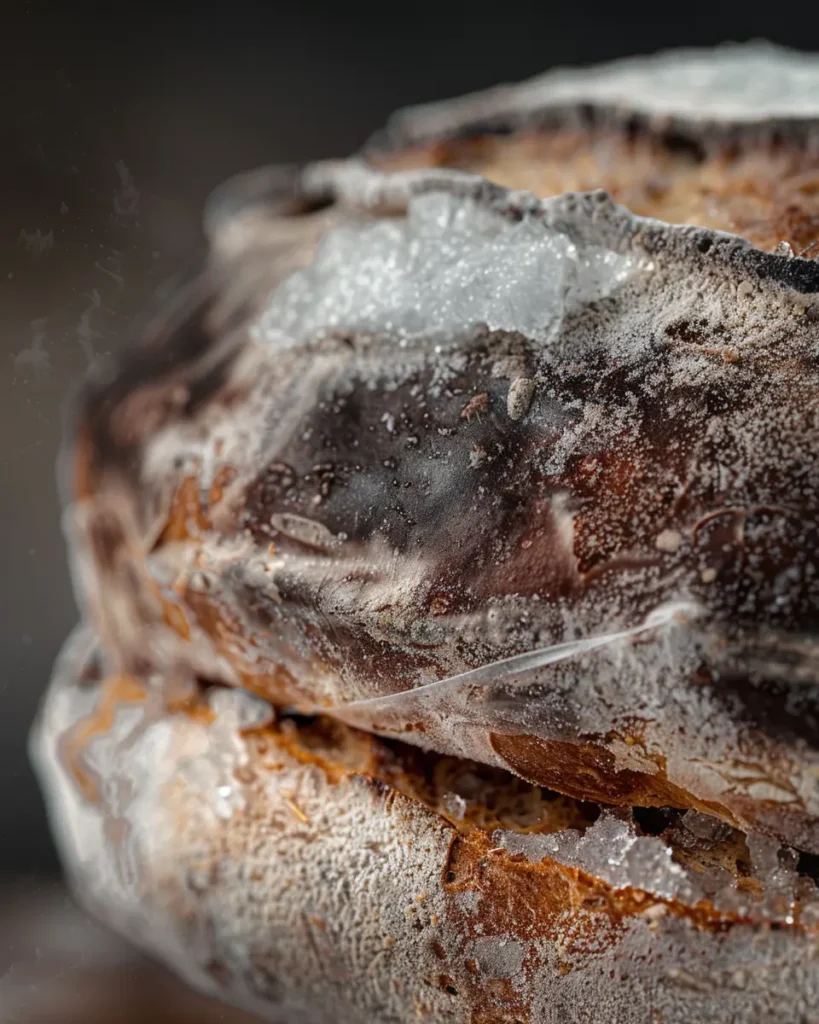
Beyond the freeze-thaw process itself, prolonged freezer exposure introduces a secondary problem: the Cold-Air Drying Effect. Even inside the freezer, bread gradually loses surface moisture to the surrounding dry frozen air. This process is similar to the freezer burn and moisture loss during freezing described by the USDA, where air exposure inside packaging gradually removes moisture from frozen food surfaces over time.
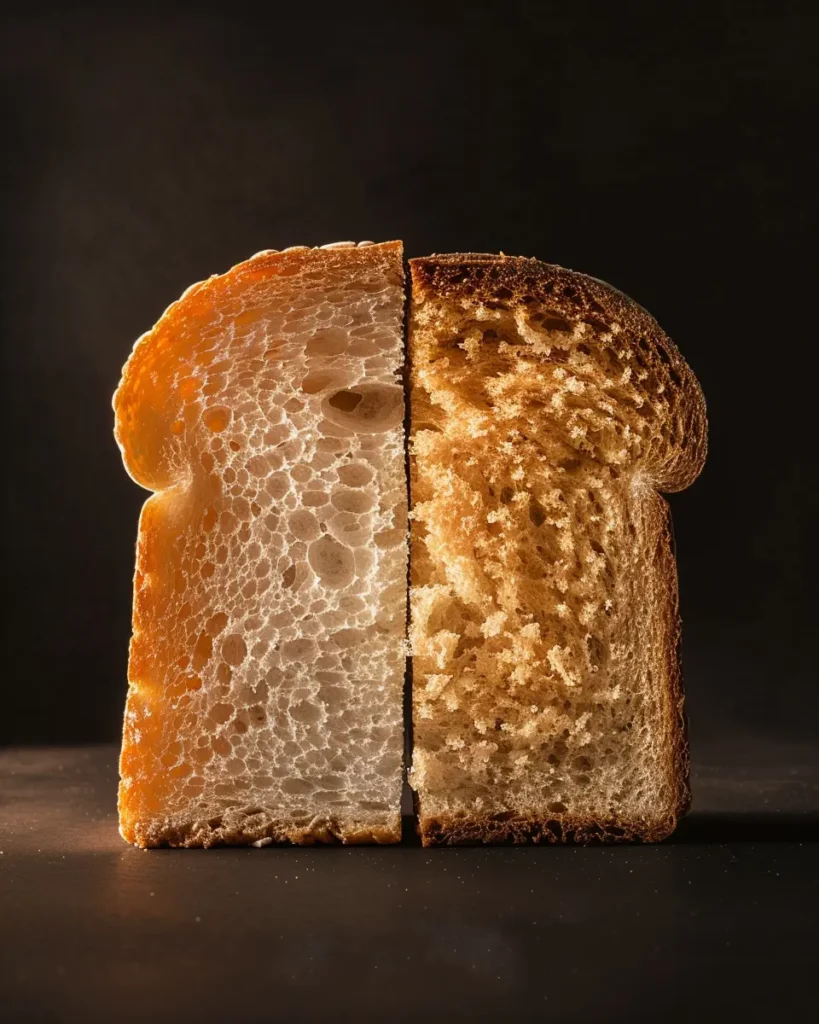
This process — technically sublimation — is the cause of freezer burn. It begins at any exposed surface and progresses inward over weeks. Bread with inadequate wrapping shows visible drying and a white, papery texture at the edges within four to six weeks. Bread wrapped properly with no air gaps resists this effect for two to three months before quality noticeably declines.
For a complete comparison between freezing, refrigeration and room-temperature storage, see our carnivore bread shelf life guide.
Realistic texture expectations after freezing
Properly frozen and slowly thawed carnivore bread returns to approximately 85 to 90 percent of its original texture quality. The interior stays soft and the structure holds. There may be a very slight increase in density compared to freshly made bread, but it is minor enough that most people do not notice. Improperly frozen or rapidly thawed bread, by contrast, can arrive at the table noticeably gummier, wetter on the surface, or drier at the edges than it was before freezing — none of which reflects the quality of the bread itself, only the quality of the process.
Best Way to Freeze Carnivore Bread
The wrapping method matters more than any other freezing variable. Proper wrapping eliminates the Cold-Air Drying Effect, prevents slice fusion, and protects the texture preservation window — the period during which frozen bread can be thawed back to near-original quality.
Slice before freezing
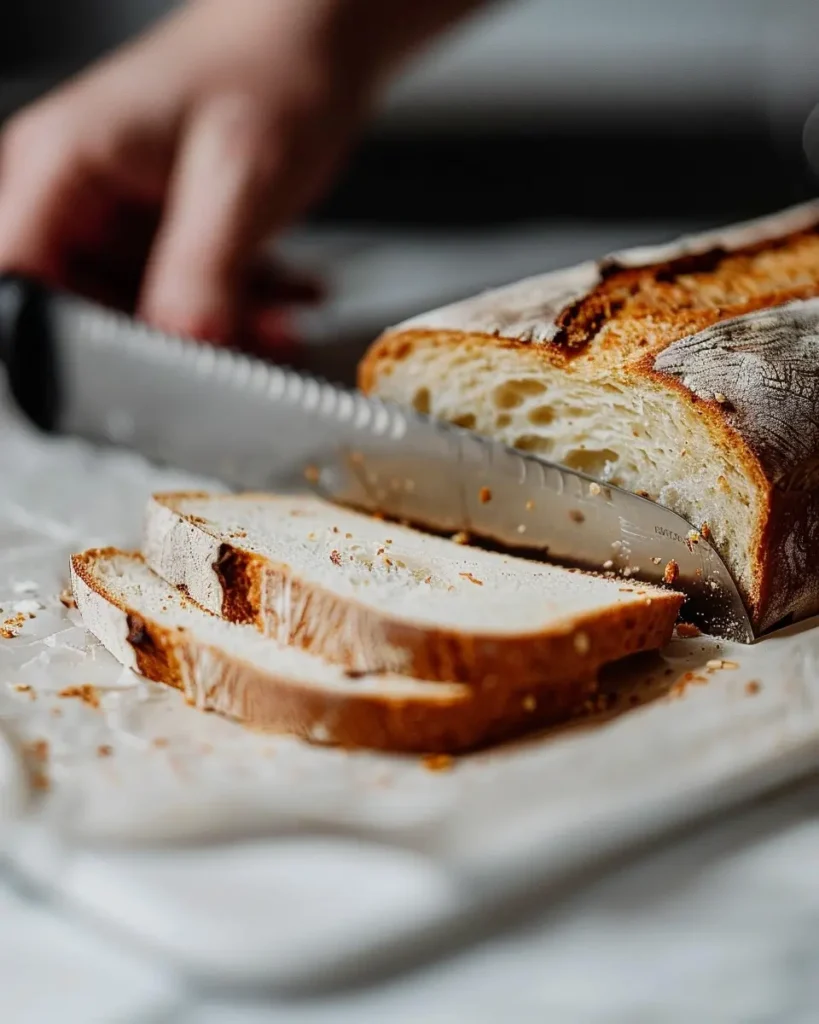
Always slice carnivore bread before freezing it. Attempting to thaw a whole loaf and then slice it produces uneven results: the exterior thaws and becomes wet while the interior remains partially frozen. Pre-slicing also allows you to thaw exactly what you need without disturbing the rest of the batch, which eliminates the repeated-thawing problem entirely. Slice to your preferred thickness before any wrapping begins.
Wrap each slice individually
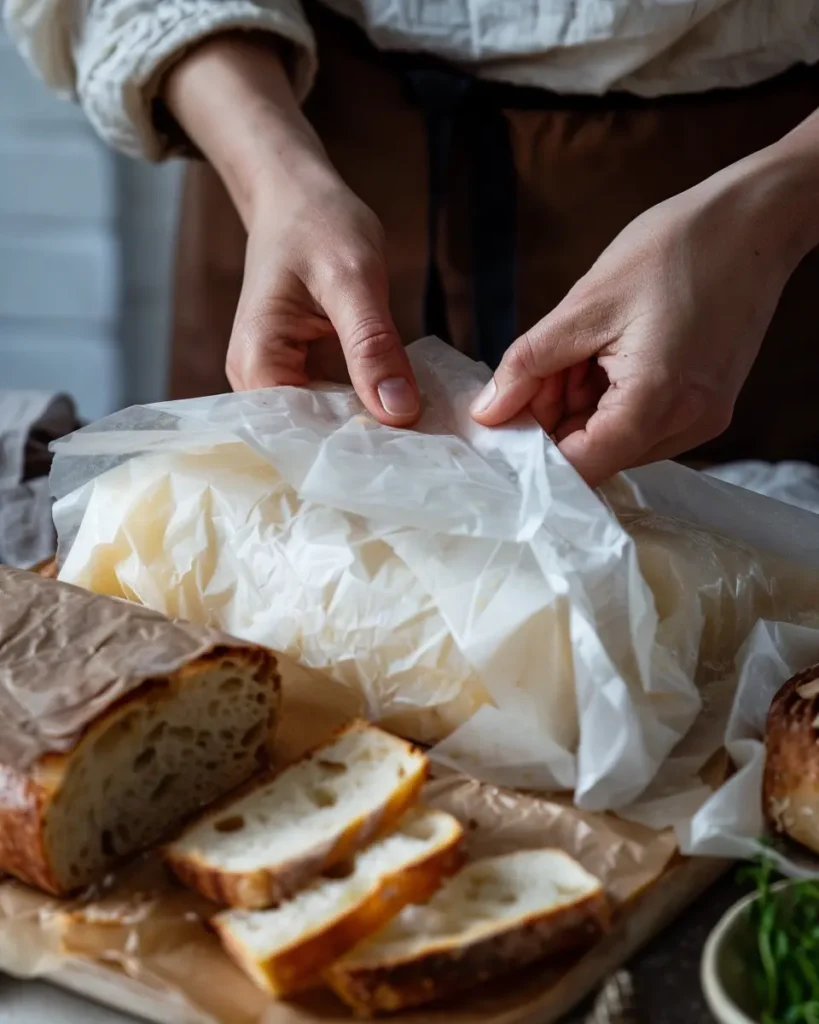
Wrap each slice in parchment paper first. Parchment creates a breathable but protective barrier that prevents the outer freezer bag from making direct contact with the bread’s surface. Direct plastic contact on the bread’s surface during freezing causes slight surface texture compression and makes it harder to separate slices cleanly after freezing. Parchment eliminates both problems. Fold the parchment around the slice fully — no exposed edges.
Use a freezer-safe bag with air removed
After wrapping each slice in parchment, place all wrapped slices into a single freezer-safe zip-lock bag. Before sealing, press out as much air as possible. The importance of removing air from the freezer bag before sealing is also emphasized in bread-freezing guidelines reviewed by Healthline, since trapped air accelerates freezer moisture loss and surface drying over time.
Air remaining inside the bag is the primary driver of the Cold-Air Drying Effect — even inside a sealed bag, air carries moisture away from the bread’s surface over time. A vacuum seal is ideal if available. A manually pressed zip-lock bag is effective when sealed carefully with no visible air pockets.
Label with the freezing date
Write the date on the bag before placing it in the freezer. Carnivore bread all looks identical once frozen, and the 2 to 3 month quality window passes faster than expected. Without a date, it is impossible to know whether the bread is at peak quality or past it. A piece of masking tape and a permanent marker is sufficient.
Step-by-step freezing sequence
Step 1. Cool the bread completely — at least 90 minutes on a wire rack — before slicing or wrapping. Freezing warm bread traps steam inside the wrapping, which condenses and forms ice crystals directly on the bread’s surface. This creates the surface wetness problem during thawing that most people blame on freezing when it is actually caused by condensation at the wrapping stage.
Step 2. Slice to your preferred serving thickness.
Step 3. Wrap each slice individually in parchment paper, folded fully around all edges.
Step 4. Place all wrapped slices into a freezer-safe zip-lock bag. Press out all air before sealing.
Step 5. Label the bag with today’s date and the slice count.
Step 6. Lay the bag flat in the freezer to freeze evenly. Once frozen solid (after 2 to 3 hours), it can be stored upright if space requires.
How to Thaw Carnivore Bread Properly
Thawing is where most frozen bread texture problems originate. The freeze itself is passive — the bread sits in a stable frozen state. Thawing is active: moisture is moving, temperature is changing, and the decisions made during this stage determine the final texture more than anything that happened before.
Room-temperature thawing
The best method for most situations is room-temperature thawing inside the parchment wrapping. Remove the slice from the freezer bag, keep it wrapped in its parchment paper, and place it on the counter for 30 to 60 minutes. The parchment allows the bread to return to room temperature gradually while protecting the surface from direct air exposure during the critical thawing period. Unwrapping too early — while the bread is still partially frozen — exposes the surface to room-temperature air before the interior moisture has equalized, which creates surface condensation and a wet outer texture.
The Condensation Recovery Zone is the period immediately after full thawing when the bread’s surface moisture is still redistributing internally. Leaving the bread wrapped for the full thawing period and a few minutes beyond it consistently produces a better surface texture than unwrapping as soon as the bread feels soft.
What is the best way to thaw frozen carnivore bread? The best method is slow room-temperature thawing inside the parchment wrapping for 30–60 minutes.
Oven thawing for faster results
When time is short, the foil-wrapped oven method produces good results. Place the parchment-wrapped slice inside a loose foil wrap and heat in a preheated oven at 275°F (135°C) for 15 to 18 minutes. The low temperature allows the bread to thaw and warm simultaneously without pushing the exterior past the softness restoration window before the interior has fully thawed. This method is covered in more detail in our reheating carnivore bread guide.
For full texture recovery methods after thawing, visit our reheating carnivore bread guide.
What to avoid during thawing
Microwaving from frozen at full power is the fastest way to produce a rubbery, gummy result. The rapid heat causes the outer ice crystals to melt and the released moisture to expand outward faster than the bread’s structure can absorb it. The exterior becomes wet and dense while the interior may still be partially frozen. If the microwave is the only option, use 20 to 30 percent power in 20-second bursts, checking texture between each burst.
Do not thaw bread by leaving it uncovered on the counter. The exposed surface dries slightly as the bread returns to room temperature — a counterintuitive problem where the bread simultaneously becomes wet inside from thawing moisture and dry on the surface from air exposure. Keeping it wrapped solves both issues at once.
These same moisture-management principles are explained further in our bread moisture control guide.
Common Freezing and Thawing Mistakes
Most texture problems with frozen carnivore bread trace back to a small number of consistent errors. Each one has a clear mechanism and an equally clear fix.
Freezing warm bread. This is the most common and most damaging mistake. Warm bread releases steam, which condenses inside the wrapping as the temperature drops. Those condensation droplets freeze directly on the bread’s surface, forming a layer of ice crystals that create surface wetness and texture damage during thawing. The fix is simple: cool completely on a wire rack before wrapping.
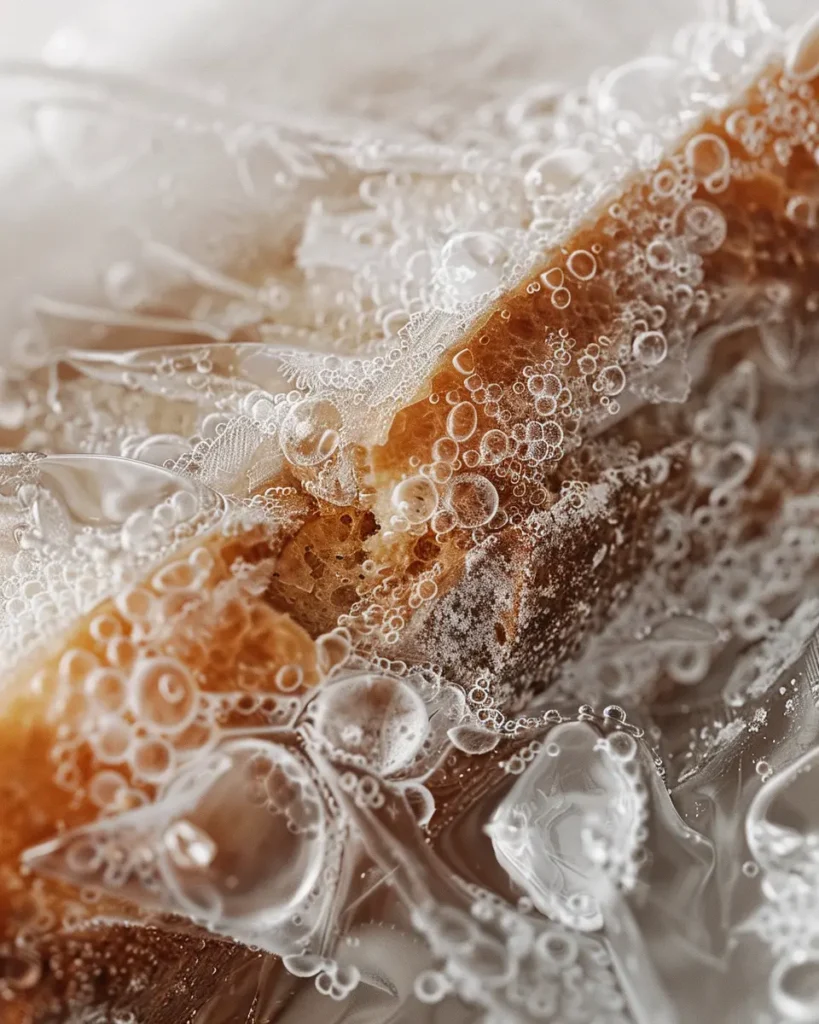
Skipping the parchment layer. Placing bread slices directly into a freezer bag without individual parchment wrapping causes two problems: the slices fuse together as they freeze (making it impossible to separate them without tearing), and the plastic makes direct contact with the bread’s surface, which compresses the outer texture slightly during the freeze. Parchment wrapping costs seconds and prevents both problems.
Leaving air in the freezer bag. Air inside the bag is the driver of Freezer Moisture Loss — the gradual sublimation of surface moisture into the surrounding frozen air. Even a small amount of trapped air accelerates the Cold-Air Drying Effect. Press every possible air pocket out before sealing, or use a vacuum-seal bag.
Repeated thawing and refreezing. Each freeze-thaw cycle causes new ice crystals to form in the bread’s internal structure, each time in slightly different locations. The cumulative effect is progressive cell wall damage that makes the bread noticeably gummier and wetter with each cycle. The solution is individual slice portioning before freezing — if you can thaw one slice at a time, you never need to refreeze.
Thawing too quickly. Leaving frozen bread in a warm oven, microwaving on high, or placing it in direct sunlight to speed thawing releases ice-crystal moisture faster than the bread’s structure can absorb it. The excess moisture pools on the surface and in the denser parts of the interior, producing the characteristic gummy texture of poorly thawed bread. Patience — 30 to 60 minutes at room temperature inside the wrapping — consistently produces better results than any speed method.
Unwrapping before fully thawed. Removing the parchment while the bread is still cold and partially frozen exposes the surface to room-temperature air at the worst possible moment. The surface, still below room temperature, acts as a cold surface that attracts condensation from the surrounding warmer air — the same mechanism that causes a cold glass to collect water droplets in a warm room. Keeping the bread wrapped until fully thawed prevents this entirely.
Ignoring the freezing date. Bread past the 3-month mark does not spoil in the safety sense, but quality declines noticeably. The Cold-Air Drying Effect accumulates over time, and even well-wrapped bread shows increased dryness at the edges and a slightly altered texture past this point. Dating every bag makes it easy to use bread within its quality window.
Your Questions, Answered
Can you freeze carnivore bread?
Yes. Carnivore bread freezes well for 2 to 3 months when each slice is wrapped individually in parchment paper and stored in a freezer-safe zip-lock bag with air removed
Does freezing change the texture of carnivore bread?
Slightly, but not significantly when done correctly. Properly frozen and slowly thawed bread returns to approximately 85 to 90 percent of its pre-freeze texture. Most of the texture problems associated with frozen bread come from thawing too quickly, not from the freezing itself.
How long does carnivore bread last in the freezer?
Up to 2 to 3 months at good quality when properly wrapped. Beyond 3 months, the Cold-Air Drying Effect begins producing noticeable dryness at the edges even in well-wrapped bread.
What is the best way to thaw frozen carnivore bread?
Room-temperature thawing inside the parchment wrapping for 30 to 60 minutes. Keep the bread wrapped until fully thawed to prevent surface condensation. For a faster option, use a foil-wrapped oven at 275°F (135°C) for 15 to 18 minutes.
Can you refreeze carnivore bread after thawing?
No. Refreezing after thawing causes progressive texture damage with each cycle. Pre-slicing before freezing eliminates the need to refreeze by making it easy to thaw exactly one serving at a time.
Why does my carnivore bread come out gummy after freezing?
Gummy texture after thawing is almost always caused by thawing too quickly or unwrapping while still cold. Both scenarios release or attract moisture to the bread’s surface faster than the structure can absorb it. Slow room-temperature thawing inside the wrapping solves this consistently.
Should you slice carnivore bread before freezing?
Yes, always. Pre-slicing allows you to thaw individual servings without disturbing the rest of the batch, prevents the whole-loaf thawing problems, and makes the bread usable immediately after thawing without needing to slice partially frozen bread.
The Bottom Line
Carnivore bread freezes reliably well with the right preparation. Slice before freezing, wrap each slice in parchment, remove all air from the freezer bag, label with the date, and thaw slowly inside the wrapping. These five steps handle the vast majority of texture and moisture problems that make frozen bread disappointing.
The freezing itself is the easy part. Most texture problems with frozen carnivore bread come from what happens before freezing (storing warm bread) or after freezing (thawing too fast, unwrapping too early). Control those two stages and the freezer becomes the most effective long-term freshness tool available for any batch-cooking routine.
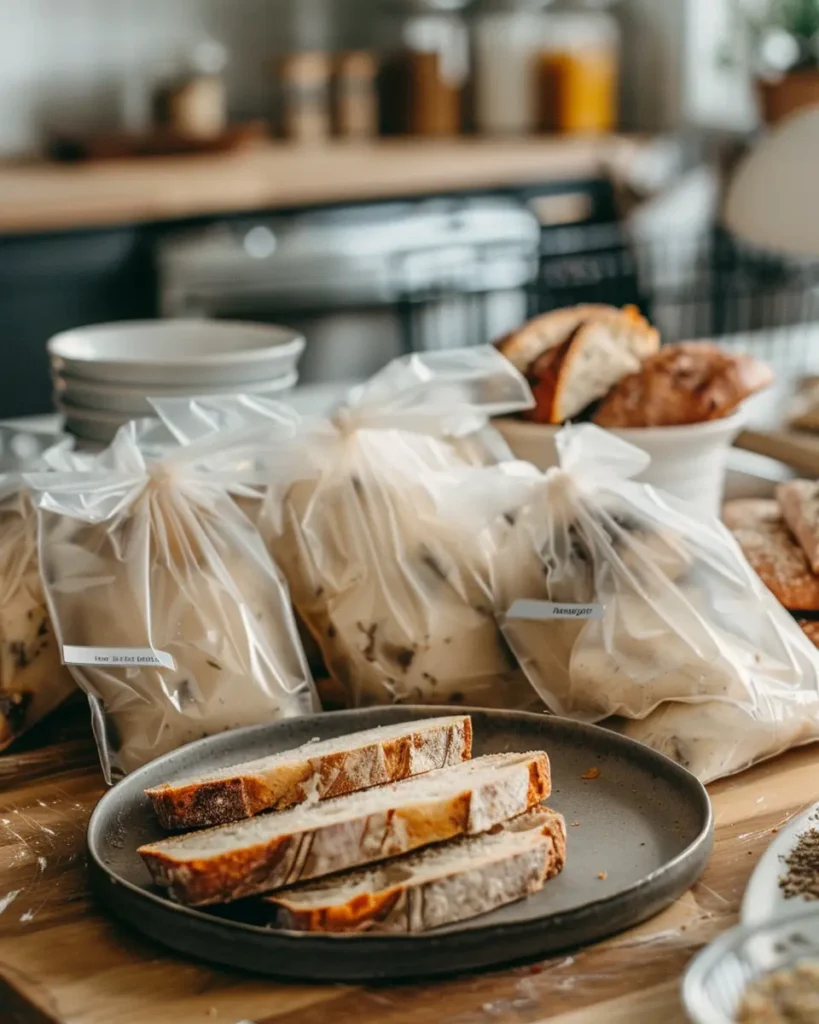
Freezing carnivore bread correctly can preserve texture surprisingly well — but the wrapping and thawing process matters far more than most people realize.
For moisture management principles that apply across all storage methods, our bread storage guide and moisture control guide cover the broader freshness system that freezing fits into. Once you are ready to use your thawed bread, our reheating carnivore bread guide covers every warming method and the texture-recovery techniques that work best after freezing.