
👉 Print the burger fat-ratio log in the pro tips section — it gives you a single-page reference for patty fat percentages, cooling windows, and container stacking sequences that keep every prepped meal structurally intact through transport and reheating.
Table of Contents
Table of Contents
A carnivore burger meal is not simply a patty without a bun. It is a structural assembly problem — a layered protein stack in which the fat content of the patty, the temperature at which components are combined, the order in which layers are placed, and the cooling protocol before packing all determine whether the meal arrives at its destination as a coherent, juicy, satisfying combination or as a collapsed, liquid-pooling mess that has lost both its structural integrity and most of its textural appeal. Getting these variables right requires understanding each component’s structural role rather than treating the assembly as a casual arrangement of cooked meats.
To execute high-density carnivore burger meal ideas with maximum structural stability, build every combination around a beef patty with a fat-to-lean ratio of at least 80:20, allow all cooked components to reach a surface temperature below 60 degrees Celsius before stacking or packing to prevent steam condensation from softening contact surfaces, and layer fat-rich components — bacon, egg yolk, bone marrow butter — between protein layers rather than on top, where they drain downward and saturate the base during storage. Fat positioned between protein layers is held in place by the surrounding meat structure during cooling and reheating, while fat placed above the stack migrates freely and pools at the container base. The assembly sequence is not a preference — it is the structural variable that determines juice distribution and holding integrity across the entire meal.
High-Protein Burger Combinations for Structural Hold
3 High-Protein Carnivore Burger Meal Ideas
Classic Burger Stack
– 80:20 Beef Patty
– Bacon
– Fried Egg
High-Fat Recovery Meal
– 75:25 Beef Patty
– Bone Marrow Butter
– Soft-Boiled Eggs
Meal Prep Burger Box
– Beef Patties
– Crispy Bacon
– Hard-Boiled Eggs
A carnivore burger stack loses structural integrity when the fat-to-protein balance within the patty falls below the threshold at which rendered fat can self-baste the meat fibers during cooking, producing a dry, crumbling patty that sheds moisture rather than retaining it through the serving window. The direct cause of a structurally sound patty versus a falling-apart one is the fat percentage of the ground beef used — 80:20 is the minimum for self-basting, and 75:25 produces noticeably better structural cohesion and juice retention in prepped meals where reheating is involved.
The relationship between intramuscular fat percentage and moisture retention during cooking and reheating in ground beef — including why fat content below the self-basting threshold produces irreversible fiber desiccation — is documented in meat science research published by the American Meat Science Association, whose protein and lipid studies confirm that fat-to-lean ratio is the primary determinant of juice retention across cook-cool-reheat cycles
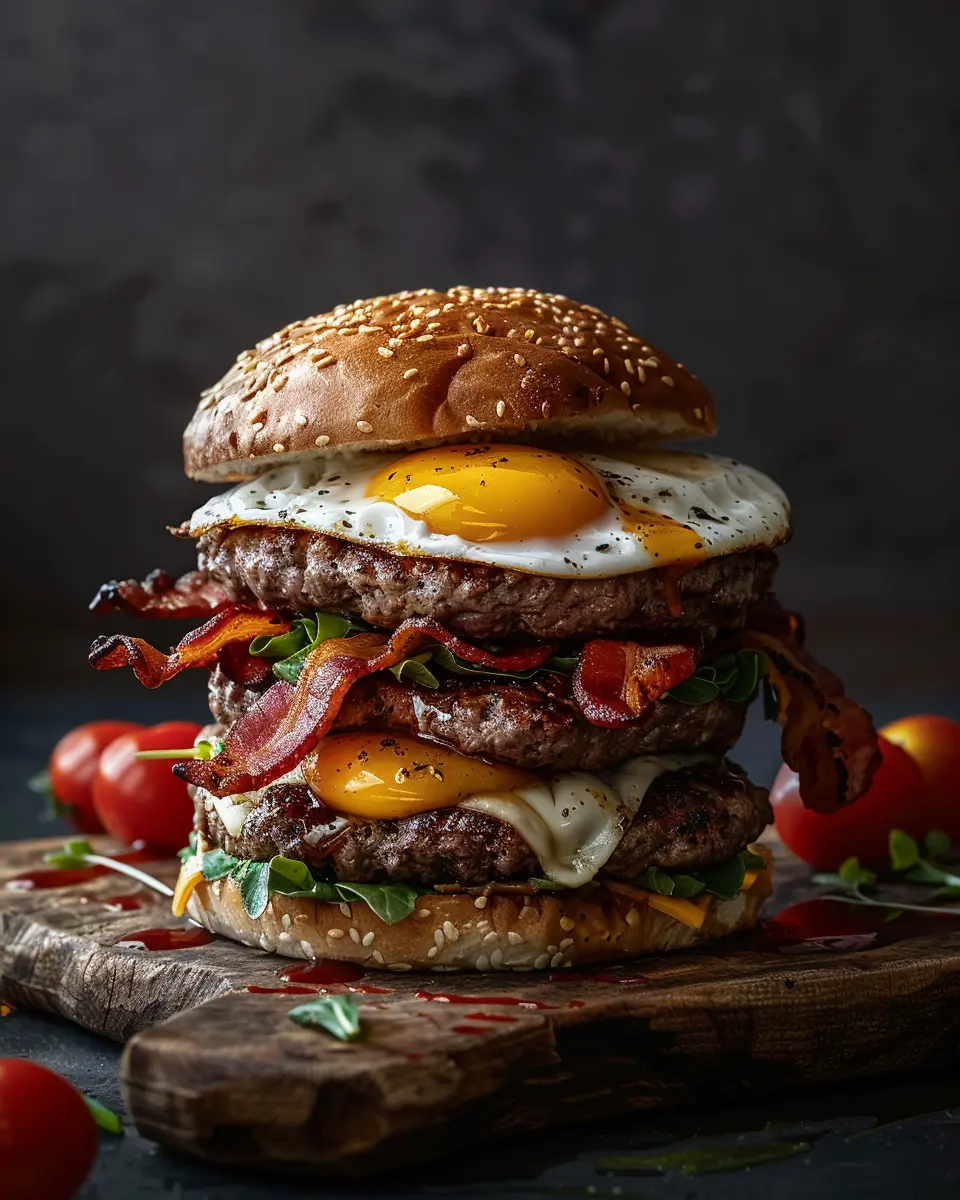
The Looksyumy Burger Assembly System approaches every carnivore burger combination as a three-layer structural unit: a fat-rich primary protein base, a lipid bonding layer, and a secondary protein component that provides textural contrast and additional fat contribution. In practice, this means a beef patty as the primary base, a bacon or bone marrow layer as the lipid bond, and a fried or soft-boiled egg as the secondary protein — a combination whose structural logic produces a stack that holds its shape during transport and reheats without separating into components. The egg yolk in this configuration functions as a natural emulsifying agent between the beef fat and any rendered bacon fat, binding the two lipid sources into a cohesive layer rather than allowing them to pool separately at the container base. Our carnivore burger buns guide details the zero-carb bun options that complement this three-layer system structurally without introducing plant-based ingredients that compromise the assembly integrity.
Bacon layering position matters more than most carnivore burger builders recognize. Bacon placed directly on top of the patty before packing renders additional fat during storage — particularly if the meal is still warm when packed — and that rendered fat drains straight down through the stack and accumulates at the container base. Bacon placed between the patty and the egg, by contrast, is sandwiched between two protein surfaces that slow fat drainage and keep the rendered lipids distributed through the stack rather than pooled below it. The textural difference between these two assembly sequences in a meal that has been refrigerated and reheated is significant — the correctly assembled stack reheats as a cohesive unit, while the incorrectly assembled one reheats with a dry top layer and a fat-saturated base.
Quick Lunches: Assembling Meat Matrices Fast
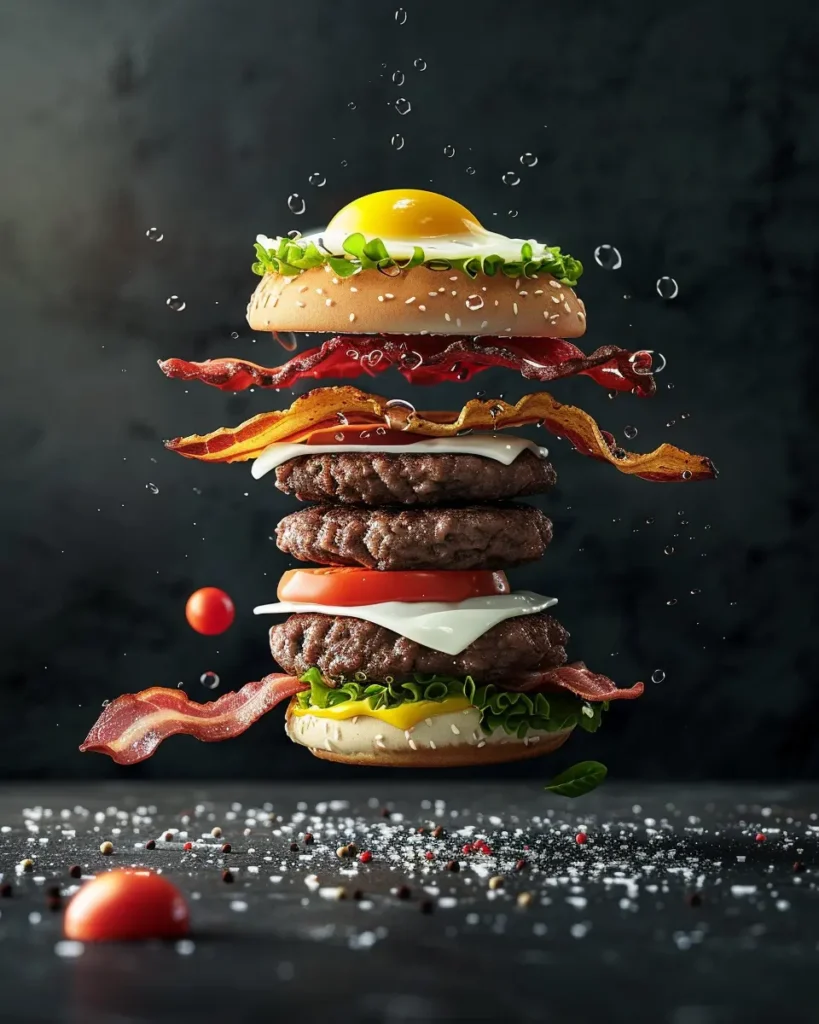
A fast carnivore burger lunch assembly that maintains structural integrity requires that the hottest component — always the beef patty — reaches the plate first and is allowed a minimum two-minute surface rest before any secondary component is placed on top, because stacking immediately traps steam between layers that softens contact surfaces and initiates the moisture migration that causes lunch containers to pool liquid. The direct cause of a quick-assembled carnivore burger that arrives at the office structurally compromised is that the assembly sequence prioritized speed over the two-minute cooling window that prevents inter-layer steam condensation.
I understood the two-minute rule intellectually long before I applied it consistently, and the batch that made it non-negotiable for me was a meal prep session where I was assembling six burger lunches simultaneously under time pressure. I pulled six patties from the pan, plated them immediately, placed bacon directly on each hot patty, added a fried egg on top of the bacon, and packed each stack into a container within ninety seconds of the patty leaving the pan. The containers went into the refrigerator still radiating heat. When I opened the first one four hours later, the base of every container had a visible pool of liquid — rendered fat mixed with condensed steam — and the bottom surface of each patty had softened to a texture closer to steamed meat than seared beef. The crust that gives a seared patty its structural integrity had been completely dissolved by the trapped steam from the assembly-while-hot process. Six lunches, all structurally failed, all from a ninety-second shortcut. Our carnivore sandwich bread guide covers the zero-carb bread and wrap alternatives that add a structural buffer layer between hot patty surfaces and secondary components when the two-minute rest window isn’t available.
For genuinely fast assembly without sacrificing structural integrity, the most practical protocol is to sear patties two minutes longer than the target doneness on the first side, flip once, and transfer immediately to a wire rack rather than a plate — the wire rack allows steam to escape from all surfaces simultaneously rather than condensing against a flat surface, which reduces the surface moisture that causes inter-layer softening by roughly 60 percent. Secondary components — bacon, egg — can be placed on the rack-rested patty within ninety seconds of transfer without producing meaningful condensation because the open-air cooling has already expelled the surface steam. This protocol adds forty-five seconds to the assembly process and eliminates the structural failure that the immediate-stack approach produces consistently.
Advanced Meal Prep Strategies for All-Meat Burgers
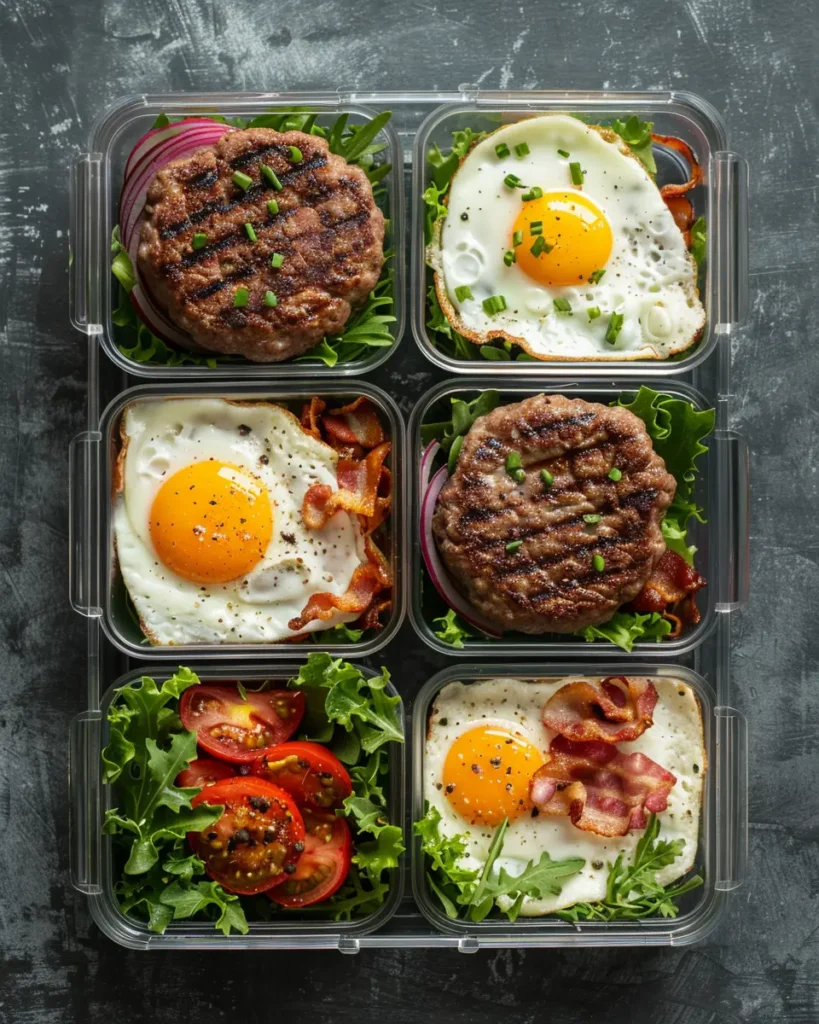
Moisture accumulation inside sealed meal prep containers is not a cooking failure — it is a physics outcome determined by the temperature differential between the packed food and the container environment, and preventing it requires that every component reaches below 50 degrees Celsius surface temperature before the container lid is sealed. The direct structural cause of a prepped carnivore burger that arrives at its destination sitting in liquid is that the sealed container trapped residual steam from components packed above 50 degrees, which condensed against the container walls and lid and drained back down onto the food during transport or refrigeration.
The physics of steam condensation inside sealed food containers — and the temperature thresholds at which residual heat produces structural moisture damage to protein-based meals during refrigerated storage — are covered in food safety guidelines published by the USDA Food Safety and Inspection Service, whose thermal management documentation confirms that sealing hot protein meals accelerates surface moisture accumulation and microbial risk simultaneously
These high-protein burger combinations and structural stacks are assembled and prepped entirely without almond flour buns, coconut flour wraps, psyllium husk binding agents, xanthan gum structural aids, or any plant-based starch component. These ingredients appear frequently in grain-free burger prep contexts as structural substitutes — almond flour buns for bun replacement, psyllium husk as a patty binder, xanthan gum as a structural stabilizer in meat-adjacent preparations. None of these compounds are carnivore-compliant, and more importantly, none of them address the actual structural variables that determine burger meal prep integrity — patty fat percentage, assembly sequence, cooling temperature before packing, and container stacking order. A psyllium husk bun absorbs liquid from a poorly cooled patty and becomes a wet, compressed mass within two hours of packing. An 80:20 beef patty cooled to below 50 degrees before packing retains its sear crust and structural integrity through six hours of refrigeration and reheating without any plant-based structural assistance.
For multi-day meal prep, the most structurally stable protocol separates patties and secondary components into different container sections or individual containers rather than pre-stacking. A pre-stacked burger meal prep container that sits for 48 hours produces significantly more inter-layer moisture migration than the same components stored separately and assembled immediately before eating. The fat from bacon and egg yolk migrates into the beef patty over time, which changes both the texture of the patty and the fat distribution of the stack in ways that are difficult to predict or control. Separate storage preserves the textural integrity of each component individually and allows the assembly sequence to be executed correctly at serving time rather than compromised by 48 hours of fat migration in a sealed container.
Quick Burger Failure Diagnostic
Dry burger? → The beef is probably too lean.
Liquid in the container? → The burgers were stored while still hot.
Soggy stacked burgers? → Steam condensation is the likely cause.
Fat pooling at the bottom? → Layers were stacked incorrectly.
Burger falling apart? → The fat ratio is too low.
Pro Tips for Flawless Patty and Stack Stability 🔥
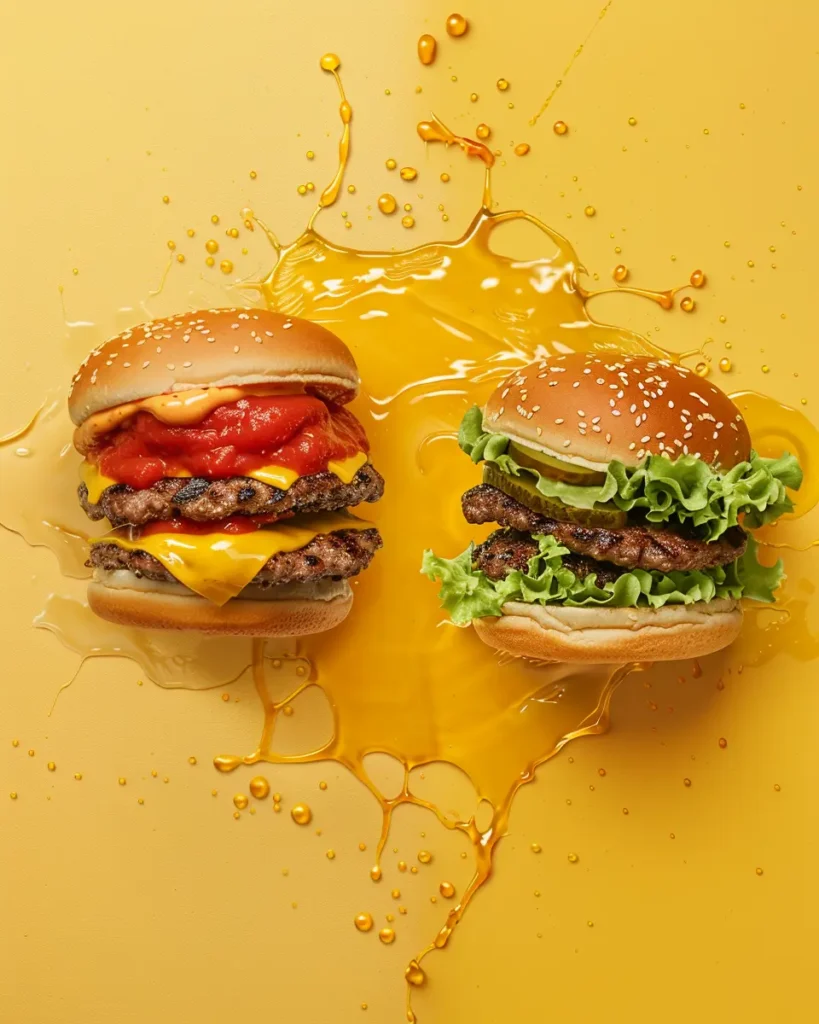
- Use 80:20 ground beef as the non-negotiable fat baseline. Leaner blends produce patties that shed moisture during reheating rather than retaining it — the rendered fat from 80:20 self-bastes the meat fibers during both initial cooking and reheating, maintaining juice retention through the full meal prep window.
- Rest patties on a wire rack, not a plate, for a minimum of two minutes before stacking. Wire rack cooling expels surface steam from all sides simultaneously, preventing the condensation that softens sear crusts and initiates inter-layer moisture migration.
- Seal containers only after all components have reached below 50 degrees Celsius surface temperature. Use a probe thermometer for the first few prep sessions until the cooling time required by your specific patty thickness becomes intuitive.
- Layer fat-rich components between protein layers, never on top. Bacon, egg yolk, and bone marrow butter positioned between the patty and secondary protein layer are held structurally in place during storage; the same components placed above the stack drain freely and pool at the container base.
- For transport, orient the container so the patty base faces down and the egg faces up. This maintains the assembly sequence during movement and prevents the egg yolk from breaking against the container lid during transit.
- Reheat from refrigerator temperature in a covered pan over medium-low heat rather than microwave. Microwave reheating introduces uneven heat distribution that softens the sear crust while over-heating the interior — covered pan reheating restores crust texture while warming the interior through conduction.
- For 48-hour prep, store patties and secondary components in separate sections. Pre-stacked burgers held for two days experience fat migration that changes both component texture and assembly integrity — separate storage preserves each component through the full prep window. Our meal prep guide covers the full container and separation protocol for all-meat meal prep across multiple days.
- Add bone marrow butter as the last element before sealing, not during assembly. Bone marrow butter placed on a warm patty during assembly melts completely and is absorbed into the meat surface before the container reaches refrigerator temperature — adding it cold immediately before sealing preserves it as a discrete fat layer that melts during reheating rather than being pre-absorbed during storage.
Carnivore Burger Meal Ideas: The Complete Assembly and Meal Prep Guide
- Prep Time: 10 Minutes
- Cook Time: 15 Minutes
- Total Time: 25 Minutes
- Yield: 2 Servings 1x
- Category: Dinner
- Method: Pan-Seared
- Cuisine: Carnivore
- Diet: Carnivore Diet
Description
A high-protein carnivore burger meal built around juicy beef patties, crispy bacon, and eggs. Designed for meal prep, recovery, and long-lasting satiety while maintaining structural stability during storage and reheating.
Ingredients
2 beef patties (80:20 ground beef)
4 slices bacon
2 large eggs
1 tablespoon bone marrow butter (optional)
Salt to taste
Instructions
Form the beef into two thick patties.
Cook the bacon until crisp and set aside.
Sear the patties until deeply browned on both sides.
Allow the patties to rest on a wire rack for 2 minutes.
Fry the eggs to your preferred doneness.
Assemble by placing bacon between the patty and egg layers.
Add bone marrow butter before serving if desired.
Serve immediately or store components separately for meal prep.
Notes
Use 80:20 beef for the best balance of structure and juiciness.
Allow components to cool before sealing meal prep containers.
For multi-day meal prep, store eggs and patties separately.
Reheat gently in a covered skillet for best results.
Frequently Asked Questions
Why does my prepped carnivore burger leak liquid inside meal containers?
Liquid pooling inside a sealed carnivore burger meal container If moisture management is a recurring issue, our meal prep guide explains the cooling and storage protocols that prevent condensation across all high-protein carnivore meals. comes from two sources that are often present simultaneously: residual steam condensation from components packed while still above 50 degrees Celsius, and fat drainage from components that were stacked in an order that allows rendered lipids to migrate downward during storage. Steam condensation produces a thin, watery liquid that accumulates uniformly across the container base. Fat drainage produces a thicker, lipid-rich liquid concentrated directly beneath the heaviest fat-contributing component — usually bacon or egg yolk. Distinguishing between the two tells you which variable to correct: if the liquid is thin and watery, the packing temperature was too high; if it is thick and fatty, the assembly sequence placed fat-rich components above rather than between protein layers. Both are corrected upstream — at the cooling and assembly stage — rather than through any modification to the cooking process itself.
How do you achieve a firm sandwich hold without using traditional flours?
Firm structural hold in a flourless carnivore burger assembly comes from three mechanical factors: patty fat percentage high enough to maintain cohesion during reheating, a sear crust intact enough to provide a rigid outer surface that resists compression, and a stacking sequence that places the most structurally stable components — the beef patty — as the base rather than as an intermediate layer. A zero-carb carnivore bun made from egg white and cream cheese provides the structural framing that conventional flour buns provide, without plant chemistry — its protein matrix holds its shape under the compression of a hand-held burger in a way that loose meat stacks without a bun cannot. The hold comes from the structural integrity of each component rather than from any binding agent applied between them, which means cooking technique — specifically maintaining the sear crust and using the correct fat percentage — is more important than any ingredient addition for achieving a sandwich that holds through eating.
What is the ideal fat-to-protein ratio for a shelf-stable carnivore patty?
For a carnivore patty intended for meal prep with a 24 to 48 hour refrigerated holding window, the optimal fat-to-lean ratio is 80:20, which provides sufficient rendered fat during cooking to self-baste the meat fibers and maintain interior moisture through the cooling, storage, and reheating cycle. Below 80:20, the patty loses moisture during reheating faster than the remaining fat can compensate, producing a dry, crumbling texture by the second day. Above 75:25, rendered fat volume during cooking is high enough that the patty shrinks significantly and may require a brief post-cook press to maintain uniform thickness for stacking. For single-day prep where the meal will be eaten within eight hours of cooking, 85:15 produces a richer, juicier result with more pronounced flavor — the additional fat renders completely during cooking and is retained in the meat fibers rather than pooling in the container because the holding window is too short for significant fat migration to occur.