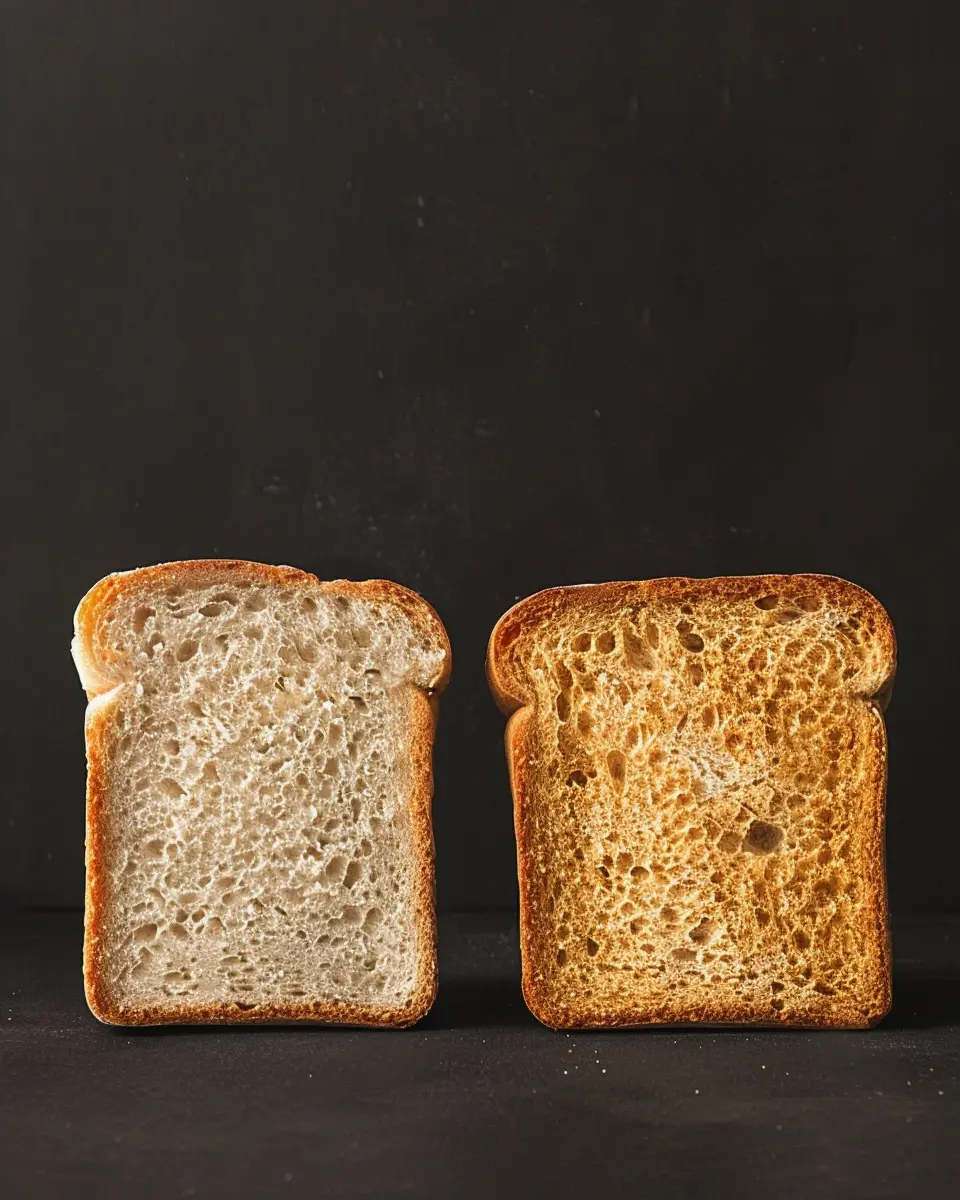
👉 Save this page or print the ideal oven range checklist below — tape it inside your cabinet door before your next bake.
Getting the flavor right in carnivore bread is the easy part. Getting the heat right is where most bakers silently fail — often without ever realizing the oven itself is the variable destroying their results batch after batch. Because carnivore bread contains no flour, no starch, and no gluten framework, it has absolutely no thermal buffer between the oven’s ambient heat and the fragile animal protein matrix inside the batter. Every single degree matters in a way that conventional baking simply never demands.
Oven temperature dictates whether egg proteins in carnivore bread coagulate slowly into a stable mesh or snap into a tight, moisture-expelling knot before the interior has fully risen. When heat rises too fast, steam generated from egg whites and fat-based dairy escapes the batter before the protein matrix can lock around the expanded air cells — causing the loaf to collapse into a hollow, dense shell. The entire structural outcome of a carnivore loaf The ideal oven temperature for carnivore bread is typically 150°C–165°C (300°F–325°F). This range allows egg proteins to coagulate gradually, helping the loaf rise properly without collapsing, becoming gummy, or drying out.— its rise height, internal crumb openness, moisture balance, and crust integrity — is determined by whether the internal batter temperature moves through the coagulation window of 60°C–80°C (140°F–176°F) at a gradual, controlled rate or breaches that range too quickly under aggressive oven heat.
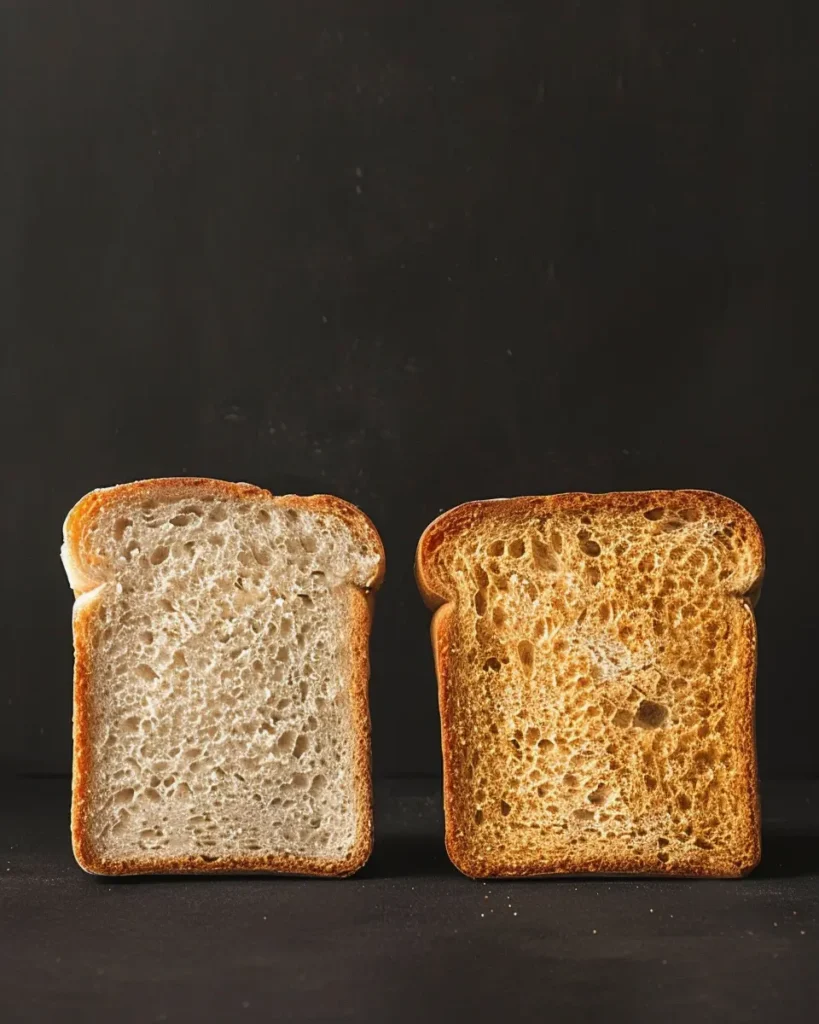
Table of Contents
Table of Contents
Low vs High Temperatures: The Structural Breakdown
When oven heat is too high in zero-carb baking, the exterior surface of the loaf crusts and sets before the interior protein mesh has had time to fully coagulate, trapping wet, unset batter at the center while the outer shell hardens prematurely. The correct structural response requires a moderate oven temperature — ideally 150°C–165°C (300°F–325°F) — which allows heat to penetrate the full mass of the batter and drive the internal temperature into the 70°C–80°C coagulation zone before the surface over-browns.
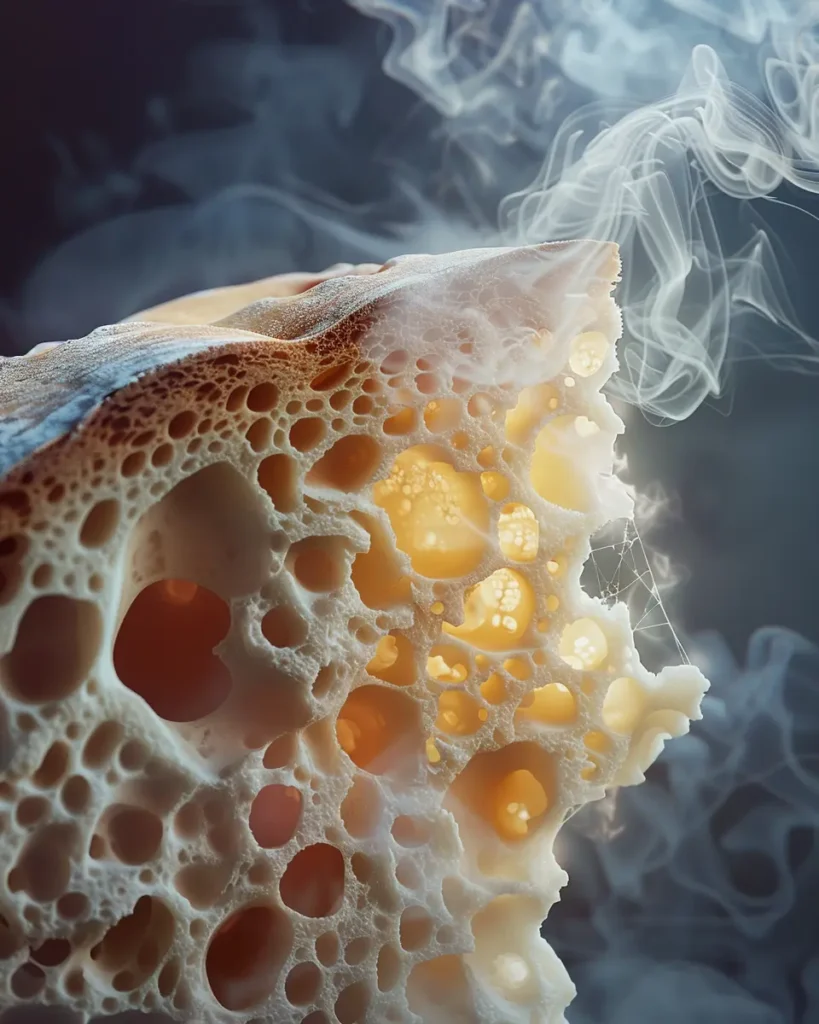
Think of the egg protein structure in carnivore bread(opens in new tab) as a slow-forming web. At 60°C (140°F), the first proteins — specifically ovotransferrin — begin to unfold and reach toward each other. By 70°C–80°C (158°F–176°F), ovalbumin, the dominant structural protein in egg white, reaches full coagulation. This is the window where the three-dimensional mesh solidifies, the air cells lock in place, and the loaf transitions from a fragile foam to a structurally sound crumb. Rush it with a hot oven and that window slams shut too early — on the outside only — while the inside remains liquid and unsupported.
At the opposite extreme, an oven running too cold (below 140°C / 285°F) creates an entirely different failure mode. The batter temperature rises so slowly that the chemical leavening exhaust its gas production before the protein can set around those bubbles. The loaf may appear to be rising during the first ten minutes — that liquid-becoming-fluid phase as fat melts — but the foam is quietly collapsing faster than the heat can cure it. The result is a flat, compressed brick with no internal structure and a gummy, under-set center.
This is precisely the dynamic that the Looksyumy Stabilization Protocol targets. Testing across dozens of carnivore loaf configurations confirms that a consistent oven temperature band of 155°C–163°C (311°F–325°F) produces the most reliable structural rise, because it synchronizes the rate of internal protein coagulation with the rate of steam expansion — the two forces must move together or the architecture fails. When they align, the loaf rises steadily, the air cells remain intact as the mesh locks around them, and the crust forms only after the crumb has already set. When they diverge — whether from an oven running 20°F hot or 15°F cold — that synchronization breaks and the loaf suffers for it.
Low temperature also has a specific impact on crust formation. A properly formed carnivore crust develops through the Maillard reaction between amino acids in the egg proteins and trace reducing compounds in the fat-based dairy. This reaction requires surface temperatures of roughly 150°C–180°C (300°F–356°F). In a correctly set oven, the surface hits those browning temperatures only after the interior has already set — meaning the crust signals doneness accurately. In an oven running hot, the crust can reach full browning color while the interior is still 20°C below the coagulation threshold. The golden top becomes a lie. Can carnivore bread look done but still be undercooked? Yes. The crust can brown fully while the center remains below the protein coagulation temperature needed for structural stability.
| Symptom | What It Usually Indicates |
|---|---|
| Wet center | Oven temperature too high or insufficient baking time |
| Dense loaf | Oven temperature too low for proper expansion |
| Hollow center | Exterior structure set before the interior finished expanding |
| Rubbery crumb | Excessive protein coagulation caused by high heat |
| Pale crust | Insufficient oven temperature or weak browning reaction |
| Dark crust + wet center | Heat reached the exterior faster than the interior |
Thermal Effects on Internal Crumb and Texture
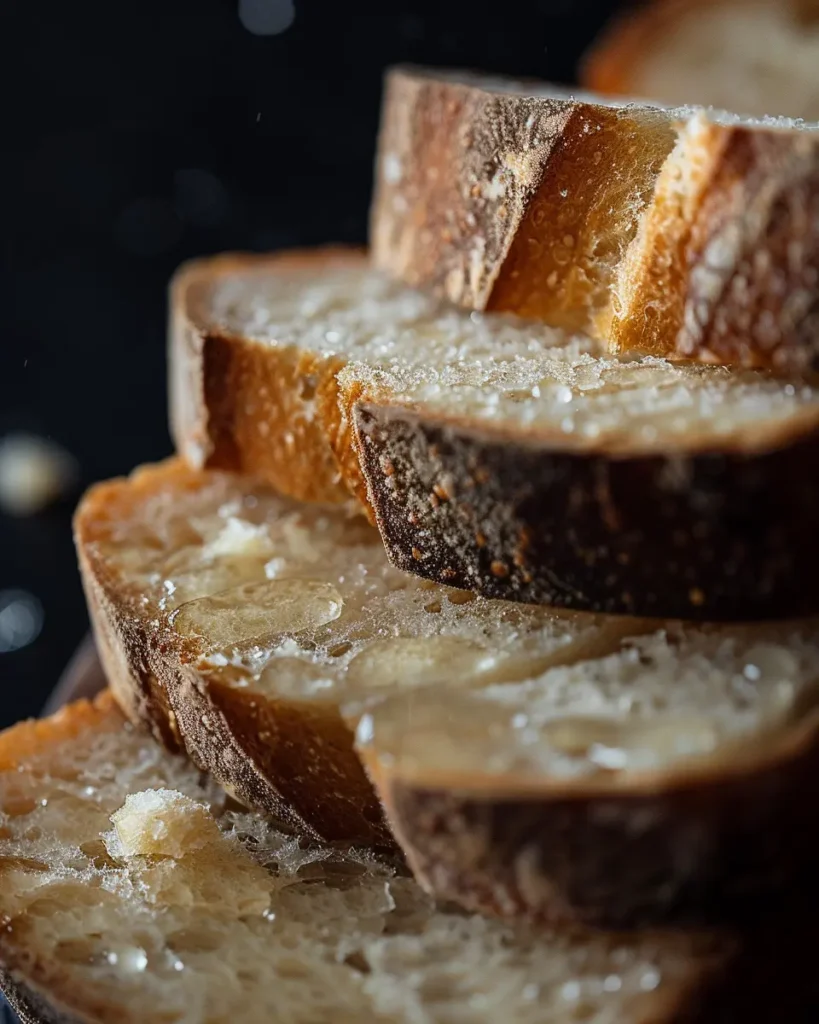
A wet, gummy center in carnivore bread is almost never about ingredients — it is exclusively a signal that the internal batter temperature never reached 75°C–80°C (167°F–176°F), meaning the ovalbumin protein network never completed its coagulation and the structural mesh remains a semi-liquid foam. The fix is never to raise the oven temperature higher; it is to lower the temperature, extend the bake time, and allow the heat to penetrate the full depth of the loaf at a pace the batter can absorb.
I learned this failure mode the hard way during early kitchen trials with a standard loaf pan. I was baking at 175°C (350°F) — a temperature that had worked perfectly well for conventional recipes and that felt intuitively like a “real baking temperature” — and my loaves looked phenomenal coming out of the oven. Beautifully golden dome, firm top, a satisfying spring when I pressed the surface. I pulled the loaf at the 25-minute mark because the exterior looked textbook perfect. Then I sliced into it. The outer inch was fully cooked — firm, springy, with a visible open crumb. Everything from the center inward was a dense, hollow, wet collapse: a sunken void ringed by a solid shell, almost like a failed soufflé. The interior hadn’t even reached coagulation temperature. My oven thermometer — the dial, not a secondary probe — was reading 175°C, but an actual oven thermometer I placed on the rack revealed the true ambient temperature was 185°C (365°F). That 10°C gap changed everything.
I noticed that at that actual temperature, the outer egg proteins were hitting over-coagulation — tightening, expelling moisture, and forming a sealed crust — while the interior never received the sustained moderate heat it needed to set through. The loaf had essentially baked from the outside in, sealing its own fate. What looked like a technique problem turned out to be a calibration problem. Dropping to 155°C (verified by the secondary thermometer) and extending the bake by 12 minutes produced the first structurally sound loaf I had achieved with that formula.
This calibration issue is extraordinarily common. Consumer ovens routinely run 15°F–25°F (8°C–14°C) off their displayed temperature. For conventional bread baking with starch-heavy doughs, that variance is largely absorbed by the thermal mass of the flour. Carnivore batters, with no starch buffer whatsoever, transfer heat almost instantly from the ambient oven air directly to the egg-fat matrix. A 15°F error that a conventional baker might never notice can be the precise gap between a perfectly set crumb and a wet, collapsed interior.
When baking buns(opens in new tab) in smaller individual portions, this effect is even more pronounced. The lower mass means the internal temperature reaches the coagulation window faster — which sounds like an advantage but becomes a problem if the oven is running hot, because there is even less time between “starting to set” and “over-coagulating.” Smaller formats demand the lower end of the temperature range, around 150°C (300°F), with close monitoring from the 18-minute mark onward.
Another crumb-level phenomenon worth understanding is steam behavior during the bake. The water content trapped in egg whites and any fat-based dairy in the batter converts to steam under heat. That steam creates additional upward pressure alongside the carbon dioxide from leavening — it is a second source of rise. In a correctly tempered oven, steam expansion is gradual, matching the pace at which the protein mesh coagulates and stiffens around the expanding air cells. The loaf rises steadily and holds. In an oven running too hot, that steam converts and escapes rapidly — the batter puffs aggressively in the first five minutes and then falls back as the protein mesh, still incomplete and fragile, cannot contain the sudden pressure release. What remains is a loaf that peaked early and then caved in on itself as it cooled.
Identifying the Ideal Temperature Range
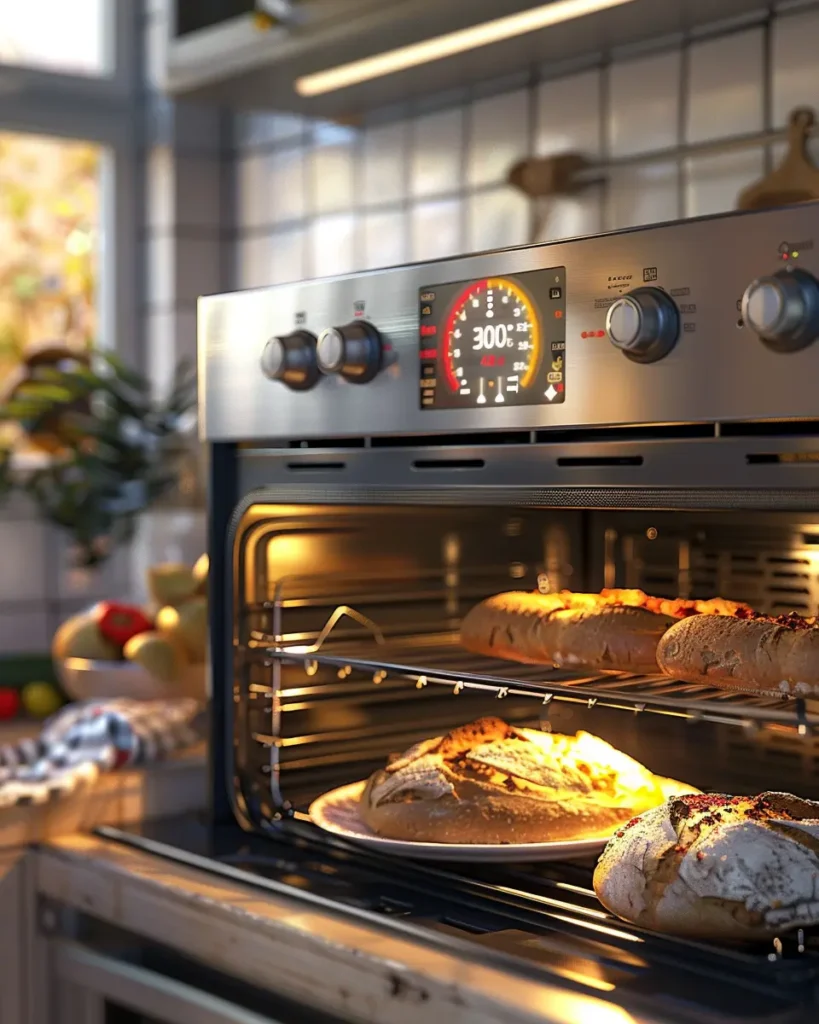
The ideal oven temperature for zero-carb carnivore bread baking is 150°C–165°C (300°F–325°F), measured by a secondary oven thermometer placed on the rack — not read from the dial — because this specific range allows the interior to reach full protein coagulation at 75°C–80°C internal while keeping the surface in controlled Maillard browning territory rather than aggressive over-crust formation. Confirming internal doneness with an instant-read probe thermometer at the geometric center of the loaf is the only reliable method; visual cues from the crust are consistently misleading in animal-protein baking due to the rapid surface temperature differential.
It is worth being completely direct about what achieves structural stability within this temperature range: pure animal protein coagulation and controlled steam dynamics — nothing else. There is no almond flour providing starch buffering, no coconut flour absorbing excess moisture, no psyllium husk creating a gelatinous binding matrix, no xanthan gum forming a viscous structural substitute, and no plant-based starches of any kind acting as a thermal heat sink or moisture regulator. Every single structural outcome described in this guide — the rise, the crumb openness, the moisture balance, the crust formation — is achieved entirely through the thermal behavior of egg proteins and animal fats under heat. Any recipe or troubleshooting framework that relies on those plant-derived additives is solving a fundamentally different structural problem and is not applicable to strict carnivore or zero-carb baking. The exclusive reliance on animal-protein thermal mechanics is precisely what makes temperature calibration so critically important here: there is no plant-based fallback to compensate for heat errors.
Within that ideal 150°C–165°C window, a useful refinement is the two-phase bake: set the oven to 155°C (311°F) for the first two-thirds of the bake time to allow the interior to set slowly and completely, then increase to 165°C–170°C (329°F–338°F) for the final 10 minutes to develop surface color. This decouples interior coagulation from exterior browning — the two processes that conflict with each other at any single fixed high temperature. The interior sets gently at the lower phase; the crust develops its golden color at the brief higher phase without risk of over-cooking what is already properly set beneath it.
By 70°C–80°C (158°F–176°F), ovalbumin, the dominant structural protein in egg white, reaches full coagulation(opens in new tab) and the three-dimensional mesh solidifies — locking air cells in place and transitioning the loaf from fragile foam to structurally sound crumb.
For loaf pans, the full bake time at this range is typically 35–45 minutes depending on pan dimensions and batter volume. An internal probe reading of 75°C–80°C (167°F–176°F) at the center confirms structural set. Some bakers targeting a slightly firmer, drier crumb for slicing will let the internal temperature reach 82°C (180°F), which is acceptable but approaches the lower boundary of over-coagulation — beyond this point, moisture expulsion begins and the crumb starts to tighten toward rubberiness.
Common Oven Mistakes That Ruin Your Rise ❌
These are the thermal errors that account for the majority of carnivore bread failures. Before revisiting your recipe, audit every one of these variables first — most structural failures are heat problems, not ingredient problems. For a complete breakdown of bowl-phase and mixing errors that compound these oven issues, visit the baking mistakes(opens in new tab) diagnostic guide.
- Trusting the oven dial without a secondary thermometer. Consumer ovens routinely run 15°F–25°F off This forms part of what I call the Looksyumy Thermal Synchronization Window — the period where steam expansion and protein coagulation progress at the same pace, allowing the loaf to rise and lock into structure simultaneously. Should you trust the oven dial? No. A secondary oven thermometer is often necessary because many home ovens run significantly hotter or colder than their displayed temperature. their displayed temperature. A \10$ oven thermometer placed on the center rack eliminates the single largest uncontrolled variable in carnivore baking.
- Baking at conventional bread temperatures (175°C+ / 350°F+). At these settings, the small thermal mass of carnivore batter heats through too rapidly, driving internal protein temperatures past the 85°C over-coagulation threshold and producing a rubbery, dry, moisture-expelled crumb — even if the exterior looks perfect.
- Opening the oven door in the first half of the bake. Every door opening drops the ambient temperature by 14°C–28°C (25°F–50°F). During the critical 60°C–80°C internal coagulation window, this temperature drop stalls protein setting, allows partially formed foam to destabilize, and releases the steam contributing to rise — the loaf will partially collapse and never fully recover that volume.
- Using a cold or unpreheated pan. A cold dark metal or glass pan extends the base-baking time and creates a bottom-up heat gradient through the loaf. The base remains undercooked while the top over-sets, producing an uneven internal crumb and a wet, gummy bottom layer. Preheat the empty pan with the oven.
- Not accounting for convection fan acceleration. A convection setting circulates hot air and effectively raises the thermal impact on the batter surface by the equivalent of 14°C–17°C (25°F–30°F). If your oven is set to 165°C convection, the effective surface temperature experienced by the loaf is closer to 180°C — well above the safe range. Always reduce the set temperature by 14°C–17°C when using a fan-forced setting.
- Relying on visual crust color to determine doneness. The surface reaches browning temperatures significantly faster than the interior reaches coagulation temperature. A golden crust can be achieved when the center is still 15°C below the structural set point. Use a probe thermometer — no other method is reliable.
- Pulling the loaf and immediately transferring to a cold surface. The protein structure continues setting for several minutes after removal from the oven through residual heat carry-over. Placing a hot loaf directly on a cold countertop or in a cold environment causes rapid steam condensation at the base and can partially collapse the still-setting center. Rest on a wire rack for a minimum of 10 minutes before handling.
Frequently Asked Questions
Why does my carnivore bread sink as soon as it cools?
Sinking during the cooling phase is almost always a sign that the internal protein mesh set well enough to hold the loaf’s shape under heat — when the steam and CO₂ inside were still expanded — but lacked sufficient structural density to support itself as those gases contracted during cooling. As the loaf exits the oven, internal steam begins condensing and gas cells shrink. If the protein walls surrounding those cells are strong enough, the crumb holds its shape through that contraction. If they are too thin — because the egg protein content was marginally low relative to the loaf’s volume, or because the bake ended slightly before the internal temperature fully reached 80°C — the walls yield inward. The corrective approach has two components: first, confirm with a thermometer that the internal temperature genuinely reached 75°C–80°C before removal, and second, consider cooling the loaf slowly inside the oven with the door cracked open rather than removing it immediately to room temperature. The gradual temperature reduction gives the residual heat time to complete the final percent of protein coagulation and eases the gas contraction rate, reducing the inward pressure on the crumb walls.
Do I need to use a convection fan setting for zero-carb baking?
Not only is convection not required for carnivore bread — in many cases it actively creates problems if not carefully managed. The circulating hot air in a convection setting accelerates surface evaporation and browning dramatically, which sounds like a benefit but in practice means the crust forms a sealed outer layer much earlier in the bake while the interior is still in its fragile, partially set state. The pressure differential between a rigid exterior and an expanding, liquid interior is a primary cause of dome cracking and structural collapse. If you prefer to use a convection setting for even heat distribution, reduce your set temperature by 14°C–17°C (25°F–30°F) below whatever you would use for a static oven — so if the target is 160°C static, set convection to 143°C–146°C. Additionally, some bakers tent the top of the loaf loosely with foil for the first two-thirds of the bake when using convection, which slows surface browning while allowing the interior to set at its own pace before the crust is allowed to fully develop in the final phase.
How can I tell if the center of my loaf is fully cooked through?
The only reliable method for confirming doneness in carnivore bread is an instant-read probe thermometer inserted into the geometric center of the loaf — the deepest point, avoiding any pockets near the edge. The target internal temperature is 75°C–80°C (167°F–176°F) for a tender, moist crumb that is fully set. If you are targeting a firmer texture for slicing, 80°C–82°C (176°F–180°F) is acceptable, though moisture expulsion begins to occur above this range. Visual tests — skewer or toothpick — are far less reliable in carnivore bread than in conventional baking because the wet, custardy texture of a partially set egg-protein batter can still allow a skewer to come out relatively clean even when the surrounding mass is significantly under-temperature. Surface color is equally unreliable for reasons detailed throughout this guide. Invest in a reliable instant-read thermometer and use it every time; it removes the single greatest source of guesswork from the entire baking process and answers the doneness question definitively in under five seconds.