
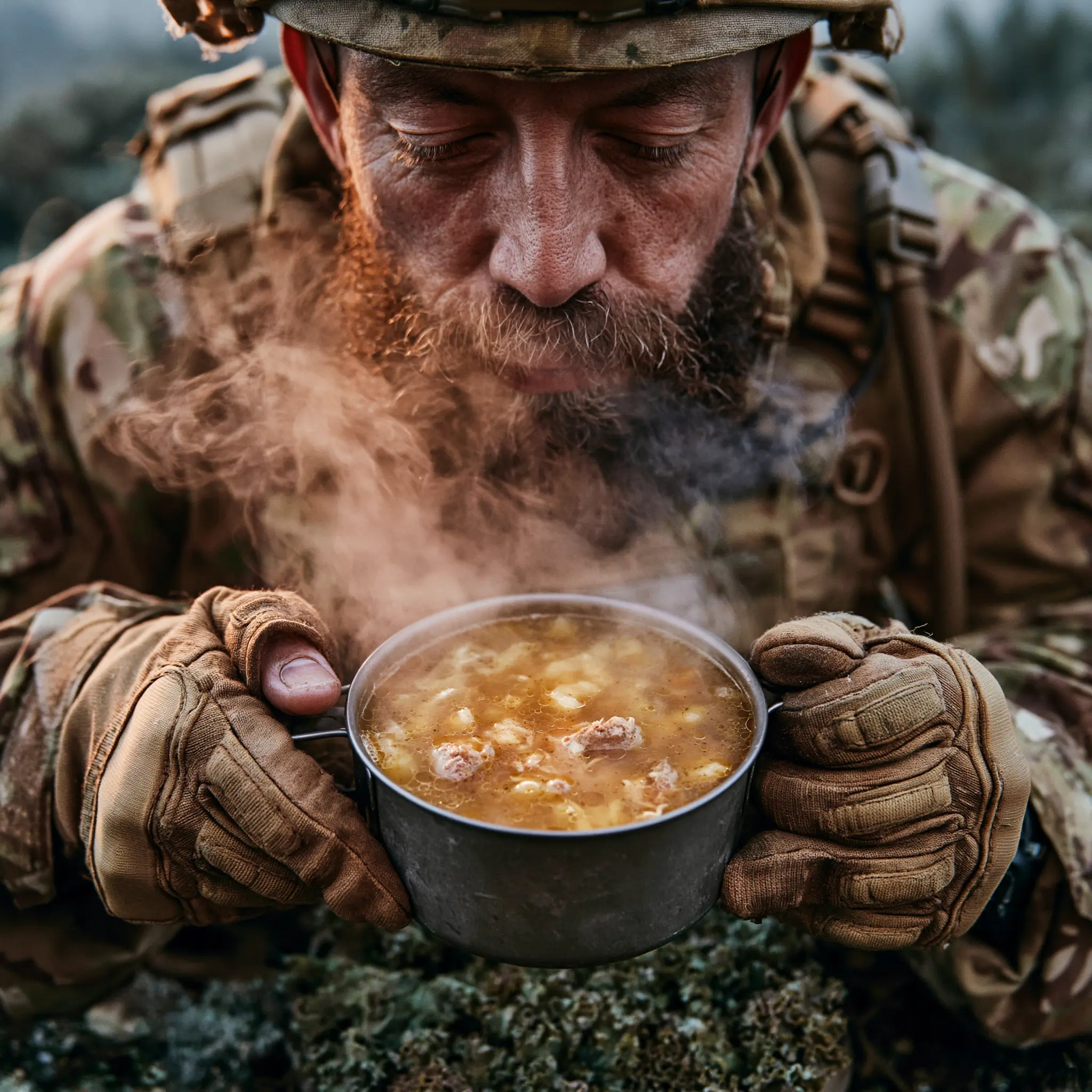
👉 Download the Free Field-Ready Carnivore Meal Prep & Storage Checklist — Print It Before Your Next Deployment or Field Exercise
Military personnel use carnivore recipes because animal-based meals deliver more usable energy per ounce than carb-heavy MREs, without the sugar crash that hits two hours into a long patrol or training day. When food needs to survive heat, rough handling, and zero refrigeration, fat and protein hold up — they don’t spoil, ferment, or lose calorie density the way bread and starches do. These recipes are built for one job: keep you fueled and sharp when there’s no kitchen, no fridge, and no time to stop.
The best carnivore recipes for military personnel are portable, shelf-stable, calorie-dense meals built around dried meat, tallow, eggs, and bone broth. These foods provide reliable energy, survive harsh field conditions, and require little or no refrigeration.
Table of Contents
Energy Demands in the Field: Why Operators Go Plant-Free
The primary factor driving service members toward carnivore eating isn’t preference — it’s energy reliability under unpredictable conditions. When meals run on fat and protein instead of carbs, energy stays steady through long stretches without food, instead of spiking and crashing every few hours.
Field conditions punish anything that needs precise timing or refrigeration. Carb-based energy needs frequent top-ups, and most field rations rely on sugar and starch to hit calorie targets fast, which works for an hour and fails by hour four. Animal-based meals — beef, eggs, rendered fat — store calories your body can actually pull from steadily, whether you ate two hours ago or eight. The Looksyumy Performance Plan applies this directly to field readiness: pack dense, shelf-stable, animal-only meals that don’t need a stove, a fridge, or a strict eating schedule to keep working. Personnel running variations of the Looksyumy Performance Plan during extended field exercises consistently report fewer energy crashes during long movements and less dependence on constant snacking to stay sharp.
Many of these same performance principles apply outside military environments as well. Athletes using animal-based nutrition strategies often rely on similar approaches to maintain energy, recovery, and mental focus during demanding training blocks.
Top 8 Portable Carnivore Recipes for Field Use
Every recipe below is made 100% without dextrose, sweet potato starches, maltodextrin, pea protein isolates, xanthan gum, or oat flours. No MRE fillers, no shelf-stabilizers you can’t pronounce — just dense animal food built to survive a rucksack.
1. Carnivore Pemmican Bars
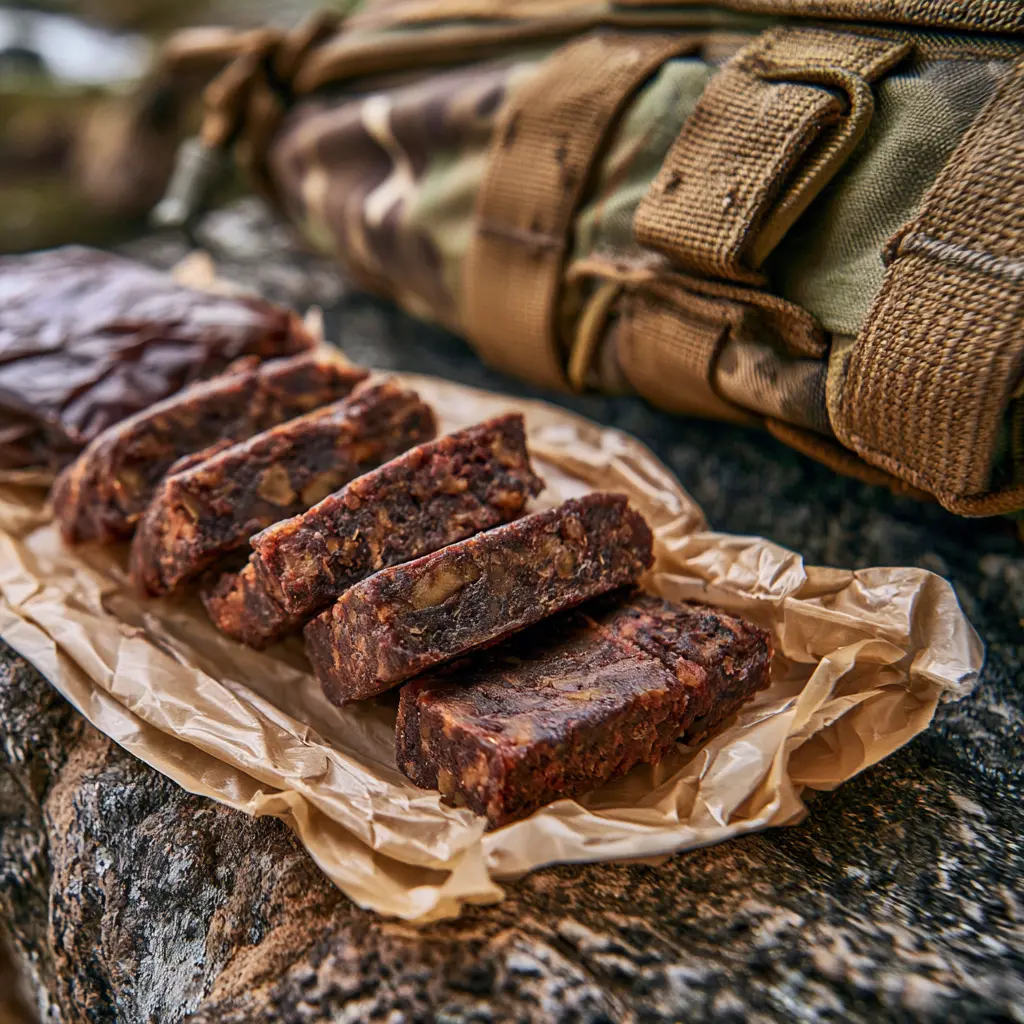
Field Benefit: The original long-haul field ration. No refrigeration needed, survives heat and pressure, and delivers massive fat-and-protein calories in a small, dense block that fits in any pocket or pouch.
Ingredients:
- 8 oz lean beef (eye of round or similar), sliced paper-thin
- 4 oz beef tallow, melted
- 1 tsp sea salt
- Optional: ½ tsp smoked salt for flavor
Directions:
- Dry the beef slices in a dehydrator at 160°F (70°C) for 4–6 hours, or in an oven at the lowest setting with the door cracked, until completely dry and brittle.
- Pulse the dried beef in a food processor until you get a fine, dry powder with no moisture left.
- Mix the beef powder with salt thoroughly.
- Pour melted tallow over the mixture gradually, stirring until it forms a thick, moldable paste — roughly 2:1 meat powder to tallow by weight.
- Press firmly into a small loaf pan or silicone mold.
- Refrigerate 2 hours until solid, then slice into bars.
- Store at room temperature in a sealed bag for up to 5 days, or refrigerated for 3 weeks. Ideal for a 72-hour pack or extended exercise.
2. Carnivore Trail Crackers
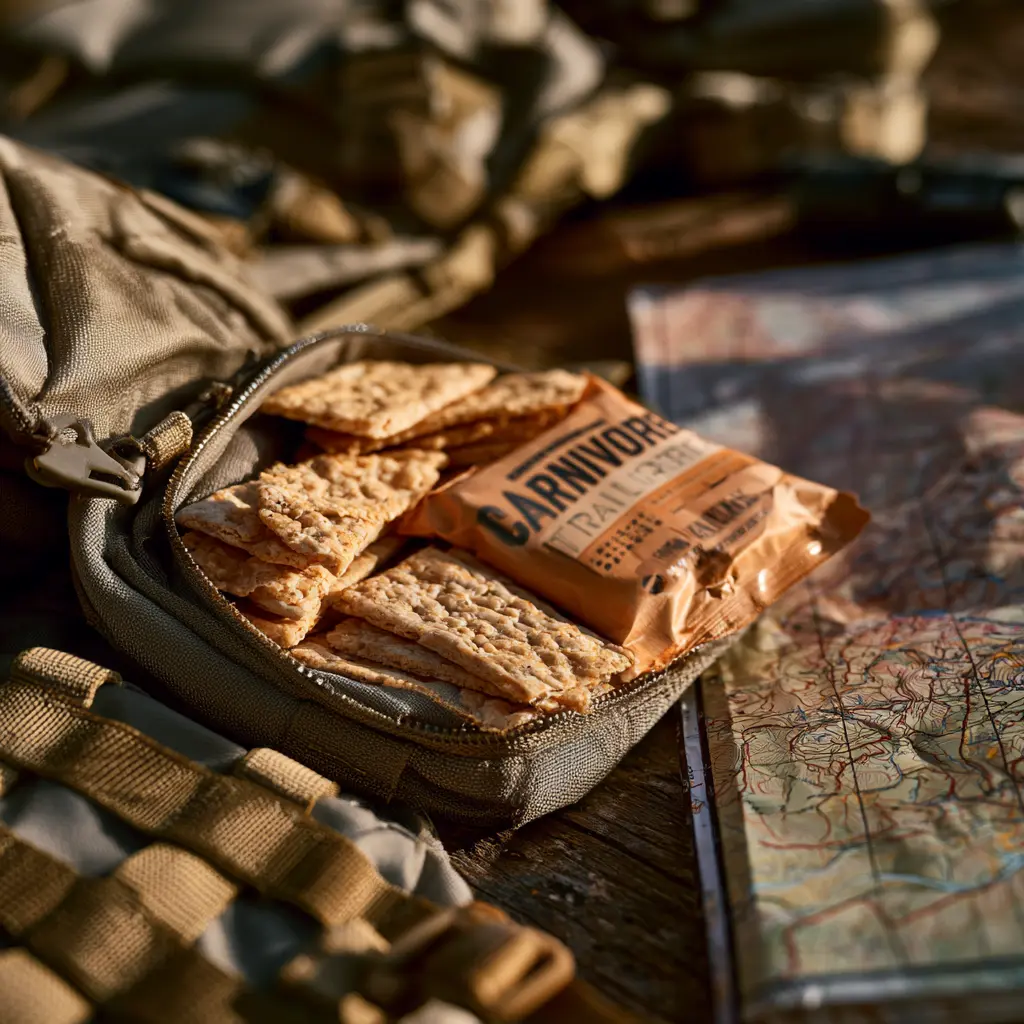
Field Benefit: Light, thin, and breaks into bite-sized pieces — easy to eat one-handed while moving. High sodium content makes these useful for replacing lost electrolytes during long days in heat.
Ingredients:
- 8 oz 80/20 ground beef
- ½ tsp sea salt
- ½ tsp smoked salt (optional)
- ¼ tsp black pepper
Directions:
- Mix ground beef with salt, smoked salt, and pepper until evenly combined.
- Place a golf ball–sized portion between two sheets of parchment paper and roll flat to about 2mm thick.
- Peel off the top parchment and transfer to a baking rack.
- Repeat until all beef is rolled flat.
- Bake at 250°F (120°C) for 2–2.5 hours until fully dried and crisp.
- Break into cracker-sized pieces. Pack in a sealed bag — stays good for 7 days at room temperature, longer if vacuum-sealed.
3. High-Protein Carnivore Crunch Cereal
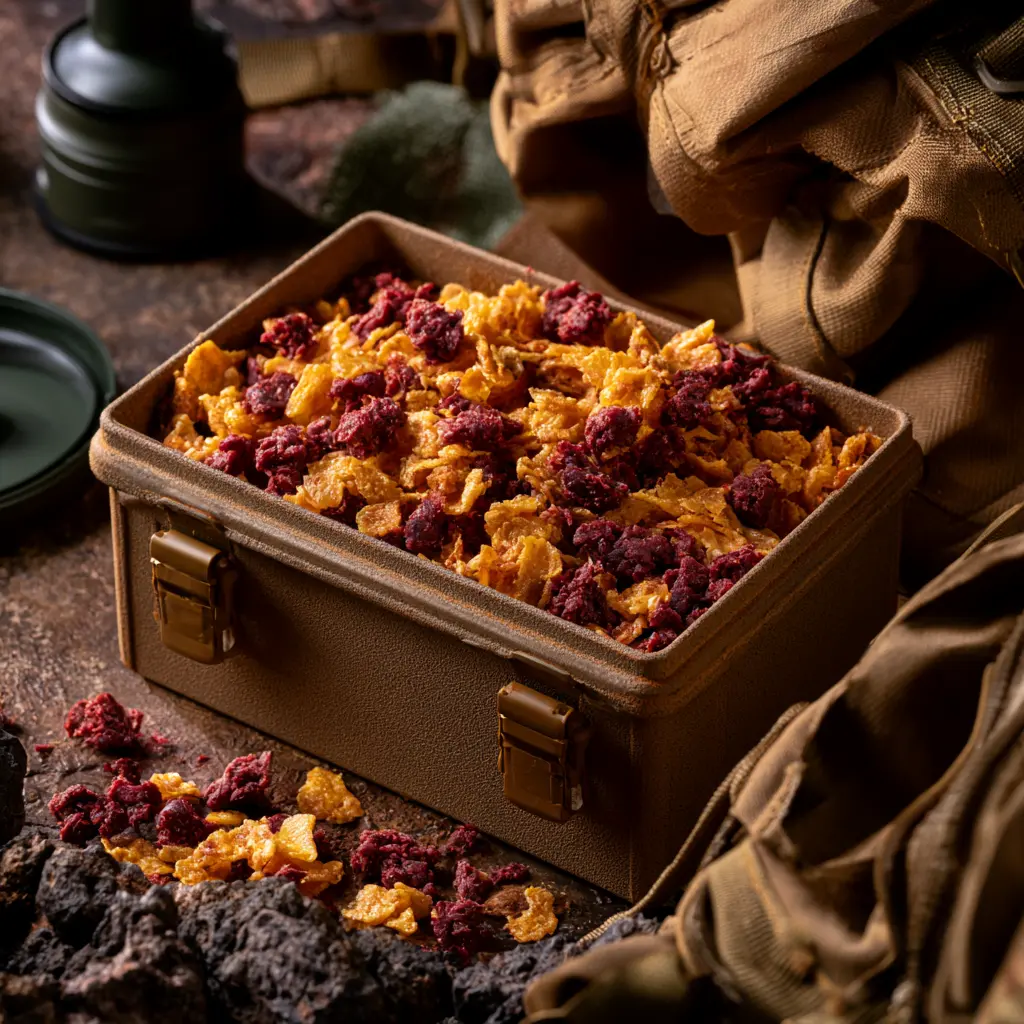
Field Benefit: Dry, light, and crush-resistant in a pack. Rehydrates instantly with whatever liquid is available — water, broth, or canteen milk — making it useful when you can’t predict what you’ll have access to.
Ingredients:
- 8 oz 80/20 ground beef
- ½ tsp sea salt
- ¼ tsp black pepper
Directions:
- Brown ground beef in a skillet, breaking into very fine, even crumbles. Season with salt and pepper.
- Spread on a parchment-lined baking sheet in a single thin layer.
- Bake at 275°F (135°C) for 50–60 minutes, stirring once, until completely dry and crunchy.
- Cool fully before packing. Store in a sealed, crush-resistant container — these hold up well in a rucksack for 6+ days.
- In the field: pour any available liquid over a portion and eat immediately.
4. Hard-Cooked Egg and Salt Pack
Field Benefit: Zero prep needed once cooked, no refrigeration required for short windows, and one of the densest, fastest protein sources you can carry without cooking gear.
Ingredients:
- 6 large eggs
- 1 tsp sea salt (carried separately in a small pouch)
Directions:
- Boil eggs for 10–11 minutes for a fully set yolk, which holds up better than a soft yolk in field conditions.
- Cool completely in cold water, then leave the shells on.
- Pack whole, unpeeled eggs in a hard container to prevent cracking.
- Peel and salt right before eating. Unpeeled, salted eggs are safe at ambient temperature for up to 2 days; refrigerate if longer storage is needed.
5. Crispy Egg Yolk Performance Chips
Field Benefit: Extremely lightweight and calorie-dense per gram, with no moisture to spoil. A small handful covers fat-soluble vitamins that get missed when eating mostly dry meat for days at a time.
Ingredients:
- 6 egg yolks
- Sea salt
Directions:
- Separate yolks carefully, keeping each intact.
- Place on a parchment-lined baking sheet, spaced apart.
- Season each yolk with a pinch of salt.
- Bake at 200°F (95°C) for 2.5–3 hours until fully dried and chip-like.
- Cool completely, then pack in a hard, crush-proof container. Stable at room temperature for up to 5 days.
6. Carnivore Flourless Field Bread
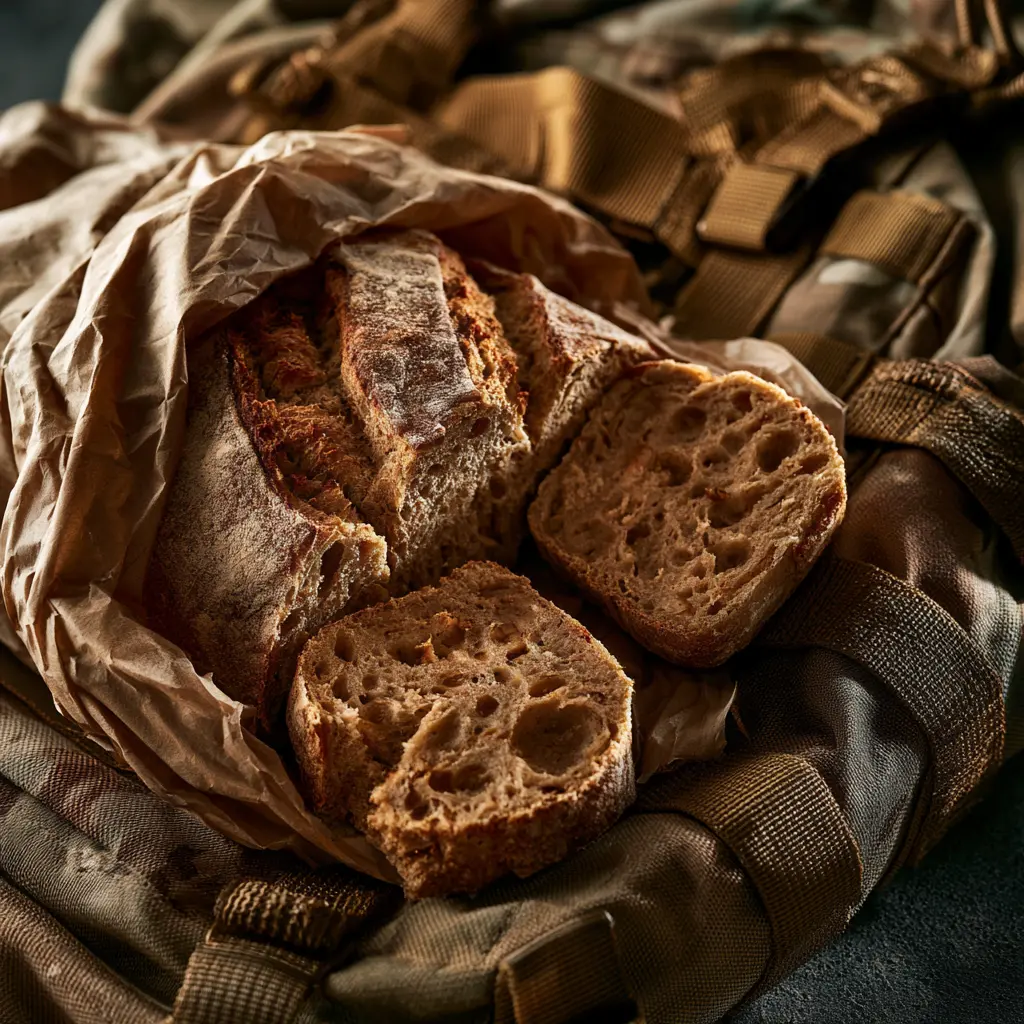
Field Benefit: A dense, low-moisture bread that holds together under pressure in a pack — useful as a base for any other field protein and doesn’t crumble apart like standard bread.
Ingredients:
- 6 egg whites
- 2 egg yolks
- ½ tsp cream of tartar
- Pinch of sea salt
- Butter for greasing
Directions:
- Preheat oven to 300°F (150°C) and grease a loaf pan with butter.
- Beat egg whites with cream of tartar and salt until stiff, glossy peaks form.
- Fold in yolks gently without deflating the whites.
- Pour into the loaf pan and bake 40–45 minutes until firm and golden.
- Cool fully, then slice. For field storage, individually wrap slices in parchment or wax paper to prevent sticking — keeps well refrigerated up to 4 days, or vacuum-sealed for longer field carry.
7. Beef Tallow and Jerky Pouch
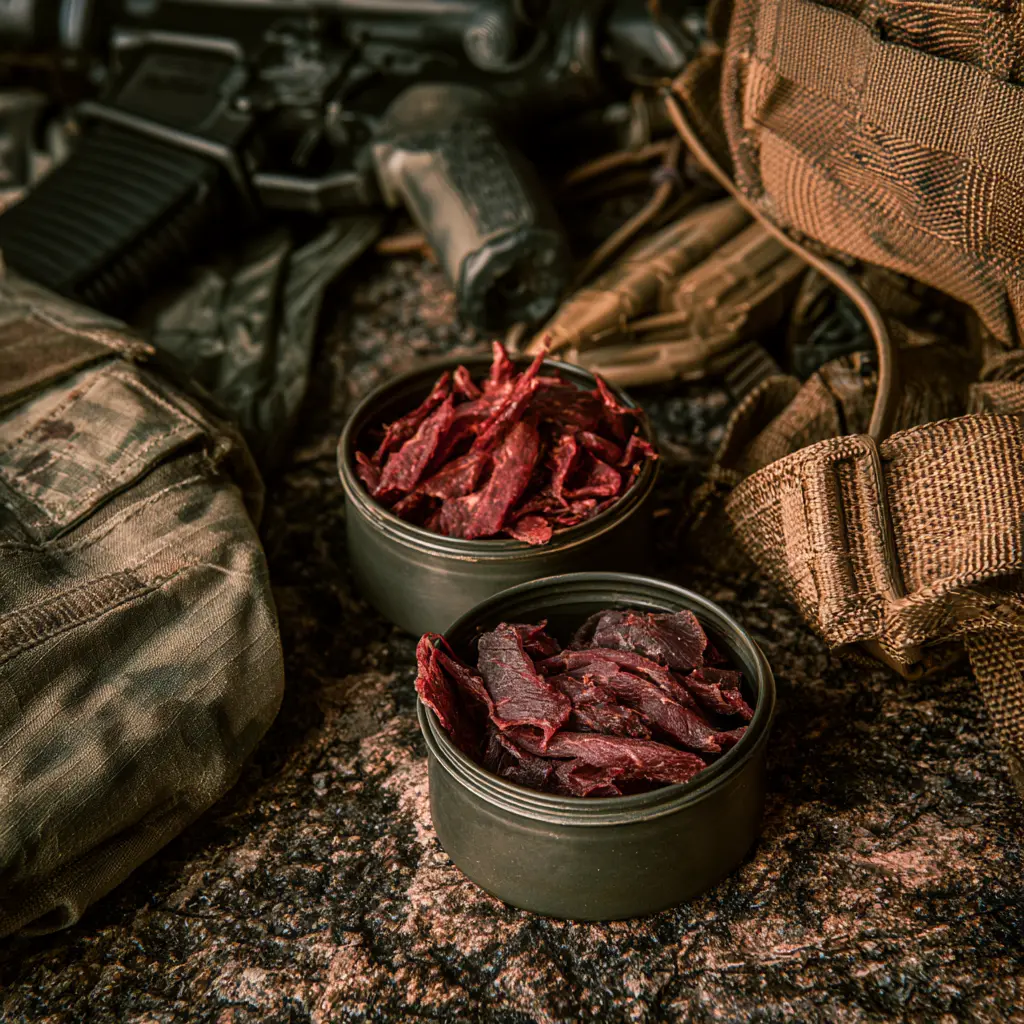
Field Benefit: A compact, high-calorie combo pack. Tallow adds dense fat calories to plain jerky, turning a light snack into a real meal replacement when you don’t have time to stop and cook.
Ingredients:
- 4 oz beef jerky (homemade, salt-only — no sugar-cured store brands)
- 2 tbsp solid beef tallow, portioned into a small sealed container
Directions:
- Slice lean beef thin against the grain and season with sea salt only.
- Dehydrate at 160°F (70°C) for 4–5 hours until fully dry and bends without breaking.
- Pack the dried jerky alongside a small sealed container of solid tallow.
- In the field, eat tallow directly off a knife edge or spoon alongside the jerky for a fast calorie boost — solid tallow doesn’t need refrigeration in moderate temperatures.
8. Blended Bone Broth Butter Shake (Field Version, Shelf-Stable)
Field Benefit: Fast liquid fuel when appetite is low from stress, heat, or fatigue. Uses shelf-stable packaged broth and solid fats that don’t need a cooler — just hot water from a canteen stove or field heater.
Ingredients:
- 1 packet shelf-stable beef bone broth concentrate (mixed with hot water per package instructions)
- 1 tbsp solid butter or ghee, portioned ahead in a small container
- ½ tsp sea salt
Directions:
- Heat water using a field stove or canteen cup.
- Dissolve the broth concentrate fully.
- Stir in butter or ghee and salt until melted and combined.
- Drink while hot. Works as a fast 200–300 kcal boost when solid food isn’t practical or appetite is low.
These field-ready meals also fit naturally into high-protein carnivore eating plans designed to support muscle maintenance, recovery, and sustained performance.
Field Storage: Keeping Carnivore Meals Safe Without Refrigeration
The main reason field meals fail isn’t taste — it’s moisture. Any food with water content left in it spoils fast in heat; the recipes above work because drying and rendering remove the moisture that bacteria need to grow.
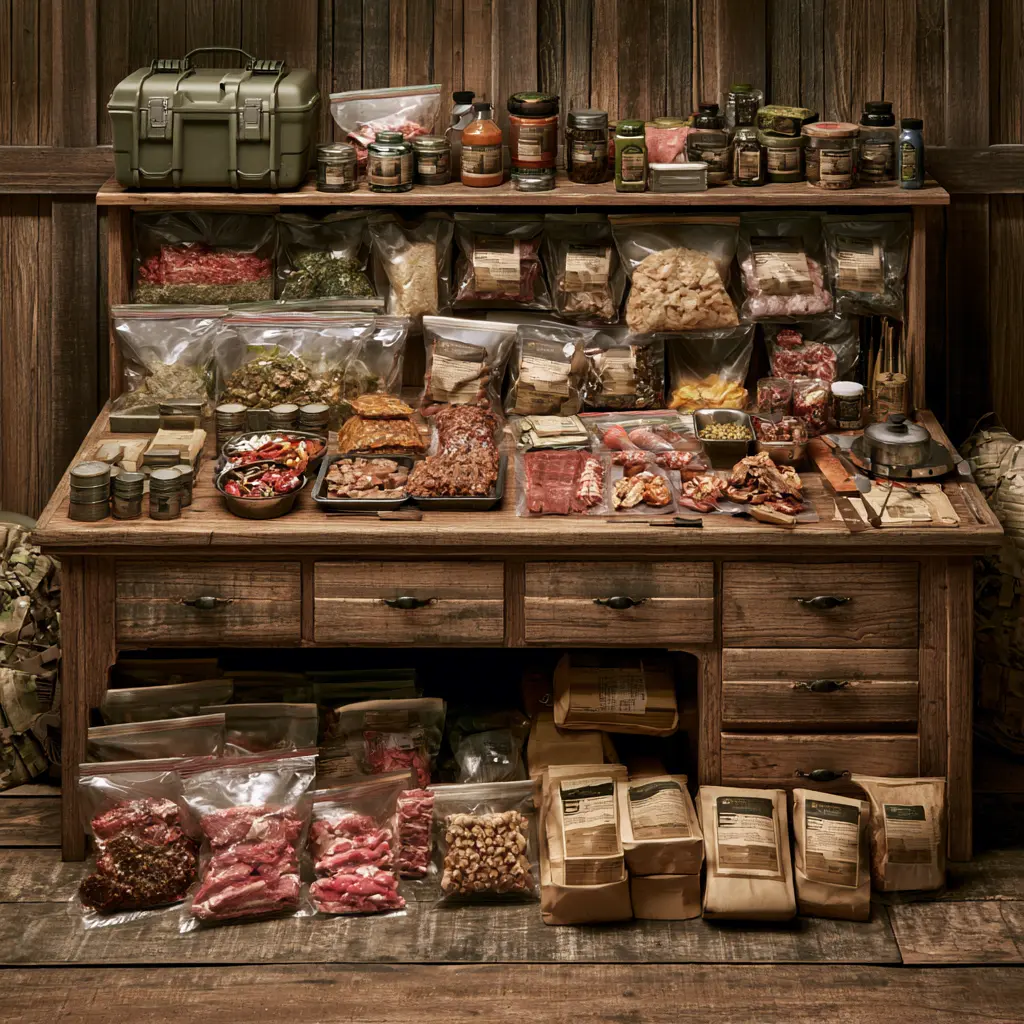
Dried meat (pemmican, jerky, trail crackers, crunch cereal) is shelf-stable specifically because the dehydration process pulls out nearly all the water. Store these in vacuum-sealed bags when possible, or at minimum in a hard, crush-resistant container — moisture exposure from humidity or condensation is what shortens shelf life, not heat alone. Solid fats like tallow and butter are naturally stable at room temperature for days and don’t need cooling unless conditions are extreme. Eggs and softer items (custards, puddings, flourless bread) have the shortest field life — plan those for the first 24–48 hours of any exercise and shift to dried, fat-based options after that.
If you regularly prepare food in advance, learning how to store and transport carnivore meal prep buns can help expand your field-ready meal options while maintaining freshness.
Meal Prep for Field Readiness
The real issue with most field meal prep isn’t the recipes — it’s batching the wrong things together. Mixing high-moisture and fully-dried foods in the same pack speeds up spoilage of everything, even the shelf-stable items.
Build your pack in layers: dried proteins (pemmican, jerky, trail crackers) go in one sealed bag or pouch, separated from anything with residual moisture. Batch-cook on a rest day — a single prep session can produce a full pemmican loaf, a tray of trail crackers, and a batch of crunch cereal in about 4 hours of mostly hands-off oven time. Pack tallow and butter in small, individually sealed containers rather than one large tub; once opened in the field, smaller portions stay cleaner and last longer. For multi-day exercises, rotate: eat the egg-based and softer items first while they’re freshest, then move to dried and fat-dense options as the days progress.
High Energy Options for Heavy Operational Days
When calorie demand spikes — long rucks, extended movements, cold-weather operations — fat density matters more than variety. The Beef Tallow and Jerky Pouch and the Carnivore Pemmican Bars are your highest calorie-per-ounce options, both built specifically for situations where you need maximum fuel in minimum pack weight. On cold-weather operations especially, increase fat intake; your body burns significantly more calories maintaining core temperature, and tallow-based foods replace that deficit faster than lean protein alone.

Common Errors ❌ That Drain Your Energy in the Field
The root problem most people run into when switching to carnivore field meals isn’t the food itself — it’s packing too lean and forgetting that sodium loss in the field is constant, not occasional.
I noticed this firsthand during an extended field exercise where I’d packed almost entirely lean jerky and egg whites, trying to keep the pack light. By day two, my energy had flattened completely — not gradually, but like someone cut the power mid-afternoon. I’d cut the fat to save weight and hadn’t packed extra salt at all. In my own experience, that combination is what actually drains you in the field, not the workload itself. Once I added tallow back into the rotation and started salting every meal heavily, the energy crashes stopped within a day.
Quick diagnostic fixes:
- Sudden energy crash mid-day: Eat a portion of tallow or a pemmican bar immediately and salt your next meal heavily. Reassess within 2–3 hours.
- Cramping during long movements: Almost always sodium, not fluid. Carry a separate small salt pouch and add it directly to water or broth.
- Constant hunger despite eating: You’re packing too lean. Swap lean jerky for pemmican or add tallow to your ration — fat is what keeps hunger suppressed for hours.
- Headaches in heat: Check both water and salt intake together. Drinking water without replacing sodium is a common field mistake that mimics dehydration symptoms.
Field Fuel Quick Guide
| Mission Need | Best Carnivore Option |
|---|---|
| Long Patrol Energy | Carnivore Pemmican Bars |
| Lightweight Field Snack | Crispy Egg Yolk Chips |
| High-Calorie Fuel | Beef Tallow and Jerky Pouch |
| Electrolyte Support | Bone Broth Butter Shake |
| Portable Protein | Carnivore Trail Crackers |
| Multi-Day Storage | High-Protein Crunch Cereal |

Carnivore Recipes for Military: 8 Field-Ready Meals That Survive Heat, Pressure, and Long Days
- Prep Time: 20 Minutes
- Cook Time: 6 Hours
- Total Time: 6 Hours 20 Minutes
- Yield: 8 Bars 1x
- Category: Snack
- Method: Dehydrated
- Cuisine: American
- Diet: Keto
Description
These Carnivore Pemmican Bars are a traditional high-energy survival food made from dried beef and rendered beef tallow. Designed for military personnel, outdoor adventurers, and anyone needing portable nutrition, they provide long-lasting energy, excellent shelf stability, and exceptional calorie density without carbohydrates.
Ingredients
8 oz lean beef (eye of round or similar), sliced very thin
4 oz beef tallow, melted
1 teaspoon sea salt
1/2 teaspoon smoked salt (optional)
Instructions
Dry the beef in a dehydrator at 160°F (70°C) until completely brittle.
Allow the dried beef to cool fully.
Grind the dried beef into a fine powder using a food processor.
Mix the beef powder with sea salt.
Slowly pour melted beef tallow into the mixture while stirring.
Combine until a thick, moldable paste forms.
Press the mixture firmly into a loaf pan or silicone mold.
Refrigerate for 2 hours until solid.
Slice into bars and store in an airtight container.
Notes
Proper dehydration is critical for long shelf life.
Store in a cool, dry location.
Vacuum sealing extends storage time significantly.
Ideal for military field exercises, hiking, hunting, and emergency preparedness.
Can be frozen for long-term storage.
Nutrition
- Serving Size: 1 Bar
- Calories: 310
- Sugar: 0 g
- Sodium: 290 mg
- Fat: 24 g
- Saturated Fat: 11 g
- Unsaturated Fat: 11 g
- Trans Fat: 0 g
- Carbohydrates: 0 g
- Fiber: 0 g
- Protein: 22 g
- Cholesterol: 38 mg
Frequently Asked Questions
How long do carnivore field rations last without refrigeration?
Properly dried items like pemmican, jerky, and trail crackers last 5–7 days at room temperature when sealed, and significantly longer if vacuum-sealed or kept dry. Solid fats like tallow and butter stay stable for days outside refrigeration in moderate conditions. Softer items like cooked eggs, custards, or fresh bread should be eaten within 24–48 hours unless refrigeration is available.
What’s the most calorie-dense carnivore option for a field pack?
Pemmican is the densest option by weight, combining dried meat powder with rendered tallow at roughly a 2:1 ratio — a small bar can carry several hundred calories in a compact, pocket-sized block. The Beef Tallow and Jerky Pouch is a close second, since solid tallow alone delivers concentrated fat calories without any added bulk.
Do these recipes work for cold-weather or high-altitude operations?
Yes, with one adjustment — increase the fat ratio across all your meals. Cold and altitude both raise calorie burn significantly, and fat is the most efficient way to close that gap without adding pack weight. Lean heavier on tallow, butter, and pemmican rather than lean jerky or egg whites during cold-weather exercises.
Welcome to the Looksyumy family