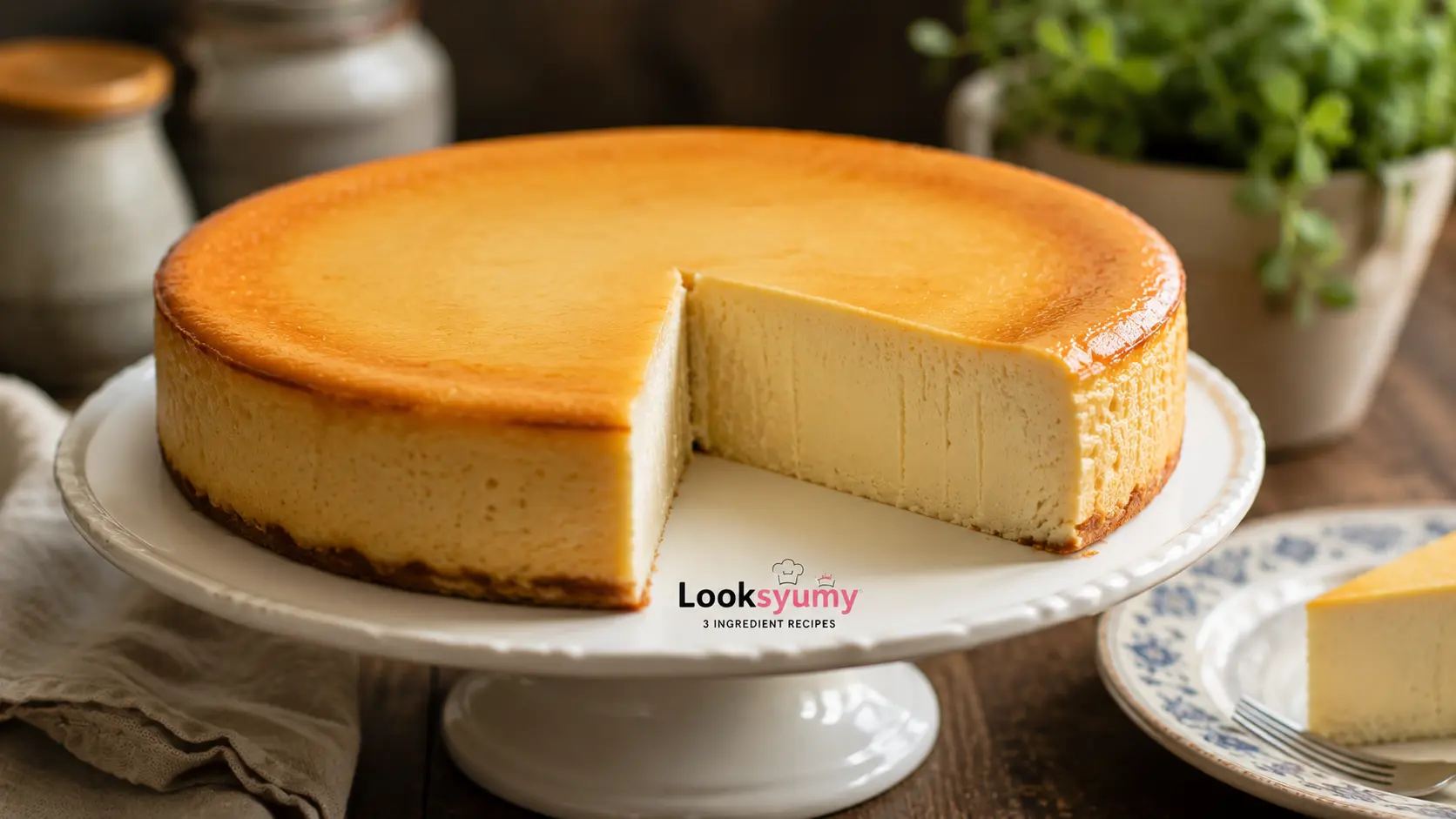
Stop guessing your bake time. This is the ratio-first method that turns four ingredients into a dense, custard-like slice every single time.
Most carnivore cheesecakes fail for the same three reasons: too many eggs, too much air, or too much heat too fast. You’ve probably had at least one of these happen — a cheesecake that looks perfect coming out of the oven, then sinks, cracks, or turns rubbery by the time it’s cold enough to slice.
This guide fixes that. It’s built around what I call the Looksyumy Cream-Custard Method, a ratio and technique system developed after enough kitchen failures to know exactly where things go wrong. You’ll get the master recipe, the science behind why it works, a full troubleshooting map, and the decision-making tools to adjust it for your own kitchen — different oven, different cream cheese brand, different pan.
If you’ve made carnivore cheesecake before and it didn’t turn out right, the problem almost certainly isn’t your oven. It’s the ratio, the mixing, or the cooling. All three are covered below.
How to make carnivore cheesecake that stays creamy and never turns dry, grainy, or cracked: Use a high cream-cheese-to-egg ratio (roughly 4:1 by weight), mix on low speed just until smooth to avoid trapping air, and bake low and slow (325°F / 163°C) in a water bath until the center still jiggles slightly. Then cool it gradually — oven door cracked open, then room temperature, then fridge — so the custard sets without seizing or splitting.
If you enjoy smooth baked desserts with fewer ingredients, carnivore custard uses many of the same baking principles while skipping the cream cheese entirely.
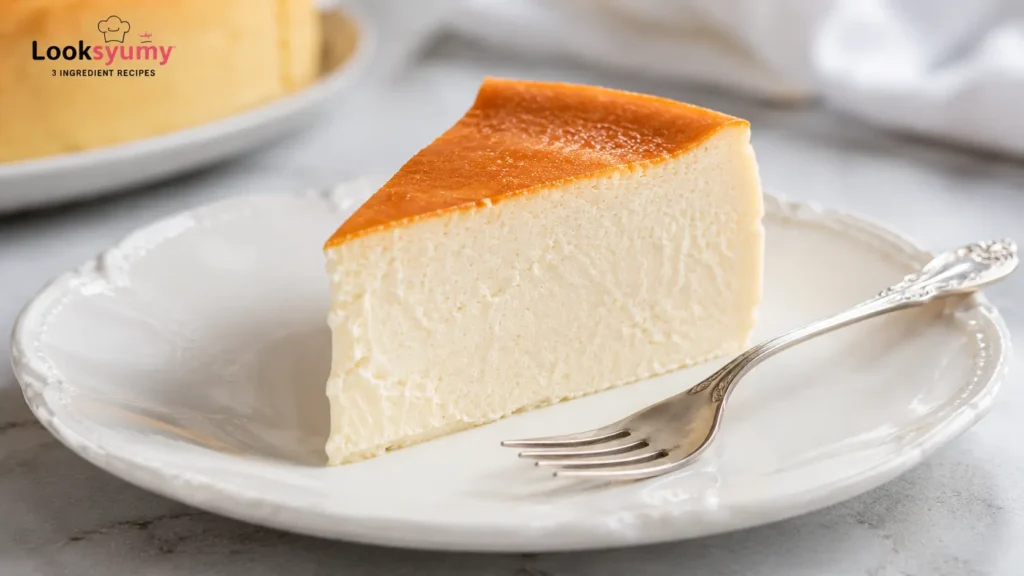
Table of Contents
Quick Recipe Table
| Detail | Info |
|---|---|
| Prep time | 15 minutes |
| Bake time | 55–65 minutes |
| Cooling time | 4–6 hours (plus overnight chill recommended) |
| Total time | ~6 hours, mostly hands-off |
| Yield | One 8-inch cheesecake, 8–10 slices |
| Method | Looksyumy Cream-Custard Method, water bath |
| Texture | Dense, smooth, custard-like |
| Skill level | Beginner-friendly with careful technique |
Master Recipe
Ingredients
- 32 oz (900g) full-fat cream cheese, softened to true room temperature
- 4 large eggs, room temperature
- 2 egg yolks, room temperature
- ½ cup (120ml) heavy cream
- ¼ cup (60g) sour cream
- Optional: pinch of salt to sharpen the flavor
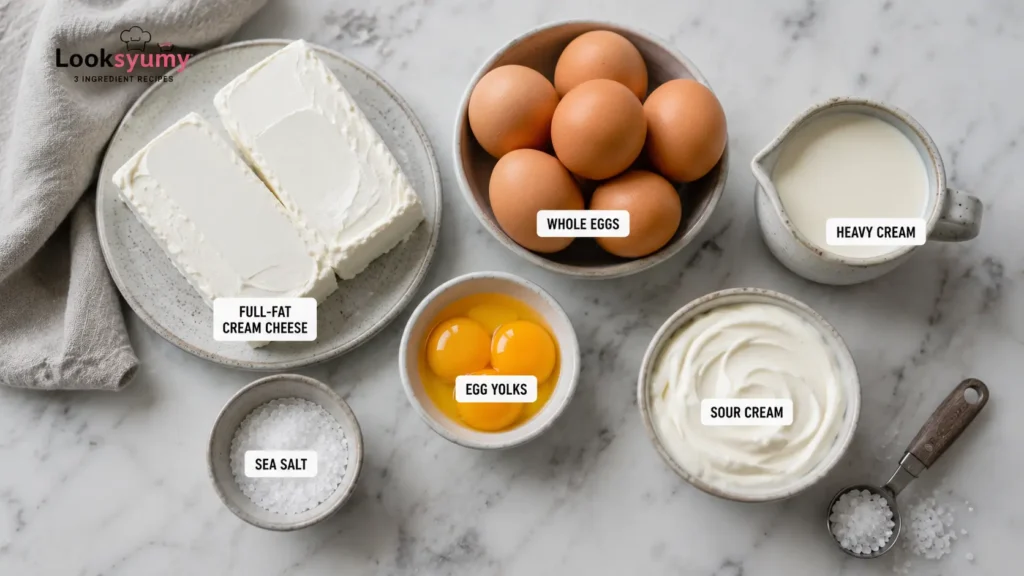
That’s it. No sweeteners, no flour, no crust in the traditional carnivore version — the structure comes entirely from cream cheese and eggs, which is exactly why the ratio matters so much more here than in a standard cheesecake recipe.
Step-by-Step Instructions
1. Bring everything to true room temperature. Not “left out for 20 minutes” — actually room temperature, about 1–2 hours on the counter. Cold cream cheese won’t blend smoothly no matter how long you mix it, and overmixing to compensate is the single biggest cause of grainy texture.
2. Beat the cream cheese alone first. Beat it on low-medium speed until completely smooth, about 2 minutes, scraping the bowl once. Do not add anything else yet. This step alone prevents most lump problems.
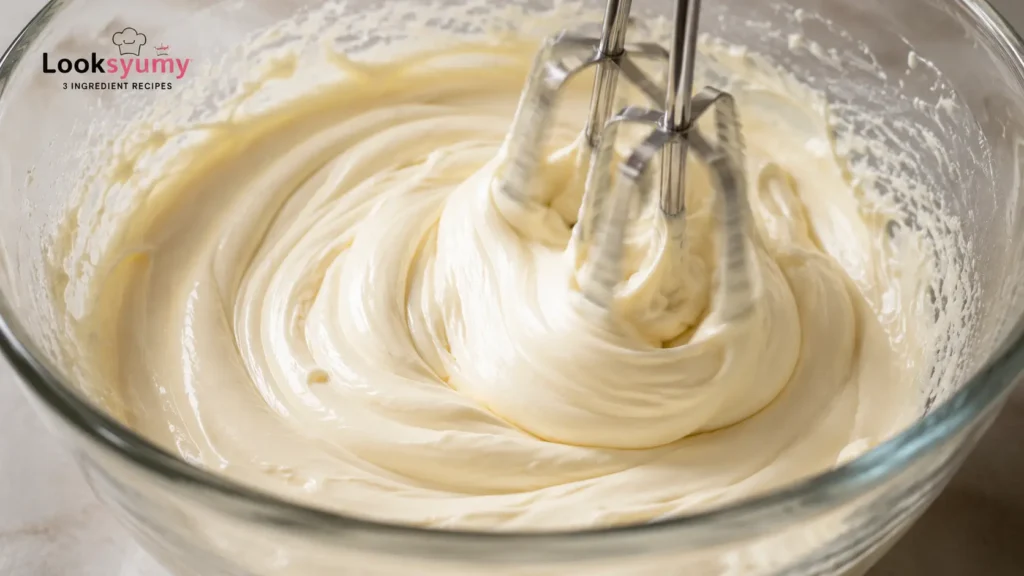
3. Add sour cream and heavy cream. Mix on low until just combined, maybe 30 seconds. You’re building a smooth fat base before eggs go anywhere near the bowl.
4. Add eggs one at a time, on low speed. Add each egg and mix only until it disappears into the batter — a few seconds each. Stop the mixer the moment you stop seeing streaks. This is the step most people rush, and it’s where most excess air gets whipped in.
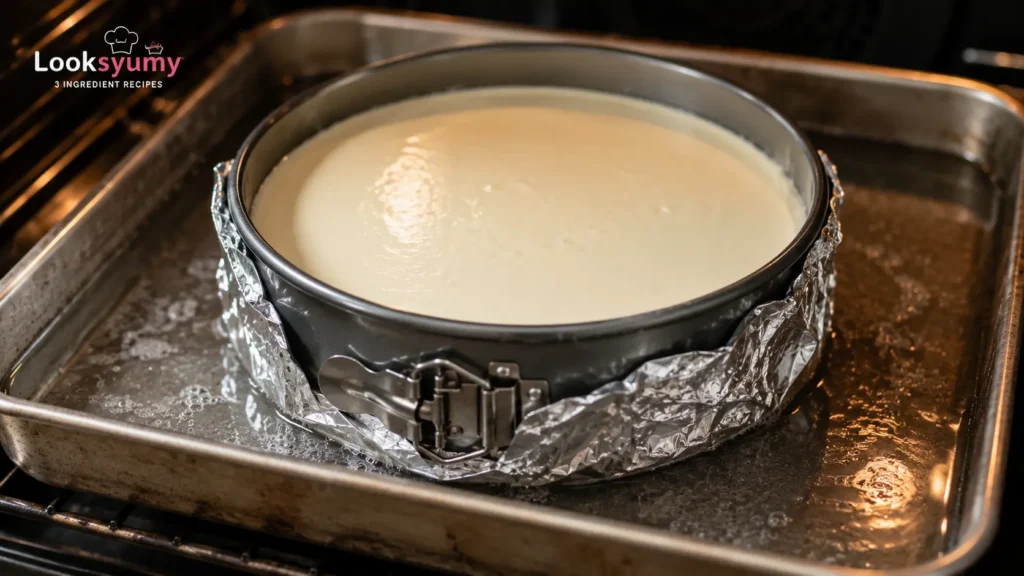
5. Pour into a prepared 8-inch springform pan. Wrap the outside of the pan tightly in foil (two layers) if you’re using a water bath, which is strongly recommended for this method.
6. Bake at 325°F (163°C) in a water bath for 55–65 minutes. The center should still jiggle like set gelatin — not liquid, not firm. It will look underdone. That’s correct.
7. Turn off the oven and crack the door. Leave the cheesecake inside for 1 hour. This slows the temperature drop and is the step most recipes skip entirely — skipping it is why so many cheesecakes crack right after baking.
8. Cool to room temperature, then refrigerate for at least 4 hours, ideally overnight. The custard continues to set during chilling. Slicing too early is the most common reason people think their cheesecake is “grainy” when it’s actually just underset.
The Looksyumy Cream-Custard Method: Why It Exists
Standard cheesecake logic doesn’t fully apply here. A traditional cheesecake has flour or a graham crust to buffer moisture and structure. Carnivore cheesecake has neither — it’s just dairy fat and egg protein holding themselves together. That means the ratio between cream cheese and egg has to do more work, and small mistakes show up much more obviously in the final texture.
The Cream-Custard Method exists to solve that. It treats the batter less like a “cake” and more like a baked custard — because structurally, that’s what it actually is. Baked custards (think crème brûlée or flan) are stabilized almost entirely by egg proteins setting slowly around fat and liquid. Push the temperature too high or too fast, and the proteins seize instead of setting gently, which squeezes out moisture and creates a grainy, weeping texture.
Here’s what that means practically: you use a higher cream-cheese-to-egg ratio than a typical recipe (about 4:1 by weight, versus closer to 2:1 or 3:1 in many standard recipes), you mix gently to avoid trapping air that expands and collapses in the oven, and you bake low and slow in a water bath so the custard sets evenly from edge to center instead of overcooking the outside before the middle catches up.
Use this method any time you’re making a crustless, high-fat, high-protein baked dessert — it applies just as well to carnivore custard or carnivore cheesecake bites, not just this cheesecake.
Decision Guide
Directly below every heading: the biggest question readers have, answered in two sentences.
Which cream cheese works best?
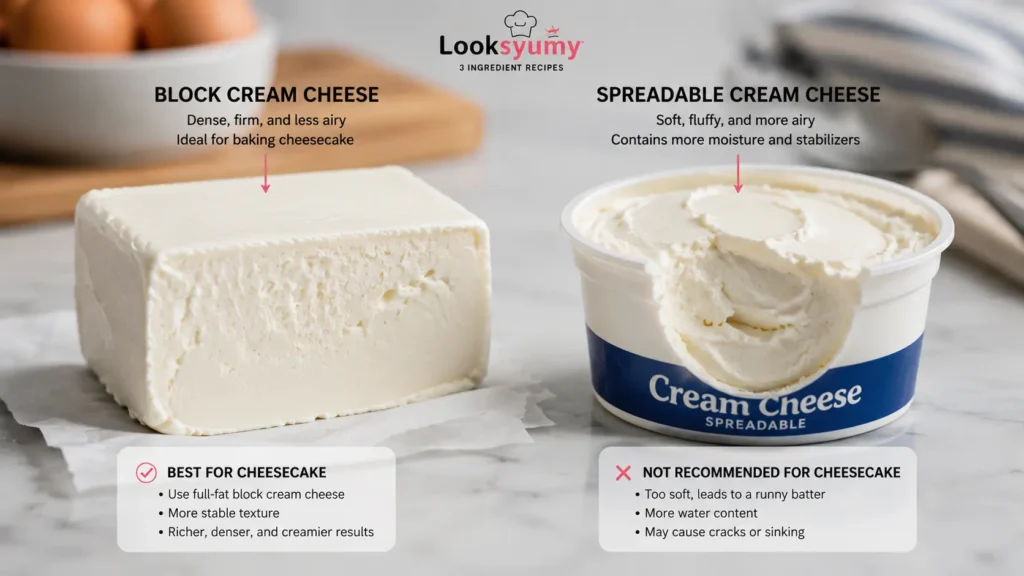
The primary factor is fat content and moisture, not brand loyalty. Full-fat block cream cheese (never the spreadable tub kind, which has added water and stabilizers) gives you a firmer, more predictable custard set.
| Cream Cheese Type | Result | Recommended? |
|---|---|---|
| Full-fat block, brick-style | Firm, dense, reliable structure | Yes — best default choice |
| Reduced-fat block | Softer set, slightly more liquid-prone | Use only if adjusting bake time down |
| Spreadable tub | Loose, may not fully set | Avoid |
| Store-brand full-fat block | Comparable to name brands if fat % matches | Yes, check the label |
Heavy cream vs. sour cream — which one, or both?
Heavy cream adds pure fat and smoothness with almost no tang, while sour cream adds a slight tartness and a touch of extra structure from its own proteins. The real issue is balance — heavy cream alone can taste flat, and sour cream alone can taste sharp, so the master recipe uses both in a 2:1 ratio for the best of each.
| Option | Texture Effect | Flavor Effect | Best For |
|---|---|---|---|
| Heavy cream only | Silkier, looser | Rich, mild | Ultra-smooth texture priority |
| Sour cream only | Slightly denser | Tangy, sharper | Traditional cheesecake flavor |
| Both (recommended) | Balanced, custard-smooth | Rounded, rich with mild tang | Most bakers, most occasions |
Whole eggs vs. extra yolks?
Whole eggs provide structure through both white and yolk protein, while yolks alone add fat and richness without adding much firmness. Here’s what most people miss — using only whole eggs can make the cheesecake slightly rubbery, while using only yolks can leave it too soft to slice cleanly, which is why the master recipe blends both.
Water bath vs. no water bath?
A water bath surrounds the pan with gentle, even heat, so the edges don’t overbake while the center is still setting. Skipping it is possible, but you’ll need to drop the oven temperature further and watch closely, because direct dry heat is the single biggest cause of surface cracking.
Bake today vs. make ahead?
This cheesecake genuinely improves after a full overnight chill, since the custard keeps firming and the flavor rounds out. If you’re serving guests, make it the day before — cutting it same-day almost always results in a softer, less clean slice.
Fresh cheesecake vs. frozen slices?
Fresh, chilled cheesecake has the smoothest possible texture, while frozen and thawed slices are slightly denser but still hold up well. Freezing individual slices (wrapped tightly, thawed overnight in the fridge) is the better option for meal prep since it avoids repeatedly opening a full cheesecake.
Best cheesecake approach for beginners vs. special occasions?
Beginners should stick to the plain master recipe exactly as written, since it has the fewest variables to go wrong. For special occasions, the same base recipe holds up well with topping variations — the technique doesn’t need to change, only the presentation.
Ingredient Science: Why Each One Matters
Cream cheese is the structural base of the whole dessert — it’s a fresh, high-fat, mildly cultured cheese, and its protein network is what firms up around the other ingredients as it bakes. Because there’s no flour to fall back on, cream cheese quality has a bigger impact here than in almost any other baked good. This isn’t just a texture opinion — the FDA’s legal standard of identity for cream cheese requires a minimum of 33% milkfat, which is exactly why block-style cream cheese behaves so differently in the oven than lower-fat tub spreads that dip below that threshold.
Heavy cream is high-fat dairy (36%+ fat) that thins the batter slightly and adds richness through fat emulsification — the process where fat droplets get evenly suspended through the mixture instead of separating out. This is part of what gives the final texture that smooth, almost mousse-like quality rather than a dense block.
Sour cream is cultured cream with a lower fat percentage than heavy cream but its own small amount of protein, which adds a bit of extra body along with tang. It’s a small ingredient with an outsized effect on flavor balance.
Egg yolks are almost pure fat and emulsifiers — they carry flavor and smoothness without contributing much toughness. Whole eggs add both yolk fat and white protein, and that white protein is what actually sets and holds the custard together as it bakes.
Protein coagulation is the core science of this whole dessert: as the batter heats, egg proteins unfold and link together, trapping fat and moisture in a semi-solid network. Done slowly, this creates a smooth custard. Done too fast (high heat), the proteins over-tighten, squeeze out moisture, and create that grainy, watery-pool texture people associate with a “failed” cheesecake. According to the American Egg Board’s research on egg coagulation, egg white proteins begin setting around 144–149°F while yolk proteins set slightly higher, at 149–158°F — a narrow window that explains why a 325°F oven with a water bath gives you far more control than baking directly at a higher temperature.
Residual heat and carryover cooking refer to the fact that the cheesecake keeps cooking after you pull it from the oven, from heat still stored in the pan and batter. This is exactly why you pull it while the center still jiggles — it will continue firming up as it cools, and if you wait for it to look fully set in the oven, it will be overcooked by the time it’s cold.
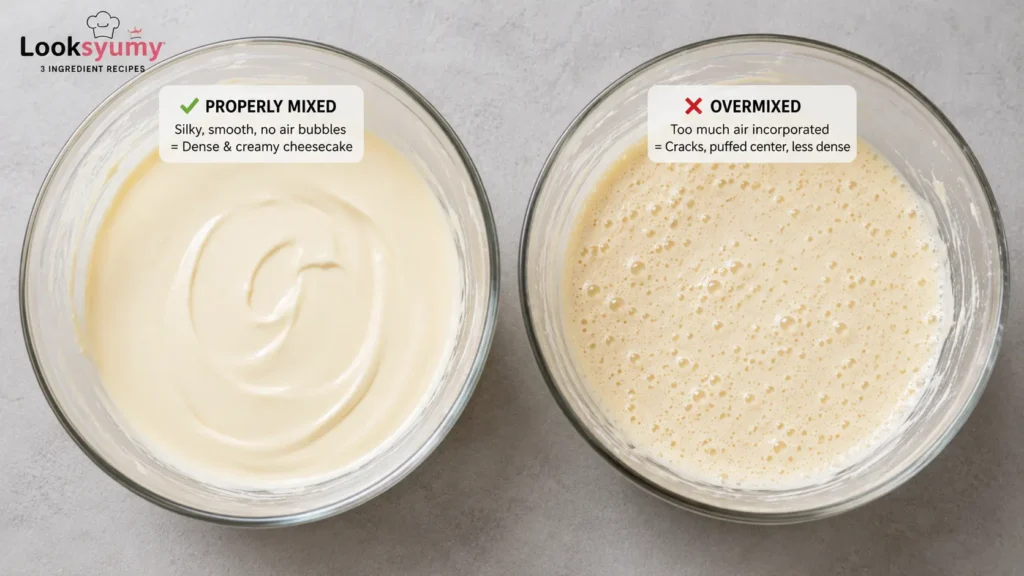
Overmixing traps air bubbles into the batter. Those bubbles expand in the oven’s heat and then collapse as the cheesecake cools, which is one of the most common causes of both a sunken center and a cracked top.
Educational Comparison Tables
Problem → Cause → Fix
| Problem | Cause | Fix |
|---|---|---|
| Cracked top | Overmixing (trapped air) or oven too hot | Mix on low, use water bath, cool gradually with oven door cracked |
| Grainy texture | Cold ingredients or overbaking | Bring everything to true room temp; pull at slight jiggle |
| Rubbery texture | Too many whole eggs relative to cream cheese | Use the 4:1 cream cheese-to-egg ratio, add extra yolks instead of whole eggs |
| Watery/weeping cheesecake | Baked too hot or too long | Lower oven temp, use water bath, check doneness earlier |
| Sunken center | Air collapse from overmixing, or underbaking | Mix minimally; ensure center is set (jiggle, not liquid) before pulling |
| Soggy or wet crust area (no-crust version: pan bottom) | Water bath leak through foil | Double-wrap foil, or use a slow cooker bag around the pan |
Texture Goal → Adjustment
| You Want | Adjust This |
|---|---|
| Denser, firmer slice | Slightly reduce cream, add one extra whole egg |
| Lighter, mousse-like texture | Increase heavy cream slightly, use yolks over whole eggs |
| More tang | Increase sour cream ratio |
| Richer, milder flavor | Increase heavy cream, reduce sour cream |
Bake Temperature → Result
| Oven Temp | Result |
|---|---|
| 300°F (149°C) | Very gentle set, longer bake, lowest crack risk |
| 325°F (163°C) | Recommended — balanced bake time and smooth set |
| 350°F (177°C) | Faster bake but higher risk of cracking and graininess |
| 375°F+ (191°C+) | Not recommended for this method — too fast for even protein coagulation |
Troubleshooting
The real issue with most carnivore cheesecake failures is timing, not the recipe itself — pulling it too early or too late, cooling it too fast, or not letting ingredients come to temperature. Here’s what to check first for the most common problems.
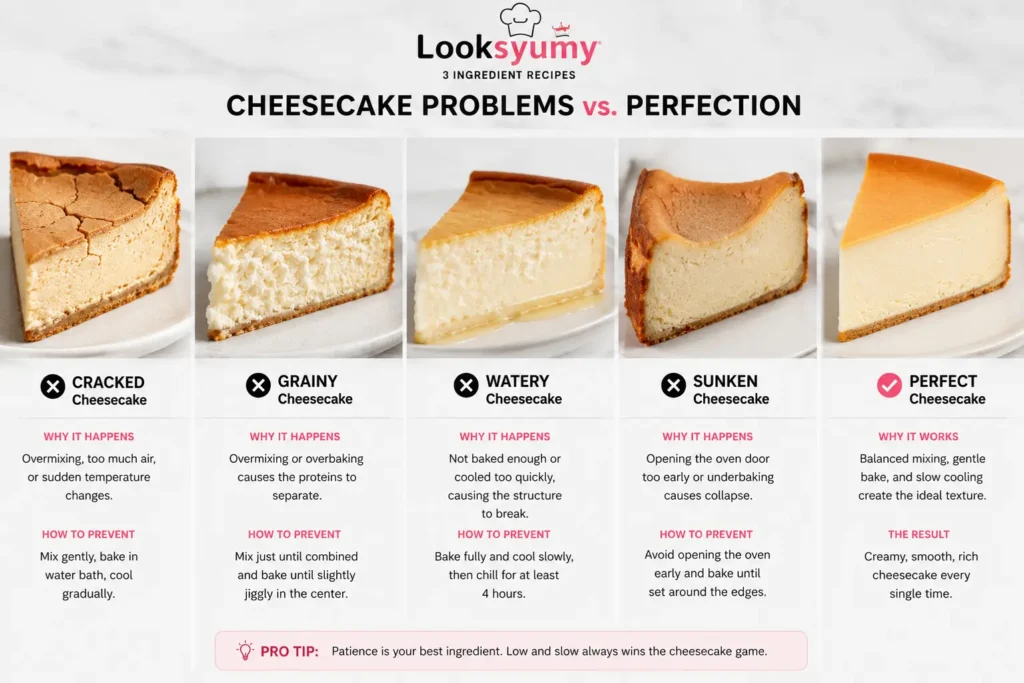
If your cheesecake cracked, it happened before it ever hit the oven — the mixing stage introduced air that had nowhere to go once it started expanding under heat. Next time, watch your mixer speed, not just your oven temperature.
If the texture came out grainy after chilling overnight, go back to your ingredient temperatures. This is the most overlooked variable, and it affects graininess more than almost anything else in the recipe.
If the center never fully set even after overnight chilling, it likely needed a few more minutes in the oven — a slight jiggle at the very center is correct, but if the whole middle third is loose, it wasn’t quite done.
Original Kitchen Observation
In my early kitchen trials with carnivore cheesecake, I used a standard 2:1 cream cheese-to-egg ratio, closer to what you’d see in a conventional cheesecake recipe. It cracked almost every time, and the texture underneath the crack was noticeably tighter and drier than the rest of the slice.
The issue was too much egg protein relative to fat. Without flour or a crust to buffer the structure, that extra egg made the batter set too firmly and too fast, and the surface tightened before the center caught up — which is exactly the mechanical cause of cracking.
Switching to a 4:1 ratio, weighted toward extra yolks rather than more whole eggs, fixed it almost immediately. The yolks added richness and smoothness without adding the structural tightness that was causing the problem. That adjustment became the foundation of the Cream-Custard Method used in this recipe.
Carnivore Desserts Hub
This cheesecake sits inside a bigger picture of carnivore baking, and understanding how it connects to other desserts makes you better at adjusting any of them.
Carnivore Custard is essentially this cheesecake without the cream cheese — same protein-coagulation science, same low-and-slow logic, just a different fat-to-protein starting point. If you understand why this cheesecake cracks, you already understand why custard curdles.
Carnivore Cheesecake Bites use the exact same batter and ratio, just baked in a muffin tin for a shorter time — useful for meal prep portions without needing to slice a whole cheesecake.
Carnivore Ice Cream and Carnivore Mousse both rely on the same dairy-fat-and-egg base, but instead of setting through heat, they set through cold and air incorporation — which is worth knowing, since it’s the opposite mixing philosophy from this cheesecake (there, you want air; here, you don’t).
For a lighter dessert that relies on chilled aeration instead of baked custard, try our carnivore mousse recipe.
Carnivore Cream Puffs and Carnivore Bread pull from the egg-structure side of this same science rather than the fat side, which is part of why they behave so differently in the oven despite sharing ingredients.
For deeper ingredient behavior, our Dessert Science and Ingredient Guides sections break down cream cheese, egg protein, and dairy fat individually. Our Troubleshooting Guides cover cross-recipe issues like cracking and graininess in more depth than fits into any single recipe post.
If you’re looking for a frozen dessert instead of a baked one, carnivore ice cream uses many of the same dairy ingredients while setting through freezing rather than baking.
- A cheesecake cracks long before it enters the oven — the mistake usually happens while mixing.
- Without flour to buffer it, carnivore cheesecake is really just baked custard wearing a cheesecake’s name.
- Graininess is rarely a bad recipe — it’s usually a cold bowl.
- The jiggle in the center isn’t underbaking. It’s the sign you pulled it at the right moment.
- More egg isn’t more structure — past a certain ratio, it’s just more risk of cracking.
Description
A rich, creamy carnivore cheesecake made with cream cheese, eggs, heavy cream, and sour cream. The Looksyumy Cream-Custard Method creates a smooth, custard-like texture that stays dense, silky, and crack-free without crusts, sweeteners, or plant ingredients.
Ingredients
- 32 oz (900 g) full-fat cream cheese, softened
- 4 large eggs, room temperature
- 2 large egg yolks, room temperature
- 1/2 cup (120 ml) heavy cream
- 1/4 cup (60 g) sour cream
- Pinch of fine sea salt (optional)
Instructions
- Preheat the oven to 325°F (163°C) and prepare an 8-inch springform pan. Wrap the outside with two layers of foil for a water bath.
- Beat the softened cream cheese on low speed until completely smooth.
- Mix in the sour cream and heavy cream until fully combined.
- Add the eggs one at a time on low speed, then add the egg yolks. Mix only until incorporated.
- Pour the batter into the prepared pan and place it inside a larger roasting pan filled with hot water.
- Bake for 55–65 minutes, until the edges are set and the center still jiggles slightly.
- Turn off the oven, crack the door open, and let the cheesecake rest inside for 1 hour.
- Cool completely at room temperature, then refrigerate for at least 4 hours, preferably overnight, before slicing.
Notes
- Always use room-temperature ingredients for a perfectly smooth batter.
- Avoid overmixing after adding the eggs to reduce trapped air.
- A water bath produces the smoothest texture and greatly reduces cracking.
- Chill overnight for the cleanest slices and best flavor.
- Store refrigerated for up to 5 days or freeze individual slices for up to 2 months.
Nutrition
- Serving Size: 1 Slice (1/8 cheesecake)
- Calories: 465 kcal
- Sugar: 2 g
- Sodium: 310 mg
- Fat: 43 g
- Saturated Fat: 26 g
- Unsaturated Fat: 14 g
- Trans Fat: 0 g
- Carbohydrates: 3 g
- Fiber: 0 g
- Protein: 12 g
- Cholesterol: 225 mg
FAQ
Why did my carnivore cheesecake turn out rubbery?
Too many whole eggs relative to cream cheese is the most common cause. Shift toward the 4:1 ratio used in this recipe, favoring extra yolks over extra whole eggs.
Can I make carnivore cheesecake without a water bath?
Yes, but you’ll need to lower the oven temperature further and watch it closely, since dry heat increases the risk of a cracked, uneven bake.
How do I know when it’s actually done?
The outer two-thirds should look set, while the very center still jiggles slightly, like firm gelatin. It will continue to set as it cools.
Why does my cheesecake taste fine but look grainy?
This is almost always a temperature issue — either the ingredients were too cold going in, or the cheesecake was overbaked and the proteins seized.
Can I freeze carnivore cheesecake?
Yes. Freeze individual slices wrapped tightly, and thaw them in the fridge overnight rather than at room temperature for the best texture.
Do I need a crust for carnivore cheesecake?
No — the traditional carnivore version skips the crust entirely, relying on the cream cheese and egg structure alone.
Conclusion
Carnivore cheesecake isn’t a harder recipe than a normal cheesecake — it’s just a less forgiving one, because there’s no flour or crust to cover for small mistakes. Once you understand it as a custard rather than a cake, the ratio, the low heat, and the slow cooling all make sense as parts of the same idea: give the egg protein time to set gently, and the texture takes care of itself.
Follow the Cream-Custard Method above, pull it while it still jiggles, and let it chill overnight before you judge it. That’s really the whole method.