👉 Download the Free Looksyumy Animal-Based Fuel Log & Daily Macro Tracker — Print It Before You Cook
Athletes using carnivore recipes sustain training output because animal foods deliver complete amino acids and bioavailable fats without the insulin spikes that tank mid-session energy. When you strip out plant fillers and eat meat, eggs, and animal fats strategically, recovery times drop because your body isn’t fighting inflammation from seed oils or lectins. This is the most direct fueling method available — no tracking apps, no complicated ratios, just real food timed around real training.
Why High-Output Athletes Turn to the Carnivore Diet
The primary factor behind athletes switching to carnivore isn’t ideology — it’s performance data from their own workouts. When you remove processed carbs and plant-based powders, most athletes report fewer energy crashes between sessions and faster bounce-back from heavy training days.
The Looksyumy Performance Plan is built on one simple idea: your body runs cleaner on food it can fully digest and use. Beef, eggs, organs, butter, and bone broth give you dense calories, electrolytes, creatine, and zinc in forms your body absorbs — thanks to bioavailable protein from animal sources — without much effort. You’re not fighting absorption barriers. You’re just fueling. Athletes who’ve run the Looksyumy Performance Plan for 30+ days consistently report that their endurance holds longer in later sets and their joints feel less beat up between training blocks — two things no pre-workout powder ever reliably delivered.
Top 7 Trending Carnivore Recipes for Athletes (Ingredients & Step-by-Step)
Every recipe below is made 100% without dextrose, sweet potato starches, maltodextrin, pea protein isolates, xanthan gum, or oat flours. What you see is what’s in it.
1. Carnivore Power Pancakes
Performance Benefit: High collagen content supports joint repair; eggs deliver a fast amino acid hit before or after lifting.

Ingredients:
- 3 large eggs
- 2 oz full-fat cream cheese, softened
- 1 tbsp grass-fed butter (for the pan)
- 1 scoop (approx. 10g) unflavored bovine collagen powderBeef, eggs, organs, butter, and bone broth give you dense calories, electrolytes, creatine, and zinc in forms your body absorbs without much effort.
- Pinch of sea salt
Directions:
- Blend eggs, cream cheese, collagen, and salt in a small blender or with a hand mixer until smooth and slightly frothy — about 30 seconds.
- Heat a skillet over medium-low heat. Add butter and let it melt and coat the pan.
- Pour roughly ¼ cup of batter per pancake. Cook until the edges look set and the top loses its raw shine, about 2–3 minutes.
- Flip gently and cook 1–2 minutes more.
- Stack and eat immediately. Makes about 4 small pancakes.
2. High-Protein Carnivore Crunch Cereal
Performance Benefit: High sodium, fat, and protein in one bowl — ideal as a recovery snack or a fast morning meal before a light training day.
Ingredients:
- 6 oz 80/20 ground beef
- ½ tsp sea salt
- ¼ tsp black pepper
- ½ cup cold bone broth (or cold raw whole milk if tolerated)
Directions:
- Brown ground beef in a skillet over medium heat, breaking it into very small crumbles. Season with salt and pepper.
- Spread cooked crumbles on a parchment-lined baking sheet in a single layer.
- Bake at 275°F (135°C) for 45–60 minutes, stirring once, until the pieces are dry and slightly crispy but not hard.
- Let cool completely.
- Pour cold bone broth (or milk) into a bowl and add the beef crumbles like cereal. Eat immediately before the crumbles soften.
3. The Waffle Iron Bacon Omelet
Performance Benefit: Crispy fat-to-protein ratio in under 10 minutes — a practical pre-training meal when time is short.
Ingredients:
- 4 strips bacon, cut in half
- 3 large eggs
- 1 oz shredded beef or bison (optional)
- Sea salt to taste
Directions:
- Preheat your waffle iron and lightly grease with bacon fat or butter.
- Lay 4 bacon half-strips across the bottom grid of the iron.
- Whisk eggs with salt and pour over the bacon strips.
- Add shredded beef on top if using.
- Close the iron and cook 4–5 minutes until the egg is fully set and the edges are crispy.
- Open carefully, slice into sections, and serve immediately.
4. Pure Carnivore Pizza
Performance Benefit: Satisfies texture cravings while keeping fat and protein high — useful for athletes who struggle to hit their calorie targets on rest days.
Ingredients (crust):
- 2 large chicken breasts, ground or minced fine
- 2 eggs
- ½ tsp sea salt
Ingredients (toppings):
- 3 oz ground beef, pre-cooked
- 4 strips bacon, cooked and crumbled
- 2 oz beef liver pâté (spread thin, optional but nutrient-dense)
- Sea salt and beef tallow for greasing
Directions:
- Combine ground chicken, eggs, and salt. Mix until it forms a dense paste.
- Grease a round baking dish or cast iron with tallow.
- Press the chicken mixture into a flat, even round crust about ¼ inch thick.
- Bake at 400°F (200°C) for 15 minutes until set and slightly golden.
- Remove, add toppings, and return to the oven for 8–10 more minutes.
- Slice and eat like a normal pizza.
5. Fluffy Egg White Bread Loaf
Performance Benefit: Low fat, high protein — useful for athletes who need a leaner option between higher-fat meals without resorting to plant-based bread alternatives.
Ingredients:
- 6 egg whites
- 2 egg yolks
- ½ tsp cream of tartar (animal-safe; no plant gums)
- Pinch of sea salt
- Butter for greasing
Directions:
- Separate eggs. Beat whites with cream of tartar and salt until stiff peaks form.
- Gently fold in egg yolks without deflating the whites.
- Pour into a buttered loaf pan.
- Bake at 300°F (150°C) for 40–45 minutes until set and lightly golden on top.
- Cool 10 minutes before slicing. Store in the fridge and use within 3 days.
6. Crispy Egg Yolk Performance Chips
Performance Benefit: Dense in fat-soluble vitamins (A, D, K2) and choline — a rare snack format that actually supports hormone production and brain function during hard training blocks.
Ingredients:
- 6 egg yolks
- Sea salt
- Optional: smoked salt for flavor
Directions:
- Separate yolks carefully, keeping them intact.
- Place yolks on a parchment-lined baking sheet, spacing them apart.
- Sprinkle each with a pinch of salt.
- Bake at 200°F (95°C) for 2–3 hours until the yolks are fully dried out and chip-like in texture.
- Cool on the sheet. Store in an airtight container for up to 5 days.
7. Blended Bone Broth Butter Shake
Performance Benefit: Fast-absorbing fats and electrolytes in liquid form — ideal immediately post-workout when solid food feels too heavy.
Ingredients:
- 1 cup hot beef bone broth (homemade or quality packaged)
- 1 tbsp grass-fed butter
- 1 tbsp beef tallow or ghee
- ½ tsp sea salt
- Optional: pinch of black pepper or dried thyme
Directions:
- Heat bone broth until very hot but not boiling.
- Pour into a blender with butter, tallow, and salt.
- Blend on high for 20–30 seconds until frothy and emulsified.
- Pour into a mug and drink immediately while hot.
Pre-Workout Fueling: What to Eat and When

The real issue most athletes face isn’t calorie quantity — it’s timing. Eating a heavy fat-and-protein meal 30 minutes before training will slow you down because digestion competes with output. Time your fats and proteins correctly and your energy stays high the whole session.
For training sessions that start in under 60 minutes, keep it simple and light: a small portion of ground beef (3–4 oz), a couple of hard-boiled eggs, or a cup of the Blended Bone Broth Butter Shake. These digest quickly, give you usable energy, and won’t sit in your stomach like a brick.
For longer sessions or heavy lifting days starting in 90+ minutes, a full carnivore meal is appropriate: steak, eggs, butter, and salt. The fat slows digestion enough to provide sustained energy through a longer training window. Avoid going into any hard session completely fasted until you know how your body responds — some athletes do fine; others find their explosive power drops sharply after 45 minutes.
Post-Workout Recovery Meals for Fast Muscle Repair
The main reason athletes struggle to recover on a meat-based diet isn’t protein — they’re almost certainly getting enough. The real gap is usually sodium and fat, which drop sharply after intense sweating and muscle breakdown.
Within 30–60 minutes of finishing a training session, target this combination:
- Protein: 6–8 oz of ground beef, ribeye, or salmon
- Fat: 1–2 tbsp butter or tallow cooked in with the meat
- Electrolytes: Liberal sea salt on the meal, and optionally a cup of bone broth alongside
Athletes who consistently prioritize protein intake tend to recover faster and maintain muscle mass more effectively during demanding training blocks. For a deeper breakdown of optimal protein targets, meal structures, and recovery-focused strategies, explore our High-Protein Carnivore guide.
If your session lasted more than 90 minutes or involved heavy sweating, add an extra pinch of salt to your broth. Your muscles need sodium to contract properly, and most athletes replace water but forget the minerals that went with it.
Advanced Recovery: Staying Lean and Strong Without Carbs
Why this happens — athletes on meat-only approaches sometimes see their body composition plateau or their strength stall — is almost always a fat intake issue, not a missing carbohydrate issue.
When you remove carbs entirely, fat becomes your primary fuel source. If you under-eat fat while training hard, your body has nowhere to pull energy from and will eventually start breaking down muscle. The fix is straightforward: eat fattier cuts, add butter or tallow to every meal, and don’t try to stay lean by eating only chicken breast.
All recovery foods in this approach are built without dextrose, sweet potato starches, maltodextrin, pea protein isolates, xanthan gum, or oat flours. These ingredients are common in conventional recovery products because they’re cheap fillers and fast-spiking carb sources. You don’t need them. Bone broth, organ meats, egg yolks, and ruminant fat do everything those products claim to do — without the ingredient list you need a chemistry degree to read.
The leanest effective carnivore recovery approach: ribeye or ground beef (80/20) + salted bone broth + one or two eggs. That’s it. Simple, repeatable, effective.
Critical Cooking and Fueling Mistakes That Drain Your Energy
The root problem for most athletes new to carnivore eating isn’t the diet itself — it’s how they cook and portion their food during the first few weeks when their body is still adapting.
I learned this the hard way during a heavy squat training block. I noticed my explosive energy was gone by the third set — not gradually, but sharply, like someone cut the power. I’d been eating lean chicken breast and egg whites for three days, trying to “eat clean” while dropping body fat. No butter, no red meat, minimal salt. In my own training, that experiment lasted exactly four days before my performance fell off a cliff. The mistake was obvious in retrospect: I’d gone too lean and cut my sodium at the same time, which is a double hit your body cannot absorb during hard training weeks.
Quick diagnostic fixes:
- Energy crashes mid-session: Add a tablespoon of butter to your pre-workout meal and add salt. Do this for 3 days before assuming anything else.
- Muscle cramps: You’re low on sodium, not magnesium. Salt your food aggressively and drink salted bone broth post-training.
- Constant hunger: You’re eating too lean. Switch to 80/20 ground beef or ribeye. Fat is your satiety signal on this approach.
- Flat, weak lifts: Add organ meats twice a week. Liver in particular contains zinc, B12, and copper that directly support testosterone and red blood cell production.
Complete 1-Day Athlete Meal Plan {#meal-plan}
A clean day of carnivore eating for a training day — real portions, real timing:
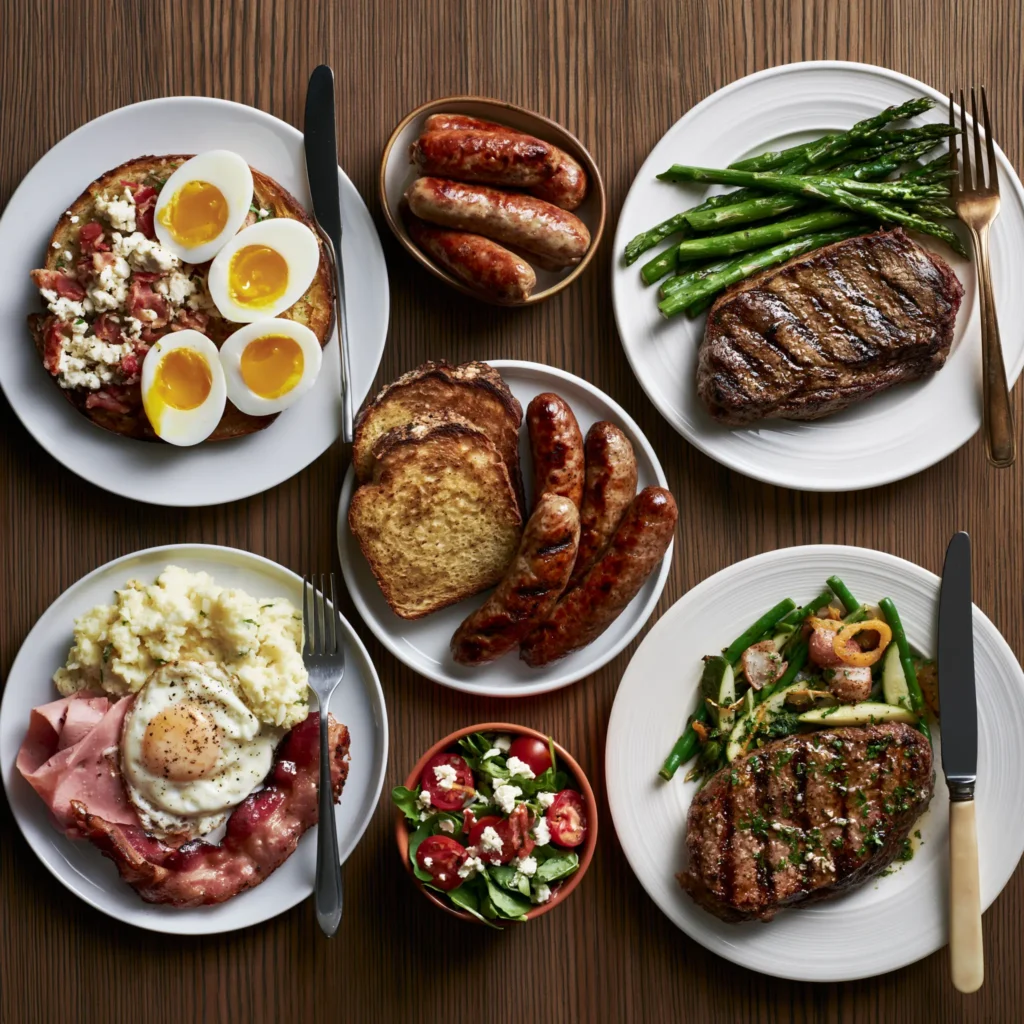
Breakfast (7:00 AM)
- 3-egg Carnivore Power Pancakes with butter
- 2 strips bacon
- Black coffee or plain water with a pinch of sea salt
Pre-Workout (10:30 AM — training at 11:30)
- 4 oz ground beef, pan-cooked with sea salt and tallow
- 1 hard-boiled egg
- Optional: half a cup of warm bone broth
Post-Workout (1:00 PM)
- 8 oz ribeye or 80/20 ground beef patty, cooked in butter
- Generous salt
- 1 cup of Blended Bone Broth Butter Shake (see recipe above)
If you need portable recovery meals that are easy to prepare in advance, these 3-ingredient carnivore burger meals provide a practical high-protein option for meal prep, post-workout recovery, and busy training days.
Dinner (6:30 PM)
- 6–8 oz salmon or lamb chops
- 2 eggs cooked in tallow on the side
- Optional: 2 oz beef liver sautéed in butter if you haven’t had organ meat this week
- Salt and water
Evening snack (if needed)
- Crispy Egg Yolk Performance Chips
- Small cup of cold bone broth
| Goal | Recommended Carnivore Food |
|---|---|
| Fast Pre-Workout Energy | Bone Broth Butter Shake |
| Muscle Recovery After Training | Ground Beef and Eggs |
| Sustained Energy for Long Sessions | Ribeye Steak with Butter |
| Portable High-Fat Snack | Crispy Egg Yolk Performance Chips |
| Joint and Connective Tissue Support | Carnivore Power Pancakes with Collagen |
| Daily Electrolyte Replenishment | Salted Beef Bone Broth |
Looking for sport-specific meal ideas? Explore our guides for runners, strength athletes, and other performance-focused carnivore meal plans.
Print
Description
These Carnivore Power Pancakes are a simple, high-protein meal designed for athletes who need steady energy, rapid recovery, and nutrient-dense fuel without relying on carbohydrates. Made with eggs, cream cheese, and collagen, they deliver complete amino acids and healthy fats in an easy-to-digest format that works before or after training.
Ingredients
3 large eggs
2 oz full-fat cream cheese, softened
1 tablespoon grass-fed butter (for cooking)
1 scoop (10 g) unflavored bovine collagen powder
Pinch of sea salt
Instructions
Add the eggs, cream cheese, collagen powder, and sea salt to a blender.
Blend for 30 seconds until smooth and slightly frothy.
Heat a skillet over medium-low heat and melt the butter.
Pour about ¼ cup of batter for each pancake.
Cook for 2–3 minutes until the edges are set.
Flip carefully and cook for another 1–2 minutes.
Serve immediately while warm.
Notes
Use room-temperature cream cheese for a smoother batter.
Cook over medium-low heat to prevent burning.
Add extra butter for additional calories during heavy training phases.
Best served fresh but can be refrigerated for up to 2 days.
Excellent as a pre-workout or post-workout meal.
Nutrition
- Serving Size: 2 Pancakes
- Calories: 290
- Sugar: 1 g
- Sodium: 320 mg
- Fat: 20 g
- Saturated Fat: 10 g
- Unsaturated Fat: 8 g
- Trans Fat: 0 g
- Carbohydrates: 2 g
- Fiber: 0 g
- Protein: 24 g
- Cholesterol: 235 mg
Frequently Asked Questions
How do athletes get energy without plant carbs?
Your liver converts fat and dietary protein into glucose through a process called gluconeogenesis — it makes exactly as much as your brain and working muscles need. Beyond that, your muscles run directly on fatty acids once you’ve adapted, which takes most people 3–6 weeks of consistent carnivore eating. The transition period is real, but once it’s done, steady energy throughout training sessions is the most common report athletes share.
What is the best pre-workout digestion window?
Give yourself at least 60–90 minutes between a full meat-and-fat meal and the start of intense training. For lighter options like a small portion of ground beef or a bone broth shake, 30–45 minutes is usually enough. Experiment during lower-stakes training days first to find your personal window — it varies based on your digestive speed and the size of your meal.
Will dropping standard recovery shakes cause muscle cramps?
Only if you don’t replace the sodium and minerals those shakes sometimes contain. Most commercial recovery drinks use magnesium and potassium, but the cramps most athletes experience are actually sodium deficiency, especially during hard training blocks. Replace your shakes with salted bone broth post-workout and eat fatty red meat at your main recovery meal. Cramps that persist after 7–10 days of adequate salt intake are worth investigating with a doctor, but for most athletes, salting your food properly is the complete fix.