
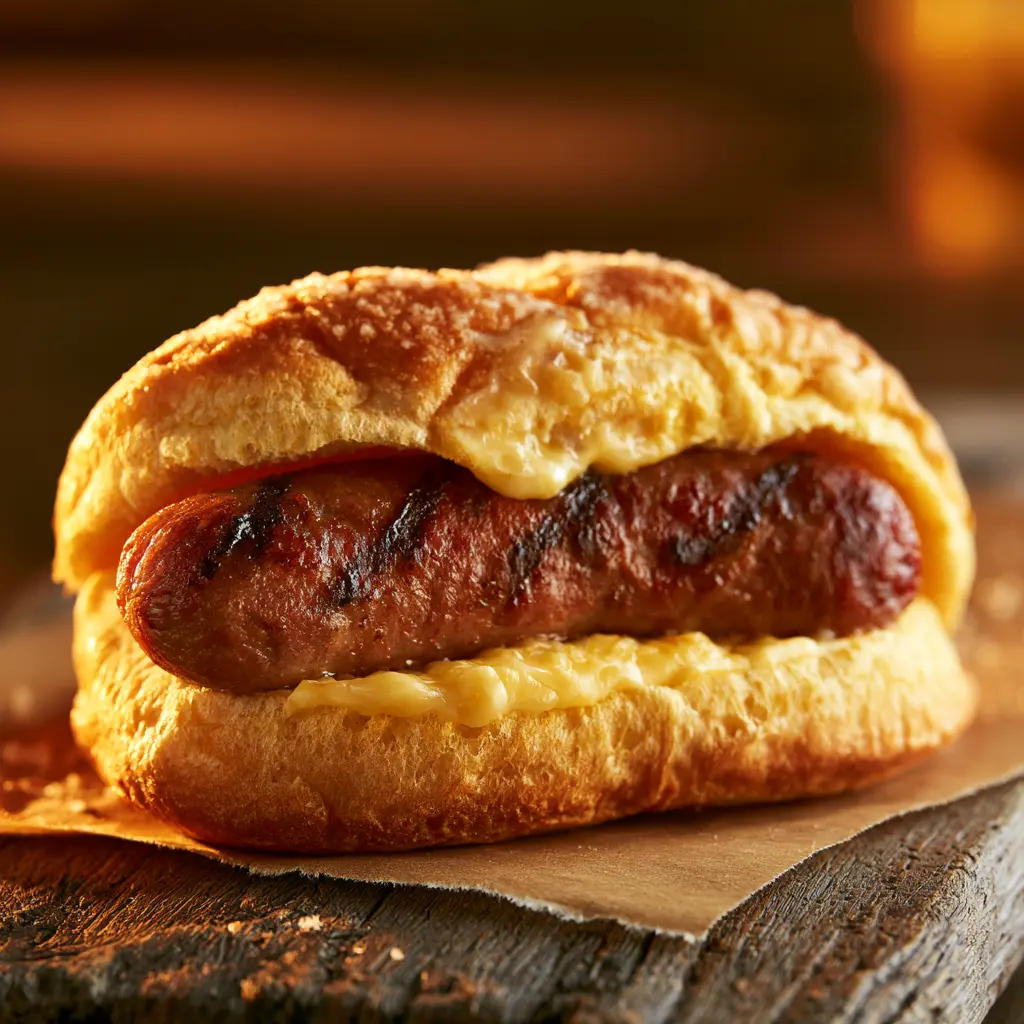
👉 Print the animal-based macro reference chart at the bottom of this page — it gives you the fat-to-protein breakdown for every ingredient in this recipe at a glance, so you can adjust portions without losing the bun’s shape.
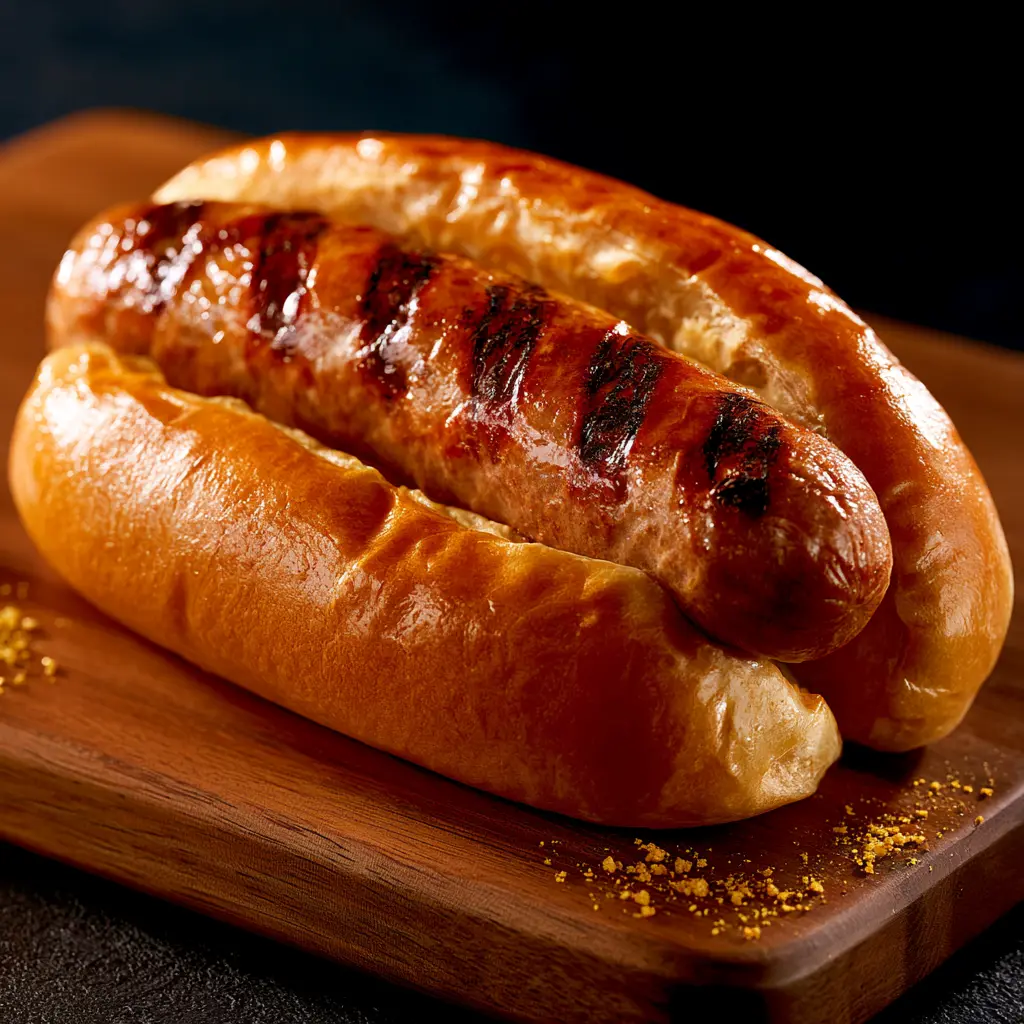
Most zero-carb bun recipes fail the hot dog test in exactly the same way: they bake up looking great, then split clean down the middle the second you try to bend them around a sausage. That crack is not a texture problem. It is a moisture problem, and it is completely fixable once you understand why it happens. A carnivore hot dog bun flexible enough to hold a sausage without splitting needs three things working together: a properly whipped egg white foam to create internal lift and a springy crumb, enough fat from cream cheese or yolk to keep that crumb from drying into a rigid shell, and a low-and-slow bake at 150°C–160°C (300°F–320°F) that sets the egg proteins gently rather than baking the moisture out of them before the center can firm up. Get all three right and you have a bun that bends at the hinge like a real hot dog roll. Miss any one of them and you have a very expensive, slightly sad cracker.
Table of Contents
Why Hot Dog Buns Are Different (The Flexibility Factor)
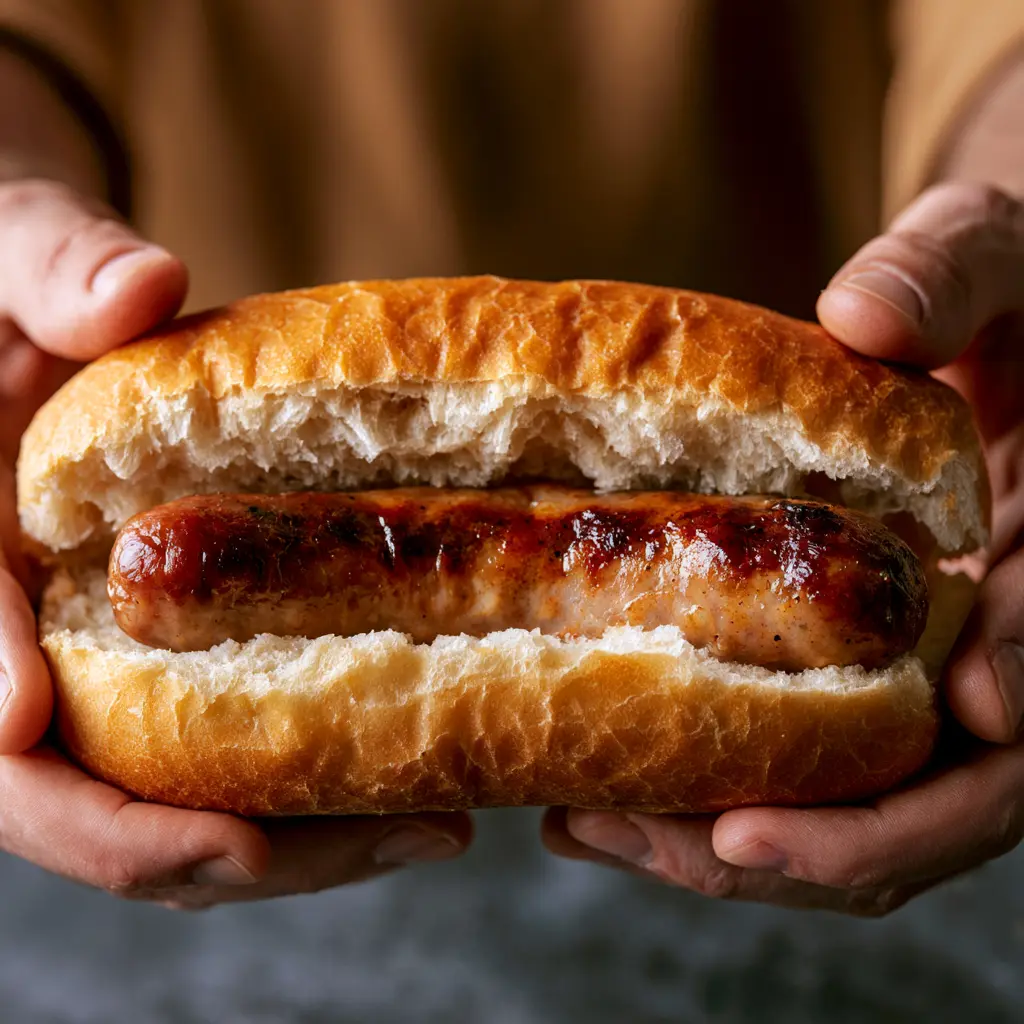
The primary factor that makes a hot dog bun structurally different from any other carnivore bread format is the hinge Unlike round carnivore burger buns that primarily need vertical strength to support burger patties, hot dog buns must remain flexible enough to open along the hinge without cracking. — the long, lateral fold along the bottom that needs to flex open wide enough to cradle a sausage without tearing the crumb apart at the spine. For that hinge to work, the crumb has to stay soft and springy after cooling, not rigid and dry like a biscuit.
The elongated shape of a hot dog bun distributes the bending stress over a longer surface than a small round roll, which means any stiffness or dryness in the crumb gets amplified across the full length of the bun when you press it open. The fix is not complicated — you need enough internal moisture, enough fat to slow crumb firming, and a shape that is wide enough at the base to allow opening without cracking. Nail the shaping on parchment paper and keep the oven temperature honest, and the bun bends cleanly every time.

Carnivore Hot Dog Buns That Actually Bend: The Zero-Carb Recipe That Won’t Crack
- Prep Time: 15 Minutes
- Cook Time: 25 Minutes
- Total Time: 40 Minutes
- Yield: 4 Hot Dog Buns 1x
- Category: Bread
- Method: Baking
- Cuisine: Carnivore
- Diet: Carnivore Diet
Description
These Carnivore Hot Dog Buns are soft, flexible, and completely grain-free. Unlike many zero-carb bun recipes that crack when opened, this version uses a balanced combination of egg whites, cream cheese, and healthy animal fats to create a light crumb that bends around a sausage without breaking.
Ingredients
- 4 large eggs, separated
- 3 oz (85 g) full-fat cream cheese, softened
- 1 tbsp melted beef tallow or butter
- 1/4 tsp cream of tartar
- Pinch of sea salt
Instructions
- Preheat the oven to 311°F (155°C).
- Line a baking sheet with parchment paper.
- Beat the egg whites with cream of tartar until stiff glossy peaks form.
- In a separate bowl, whisk the egg yolks, softened cream cheese, melted tallow, and salt until smooth.
- Gently fold the yolk mixture into the egg whites in three additions.
- Divide the batter into 4 elongated hot dog bun shapes.
- Smooth the tops with a damp spoon.
- Bake for 22–26 minutes until lightly golden.
- Cool for 10 minutes before serving.
Notes
- Do not over-fold the batter or the buns may become dense.
- Cream of tartar helps stabilize the foam and improve flexibility.
- Beef tallow produces a softer crumb than butter after cooling.
- Store in an airtight container for up to 4 days.
- Freeze for up to 6 weeks.
Nutrition
- Serving Size: 1 Bun
- Calories: 95
- Sugar: 0 g
- Sodium: 110 mg
- Fat: 7.5 g
- Saturated Fat: 4 g
- Unsaturated Fat: 3 g
- Trans Fat: 0 g
- Carbohydrates: 1 g
- Fiber: 0 g
- Protein: 6 g
- Cholesterol: 115 mg
The Ultimate Carnivore Hot Dog Buns Recipe
Ingredients & Macro Breakdown
Here is everything you need for four hot dog buns. Nothing exotic, nothing from a plant — just clean animal ingredients that hold together without any help from powders, gums, or starches.
- 4 large eggs — separated into whites and yolks
- 3 oz (85g) full-fat cream cheese — softened to room temperature
- 1 tbsp melted butter or beef tallow — adds fat density and keeps the crumb from firming too hard after cooling
- Pinch of fine sea salt — optional, brings out the egg flavor
- ¼ tsp cream of tartar — stabilizes the foam, tightens the air cell walls, gives you more working time before the batter deflates
Macros per bun (approx.):
| Per Bun | |
|---|---|
| Calories | ~95 kcal |
| Protein | 6g |
| Fat | 7.5g |
| Carbohydrates | 0–1g |
| Net Carbs | 0g |
Following the Looksyumy Baking Plan for carnivore bread formats, the cream cheese and tallow combination here is deliberate — it is the same fat-density approach tested across dozens of bun configurations to find the minimum fat level that keeps the crumb flexible after full cooling without making the bun greasy or too dense to hold its shape. For the full calorie and macro breakdown across different carnivore bun sizes and fat sources, the carnivore buns calories(opens in new tab) page has the complete reference numbers.
Step-by-Step Directions
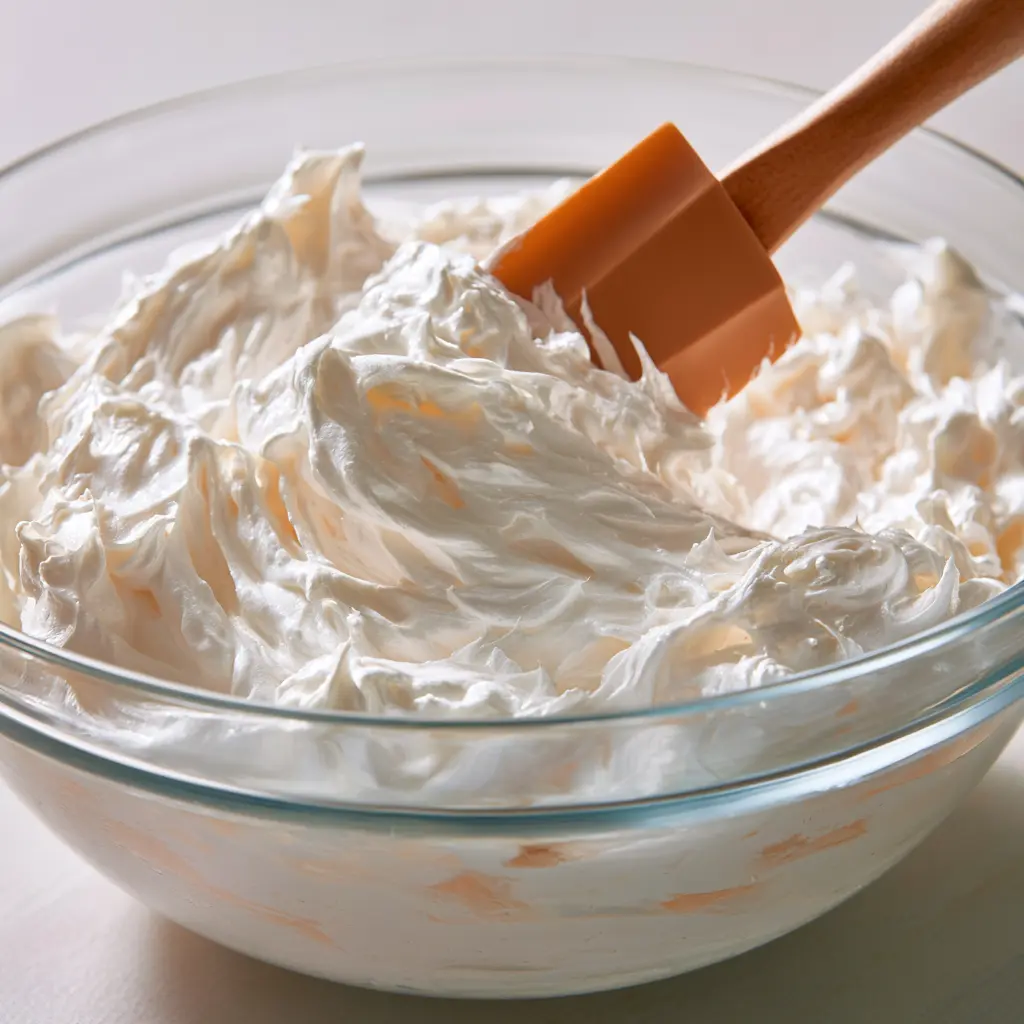
1. Whip the egg whites to stiff peaks.
Separate your four eggs carefully — no yolk in the whites, not even a drop. Add the cream of tartar to the whites in a clean, dry bowl and beat on medium-high with a hand mixer or stand mixer for 3–4 minutes until you have a firm, glossy foam that holds hard peaks when you lift the beater. The foam should not slide or droop. This is the lift engine for the whole bun — do not rush it and do not stop early.
2. Mix the yolk base, then fold the two together.
In a separate bowl, whisk the four egg yolks with the softened cream cheese and melted butter until completely smooth — no lumps of cold cream cheese. Add the salt here if using. Now fold the yolk base into the egg white foam in three additions using a wide silicone spatula, scooping from the bottom of the bowl upward with slow, deliberate arcs. You want a uniform, pale, airy batter in about 15–18 folds. Stop the moment it looks even — every extra fold costs you rise volume and contributes to a drier crumb.
3. Shape into hot dog buns on parchment paper.
Line a baking sheet with parchment. Spoon the batter into four elongated mounds roughly 13–15 cm (5–6 inches) long and 5 cm (2 inches) wide. Use the back of a wet spoon to smooth the tops and taper the ends slightly. The key shape detail for a hot dog bun is width at the base — make them 5 cm wide, not narrow like a finger roll. A wider base means more hinge surface when you open the bun around the sausage. Keep them at least 4 cm (1.5 in) apart on the pan because they will spread slightly as they bake.
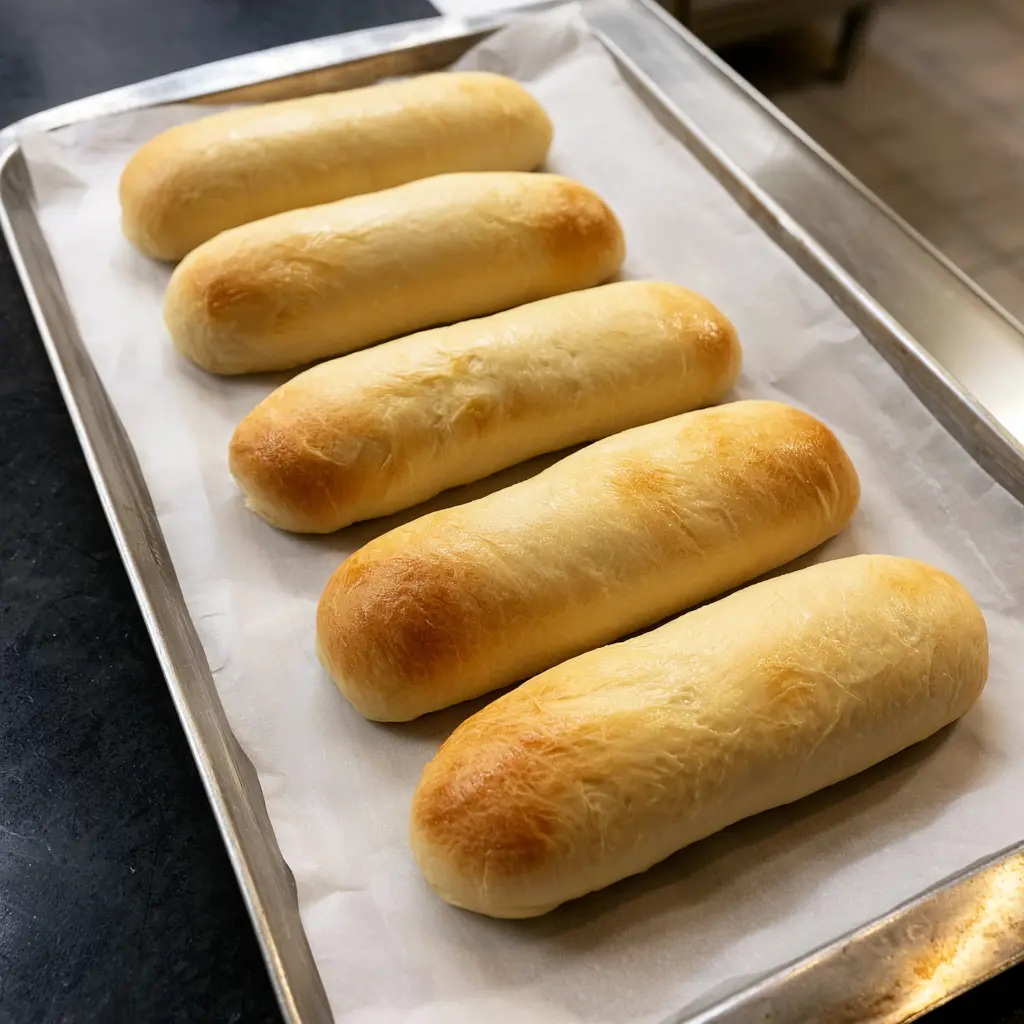
4. Bake at 155°C (311°F) for 22–26 minutes.
Preheat your oven fully — at least 20 minutes from cold — and verify the temperature with a secondary thermometer on the center rack, not from the dial. Bake on the middle rack for 22–26 minutes until the tops are a light golden color and the buns feel firm but not hard when you press them gently with one finger. The inside should still feel slightly springy. Do not open the oven before the 18-minute mark. Remove and cool on a wire rack for at least 10 minutes before handling — the crumb continues setting during this rest and the buns become noticeably more flexible as they cool from hot to warm.
Texture Tips: Ensuring Your Buns Hold the Sausage Without Snapping
The real issue with carnivore buns that crack when you open them is almost always over-baking combined with a batter that did not have enough fat to slow down moisture loss during the bake. Peer-reviewed research published in January 2026 confirms that egg white protein forms a continuous barrier that restricts moisture migration from the interior to the exterior of the crumb , which helps explain why properly baked carnivore buns remain more flexible and less prone to cracking after cooling. A properly baked bun should spring back slightly when pressed warm — if it feels hard or hollow to the touch right out of the oven, it has already lost too much internal moisture and it will snap rather than hinge.
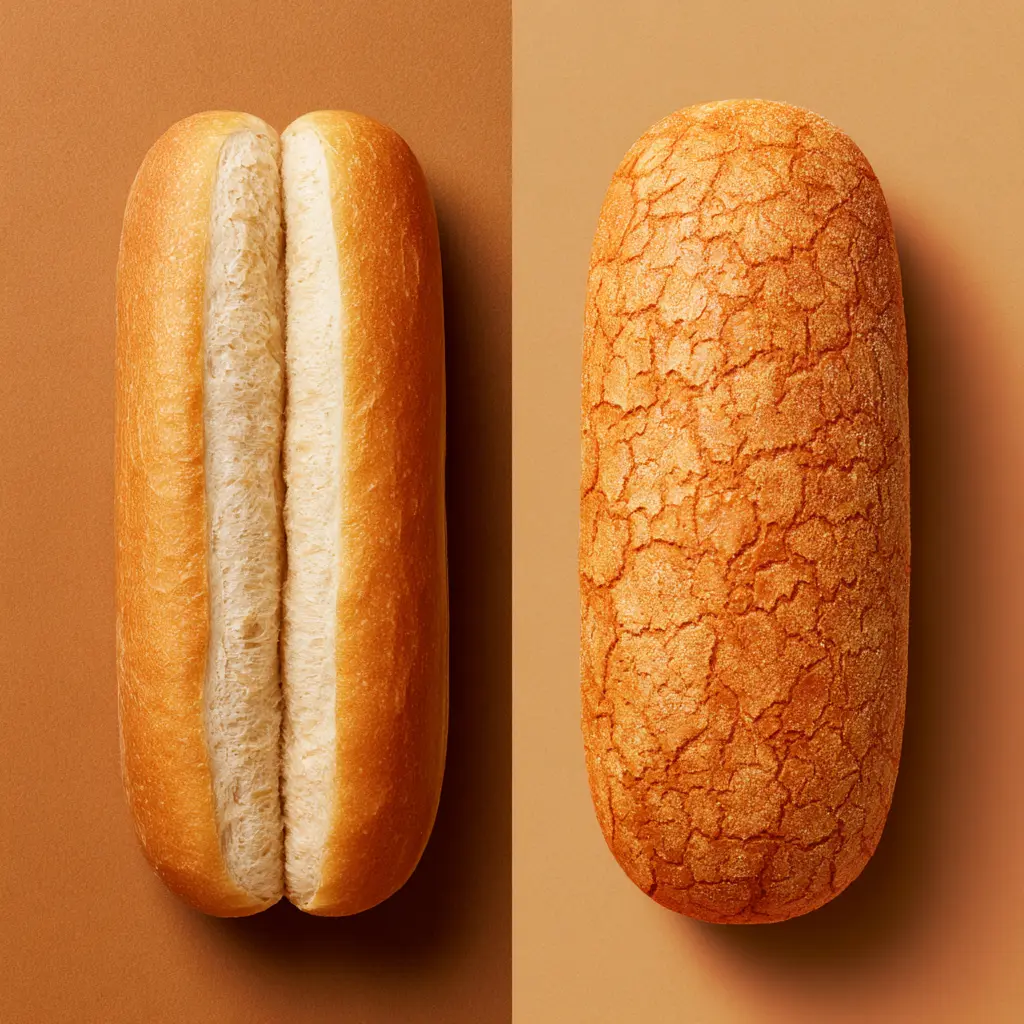
Two practical fixes work together here. First, pull the buns at the lower end of the time range if they look golden — 22 minutes at the correct temperature is usually enough. Second, rest them under a clean kitchen towel for the first 5 minutes out of the oven rather than leaving them exposed on the rack. The towel traps just enough residual steam to allow the outer crust to soften slightly and equalize with the moister interior, giving you a more uniformly pliable crumb from surface to center. After that first 5-minute rest, transfer to the rack uncovered to finish cooling. For buns(opens in new tab) that will be used straight away, this two-stage cooling approach makes a noticeable difference in how they open around a sausage.
The fat source matters more than most recipes acknowledge. Tallow keeps the crumb softer longer than butter after cooling because of its higher saturation and lower moisture content — it does not introduce water vapor into the crumb the way butter slightly does. If you find your buns drying out faster than expected, swapping the tablespoon of butter for tallow is the single highest-impact change you can make without touching the egg ratio.
Storage and Meal Prep: Keeping Your Buns Fresh
The main reason carnivore buns dry out in storage faster than conventional bread is that there is no starch retrogradation happening inside them to retain and redistribute internal moisture over time — egg white proteins, once set, do not hold water the way a starch gel does. What you baked is what you have, and moisture loss from the surface starts immediately after the bun exits the oven.
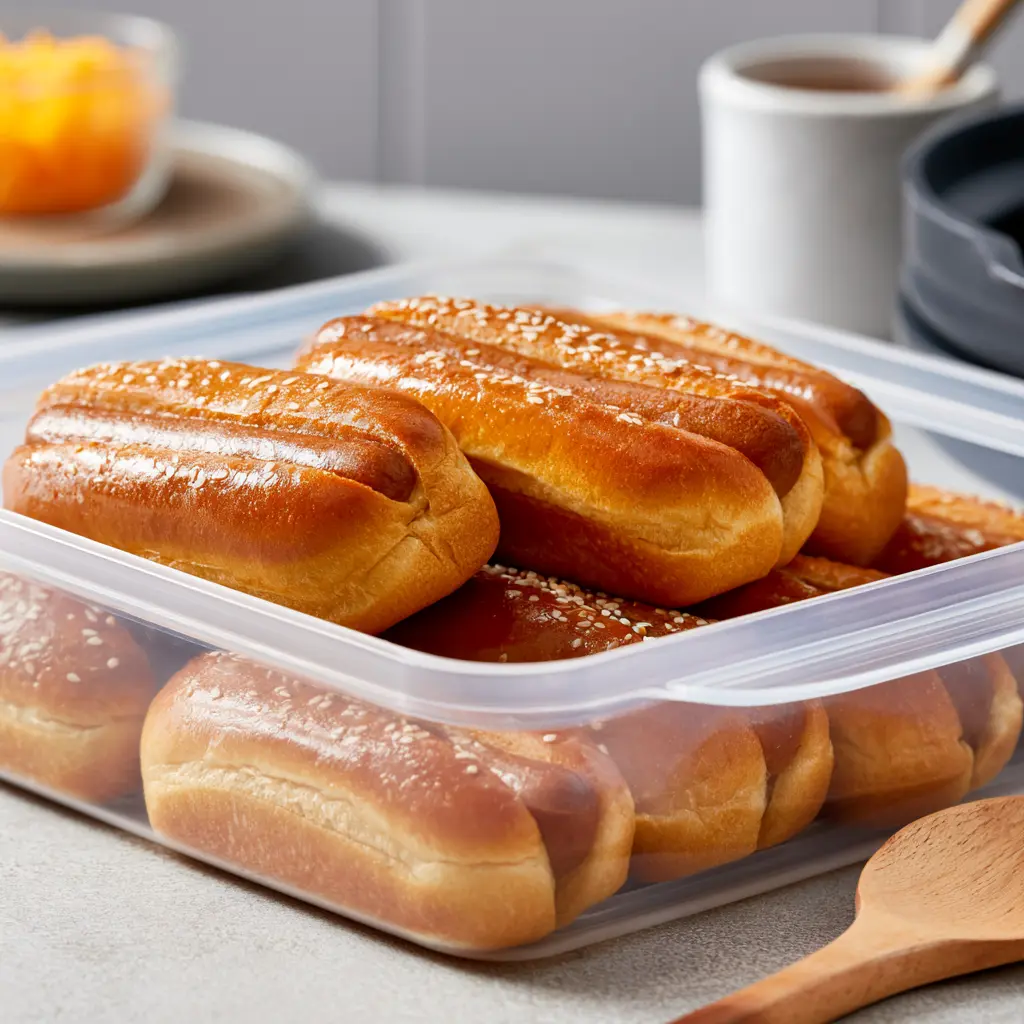
For short-term storage, place fully cooled buns in an airtight container or zip-lock bag with a small piece of paper towel inside to absorb any condensation. They stay soft and flexible at room temperature for up to 24 hours, and in the refrigerator for 3–4 days. Do not refrigerate them warm — the condensation from a hot bun in a cold container soaks back into the crumb and produces a gummy, wet layer on the outside.
For reheating, a skillet with a small pat of butter or tallow is the best method. Place the bun cut-side down in the warm fat over medium-low heat for 60–90 seconds — just long enough to warm through and develop a very slight golden crust on the interior faces. This reheating method adds a small amount of fat back into the surface layer of the crumb, which restores the softness and pliability lost during refrigerator storage. Do not microwave carnivore buns — the rapid, uneven steam generation makes the outer surface rubbery while the interior dries further.
For freezer storage, wrap each bun individually in plastic wrap before placing in a freezer bag. They freeze well for up to 6 weeks. Thaw at room temperature for 20–30 minutes, then warm in a buttered skillet as above.
Common Baking Errors ❌ and Quick Diagnostics
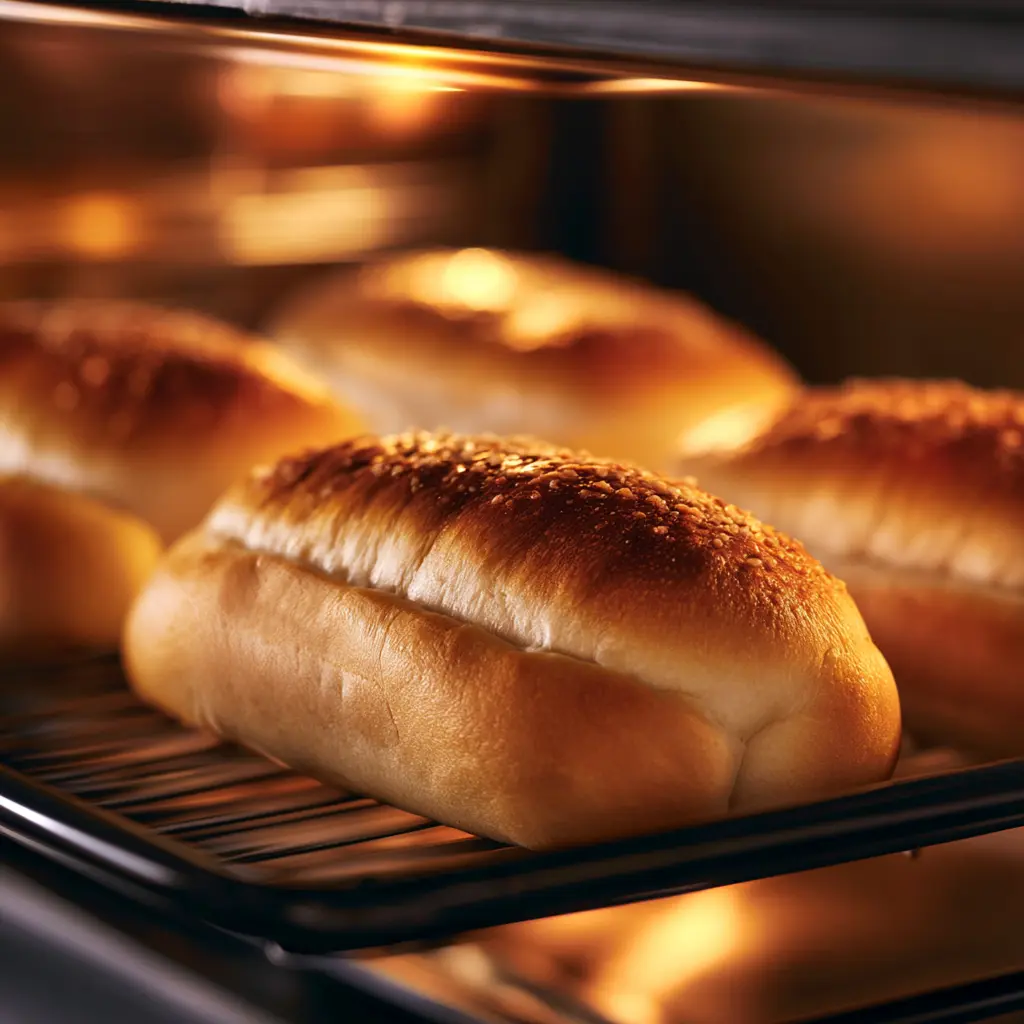
The root problem behind almost every carnivore hot dog bun failure — flat, dry, cracked, gummy, or hollow — traces back to either a compromised egg white foam, an oven temperature that was not what the dial claimed, or a crumb that dried out faster than it should have because there was not enough fat in the mix. Before you change the recipe, check the oven and the foam first.
In my own kitchen, the failure that taught me the most happened during the third batch I ever made. I skipped the cream of tartar because I did not have it, and I folded the batter a little too eagerly — probably 25 strokes instead of 15 — thinking I needed to make sure the yolk base was evenly distributed. The batter looked fine going onto the pan. The buns rose in the oven and turned a perfect golden color at exactly the right time. I pulled them, cooled them, and then opened one around a sausage. I noticed the crack before I even finished pressing — a clean split right down the top, spreading outward from the middle like a fault line. The crumb was dry and brittle rather than springy, and the inside looked more like a dry egg cloud than a soft, airy bun. What I had made was a very well-shaped cracker. The cream of tartar was not optional — it stabilizes the foam film around each air cell and keeps those films elastic rather than brittle after baking. Without it, the crumb sets into a rigid, glass-like structure that has no give at all. I also lost significant foam volume to the extra folding, which left the bun denser and drier than it should have been.
It is worth being completely clear about what is not in this recipe and why that matters. These buns hold their shape, stay flexible, and hinge around a hot sausage without dextrose, sweet potato starches, maltodextrin, pea protein isolates, xanthan gum, psyllium husk, or oat flours of any kind. Every bit of flexibility comes from the fat-to-protein balance of the egg-and-cream-cheese mix, not from a plant-based gum thickening the batter or a starch paste holding the crumb together. That absence is not a compromise — it is the point. Any recipe that needs psyllium husk to prevent cracking or xanthan gum to simulate elasticity is solving a problem that the correct egg technique and fat ratio eliminate entirely.
Here is a fast diagnostic checklist for the most common failures:
- Buns are flat and spread sideways → Foam was under-whipped (no stiff peaks) or the oven was too cold. Verify temperature with a secondary thermometer.
- Buns crack when opened → Cream of tartar was skipped, batter was over-folded, or bake time ran too long. Pull earlier and always include the cream of tartar.
- Wet or gummy center → Oven ran too hot and sealed the outside before the center set. Drop the temperature to 150°C and extend time by 4–5 minutes.
- Buns deflate into flat discs after cooling → Foam was over-folded or the door was opened before the 18-minute mark. Be patient and count your folds.
- Hard and dry texture after refrigeration → Stored without airtight wrapping. Always seal completely and reheat in buttered skillet, not microwave.
For the complete carnivore baking error guide covering bowl-phase and oven mistakes, visit the baking mistakes(opens in new tab) diagnostic resource.
Frequently Asked Questions
How do you get carnivore bread to bend without breaking?
The two things that give a carnivore bun its flexibility are fat and moisture retention. Fat from the cream cheese and butter/tallow coats the set egg protein and prevents the crumb from drying into a rigid shell. Cream of tartar during whipping keeps the foam film walls elastic rather than brittle, so the crumb has genuine spring rather than glass-like stiffness after baking. Practically speaking: do not skip the cream of tartar, do not over-fold the batter, and do not over-bake. A bun that still feels slightly springy when pressed warm will be flexible when you open it around a sausage. A bun that feels hard and hollow right out of the oven is already too dry to bend.
Can I freeze these hot dog buns for later?
Yes, and they freeze well. Let them cool completely at room temperature first — never freeze a warm bun because the condensation inside the wrap creates ice crystals that damage the crumb texture. Wrap each bun individually and tightly in plastic wrap, then place all four in a zip-lock freezer bag with the air pressed out. They keep for up to 6 weeks without noticeable quality loss. To use from frozen, pull one out of the freezer and leave it on the counter for 20–30 minutes at room temperature. Finish by warming it in a skillet with a small amount of butter or tallow over medium-low heat for 60–90 seconds per side. This rehydrates the surface and restores most of the original soft, pliable texture.
What can I use to grease the pan to prevent sticking?
The best options are beef tallow, lard, or a neutral-flavored animal fat applied with a pastry brush directly to the parchment paper. Tallow is preferred because it has a higher smoke point than butter, does not introduce additional moisture to the bun’s bottom surface, and produces a very slight golden crispness on the base of the bun that improves both texture and structural hold. Butter works but can cause the base to brown too quickly at higher temperatures. You can also use a silicone baking mat in place of parchment — it requires no greasing at all and releases carnivore buns cleanly every time. Cooking spray based on vegetable oils is the one option to avoid here: it leaves a residue on the parchment that can transfer a faint off-flavor to the bottom of the bun, and it adds unnecessary plant-derived ingredients to a recipe that does not need them.