👉 Download the Free 12-Hour Shift Carnivore Meal Prep & Locker Snack Checklist — Print It Before Your Next Rotation
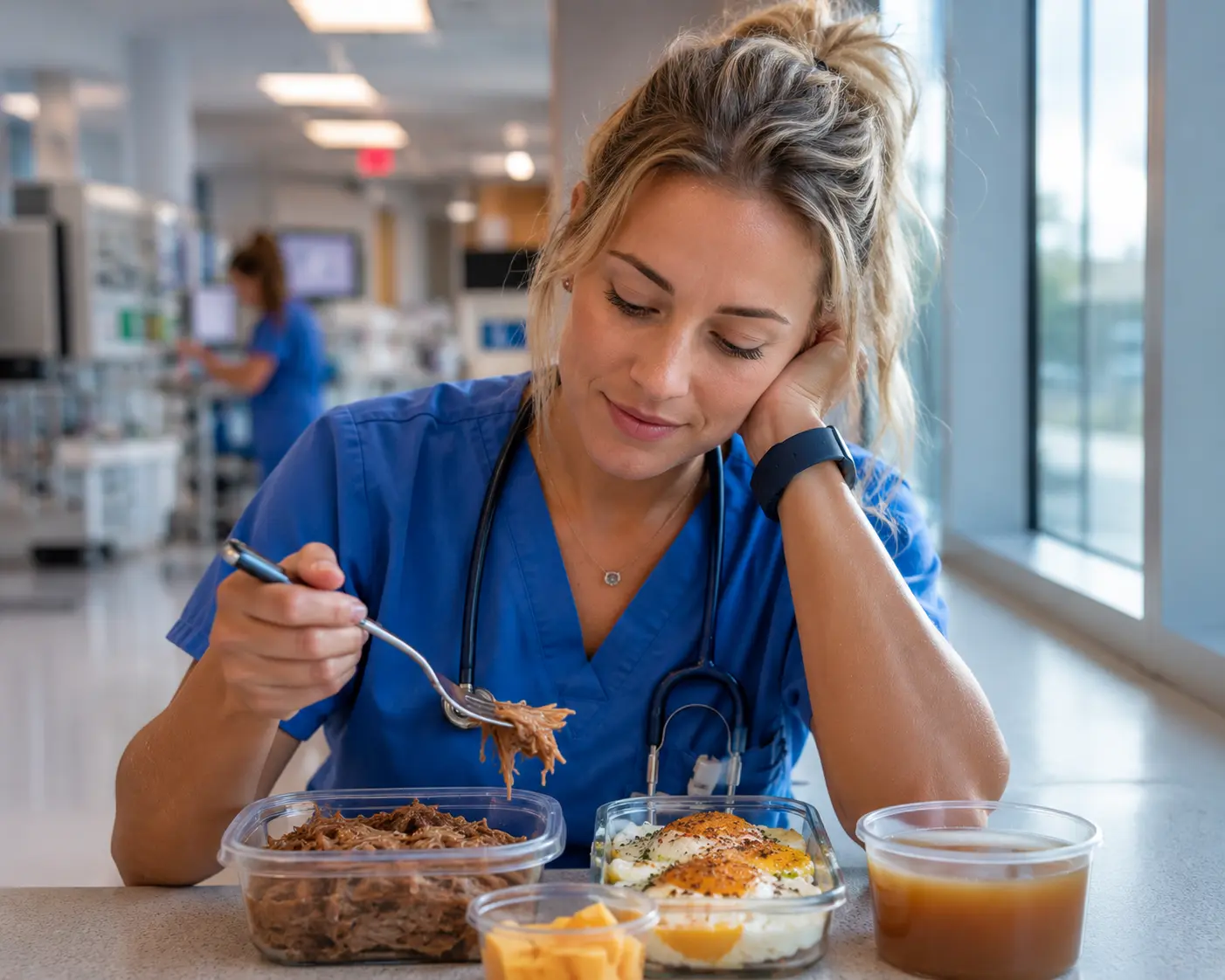
Healthcare workers use carnivore recipes because animal-based meals stay steady through a 12-hour shift without the energy crash that hits two hours after a hospital cafeteria sandwich. When you’re on your feet for half a day with unpredictable breaks, food that digests slowly and doesn’t need reheating matters more than anything else. These recipes are built for the reality of shift work — no kitchen, no microwave guarantee, and sometimes no real break at all.
Table of Contents
Shift-Friendly Nutrition: Why Healthcare Workers Go Plant-Free
The primary factor pushing nurses, techs, and physicians toward carnivore eating during shifts isn’t a diet trend — it’s the crash. Carb-heavy hospital food and vending machine snacks spike energy fast and drop it just as fast, right in the middle of a shift when you can’t afford to feel foggy.
Twelve-hour shifts punish anything that needs precise timing to work. A bagel at 7am means you’re running on empty by 11. Animal-based meals — eggs, beef, hard cheese, rendered fat — release energy steadily over hours instead of in one short spike, which matters when your next chance to eat could be in 20 minutes or four hours depending on what comes through the door. This isn’t just anecdotal — hospital-based nutrition research on shift workers has documented that nutrient intake drops sharply during and after long shifts, with meal timing and food accessibility cited as the biggest barriers staff face. The appeal of carnivore-style shift eating isn’t performance optimization; it’s simply having food that holds up to an unpredictable schedule without leaving you searching for vending machine sugar at hour nine.
Top 8 Carnivore Recipes for 12-Hour Shifts
Every recipe below is made 100% without dextrose, sweet potato starches, maltodextrin, pea protein isolates, xanthan gum, or oat flours. No hospital cafeteria fillers — just real food that survives a locker, a cooler bag, or a quick five-minute break.
1. Hard-Cooked Egg and Cheese Cups
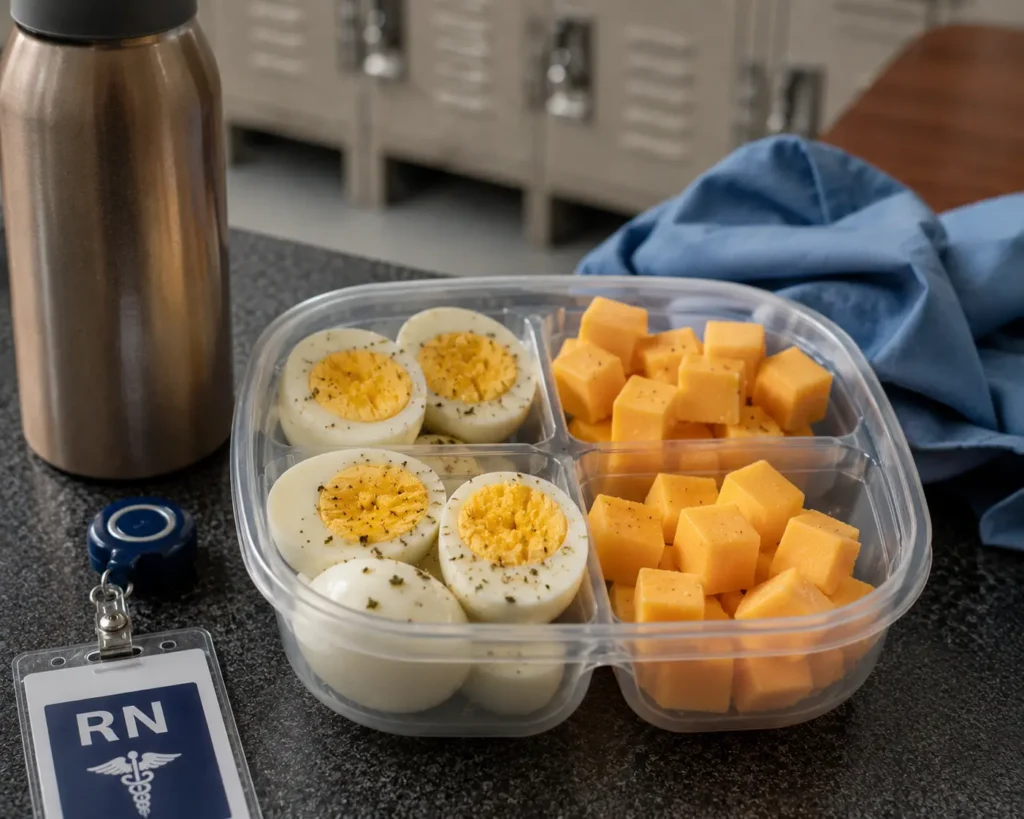
Shift Benefit: Fully portable, no reheating needed, and ready to eat in seconds during a five-minute break between patients.
Ingredients:
- 6 large eggs
- 2 oz shredded cheddar or parmesan
- ½ tsp sea salt
- Butter for greasing
Directions:
- Preheat oven to 350°F (175°C) and grease a muffin tin.
- Whisk eggs and salt together, then stir in shredded cheese.
- Pour into muffin cups, filling about ¾ full.
- Bake 18–20 minutes until fully set and slightly puffed.
- Cool completely, then refrigerate in a sealed container. Grab-and-go for up to 5 days — eat cold or room temperature, no microwave required.
2. Carnivore Crunch Cereal
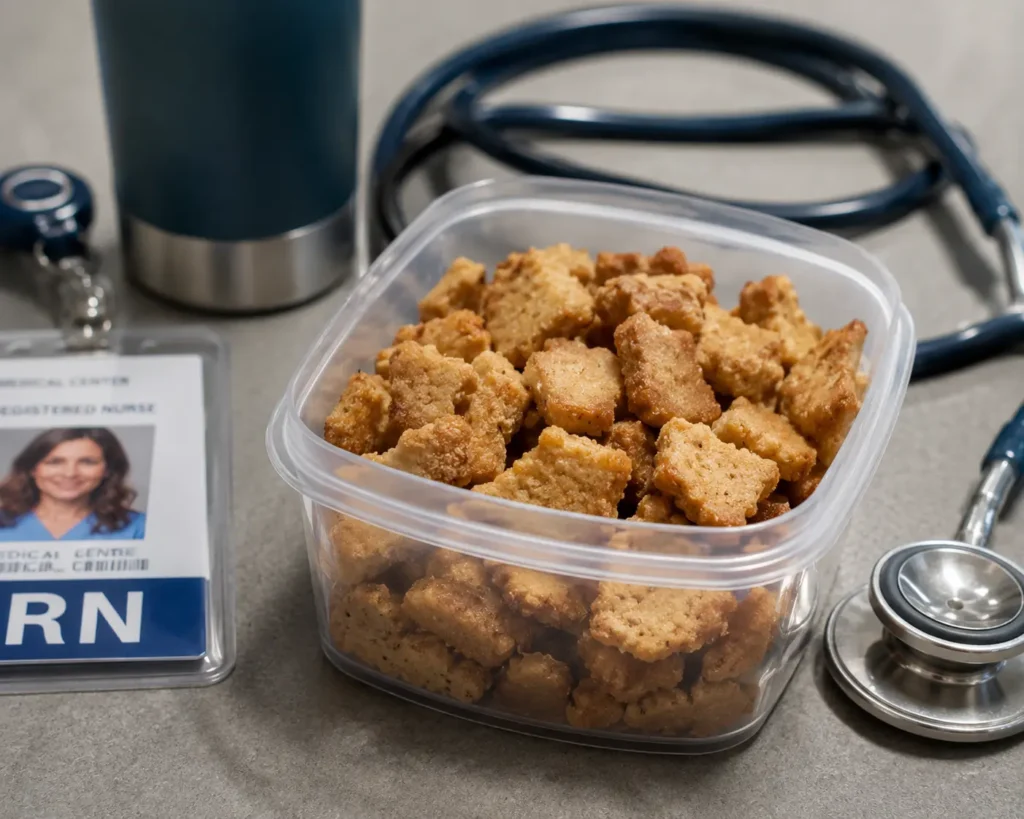
Shift Benefit: Dry, doesn’t spill in a bag, and rehydrates instantly with whatever’s available — break room milk, water, or leftover broth from home.
Ingredients:
- 8 oz 80/20 ground beef
- ½ tsp sea salt
- ¼ tsp black pepper
Directions:
- Brown ground beef in a skillet, breaking into very fine, even crumbles. Season with salt and pepper.
- Spread on a parchment-lined baking sheet in a thin, single layer.
- Bake at 275°F (135°C) for 50–60 minutes, stirring once, until dry and crunchy.
- Cool fully and pack into a small container. Carry separately and add liquid right before eating to keep it crisp until break time.
3. Beef and Cheese Roll-Ups
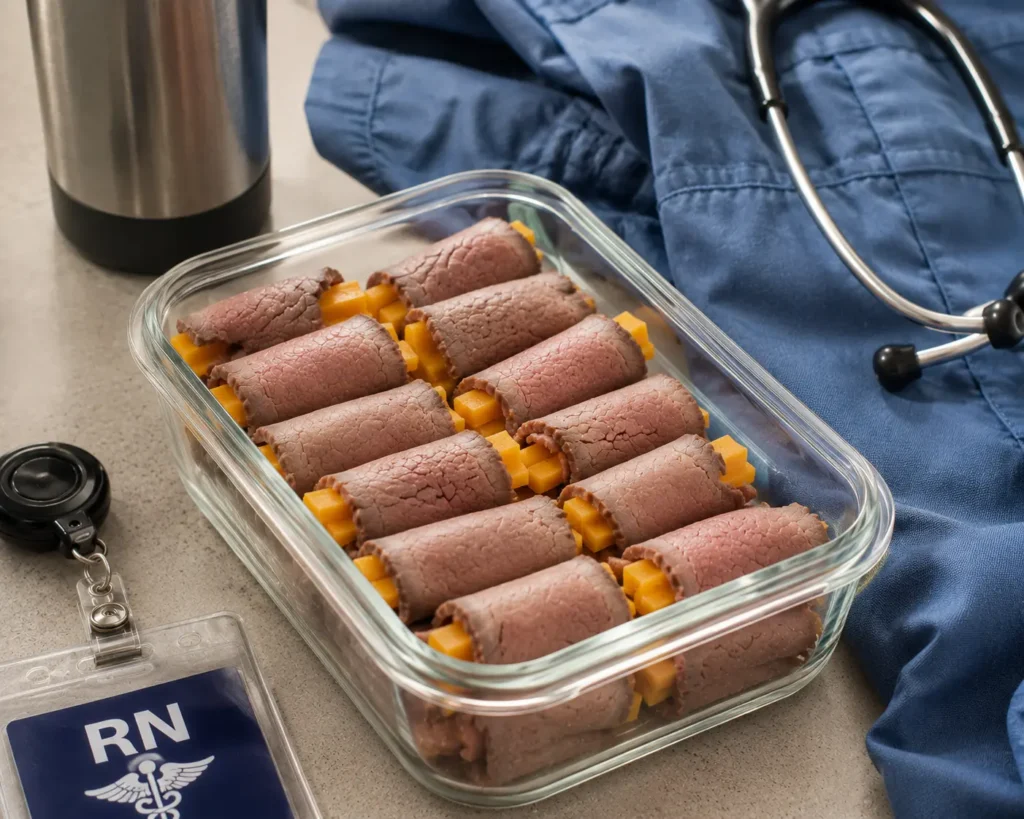
Shift Benefit: Zero utensils needed — eat standing up, walking to the next room, or one-handed at a nurses’ station.
Ingredients:
- 6 slices deli roast beef (sugar-free, salt-cured)
- 6 slices sharp cheddar or pepper jack
- Pinch of black pepper
Directions:
- Lay out a slice of roast beef flat.
- Place a slice of cheese on top, slightly offset.
- Roll tightly from one end.
- Repeat for all slices and secure each roll with a small toothpick if carrying loose.
- Pack in a small container. No refrigeration needed for up to 4 hours; refrigerate for longer storage.
4. Carnivore Flourless Breakfast Buns
Shift Benefit: A solid base for building a quick sandwich-style bite at the start of a shift, eaten plain or with a slice of meat folded inside.
Ingredients:
- 6 egg whites
- 2 egg yolks
- ½ tsp cream of tartar
- Pinch of sea salt
- Butter for greasing
Directions:
- Preheat oven to 300°F (150°C) and grease a muffin tin.
- Beat egg whites with cream of tartar and salt until stiff, glossy peaks form.
- Fold in yolks gently without deflating the whites.
- Spoon into muffin cups and bake 25–30 minutes until golden and set.
- Cool completely. Store in the fridge up to 4 days — batch-make 12 at the start of the week for the whole rotation.
5. Crispy Egg Yolk Chips
Shift Benefit: Lightweight, doesn’t need refrigeration for a single shift, and covers fat-soluble nutrients easily missed when meals get rushed or skipped.
Ingredients:
- 6 egg yolks
- Sea salt
Directions:
- Separate yolks carefully, keeping each intact.
- Place on a parchment-lined baking sheet, spaced apart, and season each with a pinch of salt.
- Bake at 200°F (95°C) for 2.5–3 hours until fully dried and chip-like.
- Cool completely and store in a small sealed container. Stable in a bag or locker for a full shift without spoiling.
6. Slow Cooker Shredded Beef (Batch Meal)
Shift Benefit: One cook session on a day off covers protein for an entire week of shifts — portion into containers and grab whatever’s needed on the way out the door.
Ingredients:
- 3 lbs beef chuck roast
- 1 tbsp sea salt
- 1 tsp black pepper
- 2 tbsp beef tallow or butter
Directions:
- Season the chuck roast generously with salt and pepper on all sides.
- Place in a slow cooker with tallow.
- Cook on low for 8 hours, or high for 5–6 hours, until the meat shreds easily with a fork.
- Shred the beef directly in the cooking liquid to keep it moist.
- Divide into individual containers (5–6 oz portions) and refrigerate for up to 5 days, or freeze portions for longer storage.
7. Cold Bone Broth Sip Cups
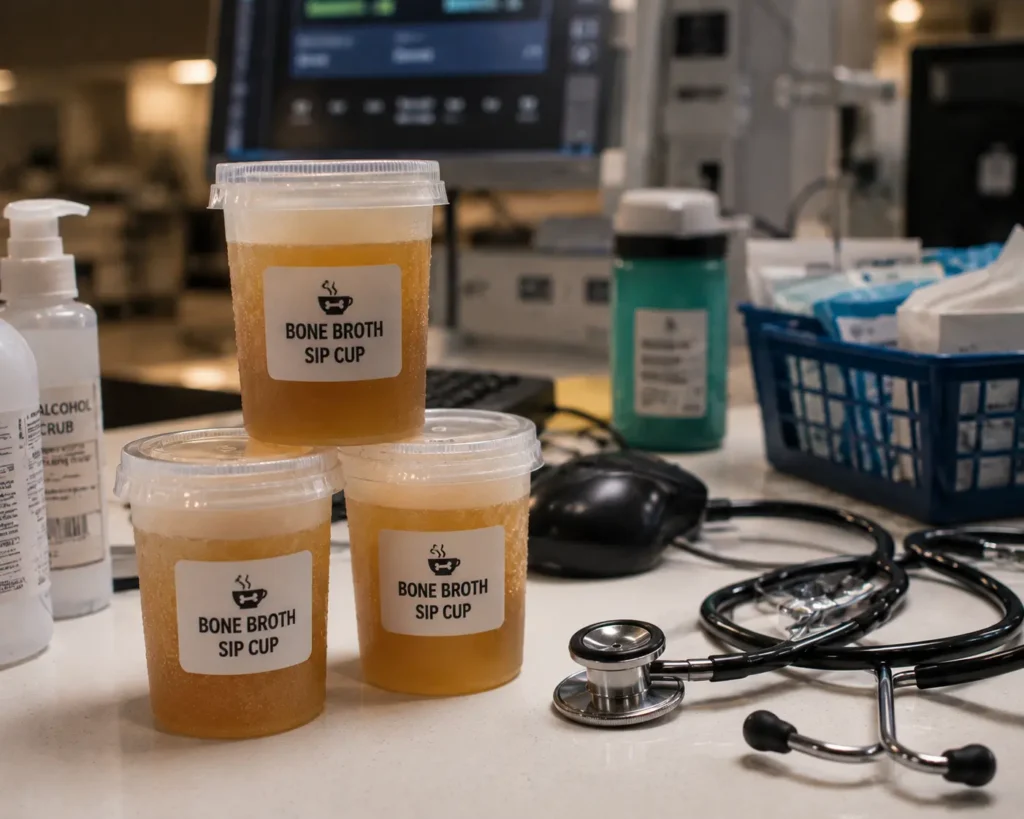
Shift Benefit: A fast sodium and fluid reset during a long shift, especially useful on a unit where you’re sweating under PPE or moving constantly. No heating required — drink straight from a small thermos or cup.
Ingredients:
- 2 cups beef bone broth (homemade or quality packaged)
- 1 tsp sea salt
Directions:
- If using homemade broth, cool it fully in the fridge after cooking.
- Stir in sea salt until dissolved.
- Portion into small travel cups or a thermos.
- Sip cold or at room temperature during breaks — no microwave or kettle needed.
8. Carnivore Cheese and Egg Bites (Night Shift Version)
Shift Benefit: Heavier and more filling than the breakfast version — built for the 2-3am energy dip that hits hardest on night shifts.
Ingredients:
- 6 large eggs
- 3 oz cream cheese, softened
- 2 oz cooked, crumbled bacon
- ½ tsp sea salt
Directions:
- Preheat oven to 325°F (165°C) and grease a muffin tin.
- Blend eggs and cream cheese until smooth.
- Stir in crumbled bacon and salt.
- Pour into muffin cups and bake 20–22 minutes until set in the center.
- Cool and refrigerate. These reheat well in 30 seconds if a microwave is available, but are filling enough to eat cold straight from the locker.
Portable Meals: Building a Shift Bag That Actually Works
The real issue with most shift meal plans isn’t the food — it’s packing things that need a fridge, a microwave, or a sit-down break you might not get. A shift bag built around carnivore food removes that dependency entirely.
Pack in layers based on access: items that need zero equipment (roll-ups, egg cups, crunch cereal, yolk chips) go in an easily reachable outer pocket for grabbing during a 5-minute gap. Items that benefit from a short reheat (the bacon egg bites) go in an insulated section in case a microwave becomes available. Always pack more than you think you’ll eat — shifts that run long or skip breaks entirely are common, and having backup food prevents the vending machine detour at hour ten.
Many of the same nutrition principles used by athletes to maintain energy and recovery can also help healthcare workers stay fueled through demanding shifts.
Night Shift Tips: Eating Around a Flipped Schedule

Night shifts scramble normal meal timing, and that’s where most people default back to coffee and sugar just to stay upright. The fix isn’t fighting your schedule — it’s adapting your meals to it.
Treat your first meal of the night shift like a normal breakfast, even if it’s 7pm: something substantial like the Slow Cooker Shredded Beef or Cheese and Egg Bites. Around the 2-3am window, when alertness naturally dips hardest, a small high-fat snack — a cold bone broth sip cup or a few egg yolk chips — helps more than caffeine alone, since steady fuel keeps you from crashing the way sugar does an hour later. Your last meal before heading home should be lighter, since eating heavy right before trying to sleep during daylight hours can make it harder to actually rest. A few roll-ups or a small portion of crunch cereal is usually enough to hold you over until your post-sleep meal.
Meal Prep for a Full Rotation
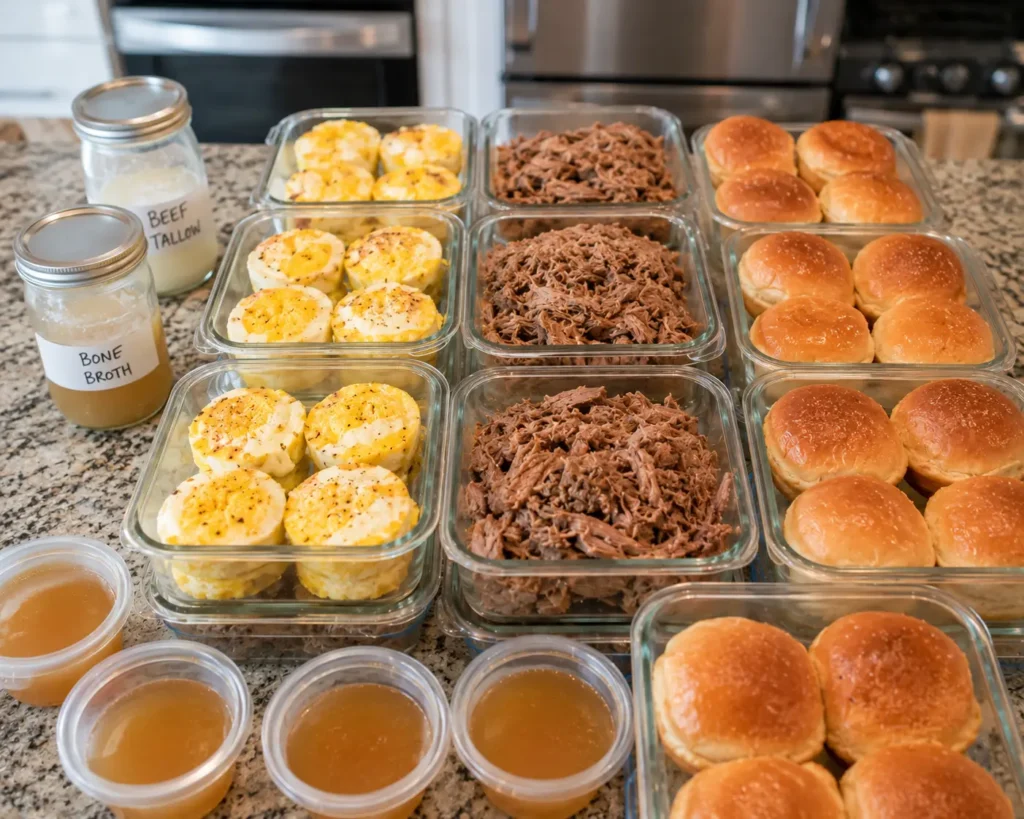
The main reason healthcare workers fall back on cafeteria food and vending machines isn’t lack of discipline — it’s lack of prep time between back-to-back shifts. Batch cooking on a single day off solves this completely.
Pick one day per week and cook in volume: a full batch of Slow Cooker Shredded Beef, a tray of Crunch Cereal, a dozen Flourless Breakfast Buns, and a batch of Egg Yolk Chips can all be made in one afternoon with mostly hands-off cooking time. Portion everything into grab-and-go containers immediately after cooking, labeled by day if your schedule rotates. This single prep session can cover 4-5 shifts without touching a stove again until the next day off — which is the entire point when your actual day off needs to be a day off.
Healthcare workers who batch-cook their meals may also benefit from these carnivore meal prep buns for portable breakfasts and quick shift-friendly meals.
Common Errors ❌ That Drain Your Energy on Shift
The root problem most healthcare workers run into when they try eating this way isn’t the food itself — it’s skipping meals entirely during a busy stretch and then trying to make up for it with whatever’s fastest, which is usually the vending machine. This pattern shows up clearly in research on hospital shift workers, which found that nursing staff working rotating shifts consistently reported higher calorie intake from convenience food alongside poorer overall diet quality compared to non-shift colleagues.
I noticed this pattern clearly during a string of back-to-back 12-hour shifts where breaks kept getting pushed or cancelled. By hour nine on the third day, I was reaching for whatever was closest instead of what I’d actually packed, and the energy crash that followed wasn’t subtle — it felt like hitting a wall mid-shift. The fix wasn’t more willpower; it was keeping food that needed zero prep time within arm’s reach at all times, not buried at the bottom of a locker.
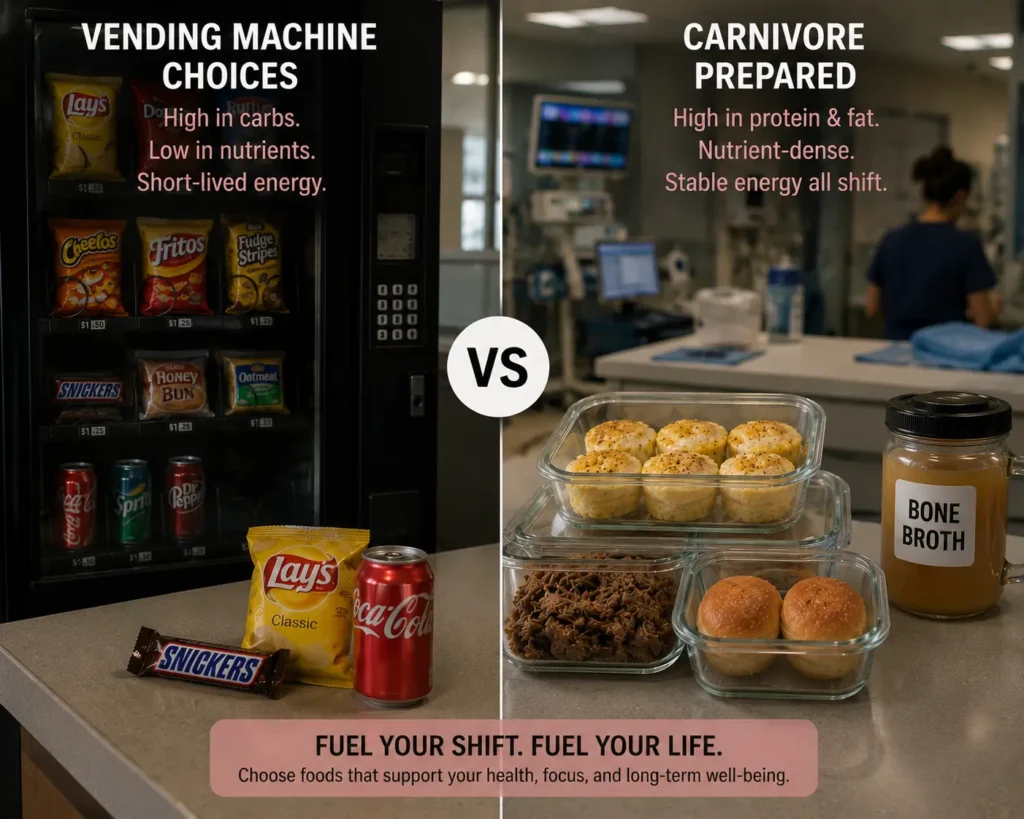
Quick diagnostic fixes:
- Mid-shift energy crash: Keep at least one zero-prep item (roll-ups, yolk chips) in your scrub pocket, not just your bag, for moments when you can’t get to a locker.
- Skipping meals entirely on busy days: Pre-portion everything into single servings during meal prep so grabbing food takes seconds, not a decision.
- Headaches by the end of a shift: Check water and salt together — long shifts under fluorescent lighting and PPE often mean more fluid loss than people realize, and salted bone broth addresses both at once.
- Falling back on vending machine snacks: This almost always means your bag ran out of backup food. Pack more than feels necessary; a long shift with no break is common, not rare.
A structured high-protein carnivore eating plan can help reduce the energy fluctuations commonly experienced during long workdays.
Frequently Asked Questions
What carnivore foods don’t need a fridge or microwave?
Hard-cooked eggs, dried crunch cereal, beef and cheese roll-ups, egg yolk chips, and salted bone broth all hold up for a full shift without refrigeration or reheating. These are the easiest options to keep in a scrub pocket or bag for unpredictable breaks.
How do I eat carnivore on a night shift without crashing at 3am?
Treat your first meal of the night like a normal breakfast — something substantial, not just coffee. Around the natural alertness dip in the early morning hours, a small high-fat snack like bone broth or egg yolk chips works better than sugar or extra caffeine, since it doesn’t create a crash an hour later.
How much should I meal prep for a week of 12-hour shifts?
Plan for one large batch protein (like slow-cooked shredded beef) plus two or three portable snack options, prepped on a single day off. This typically covers 4-5 shifts without needing to cook again, which matters most on weeks where your only free time is the day before your rotation starts.