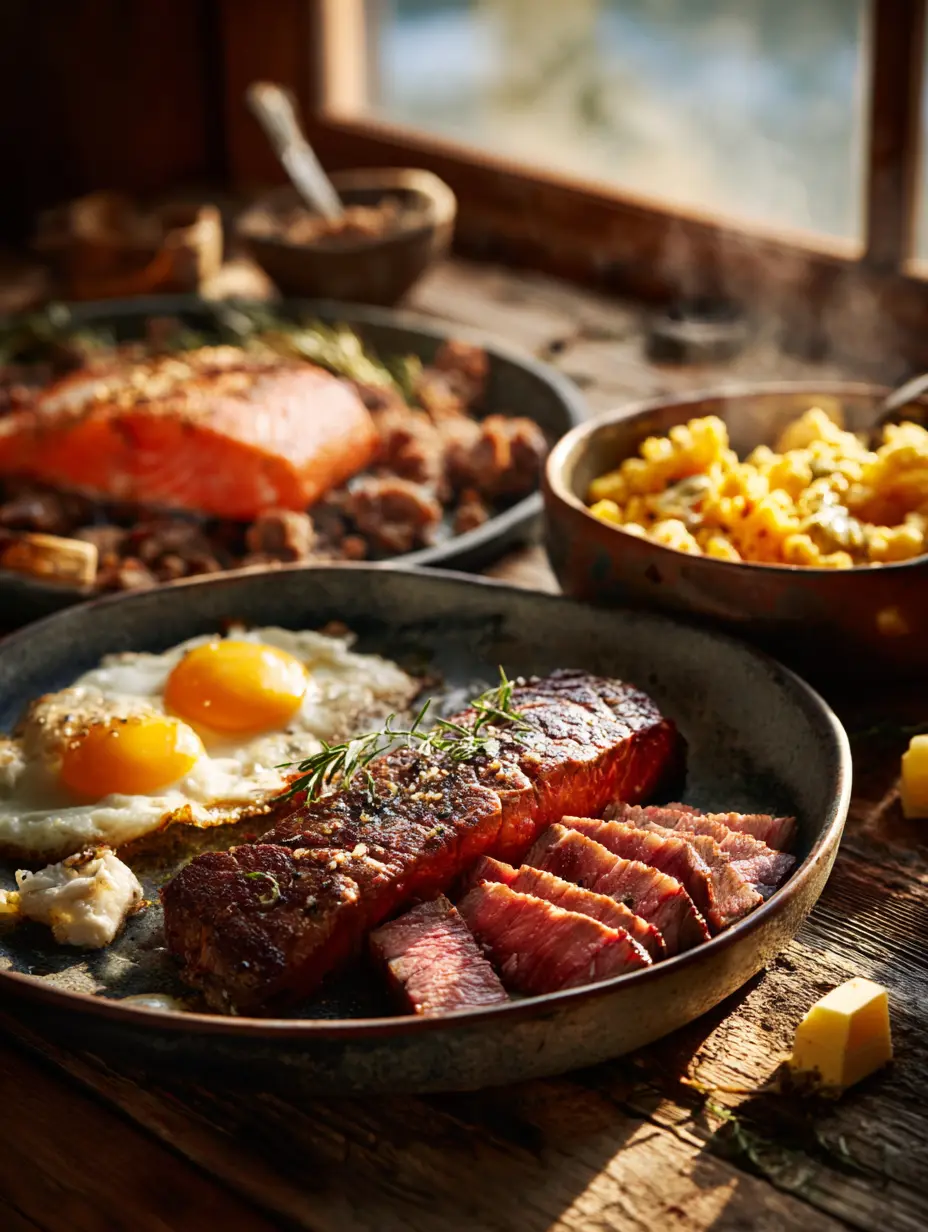
When you’re building muscle, working 24-hour shifts, or training twice a day, you need food that works as hard as you do. High protein carnivore meals eliminate the guesswork from performance nutrition by focusing entirely on animal foods that deliver complete protein, healthy fats, and zero digestive issues.
I’ve worked with athletes, bodybuilders, and first responders who switched to carnivore and never looked back. They’re not dealing with meal prep containers full of rice and chicken breast anymore. They’re not timing carb intake or worrying about insulin spikes before shifts. They’re eating meat, feeling satisfied, and performing better than they did on complicated diet plans.
The challenge with high protein carnivore eating isn’t complexity. It’s simplicity. People overthink it because they’re used to counting macros across multiple food groups. But when you’re eating only animal products, the nutrition becomes straightforward. Eat enough meat to hit your protein target, add fat for calories and satiety, salt everything, and that’s it.
This guide covers the high protein carnivore recipes and strategies that work for people with physically demanding lifestyles who need reliable nutrition without spending hours in the kitchen.
Table of Contents
Table of Contents
Quick Answer: What Are High Protein Carnivore Recipes?
High protein carnivore recipes are animal-based meals that provide 40 to 60 grams of protein per serving using only meat, fish, eggs, and dairy. These recipes eliminate all plant foods and focus on nutrient-dense animal products like ribeye steak, ground beef, salmon, and eggs. Athletes and physically active individuals use these meals to support muscle recovery, maintain energy during long shifts, and simplify nutrition without tracking multiple food groups or preparing complicated meals.
What Are High Protein Carnivore Recipes?
High protein carnivore recipes are meals made entirely from animal foods such as beef, eggs, fish, and dairy that provide at least 40–60 grams of protein per serving. These meals are commonly used by athletes, bodybuilders, and physically demanding professionals to support muscle recovery, sustained energy, and simplified nutrition without plant foods or carbohydrates.
Why High Protein Carnivore Meals Support Performance
Understanding why carnivore works for high-performance lifestyles helps you stick with it when people question your food choices.
Muscle Recovery and Repair
Animal protein provides all nine essential amino acids in optimal ratios for human muscle protein synthesis. Unlike plant proteins that require combining foods to get complete amino acid profiles, every carnivore meal delivers everything your muscles need to recover and grow.
Beef, eggs, and fish contain leucine, the key amino acid that triggers muscle protein synthesis. A single 8-ounce ribeye provides roughly 3 to 4 grams of leucine, well above the threshold needed to maximize recovery after training.
The bioavailability of animal protein is also superior to plant sources. Your body can actually use 95 percent or more of the amino acids from meat and eggs compared to 70 to 80 percent from plant proteins. This means you get more benefit from less total protein when eating carnivore.
Stable Energy From Animal Fats
Fat-adapted athletes and workers report stable energy throughout the day without the crashes that come from carbohydrate-dependent metabolism. Your body learns to efficiently burn fat for fuel, accessing both dietary fat and body fat stores as needed.
This matters especially for first responders working 12 to 24 hour shifts or athletes training multiple times daily. You’re not hitting walls when glycogen runs out because you’re not relying on glycogen for energy.
The combination of protein and fat in carnivore meals provides sustained satiety. You’re not hungry again two hours after eating. A substantial carnivore meal keeps you satisfied for 4 to 6 hours, sometimes longer, which is crucial when you can’t stop to eat on demand.
Simple Nutrition for Busy Schedules
Carnivore eliminates decision fatigue around food. You’re not weighing portions of rice, tracking vegetable servings, or calculating meal timing around different macronutrients.
Cook meat. Add salt. Eat until satisfied. That simplicity matters when you’re working unpredictable hours or training around a demanding schedule.
Meal prep becomes faster too. Cooking five pounds of ground beef takes the same time as cooking one pound. Pre-cooking steaks, boiling eggs in bulk, and preparing carnivore burger patties means you always have appropriate food ready regardless of your schedule.
Why Athletes and First Responders Choose Carnivore Meals
Many athletes, bodybuilders, and first responders prefer carnivore meals because they simplify nutrition while delivering dense protein and fat from animal foods. Instead of managing multiple food groups and macronutrient ratios, carnivore eating focuses on high-quality meat, eggs, and fish that naturally provide complete protein and essential nutrients.
For people with demanding schedules or intense training routines, this simplicity can make meal planning easier while still supporting muscle recovery, performance, and sustained energy throughout long work shifts or training sessions.
Best High Protein Carnivore Foods for Performance
The most effective high protein carnivore foods for athletes, bodybuilders, and physically demanding professions include:
- Ribeye steak
- Ground beef (80/20)
- Eggs
- Salmon and fatty fish
- Beef liver
- Butter and animal fats
These foods provide complete protein, essential amino acids, and healthy fats needed for muscle recovery and sustained energy.
Best High Protein Carnivore Foods
These are the foods that form the foundation of high protein carnivore eating for performance.
Beef and Red Meat
Beef is the cornerstone of carnivore diets for athletes and bodybuilders. Ribeye, ground beef, chuck roast, and New York strip provide complete protein with healthy animal fats.
Ground beef 80/20 is the most versatile and affordable option. One pound of cooked ground beef delivers approximately 75 grams of protein with enough fat to keep you satisfied.
Ribeye offers the best combination of protein, fat, and flavor. A 12-ounce ribeye provides roughly 60 grams of protein with substantial fat content that makes it incredibly satiating.
Red meat also supplies creatine, carnitine, and heme iron—nutrients that support athletic performance and are difficult to obtain from non-animal sources.
Eggs
Eggs are the most complete food available. The protein quality of eggs is so high that it’s used as the reference standard against which all other proteins are measured.
One large egg contains 6 grams of protein with a perfect amino acid profile. Eggs also provide choline for brain function, vitamin D for bone health, and healthy fats for hormone production.
For high protein intake, whole eggs are superior to egg whites. The yolk contains half the protein plus all the vitamins, minerals, and healthy fats. Eating 6 whole eggs gives you 36 grams of protein with complete nutrition.
Fatty Fish
Salmon, mackerel, sardines, and other fatty fish provide high-quality protein with omega-3 fatty acids that support inflammation management and recovery.
An 8-ounce portion of salmon delivers 50 grams of protein with beneficial fats that most people don’t get enough of on standard diets.
Fatty fish also provides vitamin D, selenium, and B vitamins. For athletes and first responders dealing with physical stress, the anti-inflammatory properties of omega-3s can improve recovery between training sessions or shifts.
Organ Meats
Liver, heart, and kidney are the most nutrient-dense foods available. Beef liver contains more vitamins and minerals per calorie than any plant food.
Just 4 ounces of beef liver provides 24 grams of protein plus massive amounts of vitamin A, B vitamins, iron, and copper. The nutrient density supports recovery and overall health beyond what muscle meat alone provides.
Many carnivore athletes eat liver once or twice weekly for the micronutrient boost. If the taste bothers you, mix small amounts of ground liver into ground beef or take freeze-dried liver capsules.
Animal Fats
Butter, tallow, ghee, and bacon fat aren’t just flavor additions. They’re essential fuel sources for athletes and active individuals on carnivore.
Animal fats provide fat-soluble vitamins (A, D, E, K) and contain no inflammatory compounds like seed oils. They’re stable at high temperatures and add calories needed to support demanding physical activity.
Add butter to steaks, cook eggs in bacon fat, or eat fatty cuts of meat to ensure adequate fat intake. Most high-performance individuals need 60 to 75 percent of their calories from fat on carnivore.
High Protein Carnivore Recipes for Athletes
These recipes are designed around training schedules and performance demands.
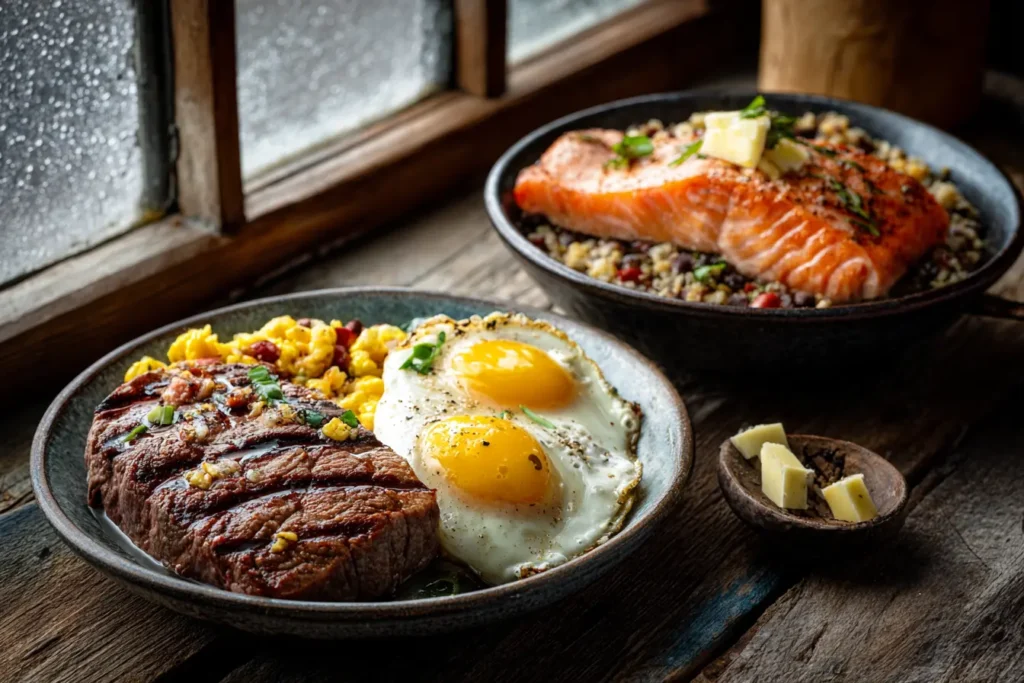
Steak and Eggs Performance Meal
Cook a 10 to 12 ounce ribeye or New York strip to your preference. While the steak rests, scramble 4 eggs in the rendered steak fat. Season everything with salt.
Print
Steak and Eggs Performance Meal
- Prep Time: 5 minutes
- Cook Time: 10 minutes
- Total Time: 15 minutes
- Yield: 1 serving 1x
- Category: Main Course
- Method: Stovetop
- Cuisine: American
- Diet: Gluten Free
Description
A simple high-protein carnivore meal made with ribeye steak and eggs. Perfect for athletes, bodybuilders, and anyone following a carnivore diet who needs a satisfying protein-rich meal.
Ingredients
-
10–12 oz ribeye steak
-
4 large eggs
-
1 tablespoon butter or beef tallow
-
salt to taste
Instructions
- Heat a skillet over medium-high heat.
- Season the ribeye steak generously with salt.
- Cook the steak for about 3–4 minutes per side or until desired doneness.
- Remove the steak from the pan and let it rest for a few minutes.
- In the same pan, add butter or tallow.
- Crack the eggs into the skillet and cook until the whites are set.
- Serve the steak with the eggs and season with additional salt if desired.
Notes
Ribeye works best because it contains both protein and fat.
You can substitute New York strip or sirloin if needed.
Cook eggs in the steak fat for extra flavor.
Nutrition
- Serving Size: 1 plate (steak with 4 eggs)
- Calories: 650
- Fat: 45g
- Carbohydrates: 0g
- Protein: 60g
- Cholesterol: 420 mg (approx.)
Keywords: high protein carnivore meal, steak and eggs carnivore, carnivore diet recipe, high protein carnivore recipe
This meal provides approximately 70 grams of protein with substantial fat for sustained energy. The combination of beef and eggs delivers complete nutrition with all essential amino acids.
Total prep time is under 15 minutes. This works as either a substantial breakfast before training or a post-workout recovery meal.
Ground Beef Recovery Bowl
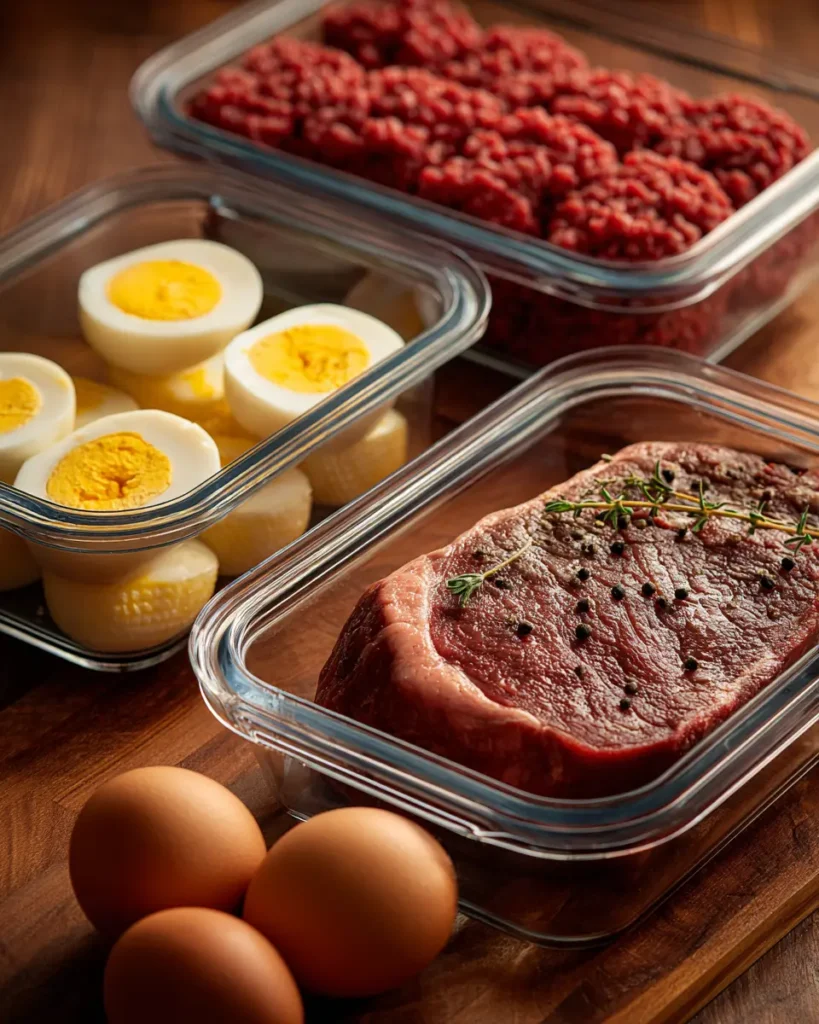
Brown 1 pound of 80/20 ground beef in a skillet. Season with salt while cooking. Transfer to a bowl and top with 4 scrambled eggs cooked in the beef fat.
This massive protein bowl delivers roughly 90 grams of protein. It’s substantial enough for post-workout recovery after heavy training and keeps you satisfied for hours.
The ground beef and eggs combination is one of the most affordable high-protein carnivore meals you can make. Prep multiple portions at once for quick meals throughout the week.
Salmon and Butter Plate
Pan-fry an 8 to 10 ounce salmon fillet in 2 tablespoons of butter. Add 2 to 3 scrambled eggs cooked in the remaining butter.
This provides 60-plus grams of protein with omega-3 fatty acids that support recovery and reduce inflammation from training. The butter adds richness and extra calories.
Salmon digests easily, making this ideal for pre-workout meals or when you need substantial protein without feeling overly full.
Carnivore Egg Scramble
Scramble 6 to 8 whole eggs with 4 ounces of ground beef or crumbled bacon. Cook in plenty of butter and season with salt.
This quick meal delivers 50 to 60 grams of protein and can be prepared in under 10 minutes. It works for any meal of the day and provides complete nutrition in a simple format.
The egg and meat combination creates a texture that’s easy to eat even when you’re not particularly hungry post-workout.
Carnivore Recipes for Bodybuilders
Bodybuilders need higher protein intakes and often eat more frequently than other athletes. These recipes support muscle building goals.
Ribeye Muscle Builder Meal
A 16-ounce ribeye provides approximately 80 grams of protein with enough fat to support muscle growth without excessive leanness that can impact hormone production.
Cook the ribeye in butter or tallow, season generously with salt, and eat with 2 to 3 eggs on the side for extra protein.
This is a substantial meal that supports muscle building while keeping you satisfied for extended periods. The fat content ensures adequate calories for growth.
Ground Beef Bulk Bowl
For bodybuilders in gaining phases, mix 1.5 pounds of cooked ground beef with 6 whole eggs. This creates a massive bowl with approximately 130 grams of protein.
The ground beef provides the bulk of your protein with enough fat to support calorie needs during muscle-building phases. The eggs add extra protein and micronutrients.
This single meal can serve as your main post-workout meal, providing everything needed for recovery and growth in one sitting.
Steak and Eggs High Protein Plate
Combine a 12-ounce New York strip with 6 whole eggs for a balanced high-protein meal delivering roughly 85 grams of protein.
The leaner steak provides concentrated protein while the eggs add fat and complete the amino acid profile. This balance works well for bodybuilders managing overall fat intake while still eating carnivore.
Meal timing this post-workout maximizes the muscle-building response from training.
Carnivore Burger Patties
Form 2 pounds of 80/20 ground beef into 8 large patties. Cook them all at once and store for quick high-protein meals throughout the week.
Each patty provides about 18 grams of protein. Eat 2 to 3 patties per meal depending on your protein needs. These work hot or cold and are incredibly convenient for bodybuilders eating 4 to 6 times daily.
For easy meal assembly, pair these carnivore burger patties with our carnivore burger buns that add extra protein while maintaining zero-carb nutrition.
Carnivore Recipes for First Responders
First responders need meals that travel well, eat quickly, and provide sustained energy during unpredictable schedules.
Quick Carnivore Breakfast
Scramble 6 eggs with 6 strips of bacon. This takes less than 10 minutes to prepare and provides 45 grams of protein to start your shift.
The combination of eggs and bacon is portable if needed and provides stable energy for hours. It doesn’t require refrigeration for several hours, making it practical for shift work.
Season with salt and cook everything in the bacon fat for extra calories and flavor.
Portable Carnivore Meal
Cook 1 pound of ground beef and divide into two containers. Add 3 hard-boiled eggs to each container. This creates two complete meals that don’t require reheating.
Each portion provides approximately 50 grams of protein and travels well in a lunch box or bag. The meals stay good without refrigeration for several hours and can be eaten cold during calls.
This is one of the most practical carnivore meal formats for first responders who can’t predict when they’ll have time to eat.
High Protein Shift Meal
Pre-cook a 12 to 16 ounce ribeye. Store it with 4 hard-boiled eggs. This complete meal provides 70-plus grams of protein and can be eaten cold or quickly reheated.
The ribeye stays good refrigerated for 5 to 7 days. Prep multiple steaks and egg portions for the entire week of shifts.
This meal is substantial enough to keep you satisfied during long periods without access to food while providing all the nutrition you need.
Carnivore Snack Box
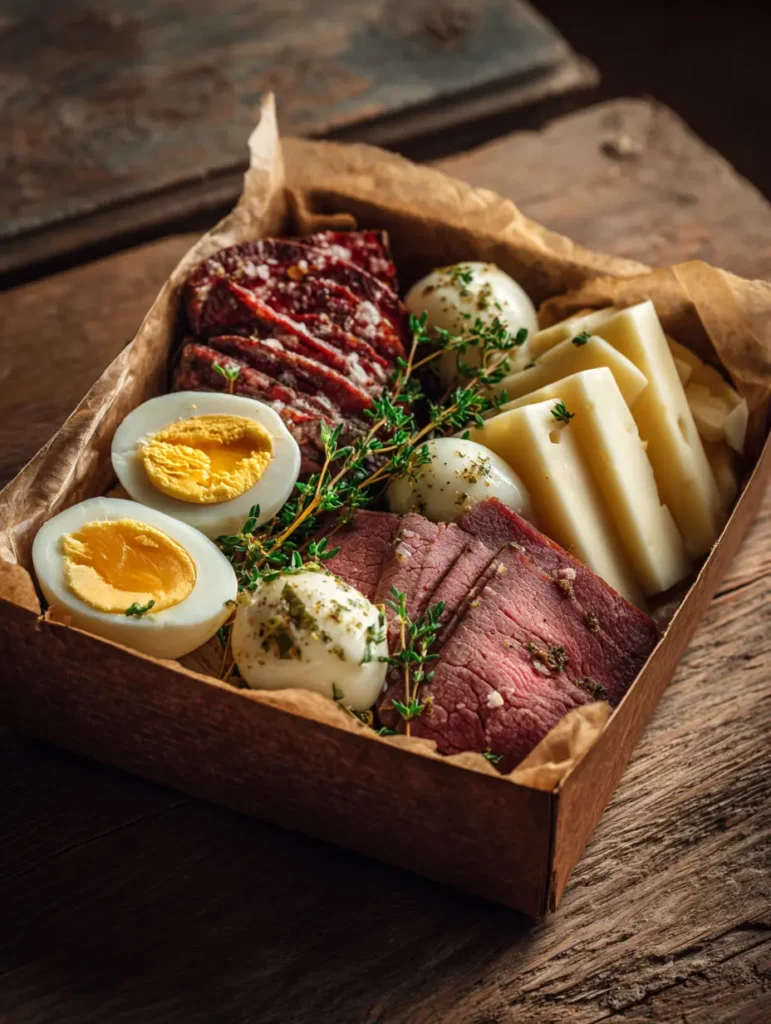
Pack a container with 8 ounces of deli roast beef, 4 hard-boiled eggs, and 4 ounces of hard cheese. This portable snack box provides approximately 75 grams of protein.
Nothing needs cooking or reheating. Everything travels well and stays good without refrigeration for reasonable periods. Eat the entire box as one meal or graze on it throughout a shift.
For additional portable options, check out our guide to carnivore snacks for athletes that includes more travel-friendly high-protein ideas.
Daily Protein Needs for Athletes on Carnivore
Athletes following a carnivore diet typically aim for 0.8 to 1.2 grams of protein per pound of bodyweight depending on training intensity and goals.
For example:
- A 160 lb athlete may need 130–190 grams of protein daily
- A 200 lb strength athlete may need 160–240 grams of protein daily
Most carnivore athletes reach these targets by eating 2 to 3 pounds of meat per day, often combined with eggs or fish for additional nutrients.
Carnivore Meal Prep for Busy Athletes and Professionals
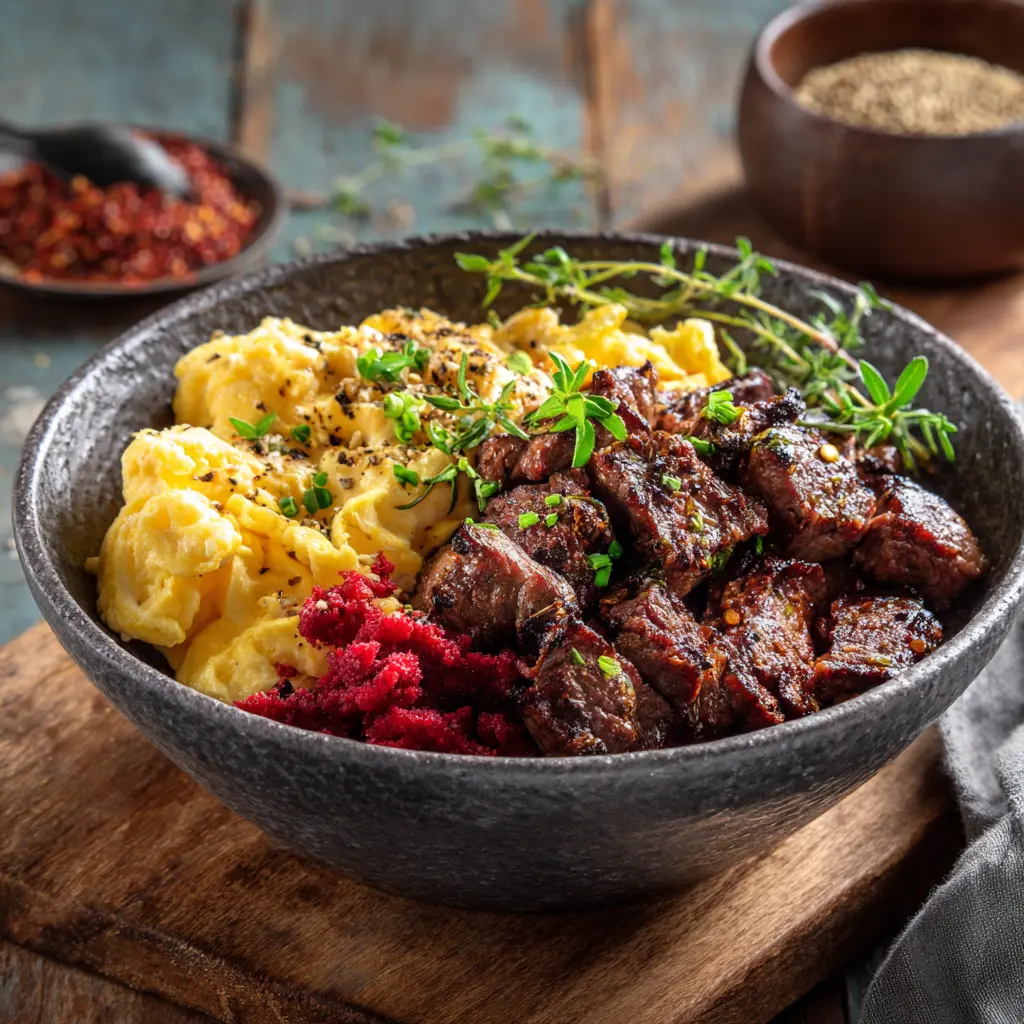
Meal prep is essential when your schedule doesn’t allow cooking multiple times daily.
Batch Cooking Ground Beef
Cook 5 to 10 pounds of ground beef at once. Season with salt and divide into containers with 8 to 12 ounces each.
Store in the refrigerator for up to 7 days or freeze portions for longer storage. This gives you ready-to-eat protein that can be combined with eggs, eaten plain, or formed into patties.
Ground beef reheats quickly in a pan or microwave and tastes good both hot and cold.
Pre-Cooking Steaks
Cook multiple steaks slightly underdone. Let them cool completely and store in the refrigerator.
Reheat in a hot pan for 2 to 3 minutes per side or eat cold. Pre-cooked steaks stay good for 5 to 7 days and eliminate the excuse of not having time to cook.
This works with any cut—ribeye, sirloin, New York strip. Choose based on your budget and preferences.
Egg Meal Prep
Hard-boil 2 to 3 dozen eggs at once. Store peeled or unpeeled in the refrigerator for up to 7 days.
Eggs serve as quick protein between meals, additions to ground beef or steak meals, or standalone snacks. Six hard-boiled eggs provide 36 grams of protein and are completely portable.
For variety, pre-make egg scrambles with ground beef or bacon. Divide into containers and reheat throughout the week.
Best Carnivore Meal Timing for Performance
Strategic meal timing optimizes both performance and recovery whether you’re training or working demanding shifts.
Pre-Workout Meals
Eat lighter, easily digestible proteins 1 to 2 hours before training. Scrambled eggs, ground beef patties, or salmon work well.
The goal is providing amino acids to protect muscle during training without eating so much that digestion interferes with performance.
Four to six eggs or 6 to 8 ounces of ground beef gives you adequate protein without the heavy feeling that comes from eating a large steak too close to training.
Post-Workout Recovery Meals
This is when you eat your largest, most protein-dense meal. Consume 40 to 60 grams of protein within 2 hours after training.
Ribeye with eggs, ground beef bowls, or salmon with butter all work excellently for post-workout nutrition. Your body is primed for nutrient uptake during this window.
Don’t skimp on this meal. Post-workout is when your muscles are most receptive to protein for recovery and growth.
Meals During Long Shifts
For first responders and others working extended hours, meal timing revolves around practicality more than optimization.
Eat substantial meals before shifts start. Pack portable high-protein options that don’t require reheating. Focus on foods that provide sustained energy rather than quick digestion.
Ribeye, ground beef, hard-boiled eggs, and fatty fish all provide hours of satiety, which matters when you can’t predict your next chance to eat.
Common Carnivore Diet Mistakes for High Performance
Avoiding these mistakes helps you perform better and feel better on carnivore.
Not Eating Enough Fat
Athletes and active individuals coming from low-fat backgrounds often eat too lean on carnivore. They choose sirloin over ribeye and wonder why they’re always hungry.
Fat is your fuel source on carnivore. Choose 80/20 ground beef, eat fatty cuts like ribeye and chuck roast, and add butter to meals.
If you’re experiencing low energy, constant hunger, or poor performance, you probably need more fat.
Under-Eating Calories
Meat is incredibly satiating, which is great for fat loss but problematic when you need adequate fuel for demanding physical activity.
Track your intake for a few days to verify you’re eating enough. Athletes and first responders often need 2,500 to 4,000 calories daily depending on activity level and body size.
If you’re losing weight unintentionally or performance is declining, eat more. Add extra meals, choose fattier cuts, or increase portion sizes.
Ignoring Electrolytes
Athletes lose significant sodium through sweat. First responders working in heat or wearing heavy gear have even higher sodium needs.
Salt your food generously. Consider adding extra salt to water during long shifts or training sessions. Most carnivore athletes need 5 to 7 grams of sodium daily, sometimes more.
Low sodium causes cramping, fatigue, weakness, and poor performance. Don’t skimp on salt.
Carnivore Snacks for Athletes and Busy Professionals
Having quick protein options prevents excessive hunger and helps you meet daily protein targets without constant cooking.
Beef Jerky
Quality beef jerky with minimal ingredients (beef and salt) provides concentrated protein in a completely portable form.
Two ounces of jerky delivers approximately 20 grams of protein. Keep it in your gym bag, vehicle, or locker for emergency protein when you can’t access real meals.
Look for brands without sugar or preservatives. The ingredient list should be beef, salt, and maybe black pepper.
Hard-Boiled Eggs
Prep two dozen eggs weekly. They provide quick protein between meals or as additions to lighter meals that need more substance.
Six eggs give you 36 grams of protein with healthy fats and complete nutrition. They’re cheap, portable, and require no cooking beyond the initial boiling.
Store peeled eggs in a container with a damp paper towel to prevent drying out.
Cheese
Hard cheeses like cheddar, parmesan, or aged gouda provide protein and fat in a shelf-stable form.
Two ounces of hard cheese offers roughly 14 grams of protein. Cheese doesn’t require refrigeration for short periods, making it practical for traveling or keeping at work.
Choose full-fat versions and watch for added ingredients. Quality cheese should be milk, salt, enzymes, and cultures.
Deli Meat
Sliced roast beef, turkey, or ham from the deli counter makes convenient protein. Six ounces provides about 30 grams of protein.
Choose options without added sugars or fillers. Plain roast beef is usually the cleanest choice.
Roll up slices with cheese for a complete snack or eat plain when you need quick protein.
High Protein Carnivore Meal Ideas (Quick List)
If you’re following a carnivore diet for performance, these high protein meal ideas provide simple ways to reach your daily protein goals using only animal-based foods.
- Steak and eggs – A classic carnivore meal delivering complete protein and healthy fats.
- Ground beef bowl – Cooked 80/20 ground beef with scrambled eggs for a high-protein recovery meal.
- Salmon with butter – Fatty fish with omega-3s that support muscle recovery and inflammation control.
- Ribeye steak plate – A protein-dense meal with enough fat to support energy needs.
- Egg and beef scramble – Quick and easy high-protein carnivore breakfast or post-workout meal.
- Carnivore burger patties – Simple beef patties that can be paired with carnivore burger buns for portable meals.
- Hard-boiled eggs and cheese – A convenient snack option with protein and healthy fats.
- Beef jerky and deli meat – Portable protein sources for busy schedules or long shifts.
High Protein Carnivore Meal Plan (Example Day)
If you’re new to high protein carnivore eating, a simple daily meal plan can help you reach your protein needs while keeping meals easy to prepare.
Here is an example of a high protein carnivore meal plan for an active person:
Breakfast
- 4 whole eggs cooked in butter
- 4 strips of bacon
Lunch
- 10–12 oz ribeye steak
- 2 scrambled eggs
Snack
- 2 oz beef jerky
- 2 hard-boiled eggs
Dinner
- 1 pound ground beef (80/20)
- 2 fried eggs
This example provides roughly 180–220 grams of protein, depending on portion sizes. Many athletes and physically active people reach their daily targets by eating 2 to 3 pounds of meat plus eggs throughout the day.
Frequently Asked Questions About High Protein Carnivore Diet
Can you build muscle on carnivore?
Yes, athletes and bodybuilders build muscle effectively on carnivore due to high-quality complete protein from animal sources. The diet provides 1 to 1.2 grams of protein per pound of bodyweight with superior amino acid profiles compared to plant proteins. Many bodybuilders report better recovery, reduced inflammation, and improved body composition on carnivore. The key is eating sufficient total calories from fatty cuts to support muscle growth while meeting protein targets.
How much protein do athletes need?
Athletes on carnivore need 0.8 to 1.2 grams of protein per pound of bodyweight depending on training intensity and goals. A 180-pound athlete requires 145 to 216 grams of protein daily. Bodybuilders and strength athletes should aim for the higher end (1 to 1.2g per pound). Endurance athletes can function well at the lower end (0.8 to 1g per pound) with higher fat intake for sustained energy.
What do bodybuilders eat on carnivore?
Bodybuilders on carnivore eat primarily ribeye steak, ground beef, eggs, and fatty fish to meet high protein demands. A typical day includes 2 to 3 pounds of meat and 6 to 12 eggs providing 150 to 250 grams of protein depending on body size and goals. Fat intake adjusts based on whether cutting or bulking. During building phases, bodybuilders choose fattier cuts and add butter. During cutting, they eat leaner cuts like sirloin while maintaining adequate fat for hormone health.
Is carnivore good for physically demanding jobs?
Yes, carnivore works excellently for first responders, military, construction workers, and others in physically demanding professions. The diet provides sustained energy without crashes, simplifies nutrition during unpredictable schedules, and supports recovery from physical stress. Many first responders report better mental clarity during long shifts and improved body composition without counting calories. The key is eating enough fat for sustained energy and salting food adequately to replace electrolytes lost through physical work.
Related Carnivore Recipes
For athletes and first responders who need variety and convenience, these carnivore recipes expand your options while staying zero-carb.
Make carnivore burger buns for portable burger meals that provide extra protein without plant ingredients. These buns hold up to juicy patties and make burgers practical for meal prep.
Our carnivore bread recipe creates sliceable sandwich bread perfect for quick meals between shifts or training sessions when you need convenient portable nutrition.
Athletes who crave something sweet after training can enjoy carnivore cream puffs made entirely from eggs and cream without breaking carnivore principles.
For more variety in your morning meals, explore our carnivore breakfast recipes collection with options beyond basic eggs and steak.
Final Thoughts on High Protein Carnivore Recipes
High protein carnivore eating isn’t complicated. Choose quality animal foods, eat enough to support your activity level, salt everything, and stay consistent.
Athletes, bodybuilders, and first responders thrive on carnivore because it eliminates nutritional complexity while delivering everything your body needs to perform and recover. You’re not tracking five different food groups or timing carb intake around training. You’re eating meat, feeling satisfied, and performing well.
The recipes in this guide provide the foundation for high-performance carnivore nutrition. Start with simple preparations like steak and eggs or ground beef bowls. Batch cook when possible. Keep hard-boiled eggs and portable protein options available for busy days.
Give your body 4 to 8 weeks to fully adapt to burning fat for fuel. During that transition, performance might temporarily dip as your metabolism shifts. Push through it. The energy stability and recovery benefits on the other side are worth the initial adjustment.
Most importantly, eat enough. Athletes and people with physically demanding jobs need substantial calories. Don’t eat like you’re trying to lose weight when you’re trying to perform. Choose fatty cuts, add butter, and trust that your body will use that fuel appropriately.
Carnivore nutrition works for high-performance lifestyles when you approach it strategically and give yourself adequate time to adapt.
- High Protein Carnivore Recipes for Athletes, Bodybuilders, and First Responders

- Carnivore Bread Recipe: The Complete Guide to Low-Carb Carnivore Bread
- Carnivore Egg Buns (3 Ingredients, No Whey) – Soft & Light Zero-Carb Option
- 3 Ingredient Carnivore Sandwich Bread – Zero Carb Loaf That Holds Fillings
- Carnivore Bread with Milk Powder (3 Ingredients): Firm, Sliceable Zero-Carb Loaf
- Carnivore Buns with Milk Powder (3 Ingredients): Soft, Stable, Zero-Carb Burger Buns