
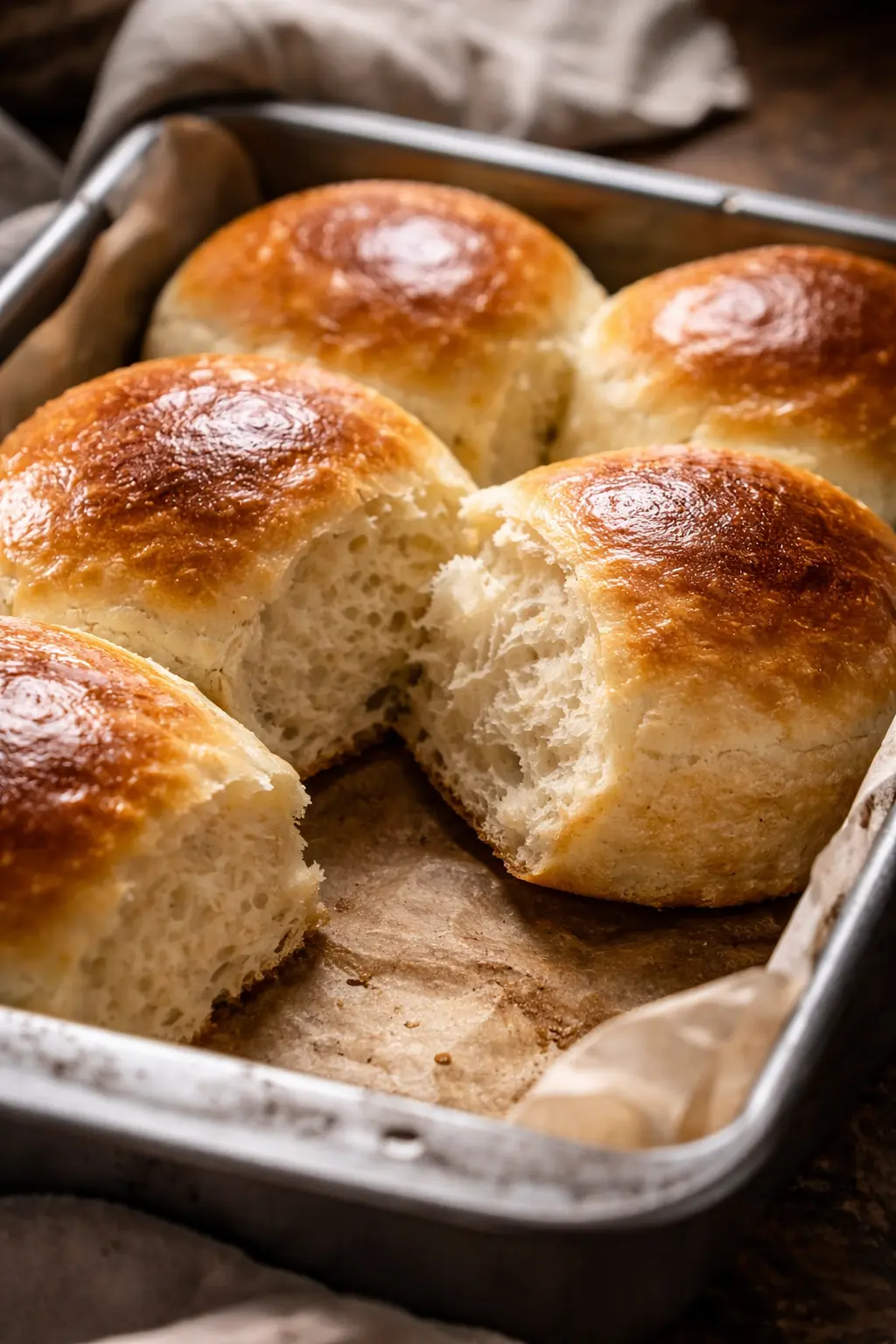
Most carnivore bun recipes look promising and bake flat. Here’s exactly why that happens — and the precise method that fixes it for good.
airy carnivore bunssoft carnivore bunsfluffy carnivore breadcarnivore buns recipe
You’ve made carnivore buns before. Maybe they looked gorgeous coming out of the oven, then collapsed. Maybe they smelled right but felt like a dense hockey puck. Maybe you’ve eaten them anyway — because carnivore — but you knew they could be better.
They can. And the difference between a flat, eggy puck and a genuinely airy, soft bun comes down to a handful of specific decisions in how you build the batter, handle your whites, and manage your oven. This guide covers all of it, in plain language, with no fluff except the kind that ends up in your buns.
Table of Contents
Table of Contents
Why Most Carnivore Buns Aren’t Fluffy
Most carnivore buns fall flat because egg whites are deflated before baking, or the batter sits too long after mixing. Without gluten or starch to hold structure, timing and technique are everything.
Traditional bread gets its airy structure from two things: gluten networks (built by kneading wheat flour) and yeast (which produces CO₂ bubbles over time). Carnivore buns have neither. What you have instead is whipped egg white protein — and it is spectacular at creating lift, but only if you treat it right.
Most recipes skip the explanation and just say “fold gently.” That’s not enough. Egg white foam starts collapsing the moment it contacts fat, acid, or even too much physical agitation. If you’re dumping a yolk mixture into your whites instead of folding the whites into a tempered base, you’re losing 40–60% of your lift before the pan even hits the oven.
The other silent killer is wait time. Carnivore bun batter is not a patient batter. Every minute it sits, the foam structure weakens. Most recipes don’t tell you this, so people mix, then grease the pan, then preheat the oven — and by the time the buns go in, they’re already half-deflated.
The Science Behind Fluffy Texture
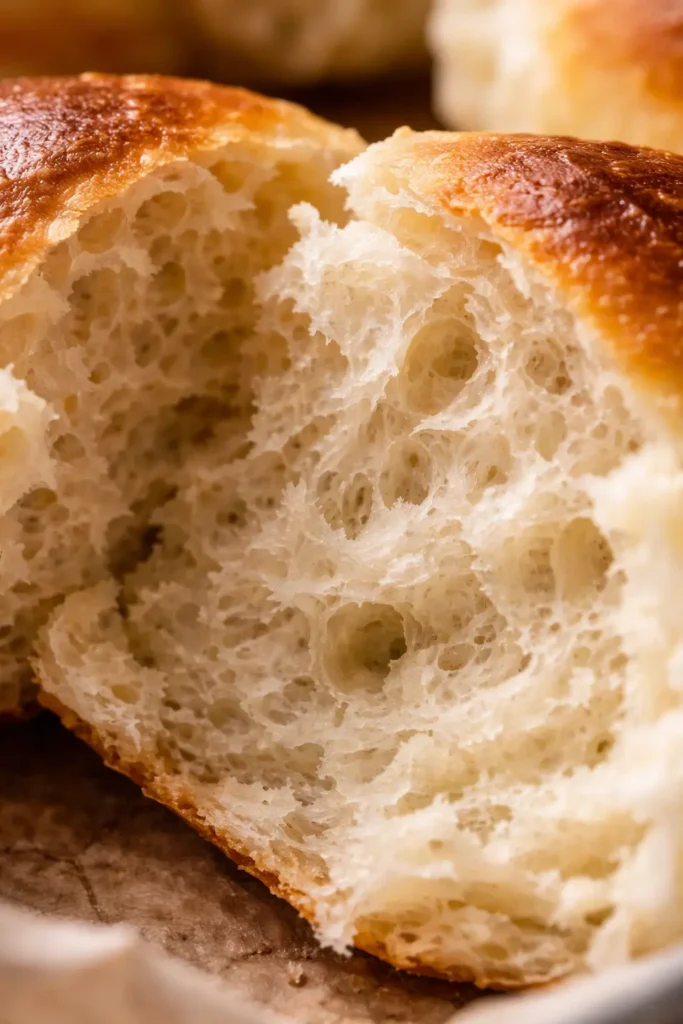
Fluffy carnivore buns rely on denatured egg white proteins forming a stable foam. Heat sets that foam into structure — your job is to preserve the air until the oven takes over.
When you whip egg whites, you’re unfolding proteins and trapping millions of tiny air bubbles between them. This is a foam — fragile, temperature-sensitive, and vulnerable to fat contamination. Even a single drop of yolk can prevent whites from whipping properly, because the fat in the yolk breaks down the protein film around the bubbles.
When this foam hits oven heat, the proteins denature and cross-link, setting the air structure in place. That’s your “crumb” — the honeycomb of tiny pockets that makes a bun feel light and airy instead of dense. The more bubbles you preserve from whip to oven, the more open and fluffy the final texture.
Cream of tartar plays a crucial supporting role here. It acidifies the whites slightly, which strengthens the protein bonds and makes the foam more stable and resistant to collapse. It’s not optional — it’s the structural insurance of your recipe.
Science note
Stiff peaks aren’t just a visual cue — they signal that protein cross-linking is nearly complete and your foam is at peak stability. Under-whipped whites (soft or medium peaks) have weaker networks and collapse faster under the weight of the other ingredients.
Ingredients That Make Buns Airy
The three ingredients that most affect airiness are egg whites (volume), cream of tartar (stability), and cream cheese or whey (binding without weighing down the foam).
- 6 largeeggs, separated — whites and yolks kept completely apart
- 3 ozfull-fat cream cheese, softened to room temperature
- ¼ tspcream of tartar — non-negotiable for foam stability
- 1 pinchfine sea salt
- Optional1 tbsp whey protein isolate (unflavored) — deepens structure
- Optional½ tsp sesame seeds or everything bagel seasoning (for topping)
A quick note on the cream cheese: it needs to be at room temperature, not cold. Cold cream cheese creates lumps that require aggressive mixing to break down — and aggressive mixing collapses your foam. Soft cream cheese folds in with almost no effort.
If you want to push airiness even further, try this soft version here using carnivore milk powder — the proteins in milk powder add an extra layer of structural support that keeps buns puffed longer, even after cooling.
Step-by-Step Method for Fluffy Buns
Whip whites to stiff peaks first, make the yolk base separately, then fold — never stir — in three additions. Bake immediately once batter is mixed.
- Preheat your oven to 300°F (150°C). Line a baking sheet with parchment. Do this before you touch an egg — oven must be ready before batter is mixed.
- Separate your eggs. Use a clean, completely dry bowl for the whites — even a trace of grease will prevent proper whipping. Any bowl that’s touched butter, oil, or yolk recently should be washed and dried again.
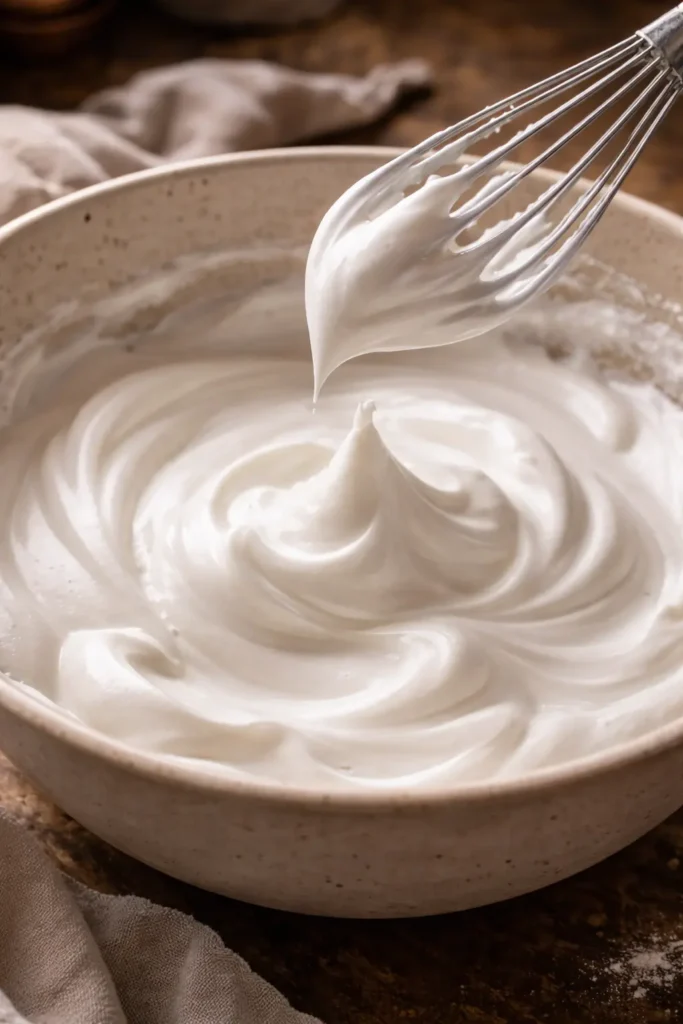
- Whip whites with cream of tartar and a pinch of salt. Start on medium speed until foamy, then increase to high. Beat until stiff, glossy peaks form — when you lift the beater, the peak should stand straight up with no curl. This takes 3–5 minutes depending on your mixer.
- In a separate bowl, beat softened cream cheese until completely smooth. Add the yolks one at a time, mixing on low until just combined. If using whey protein, fold it in now. The yolk base should be smooth and uniform — no streaks.
- Temper the base: add about ¼ of the whipped whites to the yolk mixture and stir (yes, stir) to incorporate. This sacrificial portion loosens the base so the remaining whites fold in without deflating.
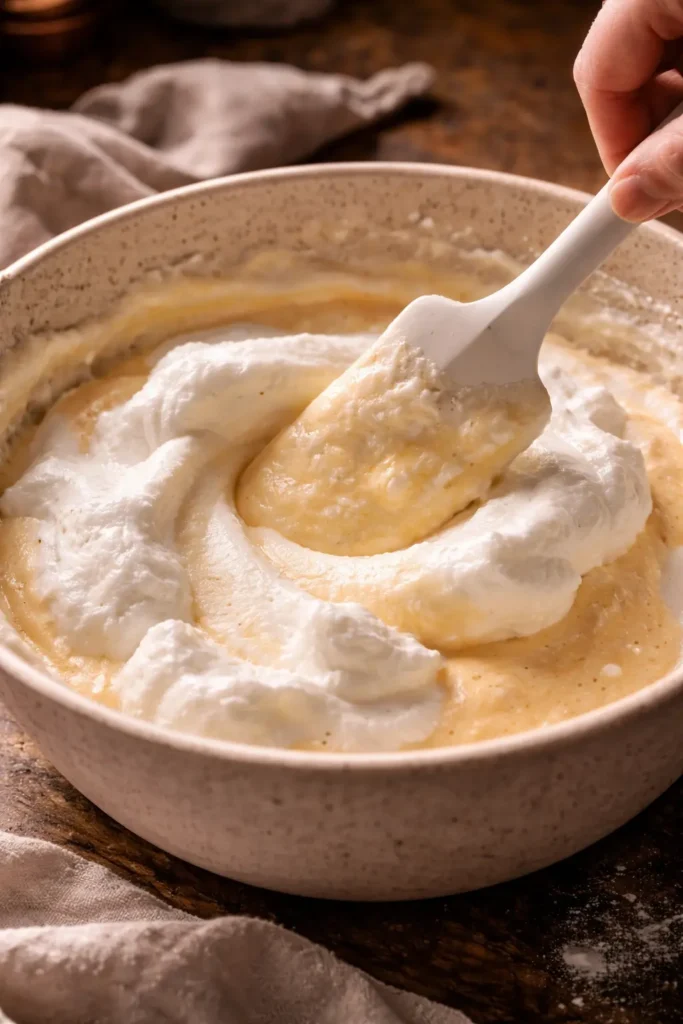
- Fold in the remaining whites in two additions. Use a large silicone spatula. Scoop from the bottom, fold over the top, rotate the bowl 90°, repeat. Count your strokes — 15–20 folds per addition maximum. Stop when you see no more white streaks, even if it looks slightly uneven.
- Scoop immediately onto parchment in 6–8 mounds. Leave space between them. Slide into the oven within 60 seconds of your last fold.
- Bake at 300°F for 25–30 minutes until golden on top and the buns feel set — not wobbly — when you gently press the center. Do not open the oven before 20 minutes. Cool on the pan for 5 minutes before moving.
Timing is everything
From the moment your whites are whipped, you have roughly 8 minutes before significant deflation begins. Mix fast, fold efficiently, and bake immediately.
Common Mistakes (Flattening, Density & Texture Issues)
Quick Answer
Most dense or flat carnivore buns happen because of three key mistakes:
- Under-whipped egg whites
- Overmixing during folding
- Waiting too long before baking
1. Buns Collapse After Baking
Problem:
The buns rise in the oven but sink once cooled.
Cause:
Incorrect oven temperature.
- Too high → outside sets too fast, inside stays undercooked
- Too low → structure never fully sets
Fix:
Bake lower and longer.
- Ideal: 300°F (150°C) for 28 minutes
- Avoid: high heat shortcuts
2. Dense or Rubbery Texture
Problem:
Buns feel heavy, chewy, or rubbery instead of light and airy.
Cause:
- Egg whites not whipped enough (soft peaks instead of stiff)
- Yolk mixture too warm, which weakens the foam
Fix:
- Beat egg whites until stiff, glossy peaks
- Let yolk mixture cool to room temperature before folding
3. Buns Spread Flat
Problem:
Buns don’t hold shape and spread on the tray.
Cause:
- Overmixing during folding → destroys air structure
- Batter left sitting too long before baking
Fix:
- Fold gently (maximum 40 folds total)
- Prepare everything in advance
- Bake within 60 seconds after mixing
Pro Tips (Chef-Level)
The biggest pro-level upgrade is aging your egg whites overnight in the fridge, uncovered — it reduces moisture and creates a stronger, more stable foam.
01: Age your whites. Separate eggs the night before and leave the whites uncovered in the fridge. Aged whites have slightly less water, whip faster, and produce a more stable foam with better volume. A small detail that makes a noticeable difference.
02: Warm your mixing bowl. Run hot water over it for 30 seconds, then dry it completely. Slightly warm whites whip faster and to greater volume than cold whites straight from the fridge.
03: Use a kitchen scale for cream cheese. “3 oz” measured by eye varies. Too much cream cheese makes buns dense; too little and they don’t hold together. 85g is precise.
04: Silicone baking mat over parchment. Parchment can grip and tear the delicate bottom crust; a silicone mat releases cleanly and promotes more even browning underneath.
05: Add a second baking sheet underneath. Placing your baking sheet on top of a second empty sheet buffers the bottom heat and prevents overbrowning on the underside — especially important for glass-bottom ovens.
06: Score the tops lightly. Just before baking, use a wet finger to smooth the top of each mound and make a shallow indent in the center. This controls how the bun rises and prevents lopsided tops.
07: Cool completely before slicing. Carnivore buns continue setting for 10–15 minutes after leaving the oven. Cutting too early compresses the crumb and makes buns seem denser than they are.
Print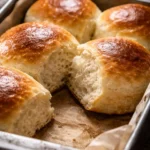
Fluffy Carnivore Buns (How to Get Perfect Airy Texture Every Time)
- Prep Time: 10 min
- Cook Time: 30 min
- Total Time: 40 min
- Yield: 6 buns 1x
- Category: Bread
- Method: Baking
- Cuisine: Carnivore
- Diet: Gluten Free
Description
Stop making flat carnivore buns. Learn the exact method to get fluffy, airy buns every time using simple ingredients and precise folding technique.
Ingredients
- 6 large eggs (separated)
- 85g cream cheese
- ¼ tsp cream of tartar
- Pinch of salt
- Optional: 1 tbsp whey protein
Instructions
- Preheat oven to 150°C (300°F)
- Whip egg whites with cream of tartar to stiff peaks
- Mix cream cheese + yolks until smooth
- Add ¼ whites to yolk mix (stir)
- Fold remaining whites gently
- Scoop onto tray
- Bake 25–30 minutes
Notes
- Do not overmix
- Bake immediately
- Use room temperature ingredients
Nutrition
- Serving Size: 1 bun
- Calories: 90
- Sugar: 0g
- Sodium: 120mg
- Fat: 6g
- Carbohydrates: 1g
- Protein: 7g
- Cholesterol: 180mg
Keywords: carnivore buns, fluffy carnivore buns, carnivore bread, zero carb buns
FAQ
Why are my carnivore buns dense?
Dense carnivore buns almost always mean the egg whites weren’t whipped to stiff peaks, the batter was overmixed during folding, or too much time passed between mixing and baking. Fix one of these three things and density disappears.
Can I make carnivore buns without cream cheese?
Yes, but you need a replacement binder. Plain Greek yogurt works if you include dairy. Cottage cheese blended smooth is another option. Without any binder, buns become very fragile and collapse easily once cooled.
How do I store soft carnivore buns?
Room temperature for up to 24 hours, loosely covered. Refrigerate for 3–4 days in an airtight container. Refresh in a 300°F oven for 5 minutes to restore crispness. They freeze well — reheat from frozen at 325°F for 10–12 minutes.
Are airy carnivore buns the same as cloud bread?
Very similar — cloud bread is the original version of this technique. Carnivore buns are typically denser and more bun-shaped than flat cloud bread rounds. Both rely on the same egg white foam principle, but buns use a higher cream cheese ratio and a lower baking temperature.
Why do my buns smell eggy after baking?
Usually a sign of underbaking. The egg proteins need to fully denature at 160°F+ to lose the raw egg smell. Bake until the tops are genuinely golden — not just pale ivory — and the center doesn’t wobble when the pan is gently shaken.
More in this series
Carnivore Egg Buns Carnivore Burger Buns Carnivore Bread Recipes